

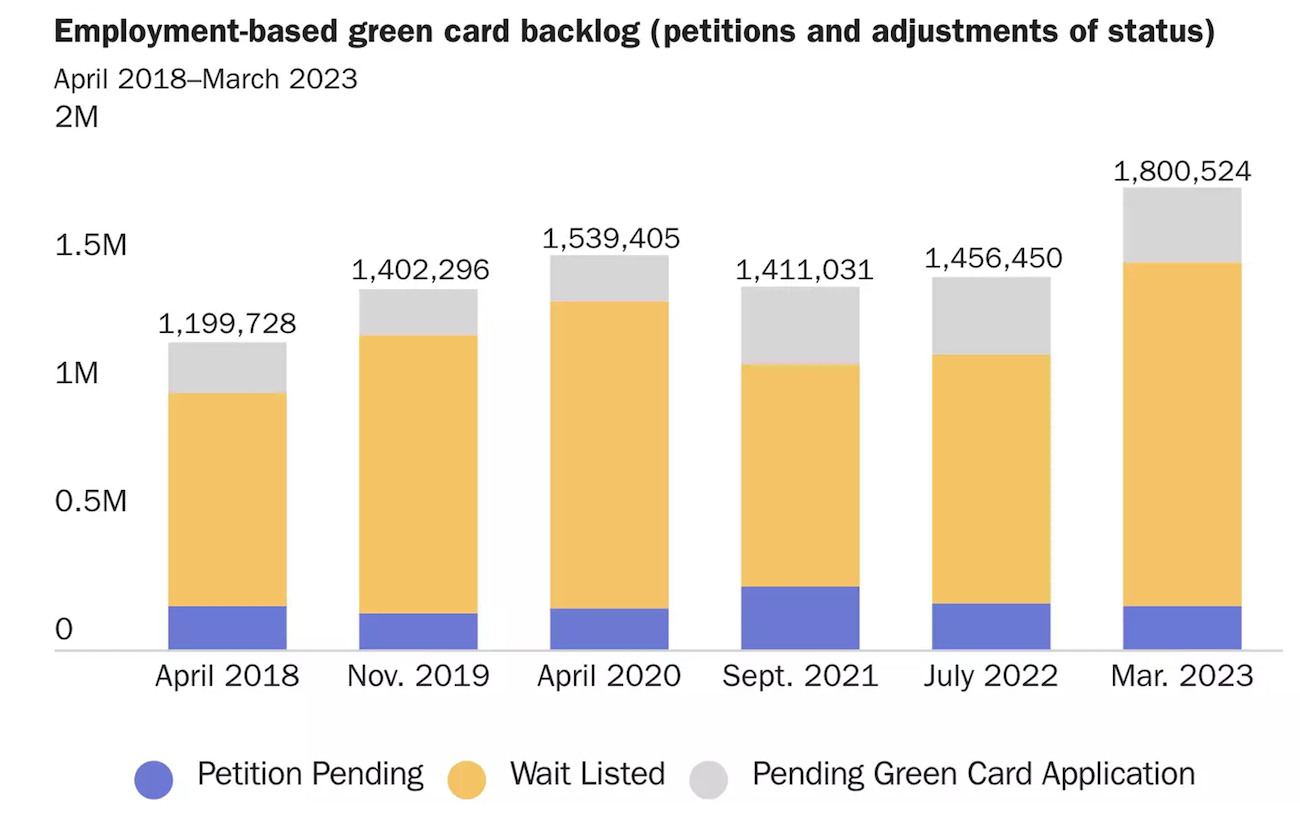
The Green Card waiting time, especially for Indian applicants, has become a pressing issue, with some facing an astounding 25 to 30 years before achieving permanent residency in the United States. This extensive delay is largely attributed to the limited annual cap on employment-based visas, where only 140,000 are available, and each country is restricted to a 7% quota. Consequently, the backlog of Green Cards has swelled to 1.8 million cases, with a staggering 1.1 million pending applications from India alone. For many, these wait times mean years of uncertainty and frustration, affecting their immigrant experiences significantly. As reforms in US immigration policies continue to be debated, the plight of those on H-1B visas highlights the dire need for a more efficient Green Card process that can accommodate the aspirations of countless individuals seeking to build their lives in America.
The protracted timeline for obtaining permanent residency status, commonly referred to as a Green Card, poses a significant challenge for many immigrants, particularly those from India. With the current system overseeing a finite number of employment-based immigrants each year, the limitations on visa quotas create an ongoing stumbling block for hopeful applicants. As individuals navigating their immigration journey, the stories and experiences of these immigrants underscore the emotional toll linked to the lengthy approval process. Many have spent years in limbo, anxiously awaiting their turn amidst a colossal backlog of applicants. This situation has sparked conversations about the need for comprehensive reforms that alleviate the pressures of waiting for permanent residency in the United States.
Understanding the Green Card Waiting Time for Indian Immigrants
The estimated waiting time for Indian immigrants to obtain a Green Card has reached a staggering 25-30 years, underscoring a significant challenge in the US immigration process. This excessive duration is largely attributed to the limited number of employment-based Green Cards available annually, coupled with the high demand from Indian nationals. With the annual cap set at 140,000 visas and a rigid 7% per country quota, the backlog of applications has reached alarming numbers, particularly for India where approximately 1.1 million cases are currently pending.
As a result of this extended waiting time, many Indian families find themselves in a precarious situation, living under the constraints of temporary H-1B visas while yearning for permanent residency. This delay not only affects their ability to plan for the future financially and personally, but it also impacts their sense of belonging and security in the United States. Many express frustrations about the inefficiencies in the immigration system and seek reform to address the prolonged wait times to gain stability as Green Card holders.
The H-1B Visa Experience and Its Impact
The H-1B visa program enables skilled foreign workers, including many from India, to work in the United States in specialty occupations. While this program offers immediate employment opportunities, it also creates a paradoxical situation for those seeking Green Cards. The temporary nature of H-1B status can be unsettling, especially when the pathway to permanent residency seems so distant. Many immigrants navigate a complex maze of paperwork and legal requirements, often feeling disheartened by the long waits and uncertainties surrounding their cases.
The impact of this experience is profound, shaping the immigrant experience for Indians in the US. Families often live in limbo, unable to fully invest in their lives and communities due to ongoing uncertainty about their immigration status. The competition for Green Cards among H-1B holders leads to heightened anxiety and frustration, as monthly updates about the backlog reveal little progress toward resolution. This systemic inefficiency highlights the urgent need for comprehensive reforms to the immigration framework that can ease the burden on applicants and streamline the Green Card process.
The Effects of Backlog on Immigrant Lives
The backlog of Green Card applications has far-reaching effects on the lives of immigrants, particularly those from India who constitute a large portion of pending cases. Endless waiting periods can lead to significant career disruptions as H-1B visa holders are often limited in their job mobility. Many opt to remain in positions they might otherwise leave, fearing that changing employers could jeopardize their status and prolong their wait for permanent residency. This scenario cultivates a sense of frustration and helplessness among Indian immigrants, who contribute significantly to the US economy but feel sidelined by an inefficient immigration system.
Moreover, the emotional toll of this backlog can strain personal relationships and family dynamics. Many H-1B visa holders worry about their future stability and the implications of remaining in temporary status for extended periods. These concerns often fluctuate between hope and despair as individuals contemplate their options. Advocacy for more equitable immigration policies is vital, not just for addressing the backlog, but also for ensuring that immigrant families can thrive in their chosen communities without the constant shadow of uncertainty.
Immigrants’ Voices and the Need for Policy Changes
The voices of immigrants are essential in discussions about the need for policy changes regarding the Green Card process. Many individuals have shared their experiences of navigating the challenges within the immigration system, highlighting the emotional and economic burdens caused by extended waiting times. These personal stories shed light on the human side of the immigration debate, challenging policymakers to understand the real-life implications of current laws that cause significant delays for applicants from specific countries such as India.
Advocacy groups and community organizations have increasingly rallied to push for reforms that would alleviate the backlog, including increasing the cap on employment-based Green Cards and eliminating country-specific quotas. They argue that such changes could create a more equitable and efficient immigration system, allowing skilled immigrants to contribute to the US economy without the fear of an indefinite waiting period for permanent residency. Empowering immigrant voices is crucial in shaping policies that reflect the values of inclusivity and fairness that America holds dear.
The Role of Government in Resolving Immigration Challenges
Government policies play a pivotal role in determining the fate of immigrants seeking Green Cards. The complexities of the immigration system can often leave applicants feeling helpless, particularly as they navigate the sometimes convoluted regulations and processes. In recent years, the shifting political landscape has exacerbated these issues, with varying degrees of support for immigration reform, leaving many hopeful for clearer and more supportive policies that could mitigate lengthy waiting times, particularly for Indian applicants.
It is essential for lawmakers to understand the implications of the backlog caused by strict immigration policies, including the social and economic consequences on families and communities. By reforming the immigration process to encourage timely processing of applications and reducing the backlog of Green Cards, the government can support immigrants in their journey toward permanent residency, fostering an inclusive environment where skilled workers are valued for their contributions to society. Stakeholders across various sectors must unite to advocate for transformative changes that prioritize efficiency and compassion in the immigration process.
Long-Term Implications of Immigration Policy on Future Generations
The long-term implications of the current immigration policies and their effects on Green Card waiting times are significant, particularly for future generations of immigrants. As older generations face prolonged periods of uncertainty, younger family members often bear the brunt of anxiety regarding their family’s future in the US. Children born to H-1B visa holders, for instance, may find themselves impacted by the limitations placed on their parents’ status, fostering a sense of instability that can influence their education and social integration.
Moreover, as the need for skilled workers continues to grow within the US economy, it is crucial for immigration policies to adapt. Streamlining the Green Card process will not only enhance the prospects for current applicants but also pave the way for a more favorable environment for future immigrants. Creating a sustainable immigration framework that addresses the needs of skilled workers could lead to a more robust workforce, ultimately benefiting the US as a whole.
Community Support and Resources for Immigrants
Navigating the Green Card process can feel isolating for many immigrants, especially in light of the lengthy waiting times associated with it. However, community support and resources have emerged as vital lifelines for Indians navigating this challenging landscape. Organizations dedicated to immigrant rights and support often provide valuable assistance through workshops, legal aid, and informational resources tailored to help individuals understand the intricacies of the immigration system.
Furthermore, connecting with local communities can offer emotional support and practical advice for those waiting for their Green Cards. Many immigrants find strength in sharing their stories with others who face similar struggles, fostering a sense of solidarity that is essential during challenging times. These community networks play a crucial role in empowering immigrants, encouraging them to advocate for themselves and actively seek out the reforms needed to improve the immigration process.
Increasing Public Awareness of Immigration Issues
Public awareness plays a critical role in shaping perceptions and policies surrounding immigration, particularly regarding the prolonged Green Card waiting times faced by many Indian applicants. Through education and outreach efforts, communities can help demystify the immigration process by sharing facts and personal experiences that highlight the complexities involved. Engaging discussions around the immigration system can encourage public support for reforms that address the backlog and improve outcomes for all immigrants.
Social media campaigns, community forums, and partnerships with advocacy organizations can elevate the voices of immigrants and create a narrative centered around their positive contributions to society. As more people become informed about the challenges that many Indian immigrants face in securing their Green Cards, the likelihood of impactful policy changes increases. Ultimately, fostering greater public awareness serves as a catalyst for reform, ensuring that the voices of those waiting for permanent residency are heard and considered in the wider immigration debate.
Future Prospects for Immigrants Seeking Green Cards
The future prospects for immigrants seeking Green Cards, particularly from India, hinge significantly on the potential for regulatory reform addressing the backlog and waiting times. The ongoing dialogue surrounding immigration policy reform presents opportunities for change that could finally alleviate some of the burdens faced by applicants in the backlog. With a more efficient and adaptive immigration system, the hope remains that reduced waiting periods can become a reality for many H-1B visa holders.
Additionally, the advocacy efforts by community organizations and immigrant rights groups are vital in shaping the narrative and influencing lawmakers to prioritize immigration reform. As awareness grows about the challenges faced by immigrant families, it encourages engagement from a broader coalition of stakeholders who recognize the importance of a functional immigration system for economic growth and social cohesion. The path ahead is fraught with challenges, but the collective push for reform could significantly enhance the outlook for future generations of immigrants in America.
Frequently Asked Questions
What is the current Green Card waiting time for Indian applicants?
The current Green Card waiting time for Indian applicants can be exceedingly lengthy, averaging between 25-30 years. This prolonged waiting period is largely due to the US immigration system’s annual cap of 140,000 employment-based visas and the 7% quota that applies to each country. Consequently, there is a significant backlog of Green Cards, with approximately 1.1 million cases pending from India alone.
| Key Points |
|---|
| The average waiting time for Indians to obtain a Green Card is now 25-30 years. |
| Indian-origin students and others affected by the long waiting list for Green Cards are becoming vocal about their concerns. |
| The Trump administration was criticized for its anti-immigration policies, affecting many potential Green Card recipients. |
| The US has an annual cap of 140,000 employment-based visas, with a 7% limit for each country, creating significant backlogs. |
| Out of a total backlog of 1.8 million cases, 1.1 million cases are from India, showcasing the disproportionate impact on Indian applicants. |
Summary
The Green Card waiting time for applicants, especially those from India, has reached alarming levels, currently averaging between 25 to 30 years. This lengthy period reflects the broader implications of immigration policies and annual quotas, particularly the 7% limit per country, which significantly affects Indian applicants due to their high numbers in the backlog. Highlighting the struggles of individuals caught in this system, the conversation surrounding Green Card waiting time emphasizes the urgent need for reform to address the disparities within the immigration process. Given the challenges faced, it’s increasingly important for future policies to consider equitable solutions that can shorten these waiting times and facilitate a smoother transition to permanent residency.



























