

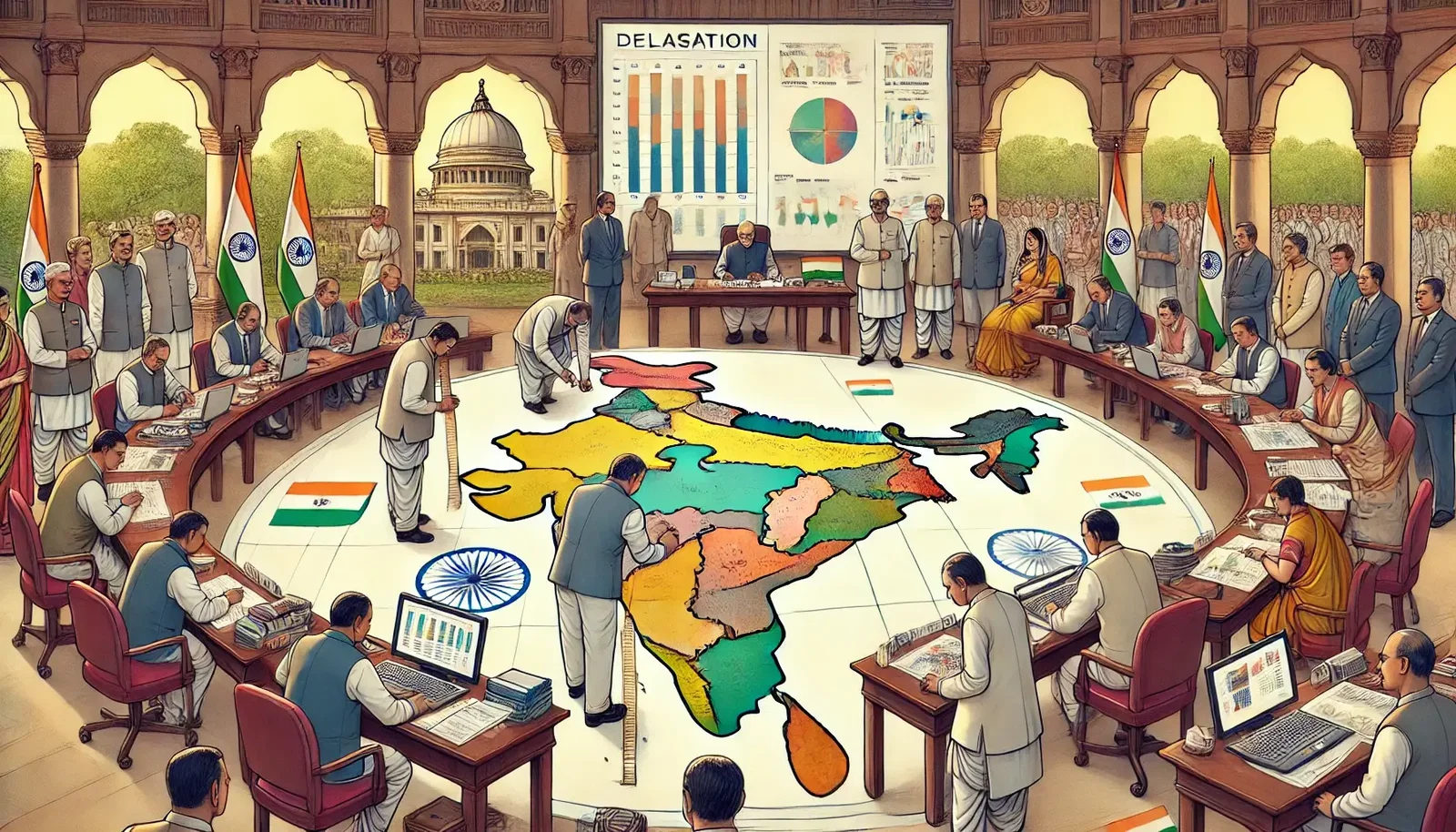
Delimitation in India has emerged as a hotly debated topic, especially in the context of political representation and women’s reservation. Senior Congress leader Shashi Tharoor has sharply criticized the proposed delimitation exercise, likening it to “political demonetisation” and pointing out its possible detrimental impact on Indian federalism. He argues that linking the draw of parliamentary constituencies to the Census and the implementation of women’s reservation creates unnecessary conditions that could complicate the democratic process. As the nation grapples with the political implications of delimitation, it becomes imperative to examine these issues critically. Tharoor’s insights underscore the complexities our government faces as it seeks to balance representation in a rapidly evolving political landscape.
The practice of constituency reconfiguration, commonly referred to as delimitation, plays a crucial role in shaping the political terrain of India. This significant process often sparks discussions around representation, especially concerning women’s inclusion in legislative bodies. Various stakeholders, including political leaders and civic activists, are voicing concerns about potential pitfalls inherent in the delimitation exercise, which could jeopardize India’s federal structure. With Shashi Tharoor’s recent remarks, the discourse surrounding the implications of this redistricting has taken on greater relevance, prompting citizens to reflect on the broader issues of representation and equity. As we delve deeper into these concerns, it’s essential to navigate the interconnected themes of census data challenges and the overarching goal of achieving fair political representation.
Understanding the Political Implications of Delimitation in India
The proposed delimitation exercise in India has sparked significant debate among political leaders, particularly under the lens of its potential political implications. Senior Congress leader Shashi Tharoor has labeled this initiative as a form of “political demonetisation,” indicating that it may hinder the democratic processes rather than enhance them. With delimitation, the redrawing of constituency boundaries is often influenced by census data, which can shift the balance of power among political parties. This reshaping could disproportionately favor certain regions or communities, leading to a distribution of representation that doesn’t accurately reflect the diverse voter base in India.
Critics argue that the linking of women’s reservation to delimitation complicates the matter further. While there is burgeoning support for enhancing women’s representation in Parliament, tying it to the reallocation of constituencies based on partisan interests can dilute its effectiveness. This political maneuvering raises serious questions about the commitment to true inclusivity in governance, as it seems to prioritize political strategies over the essential need for democratic representation and the voice of women in Indian politics.
Shashi Tharoor’s Critique of Delimitation and its Effects on India’s Federal Structure
Shashi Tharoor’s critique of the delimitation process underscores a pivotal concern regarding the integrity of Indian federalism. He warns that the exercise could lead to a tiered form of governance where certain demographics receive disproportionate attention at the expense of others. The intricacies of Indian federalism demand a careful balance in representation, ensuring that all voices—from urban to rural—are adequately represented. Delimitation, if not managed with careful oversight, risks creating a system that favors larger and more politically powerful regions, sidelining smaller or less densely populated areas.
Moreover, the current discourse around delimitation is intertwined with pressing issues arising from census delimitation, as accuracy in census data is paramount for equitable political representation. Any discrepancies in census calculations could have cascading effects on how constituencies are redrawn, thus affecting the distribution of political power. Tharoor’s warning of treating delimitation as a means of political gain rather than a genuine effort towards reform suggests a growing concern among lawmakers regarding the state of democracy in India. Without careful re-evaluation of these processes, the foundational tenets of representation and equality might be jeopardized.
The Intersection of Women’s Reservation and Delimitation Policies
The intersection of women’s reservation and delimitation policies has emerged as a topic of intense discussion, particularly in light of Shashi Tharoor’s remarks. While the push for women’s reservation is a commendable step towards greater gender equality in governance, the condition of linking it with delimitation raises significant concerns. Tharoor’s assertion highlights the dilemma where important social issues are entangled with political maneuvers, potentially undermining the primary aim of increased female representation in the legislative process.
Delimitation tied to census outcomes renders women’s reservation vulnerable to the changing political landscape, which may not always prioritize gender equity. Ultimately, this entanglement risks fostering a situation where women’s representation is used as a bargaining chip in broader political negotiations, thereby threatening the legislative advancements achieved through sustained advocacy. Therefore, achieving a genuine women’s reservation policy must remain distinct from delimitation processes to secure meaningful progress for gender representation in Indian politics.
Analyzing the Impact of Census Delimitation Issues on Representation
Census delimitation issues play a crucial role in determining how effectively representation is allocated within India’s complex political landscape. The accuracy and timeliness of census data are vital for the delimitation process, as they inform the boundaries of legislative constituencies. Any inaccuracies or significant delays in census results can lead to disparities in political representation, skewing power towards certain populations while marginalizing others. Shashi Tharoor’s caution against hastily implementing delimitation underscores the importance of these demographics and the need for fair representation across regions.
Furthermore, the implications of such census-related issues extend beyond mere boundaries; they affect the political aspirations of diverse communities, particularly vulnerable and underrepresented groups. If the delimitation process is not grounded in sound census data, it risks entrenching existing inequalities rather than promoting a more inclusive democracy. Therefore, as policymakers consider the future of delimitation in India, the reliability of census data must be a top priority to ensure equitable representation that truly reflects the nation’s demographic makeup.
The Debate Surrounding Women’s Reservation in the Context of Federalism
The debate surrounding women’s reservation in India brings to light significant discussions about how federalism operates within a parliamentary democracy. Advocates for women’s reservation argue that increasing the number of women in legislative bodies is essential to achieving a just representation that mirrors the country’s diversity. However, Shashi Tharoor’s commentary on the timing of this reservation alongside delimitation efforts raises critical questions about whether true representation or political expediency is being prioritized. This intersection reveals the challenges posed by a federal structure that must adapt to ensure representation genuinely reflects its constituents.
Under India’s federal framework, each state has unique demographics and political climates, leading to varying degrees of representation across the country. The push for women’s reservation, while necessary, must thus consider these regional differences to avoid a one-size-fits-all approach, which could exacerbate feelings of disenfranchisement. The inclusion of women in governance must not only be an afterthought tied to delimitation practices but should instead stand as a separate and unequivocal right, inherently tied to the fundamental principles of democracy.
Critical Perspectives on Political Demonization Associated with Delimitation
Tharoor’s characterization of the delimitation process as “political demonetisation” sheds light on the skepticism surrounding government initiatives that seem overtly strategic. The term metaphorically suggests that just as demonetisation aimed to purge the economy of counterfeit currency, delimitation could, in theory, serve to purify the political landscape. However, the flip side is that these processes can also disenfranchise voters by reshuffling political cards in ways that benefit certain parties over others. Such concerns are paramount when considering how political strategies can overshadow the fundamental rights of citizens to fair representation.
Moreover, the concept of political demonetisation highlights the potential for political manipulation inherent in the delimitation process. As constituency boundaries are redrawn, the chance for gerrymandering increases, where borders may be intentionally drawn to favor specific political interests. This manipulation poses a fundamental threat to democracy and voter empowerment, provoking fears that the voices of ordinary citizens may be lost in the political shuffle. Tharoor’s critique calls for a conscientious approach to delimitation, one that prioritizes transparency and inclusivity over the immediate political gains of a select few.
The Role of Journalists in Shaping Public Discourse on Delimitation
The media plays a crucial role in shaping public discourse around significant political issues like delimitation and women’s reservation. As evidenced by the comprehensive coverage from respected platforms like The Times of India, dedicated journalists are vital in not only reporting the facts but also providing analytical insights into the implications of such policies. By engaging the public through informative content, journalists facilitate a greater understanding of how these processes affect various demographics, thus enriching the democratic dialogue.
Moreover, journalists act as watchdogs in the political landscape, holding power to account while shedding light on the complexities of issues such as delimitation. This accountability is essential, especially as political decisions can have long-lasting impacts on representation in government. Through investigative reporting and thorough analysis of statements made by political figures like Shashi Tharoor, the media ensures that citizens are informed and can engage in meaningful discussions around their rights and representation.
Democratic Representation: The Intersection of Delimitation and Women’s Rights
The pursuit of democratic representation is intricately linked with the debates surrounding delimitation and women’s rights. The challenges raised by Shashi Tharoor about the potential pitfalls of a delimitation process that intertwines women’s reservation with census data illustrate a critical juncture in India’s democracy. Women’s rights are not merely a secondary concern to be linked with political strategies; they are fundamentally integral to the understanding of a democratic society. Ensuring that women have a voice in the corridors of power mandates an independent and direct approach to reservation policies that does not allow for compromise.
As such, the intersection of delimitation and women’s rights reflects broader themes of equity and representation that must be addressed thoughtfully. It requires a commitment from lawmakers to separate matters of gender justice from political calculations. By fostering an environment where women can genuinely participate in political processes on their terms—without being contingent on delimitation outcomes—India can move closer to achieving a representative democracy that values the voices of all its citizens.
Charting the Future of Delimitation in Light of Federal Principles
Looking ahead, the future of delimitation in India must be navigated with a keen awareness of federal principles and the diverse demographics that characterize the nation. As the political landscape continues to evolve, there is an urgent need to ensure that legislative changes do not disregard the complexities of Indian federalism. Delimitation should not be merely a tactical exercise aligned with census data, but rather a thoughtful re-evaluation of how constituencies can be structured to best serve the people they represent.
Furthermore, engaging citizens in the dialogue around delimitation will be essential in building trust in the political system. Public forums, consultations, and discussions can serve as platforms for citizens to voice their concerns and aspirations regarding how their regions should be represented. An approach that prioritizes community engagement over mere political strategy will not only enhance the legitimacy of the delimitation process but also ensure that it aligns with the principles of equitable representation central to India’s democratic ethos.
Frequently Asked Questions
What are the political implications of delimitation in India, particularly regarding women’s reservation?
Delimitation in India refers to the redrawing of boundaries for parliamentary and assembly constituencies. Its political implications are significant, especially concerning women’s reservation. Senior Congress leader Shashi Tharoor recently criticized the government’s approach, calling it ‘political demonetisation’ as it ties women’s reservation to the expansion of Parliament and the new Census data. Tharoor warns that this could complicate the already intricate situation of Indian federalism and potentially hinder genuine women’s representation in politics.
| Key Points |
|---|
| Shashi Tharoor criticized delimitation as “political demonetisation” |
| He linked women’s reservation to the expansion of Parliament and delimitation based on Census |
| Tharoor acknowledged Modi’s support for women’s representation but criticized the accompanying conditions |
| The delimitation exercise poses potential threats to the foundation of federalism |
| Tharoor advised against proceeding with the delimitation exercise, warning of its implications |
Summary
Delimitation in India has emerged as a contentious issue, with senior Congress leader Shashi Tharoor labeling the proposed exercise as “political demonetisation”. This exercise is deeply linked to the issues of women’s reservation and the redefinition of parliamentary constituencies, yet it raises significant concerns about undermining the principles of federalism. Tharoor’s insights bring attention to the complexities involved in the delimitation process, highlighting the potential disruptions it could cause to democratic representation and governance. His warnings emphasize the importance of carefully evaluating the implications of such exercises before moving forward.



























