

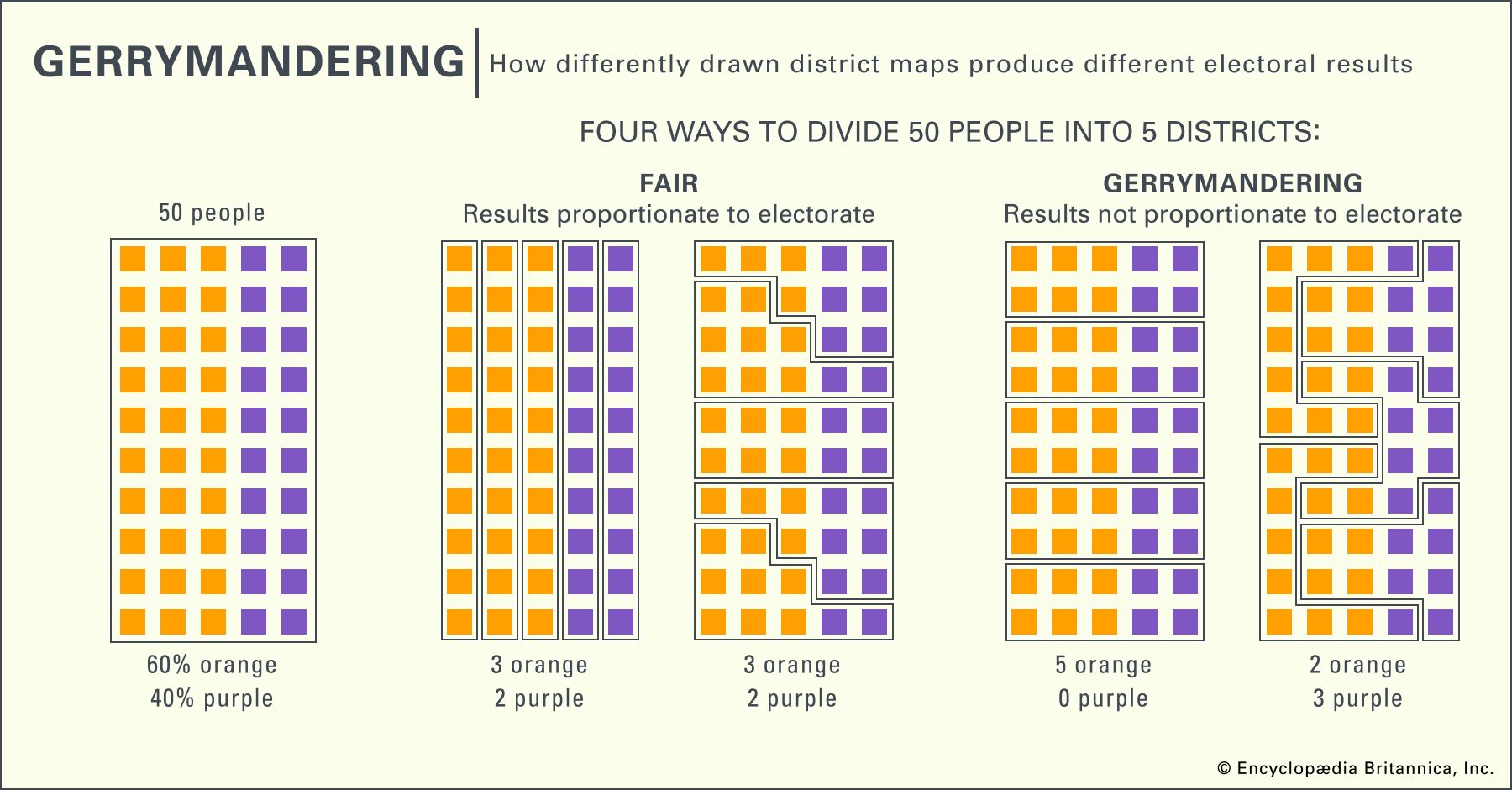
Gerrymandering has emerged as a contentious topic in the context of Indian elections, particularly in the recent delimitation processes in Assam and Jammu & Kashmir. This practice, which involves redrawing electoral boundaries to favor a specific political party, has raised serious concerns about fair representation among diverse communities. As seen in the Assam elections, the new electoral boundaries have been fashioned in ways that critics argue disproportionately diminish Muslim representation, aligning with the ruling BJP’s electoral strategy. Similarly, the redraw of Kashmir constituencies has been perceived as an effort to consolidate the political power of Hindu populations, while undermining that of Muslims. With the upcoming elections, understanding the implications of gerrymandering and the delineation of electoral constituencies is more crucial than ever.
The manipulation of electoral maps, often referred to as partisan boundary drawing, has sparked significant debate in democratic societies. In India, recent electoral reforms, particularly in regions such as Assam and Jammu & Kashmir, have highlighted the controversial nature of this practice. Observers have noted that such boundary adjustments often serve to entrench the political advantage of one party while marginalizing others. The ongoing discourse on the delimitation of constituencies raises critical questions about the integrity of electoral systems and the representation of minority communities. As election season approaches, the focus on these electoral boundaries and their ramifications on voter power becomes increasingly vital.
Understanding Gerrymandering: The Effect on Electoral Fairness
Gerrymandering, a term widely used in electoral politics, refers to the practice of redrawing electoral boundaries to favor a specific political party or group. This tactic can significantly skew representation in legislative bodies and is particularly evident in recent delimitation exercises in Assam and Jammu and Kashmir. Critics argue that these exercises were manipulated to reduce Muslim representation while enhancing the electoral prospects of the ruling Bharatiya Janata Party (BJP). The concern lies in the fact that such practices undermine the core democratic principle of fair and equal representation in a diverse society.
In electoral systems, the art of mapping boundaries should ideally reflect the demographic and geographical realities of a region. However, gerrymandering often results in oddly shaped districts that maximize the voting power of certain groups at the expense of others. This inherently unfair practice raises questions about the legitimacy of elections and the efficacy of representative democracy, as seen in Assam’s 2023 delimitation, where Muslim-majority seats were merged or abolished, consolidating electoral power into larger Hindu demographics favored by the BJP’s political strategies.
The Assam Delimitation: Shifting Political Power Dynamics
The delimitation exercise conducted in Assam raised significant eyebrows among political analysts and civil society. Observers described it as a deliberate attempt to alter the electoral landscape in favor of the BJP, resulting in a marked reduction in Muslim representation. By abolishing constituencies that had historically elected Muslim leaders and re-drawing boundaries to favor Hindu-majority regions, the exercise has drastically shifted the political balance in the state. This has led to concerns that the principle of equal representation is being compromised for political gains.
Critical voices from opposition parties have highlighted the ramifications of Assam’s delimitation on democratic processes. With the state government acknowledging a strategic push to enhance the representation of ‘indigenous’ communities, many fear that this approach may exacerbate communal tensions and foster divisions within the electorate. Moreover, the constitutional mandate that seeks to ensure equitable representation based on population has seemingly been ignored, as seen with significant disparities in voter populations across new constituencies, thus raising the perceived legitimacy of the electoral process.
Kashmir’s Delimitation Controversy: A Marginalized Voice
The delimitation commission’s decisions in Jammu and Kashmir have sparked widespread discontent, particularly among the Muslim population. Following the abrogation of the region’s special status, the new electoral framework has been criticized for disproportionately benefiting the Hindu-majority Jammu region. By adding six seats to Jammu and only one to Kashmir, the commission’s actions have deepened fears of political marginalization for the historically dominant Muslim demographic. This has led many to argue that the new electoral map could further entrench disparities in power and representation.
Critics assert that the electoral reconfiguration not only disregards the demographic realities but also strategically undermines the Muslim community’s ability to vote cohesively. For instance, gerrymandering can dilute Muslim votes by merging communities with differing interests and electing candidates who may not reflect the majority’s views. Such delineations threaten the integrity of elections and the long-held aspirations of communities in Kashmir for fair representation, igniting tensions that could destabilize the region further.
The Role of Electoral Boundaries in Democratic Representation
Electoral boundaries play a crucial role in shaping the political landscape of any democracy. When boundaries are drawn fairly, they can promote representation by ensuring that different demographic groups have a voice in government. However, when gerrymandering infiltrates this process, it can lead to significant imbalances where the voices of certain groups are systematically silenced or diminished. This is particularly concerning in regions like Assam and Kashmir, where religious and ethnic divisions are pronounced.
The manipulation of electoral maps not only affects individual elections but can also have long-term consequences for governance and national unity. If specific communities perceive that their representation is being intentionally eroded, it may lead to a loss of faith in the political process. In Assam, the redrawing of constituencies has led to accusations of disenfranchisement among Muslim populations, while Kashmir’s new electoral configurations have raised similar concerns about marginalization, highlighting the pressing need for impartial and fair delimitation processes.
BJP’s Electoral Strategy: Securing Votes through Boundary Adjustments
The Bharatiya Janata Party (BJP) has been accused of employing strategic electoral maneuvers, including gerrymandering, to solidify its influence in regional politics. By targeting areas with significant Muslim populations for delimitation that diminishes their representation, the party seems to be attempting to secure a more favorable voting landscape. This calculated approach not only reflects a broader electoral strategy but also raises ethical questions about the sacrifice of democratic ideals for partisan gain.
As the BJP seeks to strengthen its foothold across India, these delimitation exercises are seen as part of a larger strategy to create a political environment conducive to its success. By altering the demographics of constituencies to favor Hindu voters, the party’s electoral strategy aims to marginalize dissenting voices from minority communities. This trend has the potential to shift the political narrative in regions like Assam and Kashmir, making it crucial for democratic institutions to be vigilant in preserving electoral integrity.
Implications of Delimitation on Minority Communities
The implications of delimitation exercises extend far beyond mere political calculations; they have profound effects on the lives of minority communities within affected regions. In both Assam and Kashmir, the redrawing of electoral boundaries has significantly diminished the power of Muslim voters, leading to fears of systemic marginalization. This erosion of political representation can engender a sense of disenfranchisement among communities that feel their voices are no longer being heard in the legislative process.
As political representation dwindles, minority communities may face increased challenges in advocating for their rights and interests within regional governance. The consequences of gerrymandering can ripple through societal dynamics, fostering divisions and paving the way for communal tensions. It becomes imperative for civil society and political leaders to address these issues and seek ways to ensure that all communities have a stake in the democratic process, thus fostering an inclusive political environment.
Legal Challenges Against Gerrymandering in India
The rise of gerrymandering practices in India has prompted legal challenges rooted in the quest for electoral justice. Stakeholders, particularly from marginalized communities, have taken to the courts to contest delimitation exercises that they perceive as biased. In Assam and Kashmir, various opposition parties and civil rights groups have filed petitions to address the alleged violations of constitutional norms, echoing calls for fair representation in the electoral process.
These legal battles signal an increasing awareness and resistance against unfair electoral practices, as people assert their rights to contest the integrity of the democratic system. The outcomes of such litigation could set critical precedents for future delimitation exercises, potentially curbing partisan manipulation of electoral boundaries. Ultimately, it highlights the need for a vigilant judiciary that upholds democratic values and ensures that the electoral map truthfully reflects the electorate it is meant to represent.
The Future of Political Representation in Assam and Kashmir
Looking ahead, the future of political representation in Assam and Kashmir hangs in the balance as the ramifications of recent delimitation exercises unfold. Given the existing tensions surrounding gerrymandering and calls for equitable representation, it is essential for regional stakeholders to advocate for transparency and inclusivity in the political process. How communities adapt to these changes will significantly determine the assessment of their political power and influence in upcoming elections.
Moreover, the experiences of Assam and Kashmir serve as critical case studies for understanding the broader impacts of redistricting on minority rights and representation in India. The necessity for a balanced approach that upholds democratic integrity while accommodating diverse voices cannot be overstated. As citizens become increasingly politically aware, the demand for fair electoral representation is likely to intensify, prompting necessary reforms in the delimitation process.
Frequently Asked Questions
How does gerrymandering affect delimitation in Assam elections?
Gerrymandering can significantly alter the political landscape during delimitation in Assam elections. Critics argue that the recent delimitation exercise favored Hindu-majority communities while reducing Muslim representation, impacting the overall fairness and balance of electoral boundaries.
What are the implications of gerrymandering on electoral boundaries in Jammu and Kashmir?
The implications of gerrymandering on electoral boundaries in Jammu and Kashmir have resulted in a diminished political voice for the Muslim population. The recent delimitation increased Hindu representation by adding seats in Jammu while providing minimal changes to the Kashmir Valley, raising concerns about equitable representation.
Why are Assam and Jammu and Kashmir cited in discussions about BJP electoral strategy related to gerrymandering?
Assam and Jammu and Kashmir are frequently mentioned in discussions about BJP electoral strategy because the delimitation exercises in these regions are believed to have been manipulated to benefit the BJP. This manipulation through gerrymandering affects constituency demographics and reduces representation for minorities.
What role does delimitation play in the context of gerrymandering in Indian elections?
Delimitation plays a crucial role in gerrymandering by redefining electoral constituencies, which can intentionally disenfranchise certain voter groups. In India, recent delimitation in states like Assam and Jammu and Kashmir has raised alarms over the manipulation of electoral boundaries to favor specific political outcomes.
How has the gerrymandering process been perceived in the context of Assam’s 2023 elections?
The gerrymandering process in Assam’s 2023 elections has been perceived negatively by critics, who argue that it was designed to diminish Muslim political power by redrawing constituencies to concentrate Muslim voters, ultimately skewing representation in favor of the ruling party.
What are the consequences of gerrymandering for Muslim representation in Assam and Kashmir?
The consequences of gerrymandering for Muslim representation in Assam and Kashmir have been substantial, leading to reduced electoral seats for Muslim-majority areas and potentially diluting the political influence of Muslim voters in both regions.
How do political analysts view the relationship between delimitation and gerrymandering in India?
Political analysts view the relationship between delimitation and gerrymandering in India as a critical issue that can undermine democratic processes. The manipulation of electoral boundaries during delimitation can lead to unfair representation and entrench existing power dynamics among political parties.
What steps can be taken to address gerrymandering in electoral processes?
To address gerrymandering in electoral processes, measures such as independent oversight of delimitation commissions, adherence to transparent criteria for constituency boundaries, and ensuring all demographic groups are fairly represented can be implemented to uphold electoral integrity.
| Key Points | Details |
|---|---|
| Delimitation Commission Formation | Created to redraw Lok Sabha constituencies, increasing seats from 543 to 850, reserving one-third for women. |
| Criticism of Gerrymandering | Rahul Gandhi and others allege that recent exercises in Assam and Jammu & Kashmir favored the BJP and reduced Muslim representation. |
| Impact on Muslim Representation in Assam | Delimitation led to a significant reduction in Muslim-majority assembly seats, decreasing representation from around 30 to 23. |
| Controversial Redrawing of Boundaries | Constituencies were redrawn without regard for geographical norms, effectively diluting the Muslim vote. |
| Kashmir Delimitation Effects | After losing special status, Kashmir got only one additional seat while Jammu received six, reducing Muslim political power. |
| Accusations of Bias | The delimitation process is perceived as part of a larger strategy by the BJP to shift electoral power toward Hindu demographics in these regions. |
Summary
Gerrymandering has emerged as a contentious issue in the recent delimitation exercises in Assam and Jammu & Kashmir, where political boundaries have been redrawn in a manner deemed to disadvantage Muslim representation. The adjustments have led to a significant reshaping of constituencies, raising concerns about fair representation as they favor Hindu communities and the BJP. As a result, these exercises are viewed not just as administrative reforms but as strategies that intricately influence political power dynamics within the regions.



























