

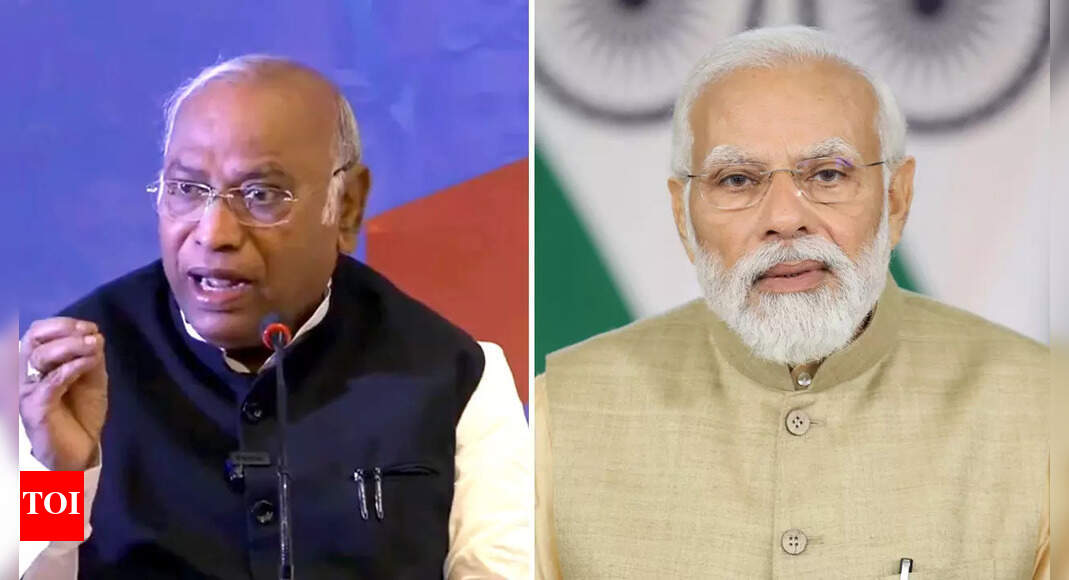
The recent Kharge Modi controversy has set the political stage ablaze, particularly with the ongoing elections in India. Congress president Mallikarjun Kharge’s controversial remarks labeling Prime Minister Narendra Modi as a “terrorist” have sparked widespread debate across the political spectrum. In his subsequent Kharge clarification, the Congress leader emphasized that his comments were taken out of context, claiming that Modi often resorts to threats. The BJP response to Kharge’s statements has been swift, branding him as “frustrated” and reflecting a desperate political strategy as the election season heats up. This incident not only showcases the intense rivalry in Indian politics but also raises questions about the state of discourse during the electoral process.
In the realm of Indian politics, the dispute surrounding Kharge’s remarks about Modi has ignited a fierce conversation concerning political civility. The term “terrorist comment” features prominently in the dialogue, as it raises pressing questions about accountability and the rhetoric employed by politicians today. Meanwhile, the BJP’s reaction to this controversy underscores a broader strategy in the face of mounting electoral challenges, highlighting the adversarial nature of contemporary political engagement. As various parties navigate this contentious landscape, the implications for upcoming elections remain significant, bringing the focus back to the evolving tactics and narratives in political discourse.
The Kharge Modi Controversy: A Political Storm in Indian Politics
The recent comments made by Congress president Mallikarjun Kharge about Prime Minister Narendra Modi have ignited a political firestorm in Indian politics. Kharge’s remarks, where he referred to Modi as a ‘terrorist,’ were immediately met with a robust backlash from Bharatiya Janata Party (BJP) leaders and supporters. This controversy underscores the escalating tensions as the election draws nearer, showcasing how derogatory remarks can potentially polarize the electorate. The BJP’s response was swift, labeling Kharge’s comments as a reflection of frustration rather than a substantial political argument. Such name-calling not only distracts from core issues but also raises questions about the Congress party’s political strategy in a highly competitive electoral landscape.
In the midst of the backlash, Kharge issued a clarification asserting that he never explicitly labeled Modi a terrorist but instead commented on the Prime Minister’s political tactics, claiming that Modi ‘always threatens.’ This clarification may be an attempt to mitigate the fallout and refocus the discourse on the perceived aggressions in political rhetoric. However, the impact of such statements can linger in voters’ minds, shaping how different political narratives are perceived, especially in the context of the upcoming elections. The BJP has seized this moment to present Kharge as a frustrated leader lacking viable solutions, reinforcing their narrative that Congress is backpedaling in the face of increasing electoral pressure.
This controversy is not merely an isolated incident; it belongs to a larger pattern in Indian politics where personal attacks often eclipse substantive debate. The use of terms like ‘terrorist’ as political weapons can detract from meaningful discussions regarding governance, economic policies, and national security. It raises critical questions about the integrity of political discourse in India and the extent to which leaders prioritize party allegiance over civil dialogue. As the elections approach, Congress must navigate these turbulent waters carefully to avoid alienating undecided voters who may be seeking genuine engagement rather than personal vilification.
Furthermore, this incident reflects deeper ideological divisions within Indian politics. As BJP leaders emphasize discipline and a unified front, Congress could risk further criticism if it fails to articulate a cohesive narrative amid the chaos. The implications of the Kharge Modi controversy extend beyond immediate reactions; they can play a pivotal role in shaping the electoral strategies of both parties as they vie for voter attention and approval amidst a fractious political environment.
BJP’s Response to Kharge’s Controversial Remarks and Implications for 2024 Elections
The reaction from the BJP in response to Kharge’s controversial remarks has been characteristically sharp and pointed. BJP spokespersons quickly labeled Kharge as a leader overwhelmed by frustration, accusing him of resorting to personal attacks when failing to present a clear political vision. This reaction not only aims to defend Modi’s reputation but also serves to bolster the party’s image of strength and resilience in the face of adversity. The BJP’s strategy in crafting a narrative around Kharge’s comments indicates their adeptness at turning a controversy to their advantage, portraying the Congress party as disorganized and desperate as elections approach. Such tactics are typical in the heat of Indian election rhetoric, where each party looks for opportunities to highlight perceived weaknesses in their opponents.
As the political landscape evolves, the BJP’s framing of Kharge’s remarks could become a key element of their campaign strategy leading into the 2024 elections. By highlighting the Congress president’s gaffe, the BJP seeks to galvanize their base and potentially sway undecided voters by emphasizing stability versus chaos. This tactic could resonate well, considering the electorate often craves certainty during turbulent times characterized by economic fluctuations and regional tensions. As the BJP amplifies this narrative, it also places the Congress party in a defensive position, compelling them to recalibrate their public messaging to regain control of the political narrative.
Amidst the backlash, Congress must strategically navigate these challenging waters to not only clarify its positions but also to redefine its political strategy. The reactions from BJP leaders illustrate a broader trend in Indian political discourse that often prioritizes sensationalism over substance. With the elections looming, this controversy serves as a compelling reminder of the importance of articulating clear policies and maintaining a focused campaign strategy. Congress needs to assess whether this incident will further alienate their voter base or if it could somehow reinvigorate discussions about their core values and objectives moving forward.
The stakes are indeed high as both parties prepare to make their pitch to Indian voters. The handling of this controversy could very well set the tone for the political battle ahead. Congressional leaders must swiftly address the narrative while keeping voters engaged on the issues that truly matter, thus ensuring they are not overshadowed by the uproar surrounding Kharge’s comments. Achieving this balance will be critical to their success in the upcoming elections, as voters look for more than just rhetoric but a vision for India’s future.
Frequently Asked Questions
What led to the Kharge Modi controversy regarding the terrorist comment?
The Kharge Modi controversy stems from Congress President Mallikarjun Kharge’s remarks where he referred to Prime Minister Narendra Modi as a ‘terrorist.’ This statement was made during a particularly heated election campaign in India and prompted significant backlash, leading Kharge to later clarify that he never intended to label Modi as a terrorist, but instead was commenting on Modi’s tendency to threaten political opponents. The situation reflects the heightened tensions in Indian politics during the election season.
| Key Points | Details |
|---|---|
| Kharge’s Initial Comment | Mallikarjun Kharge referred to PM Modi as a ‘terrorist’, which sparked immediate controversy. |
| Clarification Made | Kharge later clarified his remark, insisting he never labeled Modi a terrorist but stated that Modi often makes threats. |
| Political Implications | The comments and subsequent clarifications are viewed as politically charged, especially with the elections approaching. |
| BJP’s Reaction | The BJP reacted strongly, labeling Kharge as frustrated and suggesting that such comments reflect political weakness. |
Summary
The Kharge Modi controversy has stirred significant political discourse in India, particularly as it unfolds in an election season. The incident started when Congress president Mallikarjun Kharge referred to Prime Minister Narendra Modi as a ‘terrorist’, a statement that he later clarified, asserting he meant Modi often threatens others. This exchange highlights the contentious nature of political dialogue in India’s current landscape, where name-calling is frequently seen as an indication of desperation rather than a show of strength. The BJP’s swift response, branding Kharge as frustrated, indicates the sensitivity surrounding such allegations and the implications they hold for the parties involved.



























