

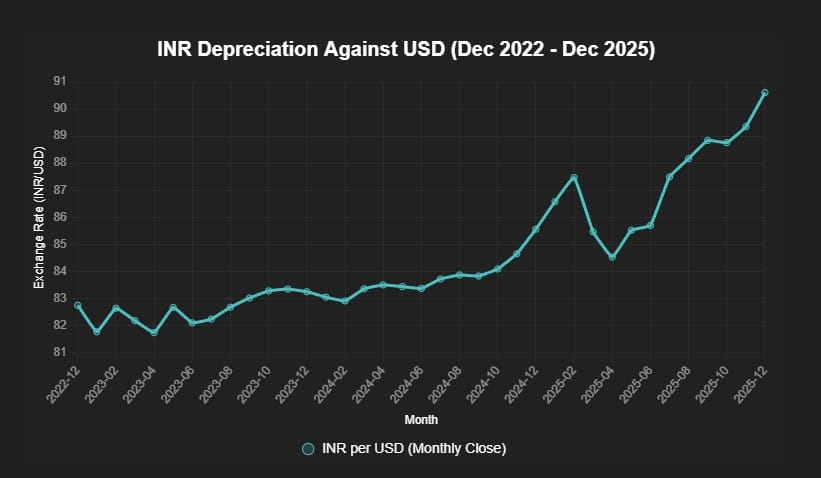
Rupee depreciation has become a pressing issue for investors and the economy alike, as it directly affects the purchasing power and financial strategies of individuals and businesses. In the foreign exchange market, the Indian Rupee (INR) has experienced a notable decline, with an alarming depreciation rate of over 8% in a single fiscal year. This currency weakening raises concerns, especially for policy-makers and investors looking to navigate the complexities of their investment strategies amidst fluctuating exchange rates. The impact on investments can be significant, as a stronger dollar can make imported goods more expensive, affecting everything from inflation to profit margins for companies heavily reliant on foreign products. Understanding the dynamics of rupee depreciation is crucial for developing a resilient investment approach that can withstand these economic shifts.
The recent decline of the Indian currency has sparked debates among economists and investors, concerning its ripple effects on the financial landscape. Often referred to as currency devaluation, this trend signifies a shrinking value of the Rupee against major global currencies, particularly the U.S. Dollar. Such fluctuations can alter investment decisions and strategies, leading to a warranted reevaluation of incurred risks and returns. Stakeholders must remain vigilant as shifts in the foreign exchange environment can create both challenges and opportunities in the realms of domestic and international finance. It becomes imperative for investors to strategically adjust their portfolios in response to these currency movements to safeguard and enhance their investment returns.
Understanding Rupee Depreciation and Its Causes
Rupee depreciation refers to the decline in the value of the Indian Rupee (INR) against foreign currencies, particularly the U.S. Dollar. This phenomenon is often attributable to factors such as India’s trade deficit, which has led to increased imports that surpass exports, creating a strain on the currency. Additionally, geopolitical tensions and changes in global economic conditions can exacerbate this situation, leading to a significant weakening of the Rupee over time.
In recent fiscal cycles, we have observed that the INR’s depreciation rate has accelerated, with an 8.45% decrease recorded between March 2025 and March 2026. Such steep declines are concerning as they reflect broader economic vulnerabilities and can indicate underlying issues within the domestic economy, including inflation, increased debt levels, and changes in foreign investment flows.
Impact of Currency Weakening on Foreign Investments
The depreciation of the Rupee has a multifaceted impact on foreign investments in India. For foreign investors, a weakening currency can make investment opportunities more attractive as goods and services become cheaper. However, this also carries a risk; if the Rupee continues to lose value, investors may fear that their returns will be eroded when converted back to their home currencies. As a result, some may delay or withdraw their investments, leading to further volatility in the market.
Conversely, a depreciating local currency can deter foreign direct investments (FDI), as international players become wary of the potential for currency risk. This can indirectly affect domestic investments, as reduced foreign confidence can lead to a slowdown in economic growth. Therefore, businesses and policymakers must strategize accordingly to create an environment conducive to stabilizing the Rupee while encouraging sustainable foreign investment.
Investment Strategies Amidst Rupee Depreciation
In light of continued Rupee depreciation, investors are advised to reassess their investment strategies. Embracing a diversified portfolio can be a prudent approach to mitigate risks associated with currency fluctuations. By investing in a variety of asset classes—both domestic and international—investors can cushion their portfolios against potential losses stemming from a weak currency.
Moreover, implementing hedging strategies, such as currency options or futures, can also protect against the adverse effects of currency weakening. Investors may explore these instruments to lock in exchange rates or cover potential losses. A thorough understanding of the foreign exchange market and how changes in the value of the INR can affect investments is crucial for developing robust investment strategies in today’s economic landscape.
Navigating the Foreign Exchange Market during Rupee Depreciation
The foreign exchange market plays a critical role in how currency depreciation impacts the broader economy. As the INR depreciates, the demand for foreign currencies increases, leading to more fluctuations and potential disruptions in the exchange rates. Investors must remain vigilant and informed about global economic trends, currency movements, and geopolitical developments that may influence the Forex market.
Moreover, an understanding of market sentiment can help investors anticipate shifts in the foreign exchange landscape. By analyzing trends in currency pairs, investors can position themselves accordingly, whether that means adjusting their trading strategies or reallocating assets in response to anticipated Rupee movements. Hence, staying updated and reactive to changes in both the local and global economy is pivotal in navigating the Forex market effectively.
Economic Consequences of Persistent INR Depreciation
Persistent INR depreciation can lead to cascading economic consequences, significantly impacting inflation rates and purchasing power. As import costs rise due to a weaker Rupee, consumers may soon face higher prices for essential goods, which can lead to inflationary pressures throughout the economy. This can deter spending and consumption, thereby stalling economic growth and leading to a vicious cycle.
Additionally, decreased purchasing power can affect the overall standard of living, as lower-income households are often hit hardest by inflation. Policymakers must closely monitor these changes and implement corrective measures, such as adjustments in monetary policy, to stabilize the currency and manage inflation effectively. Understanding these economic consequences helps investors make more informed decisions regarding their investment strategies.
Long-term Outlook for Investments with Currency Fluctuations
The long-term outlook for investments amidst currency fluctuations is a crucial concern for investors and economists alike. While short-term volatility can present challenges, a measured perspective reveals opportunities for growth. As India continues to develop economically, the potential for recovery and stabilization of the Rupee could create favorable conditions for investors willing to navigate market uncertainties.
Strategically, investors may look into sectors that could benefit from a stable or strengthening currency in the long run. Companies involved in exports may experience improved margins when the Rupee strengthens, making them attractive investments. Thus, a comprehensive understanding of how currency fluctuations correlate with market sectors can inform long-term investment decisions.
The Role of Government Policies in Mitigating Currency Depreciation
Government policies play a pivotal role in addressing the issues surrounding Rupee depreciation. Effective monetary and fiscal policies can help stabilize the currency, restore investor confidence, and stimulate economic growth. The Reserve Bank of India (RBI) can intervene in the foreign exchange market to curb excessive volatility and ensure that the Rupee does not fall to unsustainable levels.
Additionally, governments can focus on enhancing trade policies, boosting exports, and reducing the trade deficit to provide long-term support for the Rupee. By implementing structural reforms and encouraging foreign investments, the government can create a more favorable economic environment that lessens the impact of currency weakening on the overall investment landscape.
Investing in a Weakening Currency: Opportunities and Risks
Investing in a weakening currency presents both opportunities and risks that require careful consideration. Currency depreciation can create favorable entry points for certain assets, especially in a growing economy like India. Investors may capitalize on lower asset prices to secure desirable investments, potentially leading to significant returns once the currency stabilizes.
However, investors must also be wary of the risks associated with this strategy. A continued decline in the currency can erode investments’ value, leading to increased losses. Therefore, having a well-defined risk management strategy is crucial for anyone looking to navigate the complexities of investing in an environment characterized by currency fluctuations.
The Interconnection Between Inflation and Rupee Valuation
Inflation plays a critical role in determining the valuation of the Rupee, as it influences purchasing power and investor sentiment. As inflation rises, the real value of the Rupee diminishes, compelling the currency to depreciate further. This interconnection means that policymakers must strike a delicate balance between stimulating economic growth and controlling inflation to maintain currency stability.
In addition, they must consider how inflation impacts foreign investments, as higher inflation can deter investment due to concerns over the currency’s weakening potential. Understanding the relationship between inflation and Rupee valuation is essential for constructing and executing sound investment strategies in today’s fluctuating economic climate.
Frequently Asked Questions
What is the impact of rupee depreciation on investments in India?
Rupee depreciation can significantly affect investments in India by increasing import costs, which can lead to inflation. This may adversely impact domestic companies, particularly those reliant on foreign goods. As the INR weakens, foreign investors may react cautiously, affecting the equity market. Consequently, investors might need to adjust their investment strategy to hedge against currency fluctuations.
How does INR depreciation relate to currency weakening and investments?
INR depreciation refers specifically to the reduction in the value of the Indian Rupee compared to other currencies, a form of currency weakening. This situation can lead to higher costs for imports and may lead to decreased investor confidence, thereby impacting investment returns. Investors should consider how currency fluctuations might influence their investment strategy, especially if they hold assets directly linked to foreign currencies.
What are the implications of foreign exchange rates on rupee depreciation?
Foreign exchange rates directly affect rupee depreciation as they determine the INR’s value against other currencies like the U.S. Dollar. A weakening of the rupee can lead to higher costs for foreign goods, increasing inflation and affecting investment returns. Investors need to monitor foreign exchange trends to make informed decisions about their investment strategies, especially in sectors that are sensitive to currency changes.
Can rupee depreciation affect the stock market and investment opportunities?
Yes, rupee depreciation can influence the stock market. A weaker rupee may lead to rising costs for businesses that depend on imported materials, which could result in decreased profits and lower stock prices. Investors should assess how currency depreciation might affect specific sectors and their overall investment strategy, looking for opportunities that could benefit from a weaker rupee, such as export-oriented companies.
How should investors adjust their investment strategy in light of rupee depreciation?
Investors should consider diversifying their portfolios to mitigate risks associated with rupee depreciation. This could involve investing in sectors that benefit from a weakening currency, such as export-oriented businesses or commodities. Additionally, hedging strategies may be employed to protect against currency risk, allowing investors to maintain value even in times of INR depreciation.
| Aspect | Details |
|---|---|
| Rupee Depreciation Overview | The Indian Rupee (INR) has depreciated by an average of 2.5% to 3% per annum against the USD over the past few decades. |
| Current Depreciation | In FY 2025-26, the INR depreciated from 85.53 to 92.76, a decline of 8.45%. An intermediate low was recorded at 94.71, marking a 10.73% depreciation. |
| Impact on Economy | Higher imports than exports lead to currency depreciation as a means of managing trade imbalance. |
| Investor Perspective | Investors need to understand that fluctuations in the rupee, including depreciation, are common and should not be a source of undue concern. |
Summary
Rupee depreciation is a significant concern for many investors, particularly when it impacts the economy and trade balance. As the Indian Rupee continues to weaken, it reflects the underlying issues of higher imports relative to exports, which can lead to increased inflation and affect investment strategies. Understanding these dynamics allows investors to navigate the market more effectively and make informed decisions.



























