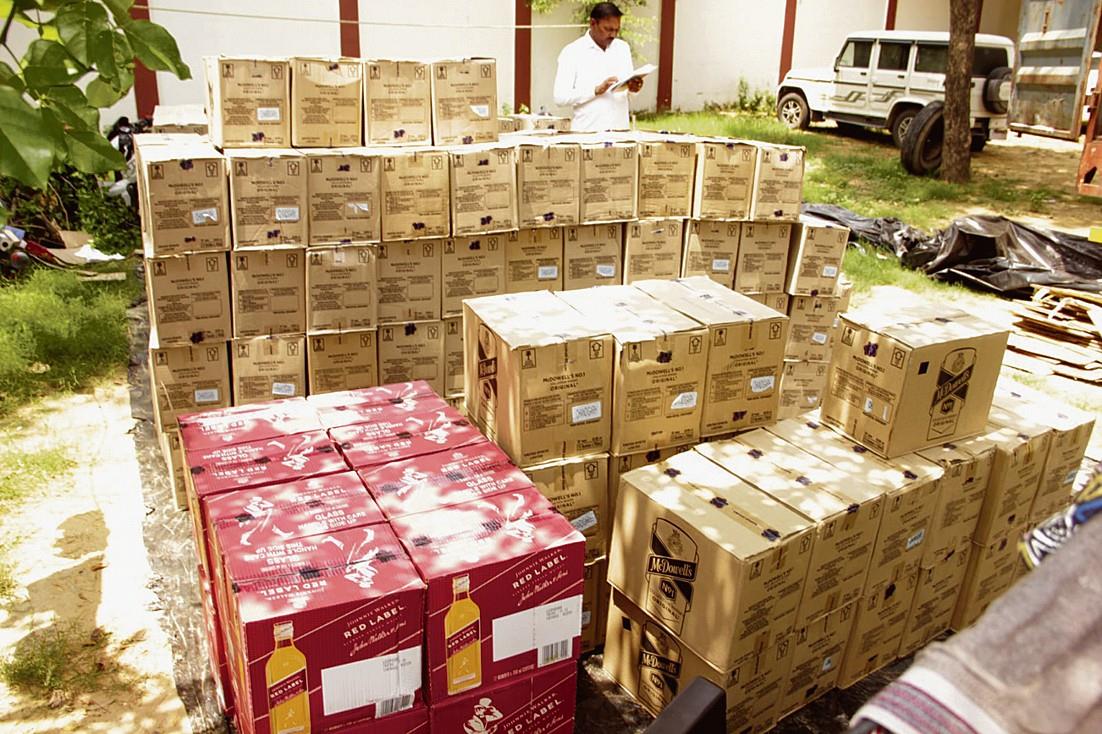
The recent liquor smuggling investigation has unveiled a significant interstate smuggling operation in Arunachal Pradesh, drawing the attention of the Enforcement Directorate (ED). This operation is believed to involve a complex network that not only deals with liquor trafficking but also ties into larger issues of money laundering. Under the stringent regulations of the Prevention of Money Laundering Act (PMLA), the ED has initiated thorough searches at multiple locations to dismantle this illicit scheme. The investigation highlights how certain groups exploit tax disparities between states to carry out their illegal activities, showcasing the dire need for stronger enforcement measures. As authorities push for accountability, this case emphasizes the growing concern over organized crime and its impacts on local economies.
In the midst of rising criminal activities, authorities have launched a thorough inquiry into a suspected liquor trafficking ring operating across state lines. This crackdown is part of a larger effort to combat money laundering, especially with regards to illicit liquor dealings that bypass regulations. The Enforcement Directorate has taken significant steps under the auspices of the Prevention of Money Laundering Act, leading raids and searches to uncover the extent of these operations. The situation spotlights the intricate relationships between tax loopholes and interstate illegal trade, further complicating law enforcement’s efforts. With the potential ramifications of these discoveries, officials are determined to address the broader implications of this organized smuggling activity.
Understanding the Liquor Smuggling Investigation in Arunachal Pradesh
The Enforcement Directorate (ED) has recently intensified its operations targeting a significant liquor smuggling investigation in Arunachal Pradesh. This inquiry focuses on a complex network known for its interstate smuggling operations. Authorities have uncovered evidence suggestive of a larger criminal syndicate that exploits tax disparities between states, facilitating the illegal transportation of liquor products. Such illicit activities not only undermine local economies but also pose substantial risks to law enforcement efforts in curbing organized crime.
In a coordinated effort, the ED executed searches at nine strategic locations, which highlights the seriousness of the situation. This investigation is not just isolated to liquor smuggling; it encompasses a broader picture of money laundering practices tied to these operations. The strategic enforcement actions are aimed at dismantling the syndicate’s financial flows, and this initiative aligns with ongoing applications of the Prevention of Money Laundering Act (PMLA) in India.
The Role of the Enforcement Directorate in Combatting Interstate Smuggling
The Enforcement Directorate plays a crucial role in addressing cases of money laundering and illegal smuggling, particularly in a diverse and vast country like India. The ED’s involvement in the liquor smuggling investigation signifies a proactive approach to maintain law and order while ensuring compliance with tax regulations. By targeting these operations more aggressively, the agency aims to disrupt the intricate financial networks that often comprise drug trafficking and other illegal ventures.
Furthermore, the ED’s actions underscore the importance of collaboration among various law enforcement agencies as they tackle these multifaceted crimes. The ongoing PMLA investigation into the liquor smuggling case also emphasizes the need for comprehensive strategies that encompass financial laws and regulations, reflecting the complex nature of modern-day smuggling operations. Enhanced cooperation with local authorities in Arunachal Pradesh will be vital to develop a coherent strategy for eradication of such illegal practices.
Implications of Tax Differences on Liquor Smuggling
The tax differences across various states in India have been identified as a critical factor contributing to the rise of interstate liquor smuggling. Criminal syndicates exploit these discrepancies, navigating through legal loopholes to create lucrative smuggling routes that directly affect the state’s revenue. Understanding these tax variations is essential for devising better regulatory frameworks that can mitigate opportunities for illicit activities.
Moreover, addressing these issues requires a collaborative effort between state governments and federal enforcement agencies. It’s crucial for stakeholders involved in liquor distribution to recognize the ripple effects of tax policy on illegal smuggling. The Enforcement Directorate’s investigation into money laundering linked to liquor smuggling underscores the importance of an integrated approach that considers not just enforcement, but also effective policy reform to handle these longstanding challenges.
The Prevention of Money Laundering Act (PMLA) and Its Impact
The Prevention of Money Laundering Act (PMLA) serves as a critical legal framework in India to combat money laundering and financial crimes. The act empowers the Enforcement Directorate to investigate cases linked to money laundering, thereby providing a robust mechanism for addressing financial irregularities that stem from illegal activities like liquor smuggling. The current investigation in Arunachal Pradesh is a prime example of how the PMLA guides the actions of the ED in establishing accountability within financial networks.
Notably, the PMLA not only facilitates investigations but also imposes stringent penalties for violations, thereby acting as a deterrent against money laundering activities. The ongoing operations in Arunachal Pradesh exemplify the enforcement of these regulations, linking the illicit liquor trade with larger financial crimes. As awareness grows regarding the itnerplay between money laundering and smuggling, the significance of the PMLA becomes ever more pivotal in shaping policy responses and enforcement measures.
Challenges in Tackling Interstate Liquor Smuggling
Despite rigorous enforcement measures, tackling the challenges posed by interstate liquor smuggling remains complex. The geographical layout and varying state laws create hurdles for law enforcement agencies, often leading to ineffective crackdowns on smugglers. Additionally, the evolving tactics employed by criminal syndicates further complicates enforcement operations, necessitating real-time intelligence sharing and proactive enforcement strategies.
Moreover, the socio-economic impact of liquor smuggling cannot be overlooked. It often leads to increased crime rates and affects public health, putting additional strain on legal and social systems. Recognizing these layered challenges, it’s paramount that local and national authorities bolster their approach by incorporating community awareness programs alongside enforcement efforts, promoting both deterrence and education.
The Financial Landscape of Liquor Smuggling and Money Laundering
The financial landscape surrounding liquor smuggling and money laundering reflects a significant underground economy that thrives in exploiting legal loopholes. The money generated from illegal liquor sales not only fuels the smuggling syndicate but also infiltrates legitimate business channels, complicating efforts to trace illicit funds. This has made it essential for regulatory bodies like the Enforcement Directorate to adopt a comprehensive understanding of financial practices linked to these crimes.
As the ED continues its detailed investigation in Arunachal Pradesh, there is an increasing need to focus on financial flows associated with liquor smuggling. Identifying these flows allows for better enforcement of financial scrutiny measures as mandated by the PMLA, thereby acting to disrupt the operations of such criminal networks. Moreover, addressing the financial nuances also empowers authorities to build stronger cases against those involved in laundering money obtained through these illicit activities.
Law Enforcement Collaboration in Combatting Smuggling
Collaboration among law enforcement agencies is vital to effectively combat the growing issues of liquor smuggling and associated money laundering. In the case of Arunachal Pradesh, the coordinated action by the Enforcement Directorate highlights the importance of inter-agency cooperation in ensuring that systematic approaches are adopted to tackle organized crime. By unifying resources and information sharing, authorities can enhance their investigations and enforcement capabilities.
Such collaboration should extend beyond federal agencies to include local law enforcement and customs officials. A multi-layered approach, encompassing intelligence sharing, joint operations, and training, can significantly improve the efficacy of tackling interstate smuggling issues. As seen in other jurisdictions, holistic strategies often yield better outcomes in breaking down these criminal syndicates and preventing the flow of illicit liquor across state borders.
Public Outreach and Education on Liquor Smuggling Issues
Public outreach and education are essential components in addressing the challenges posed by liquor smuggling and money laundering. Raising awareness about the ramifications of these illicit activities can encourage communities to report suspicious activities, ultimately assisting law enforcement efforts. Initiatives aimed at educating the public about the legal consequences of participating in or facilitating smuggling activities can help to create a culture of accountability.
Involving community leaders and organizations can amplify outreach efforts and ensure that information reaches a broader audience. By promoting public participation in these initiatives, law enforcement agencies can build trust within communities, forming collaborative partnerships that strengthen overall crime prevention strategies. Efforts to highlight the negative impact of liquor smuggling on local economies and social structures can motivate community members to become proactive in combating these issues.
Future Directions in Combating Money Laundering and Smuggling
As investigations like the one in Arunachal Pradesh continue to unfold, it is crucial to consider future directions in combating money laundering and smuggling. Addressing the complexities of these crimes will likely require enhanced legislative frameworks that adapt to emerging trends in organized crime. Policymakers must ensure that laws remain relevant and effective in thwarting the evolving tactics of criminal syndicates engaged in illicit activities.
Additionally, leveraging technology will be a key aspect of advancing enforcement efforts. Implementing data analytics and intelligence-driven solutions can aid in identifying smuggling patterns and tracking financial transactions linked to illicit activities. The ongoing cooperation between various agencies and the utilization of cutting-edge technologies will play a significant role in ensuring that law enforcement remains one step ahead of those involved in money laundering and liquor smuggling.
Frequently Asked Questions
What is the Enforcement Directorate’s role in liquor smuggling investigations?
The Enforcement Directorate (ED) plays a crucial role in liquor smuggling investigations by enforcing financial laws, particularly under the Prevention of Money Laundering Act (PMLA). Their investigations target suspected money laundering schemes that often accompany liquor smuggling networks, including those operating across state lines.
How does interstate liquor smuggling relate to money laundering?
Interstate liquor smuggling is often linked to money laundering as individuals and organizations may use the proceeds from illegal liquor sales to finance other criminal activities. Money laundering disguises the origins of these illicit proceeds, making it difficult for authorities to trace back to the original crime, which is why the Enforcement Directorate investigates such cases.
What actions are taken by the Enforcement Directorate during a liquor smuggling investigation in Arunachal Pradesh?
During a liquor smuggling investigation in Arunachal Pradesh, the Enforcement Directorate may conduct coordinated searches at multiple locations, gather evidence, analyze financial transactions, and arrest individuals involved in the syndicate. These actions aim to dismantle illicit networks and enforce the PMLA effectively.
What are the consequences of being involved in interstate liquor smuggling?
Being involved in interstate liquor smuggling can lead to severe legal consequences, including criminal charges under the Prevention of Money Laundering Act (PMLA). Offenders may face hefty fines, imprisonment, and asset seizure by the Enforcement Directorate as they work to combat such illegal activities.
What recent developments have occurred in liquor smuggling investigations in Arunachal Pradesh?
Recent developments include the Enforcement Directorate’s implementation of coordinated searches at nine locations in Arunachal Pradesh, targeting a suspected interstate liquor smuggling and money laundering operation as of April 27, 2026. This showcases an ongoing effort to address tax evasion and enforce financial laws across state borders.
How does the ED identify liquor smuggling networks?
The Enforcement Directorate identifies liquor smuggling networks through intelligence gathering, financial forensics, and analyzing discrepancies in tax records. They look for patterns that indicate large-scale operations, often involving multiple states, and utilize the PMLA to conduct investigations efficiently.
Can tax differences among states promote liquor smuggling activities?
Yes, tax differences among states can create disparities that make liquor smuggling more attractive to criminal syndicates. This incentivizes illicit operations that take advantage of lower taxes in one state while selling the liquor in states with higher taxes, prompting investigations by agencies like the Enforcement Directorate.
| Date | Location | Agency | Action Taken | Legal Framework | Investigation Focus |
|---|---|---|---|---|---|
| April 27, 2026 | Arunachal Pradesh | Enforcement Directorate (ED) | Coordinated searches at nine locations | Prevention of Money Laundering Act (PMLA) | Large-scale interstate liquor smuggling and money laundering network |
Summary
The liquor smuggling investigation is showing significant developments as the Enforcement Directorate steps up its efforts against a massive interstate smuggling and money laundering operation. The ED’s recent actions underscore the importance of vigilance in combating tax evasion and illegal trade practices that leverage state-specific tax discrepancies. As this investigation unfolds, it reveals the complexities and challenges involved in tackling organized crime in the liquor trade.