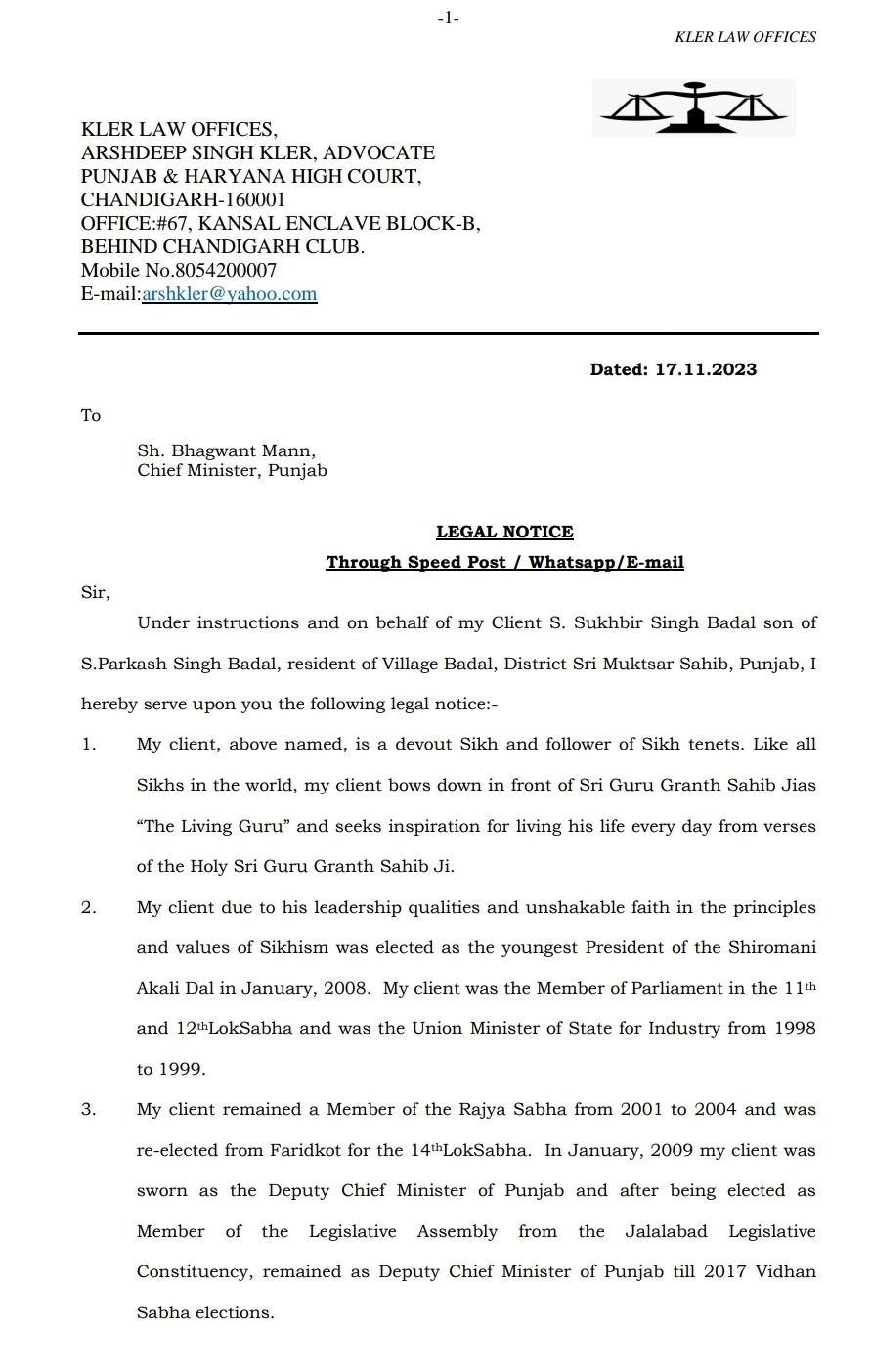
The recent Bhagwant Mann defamation notice has sparked significant political drama in Punjab, drawing attention to the evolving tensions between the Chief Minister and the BJP. In his controversial remarks linking the saffron party to the Punjab blast allegations, Mann has ignited a firestorm of accusations, prompting the BJP to seek legal redress for what they deem a calculated attempt to damage their reputation. The notice claims that Mann’s statements are “patently false” and driven by political motivations aimed at undermining the credibility of the BJP party. This clash not only highlights the escalating political tensions in Punjab but also raises questions about accountability and the consequences of public discourse. As both sides brace for an intense legal and political battle, the implications of this defamation notice could resonate far beyond the immediate conflict, influencing public perception and party loyalties across the region.
In the midst of a tumultuous political landscape, the recent legal controversy surrounding Bhagwant Mann has put a spotlight on the ongoing strife in Punjab’s governance. The Punjab Chief Minister’s derogatory comments, which suggest a connection between the BJP and the recent explosion events, have provoked the BJP party to issue a defamation notice aimed at protecting its image. The accusations of tarnishing the party’s credibility reflect a deeper struggle against perceived political sabotage amidst rising tensions within the state’s political framework. Mann’s demand for an apology highlights the delicate nature of public statements that could hold significant ramifications for party reputations. As this situation unfolds, it serves as a poignant reminder of the fragile balance between political statements and legal accountability in contemporary governance.
BJP Defamation Notice Against Bhagwant Mann: Legal Implications
The political landscape in Punjab has recently become even more contentious as the Bharatiya Janata Party (BJP) has issued a defamation notice to Chief Minister Bhagwant Mann. This legal action stems from Mann’s statements linking the BJP to a series of tragic blast incidents in the state. The BJP claims that these allegations are baseless and intended to damage not only the party’s reputation but also its credibility and public image. As the situation unfolds, this notice may lead to further legal battles or ramifications that could complicate political dynamics in Punjab.
The defamation notice raises significant questions about the nature of political speech and its boundaries. Under Indian law, defamation can encompass both spoken and written statements that harm another’s reputation. Given the serious nature of blast allegations, the BJP’s claim that Mann’s statements are ‘defamatory per se’ indicates that they believe the comments are inherently damaging. Furthermore, this situation could escalate political tensions in Punjab, as both parties navigate accusations and legal consequences, driving public discourse around safety, accountability, and political integrity.
Political Tensions in Punjab: The Fallout from Blast Allegations
The ongoing political tensions in Punjab are exacerbated by recent statements and the subsequent defamation notice exchanged between the BJP and Chief Minister Bhagwant Mann. The allegations that the BJP played a role in the blasts not only provoke further scrutiny of party actions but also fuel public concern regarding safety and governance in the region. Political analysts suggest that such statements could deepen divisions, as parties may become more entrenched in their positions amidst rising public fear and anxiety about violence.
Moreover, the fallout from these allegations could have lasting implications for the BJP’s political strategy in Punjab, particularly as they work to maintain or rebuild their reputation among voters. The party has positioned itself as a credible alternative to the ruling government, but if the public perceives it as being involved in untoward incidents, their efforts could be jeopardized. As this interaction unfolds, the potential for increased political conflict is significant, with both sides likely preparing for a prolonged battle over narratives and public perception.
Understanding the Political Context Surrounding the Punjab Blast Allegations
To fully grasp the implications of the defamation notice issued by the BJP against Bhagwant Mann, one must consider the broader political context of Punjab. The state has witnessed a series of violent incidents, including the recent blasts, stirring public concern and prompting allegations that may be politically charged. Bhagwant Mann’s comments linking the BJP to these incidents appear to have sparked a defensive response from the party, which is attempting to safeguard its reputation amid increasing scrutiny.
This situation highlights the charged atmosphere in Punjab politics, where accusations can serve as weapons in the ongoing struggle for power. The ramifications of these allegations may extend beyond immediate political rhetoric, as they could impact legislative proceedings, party alliances, and voter sentiment heading into upcoming elections. Observing these developments will be crucial, as they unfold against a backdrop of rising political tensions and fears surrounding safety and governance.
The Role of Apologies in Political Discourse: Bhagwant Mann’s Position
Apologies in the realm of political discourse can be complex and fraught with implications, as seen in the current situation involving Chief Minister Bhagwant Mann. In seeking an apology from the BJP for its actions, Mann is attempting to position himself as a leader grounded in accountability amidst ongoing claims of innocence regarding the allegations against his government. The crux of his argument seems to hinge on calling into question the integrity of the BJP’s claims, essentially framing them as not just politically motivated, but as an assault on truth itself.
This dynamic invites a broader discussion about the importance of public apologies in maintaining credibility. For Mann, securing an apology could be foundational to restoring any damaged public perception, which in turn could play a vital role in shaping the future narrative around Punjab governance. Conversely, the BJP’s refusal to concede any wrongdoing could translate into a continued or even heightened narrative of defiance, effectively complicating the public’s understanding of the incident and the party’s stances.
Legal Aspects of Defamation in Indian Politics: A Closer Look
Defamation in the context of Indian politics often intersects with issues of free speech and the complex dynamics of power. The BJP’s legal action against Bhagwant Mann illustrates how defamation claims can pave the way for drawn-out legal battles that distract from substantive political discourse. Under Indian law, defamation demands must navigate various nuances—including the burden of proof, the distinction between truth and opinion, and the implications of statements made in political contexts—making this case a particularly intriguing one.
Furthermore, as political parties wield legal instruments to shield their reputations, it raises questions about the sanctity of political speech. The BJP’s defamation notice is not just about protecting its image; it reflects the broader challenges political figures face when vocalizing concerns tied to credibility and integrity. As the situation develops, the legal outcomes may shape future political conversations in Punjab and set a precedent for how defamation cases are approached in political arenas.
Implications for the BJP Party Reputation in Poll-bound Punjab
As the political climate in Punjab heats up, the implications of the BJP’s defamation notice against Bhagwant Mann extend far beyond the immediate context of the allegations themselves. In a year marked by impending elections, the BJP must work cautiously to uphold its party reputation while addressing the fallout from such serious accusations. The notion that their party’s credibility could be compromised by perceived connections to violent incidents poses a significant challenge for the BJP as it campaigns for voter trust.
Additionally, the BJP’s handling of this situation will likely influence its overall political strategy in Punjab, as the failure to effectively counter allegations could lead to a significant erosion of support among constituents. Therefore, the party must ensure that its narrative remains strong and untainted, both to recover from this episode and to present a cohesive front against opposition claims. The path forward will require deft political navigation, as the stakes are high in a region where electoral fortunes can shift dramatically.
Accusations and Counter-Accusations in Punjab’s Political Landscape
The exchange of accusations between the BJP and Bhagwant Mann represents only one facet of Punjab’s highly charged political landscape. As players on both sides engage in a tug-of-war over narratives, the broader implications for governance and public safety cannot be overlooked. Mann’s allegations reflect a growing sentiment of mistrust among several political factions, which only fuels public uncertainty and complicates governance in a region still reeling from the impact of violence.
Counter-accusations, in turn, serve as a distraction from the pressing need for effective governance and community safety. As the political discourse spirals into a series of blame games, the citizens of Punjab may find themselves caught in the crossfire, raising concerns about the leadership’s ability to address real crises. In this climate, the challenge for both the BJP and Mann’s administration will be to refocus efforts on substantive policy discussions, rather than descending into a cycle of allegations that detract from genuine solutions.
Analyzing the Impact of Political Speech in Contemporary Governance
Political speech has taken center stage in the unfolding drama between Bhagwant Mann and the BJP, underscoring its pivotal role in contemporary governance. In a rapidly changing political environment, the effectiveness of statements made by leaders shapes public perception and can have tangible consequences for party reputation and stability. Mann’s remarks alleging BJP involvement in blast incidents has turned political speech into a weapon that both sides can exploit, emphasizing the notion that words hold substantial power.
The repercussions of such rhetoric, especially accusations involving violence, touch on fundamental issues of responsibility and accountability in leadership. As both Mann and the BJP navigate the ongoing fallout, the critical examination of political speech will only intensify. The outcomes of this dynamic may inform future political strategies, redefine boundaries of acceptable discourse, and ultimately shape the relationship between leaders and the public amid a rapidly evolving political landscape.
Public Safety and Political Accountability: A Dual Responsibility
The intersection of public safety and political accountability is front and center in the current debate surrounding the BJP and Bhagwant Mann’s allegations. In a state grappling with violence and unrest, the ability of political leaders to assure safety while holding one another accountable is essential for restoring public trust. As allegations fly between the BJP and the state government, the ramifications of their political posturing directly impact how citizens perceive their safety and the overall state of governance in Punjab.
Furthermore, with public safety at stake, politicians must recognize their dual responsibility: to enhance security and to maintain integrity in their leadership. The ongoing drama not only highlights the failures that may occur amidst rising tensions, but it challenges leaders to adopt a collaborative approach to ensure that the political discourse aligns with the pressing needs of their constituents. As citizens await resolutions in both political dialogue and safety measures, the call for accountable leadership is more vital than ever in the face of adversity.
Frequently Asked Questions
What led to the BJP sending a defamation notice to Bhagwant Mann regarding Punjab blast allegations?
The BJP sent a defamation notice to Punjab Chief Minister Bhagwant Mann after he allegedly linked the party to recent blast incidents in Punjab. They claim his remarks are false and politically motivated, stating that Mann’s comments aim to tarnish the reputation and credibility of the BJP and its leadership.
| Key Points | Details |
|---|---|
| Defamation Notice Issued | BJP sent a defamation notice to Bhagwant Mann regarding comments linking the party to blast incidents. |
| Allegations of Tarnishing Image | Mann’s claims are seen by BJP as an effort to harm their reputation and credibility. |
| Legal Threats | BJP states Mann’s statements are politically motivated and defamatory. |
| Public Response | Mann demands an apology, while incidents are being investigated by police and military. |
Summary
The Bhagwant Mann defamation notice stems from accusations made against the BJP regarding allegations of connection to recent bomb blasts in Punjab. The Chief Minister of Punjab has called for an apology and denounced the BJP’s claims as attempts to undermine his credibility. The BJP, in response, has launched a legal threat, arguing that Mann’s statements are not only politically charged but also directly aimed at damaging the party’s reputation. As investigations continue into the explosions, which have drawn serious attention from political figures, the tension between Mann and the BJP intensifies, highlighting the ongoing political discord in Punjab.