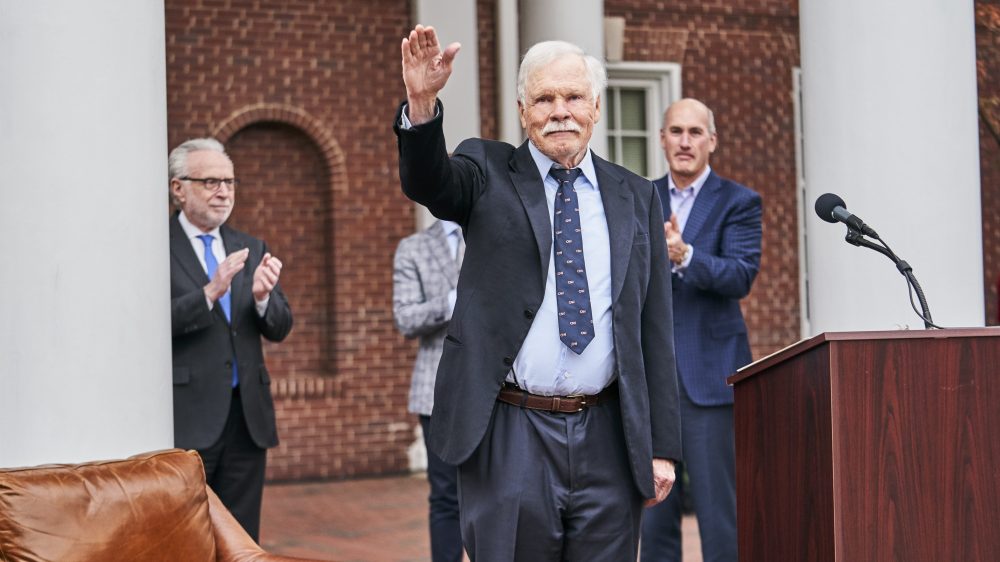
Donald Trump has recently made headlines by paying tribute to Ted Turner, the legendary founder of WCW, immediately following the news of Turner’s passing at the age of 87. This tribute, however, was not without its controversy, as Trump seized the moment to unleash criticisms against CNN, a network often associated with Turner’s legacy. His remarks have sparked a flurry of social media backlash, with users expressing their disapproval at the perceived politicization of such a solemn occasion. As we reflect on Trump’s connection to wrestling and how it ties into WCW history, it is essential to consider the complexities of their relationship, especially in light of recent events. Compounding the situation is the fact that Turner had been battling Lewy body dementia, a condition that underscores the deep personal tributes being overshadowed by political discourse.
The recent death of Turner has resurfaced discussions about the complicated dynamics between the media mogul and Donald Trump, particularly as Trump’s reactions highlight the ongoing tension surrounding CNN. This incident brings to light the broader implications of Trump’s comments, especially in relation to his wrestling history and connection to the entertainment industry. While many honor Turner with heartfelt tributes, others view Trump’s commentary as a politically motivated maneuver that detracts from the legacy of a man who shaped broadcasting and professional wrestling. The fallout from these remarks has sparked a dialogue about respect in public discourse, especially concerning figures like Turner, who faced personal challenges such as Lewy body dementia before his passing. As public figures navigate such delicate circumstances, understanding the impact of their words becomes increasingly vital.
The Legacy of Ted Turner: A Tribute Amid Controversy
Ted Turner, the legendary founder of World Championship Wrestling (WCW) and one of the pioneers of cable television, passed away at the age of 87, leaving behind a tremendous legacy in sports and media. A man whose influence stretched beyond mere entertainment, Turner revolutionized the media landscape with his visionary approach, creating not only WCW but also CNN, which changed the way news is consumed globally. Despite his battle with Lewy body dementia, which he publicly shared, Turner remained a pivotal figure until his last moments, garnering respect and admiration from millions.
However, the passing of such an iconic personality was overshadowed by the ensuing comments made by Donald Trump, who took the opportunity to publicly criticize CNN during his tribute. This intersection of Turner’s memorial and Trump’s critique has sparked questions about propriety and the manner in which political figures utilize moments of mourning for personal agendas. While some fans expressed outrage at Trump’s politicization of the tribute, others defended his right to voice his views, showcasing the complexities of public figures navigating personal and professional realms.
Furthermore, Trump’s connection to the wrestling world adds another layer of intrigue to this narrative. His appearances in wrestling events, as well as his relationship with the WWE, have garnered both acclaim and skepticism. Many critics argue that Trump’s comments at Turner’s tribute were less about honoring a friend and more about reasserting his grievances against a media outlet that has often been critical of him. This complexity showcases the challenging intersection of personal tributes in today’s politically charged environment.
In reflection, Turner’s significant contributions to broadcasting and sports entertainment, particularly through WCW, should perhaps take center stage during such tributes. While Trump’s criticisms may resonate with his adherents, it is crucial to remember the life and accomplishments of Ted Turner beyond the realm of current political dynamics.
The Impact of Ted Turner on Wrestling and Media
Ted Turner’s role in the wrestling industry, particularly as the founder of WCW, has left a lasting mark on sports entertainment history. Under Turner’s leadership, WCW became a formidable competitor to the WWF, captivating audiences and allowing for a golden age of wrestling in the 1990s. His innovative approaches to broadcasting and pay-per-view events helped to elevate wrestling to mainstream pop culture status, giving rise to iconic stars and unforgettable storylines that still resonate with fans today.
However, the eventual decline of WCW post-2001, following its acquisition by WWF in the aftermath of the AOL-Time Warner merger, signifies the unstable nature of media empires and entertainment brands. This transition not only marked the end of an era for WCW but also served as a reminder of how quickly the tides can turn within the industry. Critics attribute the downfall to several factors, including poor management decisions and changing consumer interests away from traditional wrestling formats.
The backdrop of Trump’s relationship with WCW adds another facet to the story. By participating in high-profile wrestling events, Trump reinforced the connection between celebrity culture and professional wrestling, highlighting a mutual benefit for both realms. This intertwining of media and entertainment illustrates the enormity of Turner’s vision and how his legacy will continue to influence future generations in wrestling and beyond.
As we evaluate Ted Turner’s life and the tumultuous journey of WCW, it becomes evident that his strategy of blending entertainment with competitive spirit helped to redefine not just wrestling, but the entire broadcasting landscape. Turner’s impact will undoubtedly serve as a guiding post for creators and innovators aiming to make their mark in the ever-evolving world of media.
Donald Trump and His Wrestling Connections: A Double-Edged Sword
Donald Trump’s association with wrestling, particularly his appearances and guest host role with WWE, paints a vivid picture of his foray into the world of sports entertainment. His involvement transcended merely making cameo appearances; it was a calculated move that allowed him to connect with a broader demographic. However, as demonstrated in his recent tribute to Ted Turner, such connections can be nuanced, intertwining personal relationships with political narratives.
Through his long-standing connection with the wrestling community, Trump has leveraged this platform to build his celebrity brand, which in turn has been both beneficial and controversial. While some see it as an entertainment venture that brings light-heartedness to his public image, critics often argue that it reflects a deeper need for validation within a pop culture arena. This complex relationship exemplifies how an entertainer-turned-politician can maneuver within different spheres, often culminating in reactions that provoke both admiration and criticism.
The criticisms surrounding Trump’s remarks during Turner’s tribulation highlight the sensitivity required when navigating personal versus public persona in today’s media landscape. Merging wrestling with political commentary may alienate some fans who wish to preserve the sanctity of the moment. Therefore, while Trump’s connection to WCW provides intriguing insight into his character, it also illustrates the fine line political figures must tread when addressing issues that may be considered respectful memorials.
The intersection of real-life events with political agendas can produce a volatile atmosphere, leading audiences to question the motives behind public statements. The legacy of Ted Turner and Donald Trump’s efforts to engage with it represent a complex narrative that reflects the continual evolution of wrestling and politics as intersecting social phenomena.
Social Media Reactions: The Outcry Against Trump’s Tribute
Following Donald Trump’s tribute to Ted Turner that veered into politically charged criticisms of CNN, the response on social media was immediate and vigorous. Many users expressed disbelief, interpreting Trump’s comments as a failure to honor Turner’s contributions adequately, instead choosing to prioritize his long-standing grievances against the media outlet. The backlash served as a digital forum where fans and critics alike voiced their disappointment, deeming the remarks inappropriate in light of Turner’s recent passing.
This dynamic illustrates the power of social media as a tool for public discourse, where celebrities and political figures are often held accountable for their words. The backlash highlights societal expectations surrounding mourning and respect, suggesting that moments dedicated to honoring influential figures should remain free from political undertones. By branching into critique during what was intended as a tribute, Trump opened himself up to scrutiny, revealing the complexities of public perception in the age of digital communication.
Moreover, this phenomenon brings into question how public figures should conduct themselves during moments of collective grief. The incongruence between Trump’s homage to Turner and his pointed remarks about CNN signifies a broader issue of politicizing personal moments for divisive purposes. In the public eye, every statement carries weight, especially in situations pertaining to a revered figure such as Ted Turner, whose life was filled with incredible achievements in media and sports.
The various responses to Trump’s tribute not only emphasize the emotional connection fans feel towards figures like Turner but also highlight a growing demand for sensitivity in public commentaries. As social media continues to shape our understanding of public sentiments, this incident serves as a case study on how political narratives can clash with societal norms of respect and commemoration.
Examining the Criticism: Trump’s Remarks and Their Implications
In the aftermath of Donald Trump’s remarks during his tribute to Ted Turner, critical discussions erupted regarding the appropriateness of his comments. Observers noted that using a memorial to critique a media outlet could be viewed as distasteful or disrespectful, particularly when honoring someone who contributed significantly to the broadcasting industry. The controversy raises questions about the motivations behind political figures’ public words and the implications these have for their reputations.
Trump’s decision to intertwine his critique of CNN with a tribute to Turner underscores a broader trend in modern politics where personal opinions often overshadow the significance of national mourning. Analysts suggest that this incident may further polarize audiences, with supporters viewing his comments as a bold stance against media bias, while critics perceive it as self-serving and inconsiderate. This duality of interpretation illustrates how political discussions can cloud the remembrance of significant figures and their legacies.
Additionally, the criticism directed at Trump reveals a growing expectation for public figures to exhibit grace and composure during sensitive times. This expectation may be informed by a societal desire for respect towards beloved icons in media, such as Turner, who struggled with severe health issues before his death, including Lewy body dementia. In this context, political remarks can easily be construed as insensitivity, especially when they link to a person’s life and legacy.
Overall, the outcry against Trump’s remarks reflects a collective call for a more thoughtful engagement with the memories of influential personalities. While political discourse is essential, the balance between advocacy and respect remains crucial in molding public sentiment towards significant figures like Ted Turner.
Historical Context: The Rise and Fall of WCW
WCW’s ambitious rise in the wrestling landscape during the 1990s is often attributed to the innovative leadership of Ted Turner, whose vision transformed the sport. By leveraging diverse broadcasting techniques and championing compelling storylines, Turner succeeded in creating a competing brand that challenged the dominance of WWF. The iconic battles between the two organizations not only entertained viewers but also redefined wrestling as a mainstream spectacle, resulting in unprecedented ticket sales and merchandise revenue.
However, the eventual decline of WCW after its acquisition by AOL-Time Warner in the early 2000s serves as a stark reminder of the transient nature of entertainment enterprises. The reorganization following the merger led to strategic decisions that alienated fans and detrimentally affected the brand’s programming. As WCW programming was systematically phased out, what once stood as a titan of wrestling collapsed, ultimately absorbed by its primary competitor. This narrative encapsulates the volatility of media and sports entertainment within corporate frameworks.
The juxtaposition of WCW’s explosive growth and its dramatic downfall emphasizes critical lessons for future entertainment ventures. Understanding consumer interests, nurturing talent, and maintaining the core essence of a brand are vital for longevity, as demonstrated by WCW’s trajectory. Ted Turner’s legacy as the architect of WCW can be seen as both a triumph and a cautionary tale for those within the industry.
As fans reflect on the storied history of WCW, they acknowledge the enduring influence of Ted Turner, not just as a businessman but as a transformative figure in wrestling. The lessons learned from this chapter in wrestling history will undoubtedly inform future endeavors as emerging brands seek to replicate WCW’s success while avoiding its pitfalls.
The Trump-CNN Dynamic: A Longstanding Rivalry
Donald Trump’s contentious relationship with CNN has left an indelible mark on contemporary media landscapes. Often characterizing the network as ‘fake news’, Trump’s criticisms have fueled a long-standing rivalry that has formed a significant part of his narrative as a political figure. This ongoing battle exemplifies how media narratives can shape public perception and influence political discourse, leading to a polarized media environment.
As Trump navigates his political career, references to CNN have become a staple part of his rhetoric, often surfacing during speeches or social media updates. This dynamic allows Trump to maintain a connection with his base while simultaneously engaging in conflicts with leading media entities. However, the inclusion of such criticisms during public tributes may indeed blur the lines between personal respect and political strategy.
Examining this contentious dynamic alongside the context of Turner’s passing reveals the complexity of media interactions and their implications. For many, the casual referencing of CNN in a moment dedicated to honoring Ted Turner appears as an affront to Turner’s legacy and contributions to journalism. This suggests an underlying expectation from the public that tributes should remain respectful rather than becoming platforms for personal grievances.
In navigating this multifaceted relationship, both Trump and CNN must be prepared to contend with the implications of their engagements, particularly in light of Turner’s memory. The importance of maintaining respect for contributions made by figures like Ted Turner can serve as a lesson in the balance between political expression and honoring legacy.
Frequently Asked Questions
What was Donald Trump’s tribute to Ted Turner and how did it relate to CNN?
Donald Trump’s tribute to Ted Turner came during a moment of reflection on Turner’s contributions to broadcasting and wrestling, specifically noting his role in founding WCW. However, Trump controversially used this tribute to criticize CNN, a network previously owned by Turner, igniting backlash on social media for politicizing Turner’s death. This incident highlights Trump’s long-standing connection to wrestling and fans’ perceptions of his sincerity in honoring figures like Turner.
| Key Points |
|---|
| Donald Trump criticized while paying tribute to Ted Turner. |
| Ted Turner, WCW founder, passed away at 87, suffered from Lewy body dementia. |
| Trump used the tribute to attack CNN, receiving backlash from social media users. |
| WCW’s decline linked to AOL-Time Warner merger in 2001, leading to WWF acquiring assets. |
| Critics argue Trump’s remarks were politically motivated and disrespectful. |
| Trump’s history with wrestling adds complexity to perceptions of his tribute. |
Summary
Donald Trump Ted Turner is a noteworthy narrative that intertwines politics and legacy. After the death of WCW founder Ted Turner, Donald Trump faced significant criticism for using the tribute as a platform to attack CNN. Turner’s passing, marked by his battle with Lewy body dementia and other health issues, was overshadowed by Trump’s remarks that many deemed politically charged and disrespectful. The decline of WCW post-AOL-Time Warner merger and its subsequent acquisition by WWF further contextualizes Turner’s impact on the wrestling industry. Trump’s relationship with wrestling, often seen as opportunistic, adds another layer to this unfolding story, highlighting the complex dynamics at play in public tributes and personal motives.