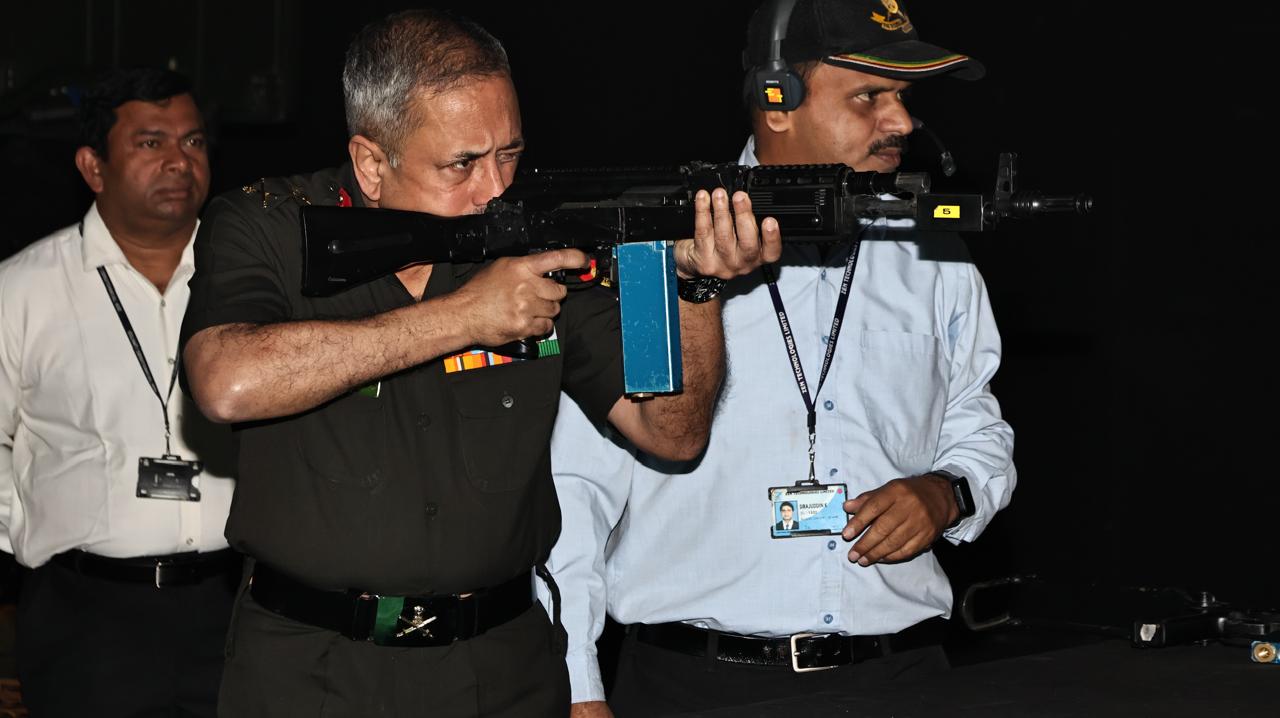
Lieutenant General NS Raja Subramani has been appointed as India’s next Chief of Defence Staff (CDS), stepping into a pivotal role following General Anil Chauhan’s tenure. With over 37 years of distinguished service in the Indian Army, General Subramani brings a wealth of experience and strategic acumen to the forefront of Indian Army leadership. His recent role as Vice Chief of the Army Staff and military adviser at the National Security Council positions him to effectively champion the ongoing military reforms in India. Armed with a comprehensive educational background from prestigious institutions, including a Master of Arts from King’s College London, Lieutenant General Subramani is poised to drive transformative changes in defense strategy. As he prepares to lead, his understanding of operational dynamics on the western and northern frontiers will be crucial for navigating the evolving landscape of national security.
Introducing Lieutenant General NS Raja Subramani, a figure poised at the helm of Indian military strategy as the new Chief of Defence Staff (CDS). With a storied career that encapsulates various senior military roles, including Vice Chief of the Army, he stands as a testament to the evolution of military leadership in India. His recent appointment comes at a time of significant shifts in the defense sector, reflecting a broader movement towards implementing comprehensive military reforms. As Subramani takes charge, the implications of his leadership extend beyond traditional military frameworks, signaling a new era in defense operations and national security. With his extensive expertise and strategic foresight, General Subramani is set to influence key decisions that will shape the operational readiness and future of the Indian armed forces.
Lieutenant General NS Raja Subramani: A New Era in Indian Military Leadership
The appointment of Lieutenant General NS Raja Subramani as the Chief of Defence Staff (CDS) marks a pivotal moment in India’s military leadership. With a commendable career spanning over 37 years, Lieutenant General Subramani’s transition into this role comes at a time when the Indian Army is navigating through substantial military reforms aimed at modernizing its capabilities and operational strategies. His extensive experience in key positions such as the Vice Chief of the Army Staff and GOC-in-C of the Central Command equips him with valuable insights that are crucial for steering the Indian military towards enhanced readiness and effectiveness.
As the new CDS, Lieutenant General Subramani is poised to influence strategic military policy and lead the overarching vision of the Indian Defence Ministry. His profound understanding of military operations on both the western and northern frontiers is expected to facilitate the execution of strategies that address national security challenges. Furthermore, his rich educational background, which includes degrees from prestigious institutions like King’s College London and the National Defence College, underscores his commitment to fostering a knowledgeable and resilient military leadership in India.
Strategic Implications of Military Reforms Under Lieutenant General Subramani
The upcoming military reforms under the stewardship of Lieutenant General NS Raja Subramani bring with them strategic implications that extend beyond administrative changes within the Indian Army. These reforms are aimed at integrating newer technologies, enhancing joint operations among the armed forces, and improving overall operational readiness. As the CDS, Subramani’s vision will be crucial in implementing policies that align with the evolving geopolitical landscape in South Asia, which includes strengthening defense ties with allies, countering regional threats, and bolstering indigenous military manufacturing.
In accelerating military reforms, Lieutenant General Subramani will also play a critical role in modernizing the defence procurement process and ensuring the seamless integration of advanced equipment and systems. This focus on modernization is not just about acquiring the latest technology, but also about cultivating a culture of continuous improvement within the Indian Army. By leveraging his experience as a military advisor at the National Security Council, Subramani can provide strategic perspectives that will enhance the operational capabilities of the Indian Armed Forces in alignment with national objectives.
The Role of Vice Chief of the Army Staff in Shaping Future Leadership
The position of Vice Chief of the Army Staff (VCOAS) plays a significant role in shaping the future leadership of the Indian Army, as well highlighted by the recent tenure of Lieutenant General NS Raja Subramani. The VCOAS acts as a critical link between senior generals and the operational units on the ground, ensuring that strategies are effectively communicated and implemented. During his time as Vice Chief, Subramani emphasized the importance of readiness and responsiveness, which are essential qualities for any military organization in today’s complex security environment.
Moreover, the insights and experiences of a Vice Chief serve to prepare senior officers for higher command positions, including those of General Officer Commanding-in-Chief and Chief of Defence Staff. The mentorship provided by leaders at this level is vital for nurturing the next generation of military leaders who will face the challenges of an ever-evolving defense landscape. As seen in the career progression of Lieutenant General Subramani, such roles are instrumental in cultivating strategic thinkers who will advance the goals of India’s military and defense policies.
The Legacy of Military Leadership in India: A Look at Lieutenant General Appointments
The legacy of military leadership in India is characterized by a series of impactful appointments that have shaped the nation’s defence framework. The recent appointment of Lieutenant General NS Raja Subramani as Chief of Defence Staff continues this tradition, reflecting a commitment to excellence and strategic vision within the Indian Army’s hierarchy. History has shown that the qualifications and backgrounds of leaders, such as their operational experience and educational achievements, play a vital role in determining the effectiveness of military leadership.
Lieutenant General Subramani’s impressive accolades, which include multiple prestigious military honors, signify a legacy of service that contributes to an ethos of excellence within the Indian Armed Forces. As he assumes the role of CDS, he stands on the shoulders of past leaders whose decisions shaped the current landscape of Indian military strategy and operations. This continuity of leadership through well-thought-out appointments underscores the importance of experienced commanders in guiding India’s military toward a robust and responsive future.
Education and Training: The Foundation of Military Excellence
Education and training serve as the cornerstone of military excellence, a principle embodied by Lieutenant General NS Raja Subramani and his distinguished career in the Indian Army. His academic pursuits, including attendance at the National Defence Academy and the Joint Services Command and Staff College, reflect a commitment to comprehensive military education. Such institutions are vital for grooming future leaders who are adept in both tactical and strategic military frameworks, ensuring that they are prepared to face contemporary challenges.
Additionally, ongoing training programs and courses play an essential role in enhancing the skills of military personnel at all levels. Ensuring that officers are continuously educated in modern warfare tactics, technological advancements, and joint operational capabilities is crucial for the overall effectiveness of the armed forces. Lieutenant General Subramani’s extensive training background emphasizes the importance of these educational foundations, providing future military leaders with the intellectual tools necessary to navigate the complexities of military operations in an ever-evolving global environment.
Understanding the Challenges Ahead for Chief of Defence Staff
As Lieutenant General NS Raja Subramani prepares to take on the responsibilities of Chief of Defence Staff (CDS), he faces numerous challenges that will require strategic foresight and tactical expertise. The rapidly changing global geopolitical landscape, coupled with emerging security threats, demands a proactive approach to national defense. Subramani’s deep understanding of the operational environment, gained through years of service in various capacities, will be essential in addressing these challenges head-on.
Moreover, the undertaking of military reforms within the Defence Ministry could pose significant hurdles in terms of implementation and adaptation across various branches of the armed forces. As CDS, Subramani must ensure that these reforms are not only realized on paper but are also effectively translated into ground realities. This requires a solid grasp of inter-service dynamics and the ability to foster collaboration among the Army, Navy, and Air Force, further complicating the advocacy for necessary changes.
Collaboration and Unity in the Indian Armed Forces: The Path Ahead
Collaboration and unity among the different branches of the Indian Armed Forces will be pivotal in shaping the future of national defense, especially under the guidance of Lieutenant General NS Raja Subramani. The new CDS must navigate the intricate landscape of inter-service relationships to promote integrated operations and cohesive strategies that enhance India’s defense posture. By fostering a culture of collaboration, Subramani can ensure that the Navy, Army, and Air Force work synergistically, enhancing overall operational effectiveness.
Furthermore, promoting unity within the military also involves improving communication and trust among different branches. Close collaboration on joint exercises and operations not only enhances preparedness but also fosters a sense of shared purpose and camaraderie. Lieutenant General Subramani’s leadership style will significantly influence how inter-service dynamics evolve, ultimately creating a more unified and capable defense structure able to respond to multifaceted security challenges.
The Importance of Strategic Defense Frameworks in Military Planning
Establishing strategic defense frameworks is essential for effective military planning, and Lieutenant General NS Raja Subramani’s role as Chief of Defence Staff will be crucial in this regard. A robust strategic framework allows for the assessment of current threats and the identification of key priorities that the Indian Armed Forces need to address. It is within this context that Subramani’s deep experience with military operations will serve as a vital asset, enabling him to formulate strategies that enhance national security.
Moreover, strategic defense frameworks must be adaptable to account for the ever-changing nature of warfare, particularly in the technological age. This adaptability will require Lieutenant General Subramani to promote innovation within the forces and encourage a mindset geared toward continuous improvement. By doing so, he can ensure that the Indian military remains at the forefront of global defense advancements, prepared to face any challenges head-on.
Looking Ahead: The Future of the Indian Army Under New Leadership
The future of the Indian Army under the leadership of Lieutenant General NS Raja Subramani promises to be marked by transformative changes and a renewed focus on excellence. With his wealth of experience and proven track record, Subramani is set to drive initiatives aimed at modernizing the force, enhancing operational readiness, and fostering a culture of accountability and innovation throughout the ranks. His leadership will be instrumental in navigating the complex challenges that lie ahead for the Indian military.
In addition, the priorities established by Lieutenant General Subramani as the Chief of Defence Staff will significantly influence the long-term trajectory of military reforms within India. As he guides the forces through this period of transformation, it will become increasingly important to ensure that changes are not only implemented effectively but also embraced by personnel at every level. By instilling a sense of purpose and unity, Subramani can lay the groundwork for a resilient and capable Indian Army prepared to protect the nation’s interests well into the future.
Frequently Asked Questions
Who is Lieutenant General NS Raja Subramani and what is his role as the Chief of Defence Staff India?
Lieutenant General NS Raja Subramani has been appointed as the next Chief of Defence Staff (CDS) of India, succeeding General Anil Chauhan. With over 37 years of experience in the Indian Army, he brings extensive operational knowledge and leadership skills to this critical role. As CDS, Subramani will be pivotal in overseeing military reforms in India and enhancing coordination between the armed forces.
| Key Aspects | Details |
|---|---|
| Appointment | Lieutenant General (retd) NS Raja Subramani appointed as the next Chief of Defence Staff. |
| Predecessor | He will take over from General Anil Chauhan. |
| Current Position | Currently serving as military adviser at the National Security Council Secretariat since September 1, 2025. |
| Previous Roles | Vice Chief of the Army Staff (July 1, 2024 – July 31, 2025), General Officer Commanding-in-Chief of the Central Command (March 2023 – June 2024). |
| Military Career | Commissioned into the Garhwal Rifles in December 1985, with over 37 years of service. |
| Educational Background | Graduate of NDA and IMA; attended Joint Services Command and Staff College in the UK and National Defence College; holds MA from King’s College London and MPhil from the University of Madras. |
| Awards and Honors | Recipient of Param Vishisht Seva Medal, Ati Vishisht Seva Medal, Sena Medal, and Vishisht Seva Medal. |
| Significance of Appointment | Assumes position at a crucial time for military reforms underway in the Defence Ministry. |
| Twelve Successors | Vice Admiral Krishna Swaminathan appointed as new Navy chief, taking charge on May 31. |
Summary
Lieutenant General NS Raja Subramani has been appointed as the new Chief of Defence Staff, taking the helm at a pivotal moment for India’s military landscape. With a stellar 37-year career in the Indian Army, his extensive experience encompasses vital leadership roles and a profound understanding of military operations. His academic accolades further enhance his credentials, positioning him to advocate for and navigate significant military reforms within the Defence Ministry. This transition not only signifies the succession from General Anil Chauhan but also highlights the strategic importance of military restructuring in response to evolving national security challenges.