

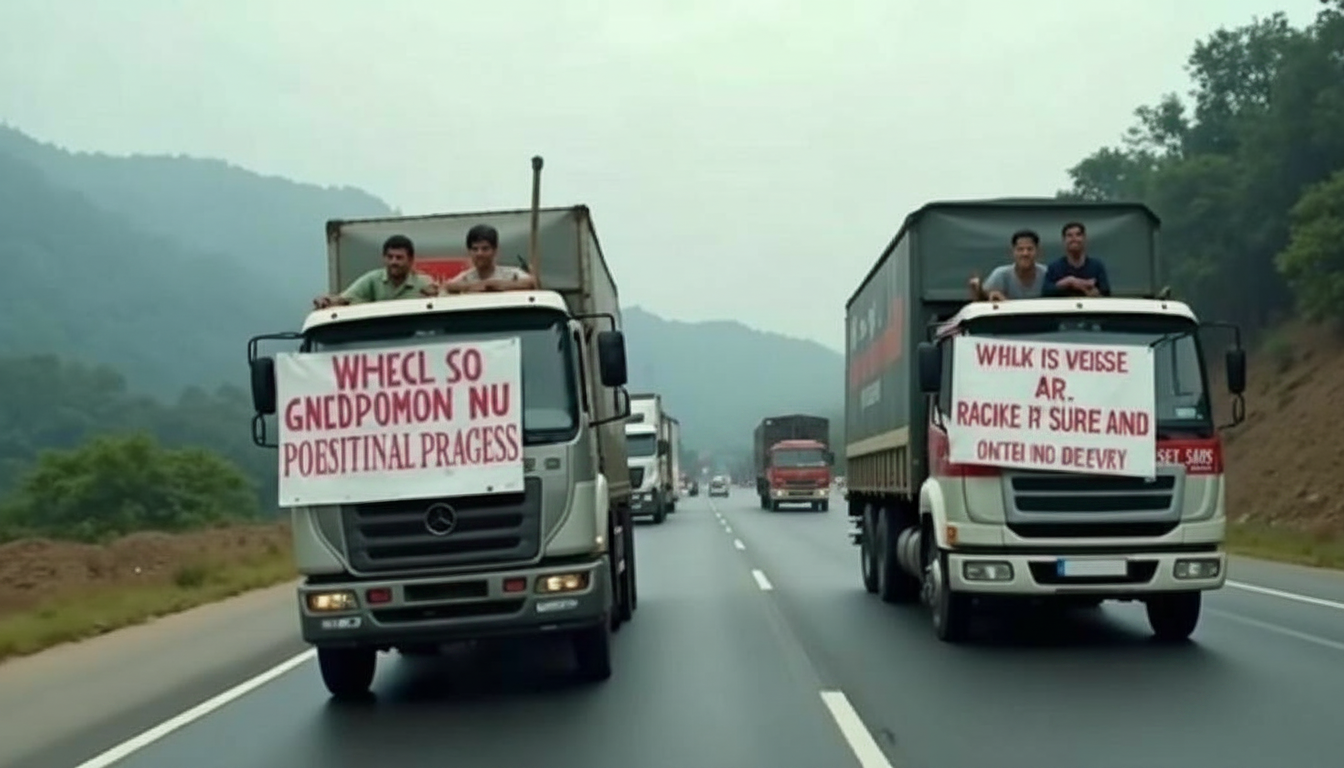
The Manipur truck drivers protest erupted on May 30, as hundreds of drivers suspended transportation services along National Highway-37, specifically the Imphal–Jiribam Road. This decisive action was ignited by the tragic ambush and murder of a fellow truck driver, increasing concerns over truck drivers’ safety in the region. The protest involved around 400 stranded trucks, including crucial LPG and oil tankers, highlighting the significant impact of this demonstration on Manipur’s transportation infrastructure. Drivers gathered not only to pay tribute to their slain colleague but also to demand urgent improvements in Manipur highway security measures, emphasizing the need for better protection while traversing conflict-prone areas. Without immediate action, the prolonged unrest threatens to disrupt the flow of essential supplies and fuel, raising critical questions about transportation stability in Manipur.
In response to ongoing concerns regarding highway safety, truck operators in Manipur have rallied together, voicing their demands for enhanced security along busy routes. This gathering stems from a recent incident where a truck driver’s life was tragically taken during an ambush, prompting fears within the professional driving community. With a significant number of vehicles, including vital cargo trucks, left immobilized, the transportation disruption in Manipur highlights the urgent need for state intervention. Moreover, the call for the complete reopening of National Highway-102 is not just about logistics; it underscores the broader implications of ensuring safe passage for those who rely on these routes. Stakeholders are now watching closely as to how authorities will address the pressing issues raised by these dedicated drivers.
Manipur Truck Drivers Protest: A Cry for Enhanced Highway Security
On May 30, the heart of Manipur echoed with the voices of hundreds of truck drivers who halted their transportation services, venting their frustrations over the escalating violence on the state’s highways. This protest stems from the tragic murder of a truck driver the day before, highlighting the urgent need for improved security in a region notorious for conflict. The truck drivers gathered at Keithelmanbi, where nearly 400 vehicles were stranded, including critical supplies like LPG and oil tankers. Their coordinated effort is not just a response to one violent incident; it underscores a larger, systemic issue regarding the safety of transport operators in the region. These men and women are risking their lives every day on the treacherous roads of Manipur, where threats of ambush and violence loom large.
The repercussions of the Manipur truck drivers protest extend beyond roadblocks; they pose a significant risk of transportation disruption throughout the state. With vital supplies halted, local communities face the looming specter of shortages in essentials and fuel. The protest is not merely a pause in services; it is a stark warning to authorities that without immediate and strategic improvements in highway security, the situation could deteriorate. The drivers’ insistence on implementing robust security measures is indicative of their commitment to ensuring that no more lives are lost on these routes. Through this demonstration, they are advocating not just for themselves but for the welfare of every person who depends on the safe transport of goods in Manipur.
Consequences of Transportation Disruption in Manipur
The protest led by truck drivers demanding safety on National Highway-37 comes with serious implications for the transportation landscape in Manipur. As vital supplies remain stranded, the state grapples with the potential fallout from extended disruptions. The transport of essential commodities such as food, medical supplies, and gasoline is compromised, raising alarm bells for both consumers and businesses across the region. The demonstration’s timing is critical; authorities must respond to the growing concerns head-on to avoid exacerbating the crisis, which could lead to widespread unrest among the local population reliant on these deliveries.
Interruption of transportation services on the Imphal–Jiribam road not only affects the availability of essentials but also threatens the economic stability of the region. Businesses relying on timely deliveries face increasing operational challenges, potentially leading to inflated prices and scarcity of goods. Moreover, the truck drivers’ resolve to stand firm until satisfactory security measures are promised underscores the severity of the issue at hand. The spotlight is now on the local government to take decisive actions that demonstrate their commitment to ensuring the safety of transport workers and the reopening of crucial routes like National Highway-102, connecting Imphal to the outside world.
Calls for Strengthened Security on Manipur Highways
In the wake of recent violent incidents, the call for strengthened security measures on Manipur’s highways has gained momentum. Truck drivers are advocating for installation of increased security checkpoints and better coordination with local law enforcement to ensure safe passage for commercial vehicles. The protests are not simply reactions to individual acts of violence, but they serve as a manifestation of the drivers’ collective despair over a pattern of danger they face daily while traversing conflict-prone areas. The transportation community is united in its demand for actionable strategies that safeguard their right to operate without fear.
Strengthened security on Manipur’s highways would not only benefit truck drivers but also enhance the safety of all road users in the region. By addressing the concerns expressed during the protests, authorities can foster a climate of trust between the government and transport operators. Inclusion of transport workers in discussions regarding safety protocols could bolster collaboration and lead to the development of comprehensive plans that prioritize highway security. Forward-thinking measures could pave the way for a safer transportation environment, reducing the fear of ambush and ensuring the smooth operation of critical supply routes.
Impact of Protests on the Local Economy and Supply Chains
The ongoing protest by truck drivers has significant implications for the local economy of Manipur, as the suspension of transportation services halts the flow of goods and services essential for daily life. Commerce relies heavily on effective transportation networks, and when truck drivers suspend their operations, it can lead to immediate shortages of intended supplies. Goods that are often transport-dependent, such as perishables, medicines, and fuel, present urgent needs that could escalate into larger crises if not addressed promptly. Local businesses are particularly vulnerable, as they depend on the steady influx of supplies to meet customer demands.
Additionally, transportation disruption in Manipur threatens to ripple through supply chains well beyond the state borders. National Highway-102 serves as a crucial corridor linking Manipur to neighboring states and accommodating trade activity. As truck drivers protest for better safety conditions, businesses look towards the government for effective solutions. Failure to resolve safety concerns and restore normalcy could deter not just local but also regional economic progress, leading to long-term implications for commerce in the area. Prompt and effective intervention will be essential to mitigate these economic risks and ensure the stability of supply chains across this vital region.
The Role of Local Government in Addressing Driver Safety
Local government plays an essential role in addressing the ongoing concerns surrounding driver safety on Manipur’s highways. The protests initiated by truck drivers highlight not only the immediate need for protection against violence but also the necessity for strategic planning involving transport safety policies. Authorities are urged to engage directly with the truck drivers, understand their grievances, and collaborate to devise solutions that address the root causes of insecurity along vital transportation routes. Encouraging dialogue and creating safety task forces could lead to more effective security measures tailored to the unique challenges faced by drivers.
Furthermore, the government’s response to these protests will set a precedent for how such issues are handled in the future. By prioritizing the safety of truck drivers, they can cultivate a more reliable transport network that serves both the local economy and the welfare of its citizens. Ensuring regular assessments of highway conditions and security risks, as well as the implementation of safety feedback mechanisms, can strengthen the government’s commitment to transport safety. In doing so, it nurtures a climate of safety where transport operators can conduct their work without fear of violence, ultimately benefiting the broader community.
Community Reactions to the Transportation Strike
The recent transportation strike by truck drivers in Manipur has elicited a range of reactions from the local community. Many residents sympathize with the drivers’ plight, recognizing the necessity for safe passage on the highways that serve as lifelines for the region. Community members understand that the protests are not simply about individual safety but are reflective of a broader issue concerning the welfare of residents reliant on efficient transport networks for access to goods. A significant portion of the population is advocating for the drivers’ demands, emphasizing the critical role that safe transportation plays in their everyday lives.
Conversely, not all reactions have been entirely supportive; some community members express frustration over transportation disruptions affecting vital services. Marketplaces are feeling the pinch, and local businesses are facing challenges due to the shortage of supplies. The strike presents a double-edged sword; while there is support for improving highway security, the tangible effects of halting transport services are immediate and problematic. Ongoing discussions within the community reveal a desire for dialogue between the truck drivers, the government, and local stakeholders to address these intricate tensions and find suitable resolutions.
Potential Solutions for Ensuring Transport Safety
In light of the ongoing protests by truck drivers in Manipur, exploring potential solutions for ensuring transport safety is crucial. One proactive measure includes the establishment of integrated security checkpoints along major highways, where truck drivers can report any threats or suspicious activities. This approach not only enhances the monitoring of highways but also reassures drivers that their safety is a priority. Moreover, investing in technology such as GPS tracking and real-time monitoring systems could provide enhanced oversight and quick responses to emergencies, creating a safer environment for transport operators.
Another essential solution is to foster collaborative partnerships between government agencies, truck driver associations, and community organizations. Creating a safety stakeholder committee can allow for better communication, where challenges can be swiftly addressed. Education and training about best practices in conflict management and safety protocols can be extended to truck drivers, equipping them with the skills necessary to navigate hostile environments. A multifaceted approach combining community engagement, innovative security technologies, and increased governmental support can significantly enhance the safety of truck drivers on Manipur’s roads, minimizing the likelihood of further protests in the future.
Government Response to Truck Drivers’ Safety Concerns
As the protests by truck drivers underscore pressing safety concerns, the government faces mounting pressure to address these issues effectively. Timely responses that demonstrate understanding and commitment to citizens’ safety are essential in mitigating unrest. Recent discussions imply that government officials are considering the drivers’ demands for enhanced security and are weighing potential legislative actions or partnerships with law enforcement agencies. The government’s swift acknowledgment of the situation signals a crucial step in the right direction but also raises the stakes for actionable changes that align with the community’s expectations.
Furthermore, the continuation of dialogue between government representatives and truck drivers is paramount. Establishing a platform where drivers can voice their concerns provides transparency and fosters trust between them and the authorities. Such communication channels can be instrumental in crafting policies that not only enhance transport safety but also ensure that the reopening of vital routes like National Highway-102 occurs smoothly. The government’s ability to provide solutions will not only placate the protesting drivers but can restore faith in the administration’s commitment to uphold safety and economic stability across Manipur.
Frequently Asked Questions
What are the reasons behind the Manipur truck drivers protest along the Imphal–Jiribam Road?
The Manipur truck drivers protest, which began on May 30, stems from the tragic killing of a truck driver from West Bengal during an ambush. This incident raised significant concerns regarding truck drivers’ safety on Manipur’s highways. The drivers demand enhanced security measures to protect transport operators and their vehicles, particularly when traveling through conflict-prone zones. Additionally, they seek the reopening of National Highway-102, which is vital for transportation stability in the region.
| Key Points |
|---|
| Protest Date: May 30, 2023 |
| Location: National Highway-37 (Imphal–Jiribam Road) |
| Reason: Killing of a truck driver during an ambush |
| Number of Trucks Involved: Approximately 400 |
| Demands: Better security on highways, reopening of NH-102 |
| Impact: Potential disruption of essential supplies if the protest continues |
Summary
The Manipur truck drivers protest highlights significant concerns over safety and security for transport operators in the region. Beginning on May 30, 2023, as a response to the tragic murder of a truck driver from West Bengal, the protest saw hundreds of drivers suspend trucking services along National Highway-37. This escalated situation not only emphasized the dire need for enhanced security measures but also raised alarms about the potential disruption of essential supplies, including fuel and goods, across the state. The commitment of around 400 trucks to remain idle until their demands are met signifies the drivers’ urgent call for action and raises important questions about the safety of travel through conflict-prone areas in Manipur.



























