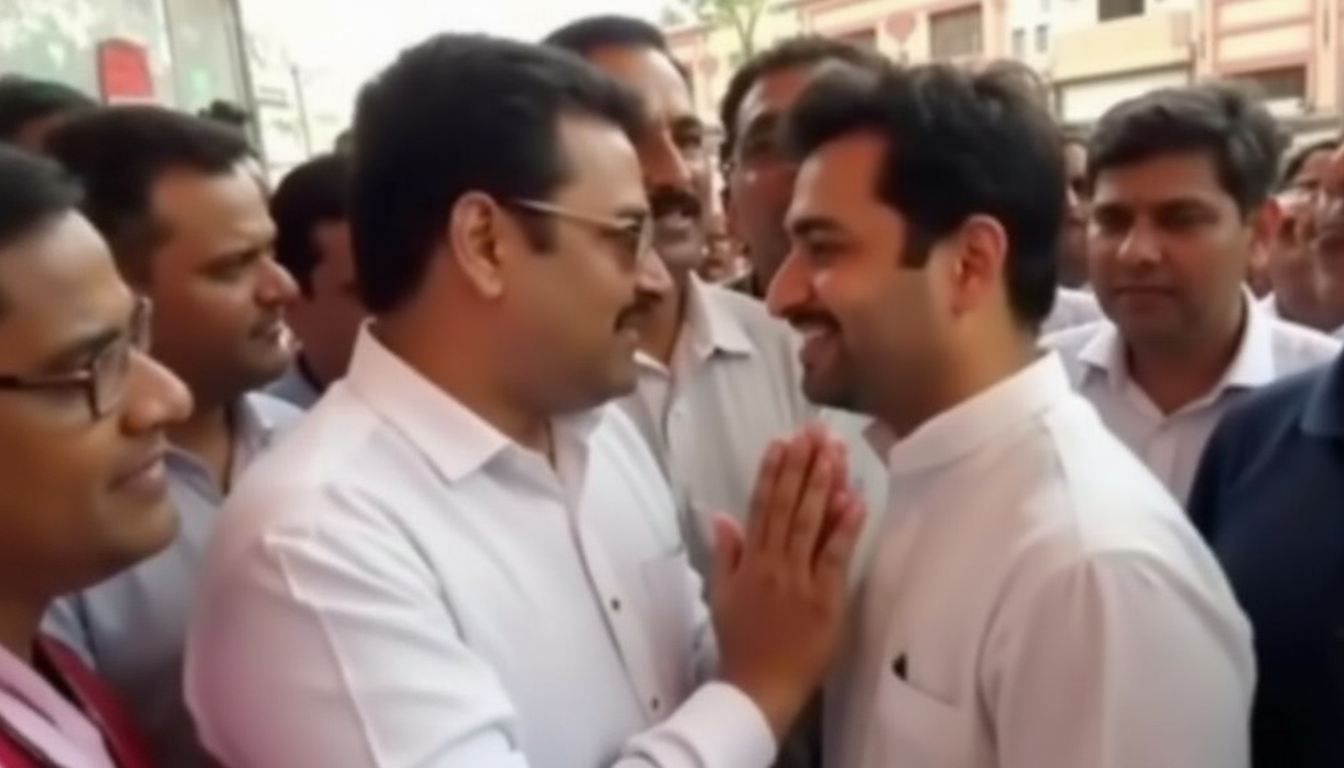
Abhishek Banerjee, the prominent Trinamool Congress (TMC) MP, recently found himself at the center of West Bengal politics after a violent incident in Sonarpur, where he was attacked by a hostile mob. The shocking event has sparked outrage, as Banerjee accused the Bharatiya Janata Party (BJP) of resorting to political violence and intimidation aimed at silencing their opponents. Following the incident, he expressed gratitude towards Rahul Gandhi, the Leader of the Opposition in the Lok Sabha, for his kind words and support during this distressing time. In his message, Gandhi extended his thoughts to Banerjee and his family, wishing him a swift recovery from the trauma. This confrontation has raised questions about the escalating tensions in West Bengal politics and the implications of political violence on the democratic fabric of the state.
In the tumultuous landscape of West Bengal, Abhishek Banerjee’s recent encounter highlights the volatile nature of contemporary party politics. The incident at Sonarpur, where Banerjee was violently confronted, illustrates the broader struggle against political intimidation fueling discord among party lines. Notably, Rahul Gandhi’s supportive remarks underscore a call for solidarity against the backdrop of growing political violence, particularly attributed to the BJP’s aggressive tactics. This situation reflects deep-seated issues within regional governance, questioning the safety and integrity of political discourse. As tensions heighten, the implications of such incidents bear heavily on the stability and future of political engagements in the state.
Impact of Political Violence in West Bengal Politics
Political violence has become a glaring issue in West Bengal, manifesting particularly during election seasons. Recent incidents, like the attack on TMC MP Abhishek Banerjee in Sonarpur, have raised serious concerns about the safety of political figures. Many believe such acts of aggression are tools used by opponents, particularly the BJP, to instill fear among rival party members and their supporters. The Sonarpur incident not only highlights individual attacks but also reflects the larger atmosphere of intimidation that pervades state politics, deterring open political discourse.
The ripple effects of this violence extend beyond individual incidents, contributing to an overall climate of fear and mistrust within the electorate. Voters may feel threatened, leading to lower participation in political events and potentially skewing election outcomes. Political figures like Rahul Gandhi have emphasized the importance of solidarity against such acts, reinforcing the need for a united front to combat the culture of political intimidation. As the situation evolves, it becomes crucial for democratic institutions to address these challenges to ensure free and fair elections.
Abhishek Banerjee’s Resilience Against Intimidation
TMC MP Abhishek Banerjee has emerged as a key figure in resisting political violence in West Bengal. His public stand against the tactics used by the BJP to suppress opponents showcases his determination to uphold democratic values. After the recent mob attack on him in Sonarpur, Banerjee thanked Rahul Gandhi for his support, further indicating the importance of inter-party solidarity in rebuilding confidence among party workers and supporters. Acknowledging such attacks can galvanize responses from other political leaders seeking to protect their constituencies from fear-induced apathy.
In his statements following the attack, Banerjee addressed the tactics of intimidation employed by the BJP, framing them as detrimental to the democratic process. This incident not only underscores his personal resilience but also sheds light on the broader fight against the instilling of fear in political realms. Banerjee’s acknowledgment of support from fellow leaders like Gandhi reflects a growing awareness among opposition parties of the collective need to combat increasing violence and promote a more equitable political landscape, vital for the health of democracy in West Bengal.
The Role of Rahul Gandhi in West Bengal’s Political Landscape
Rahul Gandhi has consistently positioned himself as a vocal critic of political violence in India, particularly in volatile regions like West Bengal. His recent support for TMC MP Abhishek Banerjee after the Sonarpur incident illustrates a commitment to solidarity among opposition parties. This stance not only reinforces the importance of collaboration among political factions in the fight against intimidation but also highlights Gandhi’s endeavor to advocate for safer political environments. In the face of growing political unrest, his involvement could serve as a beacon of hope to those targeted by violence.
Moreover, Gandhi’s engagement in these matters signifies the necessity for prominent leaders to take action against political aggression, galvanizing support for affected figures. By extending his sympathies to Banerjee, he is emphasizing that political violence cannot be tolerated, wherever it arises within the political spectrum. This solidarity is crucial in a state where the BJP has been accused of employing fear tactics to manipulate the narrative and dissuade opposition. Observers of West Bengal politics note that the involvement of high-profile leaders like Gandhi can significantly shape public perception and encourage unity against political intimidation.
Understanding BJP’s Intimidation Tactics
The BJP’s approach to political competition in West Bengal has often been marked by aggressive tactics aimed at undermining opponents. Accusations of intimidation and political violence are commonly leveled against them by opposition parties. The attack on Abhishek Banerjee serves as a pertinent example of how these intimidation tactics disrupt democratic processes and foster an atmosphere of fear. By analyzing these tactics, it becomes clear that they are designed to intimidate not just the leaders but also the voter base that supports them, promoting a culture of silence and compliance.
Critics argue that such behavior opens a Pandora’s box that threatens the very fabric of democracy. When political confrontation devolves into violence, it limits the scope for dialogue and negotiation, essential elements for a thriving democratic society. The instances of BJP intimidation leads to a chilling effect where alternative viewpoints are suppressed. Addressing these issues is vital for restoring confidence in the political system, ensuring that every party can participate in the political game without fear of retribution or violence.
Legacy of Political Violence in India
Political violence has a storied history in India, with various parties employing aggressive tactics to gain supremacy over one another. In the context of West Bengal, incidents like the one involving Abhishek Banerjee remind us of this troubling legacy that threatens the democratic framework. Such historical patterns reveal a cyclicality of violence and retribution that occasionally surfaces during crucial political seasons, creating an environment where safety is jeopardized. Understanding this legacy is essential for devising strategies that could mitigate future violence amid political rivalries.
Moreover, dissecting the societal impact of political violence illuminates the significant barriers to progress in India’s democratic journey. It restricts not only political dialogue but also hinders civil society’s ability to mobilize against injustices. By fostering awareness and encouraging transparent discussions, stakeholders can begin to dismantle these entrenched attitudes of aggression and establish a culture centered around peaceful political engagement, which is integral to fostering a prosperous democracy. To this end, the narrative surrounding political violence must shift—focusing on collaboration and dialogue rather than fear and animosity.
Building Solidarity Against Political Intimidation
The recent attack on TMC MP Abhishek Banerjee in Sonarpur has spotlighted the urgent need for solidarity among political leaders against intimidation tactics. As political violence escalates, leaders from opposing parties must come together to condemn such actions firmly. The support expressed by Rahul Gandhi illuminates a path forward that prioritizes unity over division in the face of adversity. A collective approach can empower not only the leaders but also their supporters, reinforcing the notion that violence has no place in democratic discourse.
Establishing solidarity involves addressing the root causes of political violence and intimidation. By engaging in dialogues that emphasize common values and shared goals, political leaders can create a movement that challenges the status quo. Encouraging collaboration among diverse political entities allows for the development of comprehensive strategies to combat political intimidation effectively. These efforts can lead to a safer political environment for all, fostering a greater sense of trust among constituents and paving the way for a more engaged electorate.
The Importance of Non-Violent Political Activism
In light of growing political violence, the importance of non-violent activism cannot be overstated. Political figures like Abhishek Banerjee, responding to aggression with calls for calm and solidarity, model essential behaviors that promote peaceful engagement in the political arena. Non-violent activism offers a compelling alternative to the cycle of fear and retribution that often dominates local politics. Emphasizing dialogue and constructive criticism can effectively mobilize public sentiment against violence while fostering an inclusive political landscape.
Furthermore, non-violent political activism encourages individuals to participate without the threat of repression, thereby enriching democratic processes. By creating platforms for peaceful dialogue and open disagreement, leaders can cultivate a political culture that respects differing viewpoints. The emphasis on non-violence not only uplifts individual voices but also fortifies collective actions aimed at reforming the political system. In this light, the efforts of figures like Rahul Gandhi and Abhishek Banerjee underscore the enduring potential of non-violence as a transformative force against political intimidation.
Evolving Political Dynamics in West Bengal
The political dynamics in West Bengal are in a state of constant flux, particularly with the entrance of different parties like the BJP into the fray. Incidents like the attack on TMC MP Abhishek Banerjee illustrate the increasingly polarized environment, characterized by rising tensions and escalating violence. These evolving dynamics necessitate a careful analysis of how shifts in party power can influence electoral behavior and public sentiment. Political analysts often observe that the tenor of engagement has changed, with parties increasingly resorting to intimidation to assert dominance.
Recognizing these changes allows political strategists and leaders to adapt their methods to resonate with an electorate that may be disillusioned or fearful. Understanding the implications of such violence on both voter turnout and party loyalty will be crucial for navigating future election cycles. As West Bengal continues to change, so too must the strategies employed by political entities to represent the voices of their constituents while evading the pitfalls of intimidation and violence.
The Future of Political Engagement in India
The future of political engagement in India appears to be at a crossroads, particularly in light of the escalating political violence and intimidation that pervades certain regions like West Bengal. Events like the attack on Abhishek Banerjee serve as reminders that the path to a robust democracy must navigate complex challenges. It is imperative to cultivate an environment where peaceful dialogue triumphs over aggression, allowing diverse voices to emerge freely in the political arena. Partnerships across party lines will be essential in redefining the parameters of political engagement.
Additionally, the ongoing evolution of political dynamics necessitates the incorporation of innovative platforms for civic engagement, which can withstand the pressures of intimidation. Grassroots movements and collaborative initiatives can empower communities to take ownership of their political futures, mitigating the impacts of violence. By fostering inclusive spaces for dialogue and active participation, stakeholders can contribute to a more resilient democratic framework, where the lessons learned from the past guide the political landscape of tomorrow.
Frequently Asked Questions
What did Abhishek Banerjee say about the Sonarpur incident involving political violence?
Abhishek Banerjee condemned the mob attack he faced in Sonarpur, West Bengal, connecting it to ongoing political violence led by the BJP. He expressed gratitude towards Rahul Gandhi for his support during this troubling time, highlighting the BJP’s tactics of intimidation against political opponents.
| Key Point | Details |
|---|---|
| Abhishek Banerjee’s Attack | Attacked by a mob in Sonarpur, West Bengal on Sunday. |
| Support from Rahul Gandhi | Rahul Gandhi expressed his support, wishing a speedy recovery. |
| Accusation Against BJP | Banerjee accused the BJP of using political violence and intimidation. |
Summary
Abhishek Banerjee is currently in the spotlight following an unfortunate incident where he was attacked by a mob in Sonarpur, West Bengal. His response to this violent act has drawn significant attention, particularly his appreciation for Rahul Gandhi’s public support. This event highlights ongoing tensions in Indian politics, specifically regarding the methods utilized by various parties, with Banerjee directly accusing the BJP of resorting to intimidation tactics against political rivals. As the political landscape evolves, the emphasis on safety and respect for opposition voices remains critical.