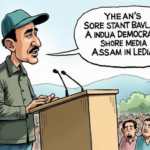

The ANSAM rally, organized by the All Naga Students’ Association, is at the center of escalating tensions in Manipur, particularly along National Highway-202. This rally has sparked significant opposition from two major Kuki civil society organizations, which have voiced their concerns regarding public safety and community tensions surrounding the proposed march. The Kuki Students’ Organization and the Kuki CSO Working Committee both emphasize that the planned route travels through areas fraught with conflict, making it a precarious choice at this time. They argue that, given the unresolved issues affecting the relations between the Kuki and Naga communities, proceeding with such a mobilization could exacerbate existing wounds and deepen mistrust. As this situation unfolds, the call for dialogue and reconsideration grows ever more urgent to maintain peace and stability in this sensitive region.
The proposed march by the All Naga Students’ Association, known as the ANSAM rally, highlights significant local tensions amidst the ongoing Manipur protests. The involvement of key players in the Kuki civil society raises critical concerns about inter-community relationships and the implications of such public gatherings. As the situation along National Highway-202 develops, discussions around community dynamics and public safety become increasingly relevant. Stakeholders are now urging reconsideration of the march’s logistics, emphasizing the importance of conflict prevention to avoid potential escalations. With the backdrop of ongoing challenges in Kuki-Naga relations, the local communities are closely monitoring the developments surrounding this rally.
Understanding the ANSAM Rally and Community Concerns
The proposed rally organized by the All Naga Students’ Association, Manipur (ANSAM) has raised significant concerns among various community groups, particularly the Kuki civil society organizations in Ukhrul district. Citing elevated tensions among different ethnic communities, Kuki organizations have issued advisories urging caution regarding ANSAM’s plans to march through Kuki-inhabited areas along National Highway-202. This critical route serves not only as a connector for communities but also as a flashpoint for historical grievances and current discontent. The Kuki Students’ Organization (KSO)-Ukhrul has publicly acknowledged ANSAM’s right to rally but simultaneously highlighted the need for careful navigation of sensitive zones where public safety may be compromised due to the ongoing inter-community conflicts and the unresolved issue surrounding the captivity of 14 Kuki men.
As tensions rise, the Kuki CSO Working Committee has voiced stronger opposition to the march, labeling the proposed route as precarious under the current socio-political climate. They have warned that the march could not only exacerbate existing community tensions but also lead to a deterioration of public safety in the region. Both Kuki organizations stress the importance of dialogue and mutual respect among communities before proceeding with such politically charged events. The sensitivity surrounding the Kuki and Naga communities showcases the intricate balance of peacekeeping that local governance and societal leaders must maintain, especially in a context charged with historical grievances.
Moreover, the KSO has raised alarms about the potential implications of conducting a rally without prior consent or consultation with Kuki stakeholders. They have articulated worries that such actions may ignite further discord in an already fragile environment. This situation highlights the growing need for effective communication and engagement among community leaders to foster mutual understanding and avoid friction. By refraining from provocative actions and respecting the pervading communal sensitivities, stakeholders can contribute to a more peaceful coexistence. The call for the ANSAM to reconsider the proposed path, in light of these communal concerns, emphasizes the importance of collaborative efforts in conflict resolution and public safety advocacy along National Highway-202.
Navigating Challenges in Public Safety and Community Harmony
The complexities surrounding the ANSAM rally underscore a broader narrative about community relations and the paramount importance of public safety in regions marked by ethnic plurality. The advisories from Kuki civil society organizations reflect the anxiety that often arises in areas facing communal strife. With National Highway-202 cutting through territories of multiple ethnic groups, any confrontation has the potential to escalate into broader conflicts, impacting not just those directly involved but the general public as well. Local leaders and organizations are advocating for pertinent discussions to address these concerns directly so that planned events respect the sentiments of all communities involved, and aim for societal harmony instead of division.
Communities have come to recognize that proactive measures are essential in securing peace and preventing escalation during politically charged events. The Kuki CSO Working Committee has articulated the need for alternative routes and better security arrangements to ensure the safety of participants and residents alike. By creating a platform for peaceful expression through dialogue and strategic planning, stakeholders can better navigate the delicate terrain of community tensions. Such preventative measures are vital to cultivate a climate where citizen engagement can occur freely and safely, thereby fostering public trust and cooperation along sensitive corridors like National Highway-202.
Crucially, the responsibility for ensuring a secure environment extends beyond individual organizations to include local government authorities and community leaders. They must engage transparently with all parties involved to facilitate an understanding of the local dynamics and cultural sensitivities. The emphasis on public safety, particularly in light of unresolved issues like the captivity of the Kuki individuals, reveals the necessity for a coordinated approach to risk management. This approach can not only help mitigate fears associated with the ANSAM rally but also pave the way for genuine dialogue among disparate groups yearning for peace. The advocacy for constructive engagement instead of confrontation serves as a cornerstone for building trust and fostering long-term community stability.
Frequently Asked Questions
What are the concerns surrounding the ANSAM rally on National Highway-202?
The ANSAM rally planned for National Highway-202 has raised significant concerns among Kuki civil society organizations regarding security and public safety. With heightened community tensions due to the unresolved hostage situation involving 14 Kuki individuals, local groups have advised against the march passing through Kuki-inhabited areas. They argue that the route is not suitable for large-scale mobilization and could worsen existing tensions, thus urging ANSAM to reconsider their plans for the safety of all communities involved.
| Key Points | Details |
|---|---|
| Tensions Surrounding ANSAM Rally | The tensions escalated after Kuki civil society organizations issued advisories opposing the ANSAM rally planned on June 4. |
| Opposition from Kuki Organizations | The Kuki Students’ Organization (KSO)-Ukhrul and Kuki CSO Working Committee criticized the rally’s planned route through sensitive areas. |
| Security Concerns | Both organizations raised alarms regarding the security risks, citing the unresolved hostage issue of 14 Kuki men. |
| Call for Peace and Safety | The KSO urged ANSAM to avoid sensitive stretches and implement safety measures during the rally. |
| Kuki’s Warning to ANSAM | The Working Committee warned that disregarding the advisory would have serious consequences for public safety. |
| Need for Dialogue | Observers suggest that dialogue among stakeholders may be essential to mitigate tensions and ensure a peaceful rally. |
Summary
The ANSAM rally planned for June 4 has ignited significant tension due to concerns raised by Kuki civil society organizations regarding security and inter-community relations. Prominent groups have voiced strong opposition to the route selected for the rally, emphasizing the delicate nature of the environment amidst ongoing issues surrounding the captivity of Kuki men. The KSO and Kuki CSO Working Committee have called for a reassessment of the rally plans, advocating for alternative routes to safeguard communal harmony and public safety. Their warnings highlight the importance of responsibility among organizers and the necessity for dialogue to navigate the ongoing tensions within the community. Engaging all stakeholders will be crucial to ensure the ANSAM rally does not exacerbate existing conflicts.