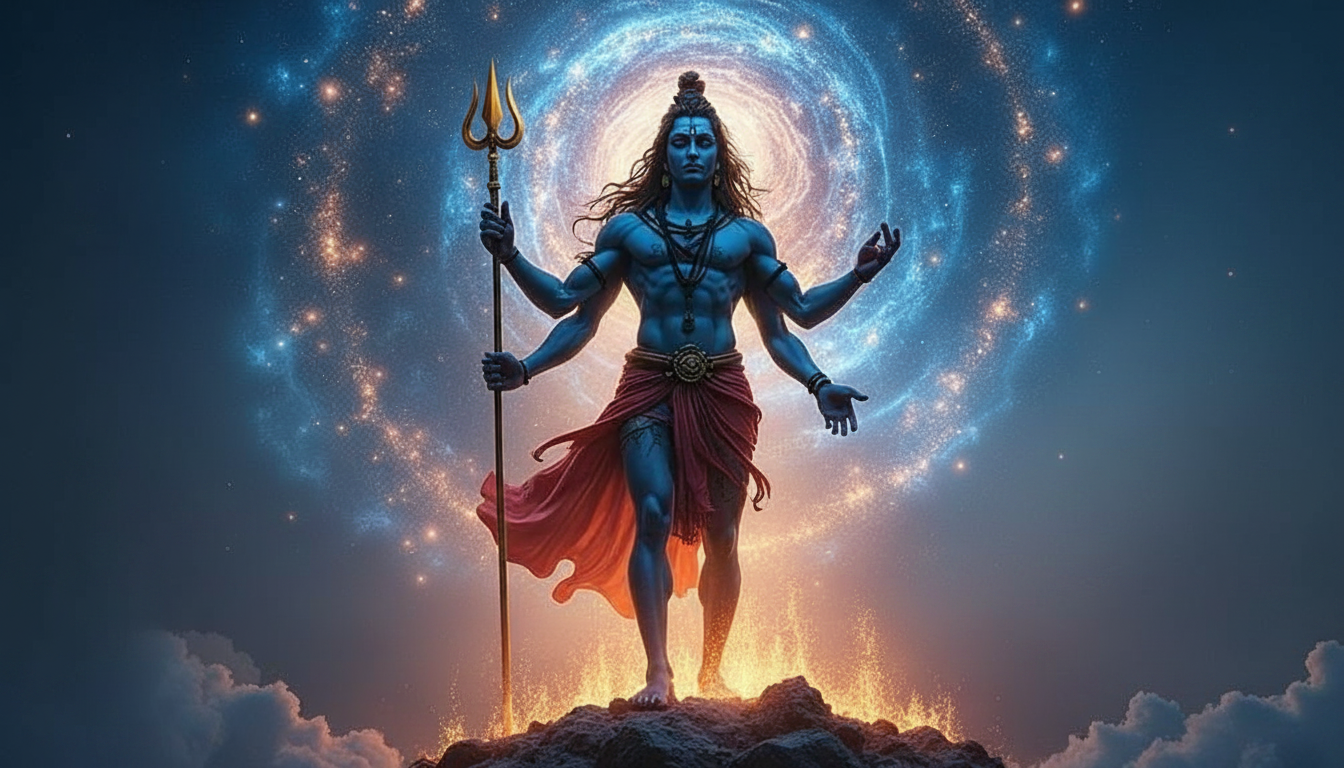
Nataraja, the cosmic form of Lord Shiva, serves as a profound symbol of cosmic energy, harmonizing the worlds of philosophy and science. This exquisite representation reflects the eternal rhythms of creation and destruction, mirroring principles found in quantum physics. A striking bronze statue of Nataraja at CERN illustrates the synergy between ancient beliefs and modern scientific inquiry, inviting observers to explore the interconnectedness of existence. As particles dance in the quantum realm, the depiction of Nataraja emphasizes a deeper understanding of the universe’s dynamics. This convergence of art and science illustrates that the quest for knowledge is not solely confined to the laboratory but extends profoundly into the spiritual and philosophical realms.
The embodiment of Shiva as Nataraja—the Divine Dancer—carries significant meaning in various cultural contexts, presenting it as a reflection of the universe’s rhythmic essence. This sacred figure, often associated with cosmic dynamics, resonates with themes prevalent in contemporary scientific discourse, such as those explored through quantum mechanics and particle physics. The striking bronze effigy at the European Organization for Nuclear Research (CERN) symbolizes an acknowledgment of the philosophical underpinnings that bridge ancient traditions with modern scientific exploration. The notion that energy and existence flow in a continuous dance aligns with key concepts in both traditional Indian philosophy and current scientific paradigms. By intertwining these diverse fields, the figure of Nataraja stands as a testament to the universal quest for understanding the nature of reality.
Exploring the Cosmic Significance of Nataraja
Nataraja, the cosmic dancer, embodies the essential rhythms of the universe and is a profound symbol of cosmic energy within Hindu philosophy. In his dance, Nataraja represents the continuous cycle of creation and destruction—key themes that resonate deeply with the principles of quantum physics. At CERN, the statue not only serves as an artistic homage to Lord Shiva but also invites contemplations on how the dance of subatomic particles mirrors the movements of the divine. This intricate connection highlights how ancient philosophies align with modern scientific understandings, emphasizing a unified view of existence that transcends cultural boundaries.
Furthermore, the dynamic movements of Nataraja’s dance can be interpreted through the lens of quantum mechanics, where particles are not static but constantly in motion, interacting in complex ways. Much like the rhythmic footfalls of Nataraja that echo through the cosmos, the dance at the quantum level embodies the ebb and flow of energy and matter. The statue at CERN serves as a tangible representation of this concept, reminding scientists and visitors alike of the philosophical underpinnings that inform their work and the interdependence of art and science in grasping the complexities of existence.
CERN: A Hub Where Science Meets Spirituality
CERN, the European Organization for Nuclear Research, acts as a bridge between science and spirituality, particularly illustrated by the presence of the Nataraja statue. Gifted by the Indian government in 2004, this bronze sculpture symbolizes not just a meeting of cultures, but the intertwining of scientific inquiry and metaphysical exploration. At CERN, physicists delve into the fundamental workings of the universe, examining quantum phenomena that often elude conventional understanding. The statue serves as a constant reminder that behind these scientific pursuits lies a philosophical quest to understand our place in the cosmic dance.
The unveiling of the Nataraja statue at CERN is emblematic of a broader acknowledgment that science and spirituality are not mutually exclusive realms but rather complementary pathways to comprehension. Just as Lord Shiva’s many forms represent different facets of reality, so too do the scientific efforts at CERN reflect diverse approaches to unraveling the mysteries of the universe. Through experimental studies of the smallest particles, scientists engage in a dance of their own, tapping into the cosmic energies that govern existence while echoing ancient wisdom that has explored these concepts for millennia.
The Symbolism of Shiva’s Dance in Quantum Physics
Shiva’s dance, particularly through the form of Nataraja, symbolizes the fundamental principles that underpin quantum physics—the interconnectedness and cyclical nature of existence. Each movement of Nataraja encapsulates core ideas such as creation (Srishti), preservation (Sthiti), and destruction (Samhara). These concepts resonate with the behavior of particles, which constantly interact and transform within the quantum realm. The dance emphasizes that existence is an ongoing process, much like how physicists observe particles in a state of flux, thereby reinforcing the idea that at the subatomic level, all forms and energies are in constant change.
In this context, Nataraja’s choreography not only represents the rhythm of the cosmos but also mirrors the dance of particles within quantum fields. The visual metaphor of Shiva’s fire illuminating the cycle of destruction and rebirth parallels the scientific understanding of energy conservation and transformation. Consequently, Nataraja becomes a powerful symbol that encapsulates the essence of life, death, and rebirth—not only in a religious sense but also in the scientific narrative that seeks to decode the workings of reality through empirical research and philosophical inquiry.
Understanding the Interplay of Art and Science at CERN
The installation of the Nataraja statue at CERN serves as a pivotal example of how art and science can coexist and enrich one another. This symbolic representation of Lord Shiva emphasizes that while scientific exploration seeks to decipher the laws of nature, art captures the emotional and spiritual essence of these discoveries. At CERN, researchers engage in groundbreaking studies that probe the origins of the universe, and having a monument like Nataraja inspires creativity and profound reflections on their findings. The statue thus creates a dialogue between creative expression and analytical thought, illustrating how both realms seek to answer life’s most profound questions.
Moreover, the presence of Nataraja at CERN signifies a broader philosophical stance that values the integration of diverse perspectives. Scientists, much like artists, are driven by curiosity and a yearning to understand what exists beyond the observable. In this way, Nataraja’s dance can be viewed as an artistic metaphor for the ever-evolving narrative of scientific progress, where theories emerge, are tested, and may ultimately transform our understanding of reality. This interplay enriches both disciplines, fostering a culture of inquiry that is holistic and inclusive, bridging the gap between empirical evidence and the search for meaning in our universe.
The Five Elements of Cosmic Existence in Nataraja’s Form
Nataraja’s dance not only embodies the creator and destroyer aspects of Lord Shiva but also represents five profound concepts integral to understanding cosmic existence: Srishti (creation), Sthiti (preservation), Samhara (destruction), Tirobhava (hiding or concealment), and Anugraha (blessing). Each elemental aspect is depicted in his dynamic movements, reflecting an awareness of the cyclical nature of the universe. This framework resonates with contemporary concepts in physics where stability, change, and the interplay of forces are continuously observed in quantum interactions, representing a rich tapestry of existence.
The significance of these five concepts extends beyond mere representation; they symbolize the underlying philosophy that drives scientific inquiry as well. Just as Nataraja orchestrates the rhythm of creation and dissolution, scientists at CERN work to decipher the fundamental rules governing particle behavior, seeking to understand how matter and energy coalesce and interact at the quantum level. In doing so, they reveal the deep interconnectedness of all things, echoing the wisdom embedded in ancient philosophies that speak to the unity of the cosmos, where art, science, and spirituality converge in a shared quest for knowledge.
CERN’s Invitation to Reflect on Existence and Reality
The statue of Nataraja at CERN serves as an open invitation to reflect on existence, urging a reconsideration of how science, art, and philosophy intersect in our understanding of reality. As researchers explore the foundational aspects of quantum physics, they are not just uncovering the mechanics of particles; they are also engaging in a philosophical dialogue about the nature of reality itself. The presence of Shiva, who embodies the cosmic dance, emphasizes that the quest for understanding is a shared human endeavor—one that acknowledges the mystery and beauty inherent in the fabric of the universe.
In this light, the statue is more than a cultural symbol; it represents a recognition that inquiry into the cosmos touches on existential themes that transcend disciplines. Physicists and artists alike contemplate fundamental questions about existence, consciousness, and the role of humanity within the vast universe. By celebrating this confluence of ideas, CERN fosters a community that values open-minded exploration, encouraging individuals to ponder not only the technical aspects of their work but also its philosophical implications, prompting deeper considerations about what it means to exist in a universe defined by both chaos and order.
The Legacy of Nataraja: Bridging Past and Future
Nataraja’s legacy as a symbol of cosmic energy draws from ancient Hindu philosophy, yet it finds relevance in modern scientific contexts, particularly within the realm of quantum physics explored at CERN. This bridging of past and future illustrates how timeless concepts can inspire cutting-edge research and technological advancements. As tomorrow’s physicists engage with the mysteries of the universe, they draw upon a rich tapestry of knowledge that includes not only rigorous scientific methodology but also insights gleaned from spirituality and philosophy, demonstrating the interdependent nature of these realms.
The enduring image of Nataraja thus invites future generations to reflect on the harmony between the scientific quest for knowledge and the spiritual pursuit of understanding existence. It encourages individuals to embrace diverse sources of wisdom while advancing their exploration of the cosmos. As particles dance within the quantum field, echoing the rhythms of Nataraja, scientists are reminded that they partake in a larger narrative—one that seeks to comprehend the fundamental principles governing life and the universe, fostering a legacy that honors both scientific inquiry and spiritual depth.
Nataraja: A Metaphor for Quantum Fluctuations
The metaphor of Nataraja as a representation of cosmic energy provides a fascinating lens through which to view the concept of quantum fluctuations. Just as Nataraja’s dance encompasses the cycles of creation and destruction, quantum physics reveals a world where particles spontaneously appear and disappear, highlighting the transient nature of energy at a subatomic level. This unpredictability echoes the very essence of existence, where the act of observation influences the behavior of particles, much like the viewer’s interpretation of art impacts its meaning.
In acknowledging Nataraja as a symbol of this dynamic interplay, we see further implications for understanding the universe. His dance serves as a constant reminder of the fluid boundaries between matter and energy, existence and non-existence. By examining the nature of reality through this artistic lens, scientists at CERN can appreciate not only the mechanics of physics but the philosophical inquiries that accompany their findings, inspiring them to consider how these insights can enrich both scientific and spiritual perspectives.
Nataraja at CERN: Fostering a Global Dialogue
The inclusion of the Nataraja statue at CERN serves a critical role in fostering a global dialogue about the intersections of culture, science, and philosophical thought. In a world increasingly driven by technology and empirical research, the statue stands as a testament to the importance of integrating diverse ways of knowing, illustrating how different cultures approach the fundamental questions of existence. It creates a space for dialogue that transcends geographical and disciplinary boundaries, encouraging scientists, artists, philosophers, and the public to engage in discussions about the profound nature of reality.
This dialogue is enriched by the understanding that the principles embodied by Nataraja—such as balance between creation and destruction—reflect key themes within scientific investigation today. As CERN continues to explore the mysteries of the universe, the statue remains a cultural reference point, reminding researchers of the responsibilities that accompany their discoveries. It emphasizes the importance of engaging with the ethical and philosophical dimensions of scientific work, fostering a community of inquiry that values collaborative dialogue, respect for cultural heritage, and a shared commitment to understanding the cosmos.
Frequently Asked Questions
How does the Nataraja statue at CERN symbolize the connection between Lord Shiva and quantum physics?
The Nataraja statue at CERN symbolizes the connection between Lord Shiva and quantum physics by representing the cosmic dance of creation and destruction, akin to the behavior of subatomic particles. In quantum physics, particles influence each other instantaneously, reflecting the rhythm of existence embodied by Nataraja. This iconic representation highlights the interrelation of art, philosophy, and science, showcasing how they together illuminate our understanding of the universe.
| Key Point | Details |
|---|---|
| Nataraja’s Symbolism | Nataraja embodies cosmic energy and the eternal cycle of creation and destruction, linking Lord Shiva’s dance with quantum physics. |
| CERN’s Role | The statue was gifted to CERN by the Indian government on June 18, 2004, symbolizing the connection of art and science. |
| Shiva’s Dance | Represents five cosmic concepts: Srishti (creation), Sthiti (preservation), Samhara (destruction), Tirobhava (forgetting), and Anugraha (blessing). |
| Art and Science Connection | The statue acknowledges that art, philosophy, and science are interconnected in understanding the universe, much like the particle interactions studied in physics. |
Summary
Nataraja, the majestic form of Lord Shiva, beautifully embodies the essence of cosmic energy, manifesting the intricate relationship between our universe and the subatomic world studied in quantum physics. The iconic bronze statue of Nataraja at CERN is not just an artistic representation but a profound reminder of how ancient philosophy and modern science intersect. Each element of Nataraja’s dance illustrates fundamental concepts of cosmic existence, intertwining the act of creation with the principles of preservation and destruction. This deep connection emphasizes that while art may evoke the beauty of existence, science meticulously dissects its principles, revealing an ever-evolving dance at the subatomic level. In blending these realms, Nataraja stands as a testament to humanity’s quest for understanding, celebrating the unity of all knowledge.