

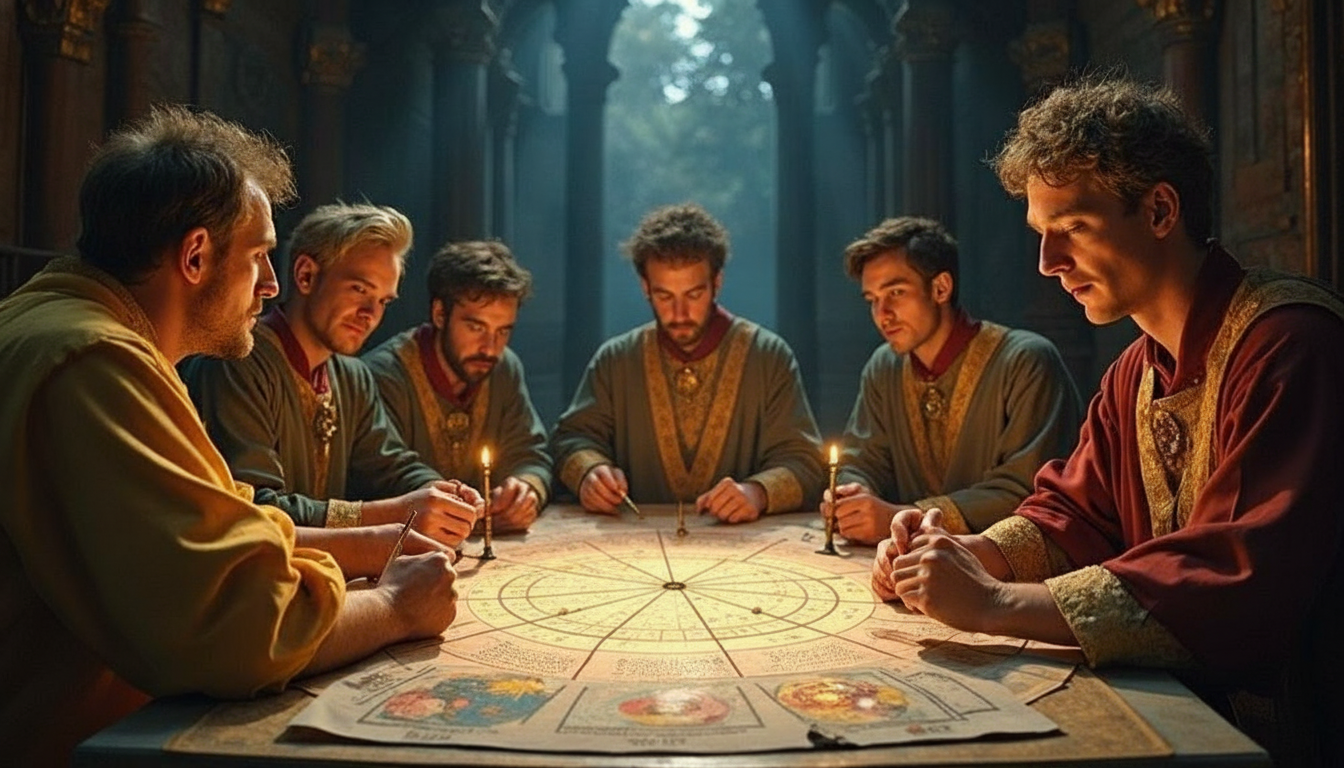
Royal mysticism captivates with its blend of the supernatural and the regal, intertwining the destinies of monarchs and the esoteric arts. Throughout history, members of royal families have been drawn to occult traditions, exploring mysteries beyond the grasp of ordinary understanding. Prominent figures, from Queen Elizabeth I and her trusted astrologer John Dee to Norway’s Princess Märtha Louise engaging in clairvoyance, illustrate how these elite individuals have sought guidance and inspiration through astrology and spiritual healing practices. Such pursuits were not merely fleeting whims; they often reflected deeper quests for knowledge and power within turbulent political landscapes. The allure of royal mysticism continues to intrigue, as we uncover the secrets woven into the fabric of history, revealing how these beliefs shaped destinies and influenced nations.
The exploration of regal esotericism unveils a fascinating intersection between nobility and supernatural insight. Throughout the ages, many royal figures have delved into metaphysical practices, such as astrology and spiritual guidance, often seeking counsel from clairvoyants and mystical advisors. This phenomenon extends back centuries, where the aristocracy’s engagement with the mystic arts reveals their thirst for understanding and influence in an unpredictably changing world. The narratives surrounding powerful rulers and their reliance on spiritual mediums underscore a profound connection between leadership and the unseen forces believed to govern fate. By examining these accounts, we uncover a rich tapestry of occult practices interwoven with the legacies of royal families.
Royal Mysticism: Bridging the Past and Present
Throughout history, the phenomenon of royal mysticism has captivated the hearts and minds of both rulers and subjects. This intriguing blend of occult traditions and high status has often led to influential royals embracing practices like clairvoyance and astrology, seeking guidance beyond the realm of empirical knowledge. From the court of Queen Elizabeth I to contemporary royal figures, the allure of mystical insights remains undeniable. The undeniable intersection of power and the supernatural raises questions about the legitimacy of these beliefs and their impact on governance during the ages.
Modern royal families continue to draw inspiration from their mystical predecessors, as seen in Norway with Princess Märtha Louise who delves into spiritual healing and teaching angelic connections. This legacy not only reinforces the importance of personal belief systems among the elite but also sheds light on broader societal tendencies to explore the unseen worlds. By examining the choices of royals past and present, we witness how spiritual practices potentially nourished their decision-making processes and offered solace in times of distress.
The Influence of Royal Astrologers in Historical Decisions
Astrology has long served as a guiding star for many royals, intertwining their fates with celestial events. Queen Elizabeth I’s reliance on John Dee showcases how the wisdom of astrologers provided guidance in matters of state and personal affairs. Guided by the stars, monarchs believed they could better navigate the complexities of rule, grounding their decisions in celestial wisdom. The necessity for royal approval often led to the intimate involvement of astrologers, as they were tasked with interpreting the heavens to benefit their sovereign.
Similarly, the historical account of Queen Victoria’s engagements with spiritualism presents a captivating insight into the Victorian era’s fascination with the occult. Reports of her interactions with mediums, believing they could bridge the gap between the living and the deceased, reveal the burgeoning interest in spirit communication within royal circles. Consequently, this connection with the metaphysical not only highlights the personal struggles of rulers but also the extent to which astrology and spiritual practices permeated the political and emotional landscapes of monarchy.
Mystics and Their Profound Impact on Royal Families
Empress Alexandra’s association with the enigmatic Rasputin brought to light the powerful yet controversial role of mystics within royal circles. Rasputin’s purported abilities to heal and predict outcomes fueled public intrigue and concern, leading to a complex narrative of reliance and trepidation. His controversial influence over Alexandra and the royal family raised critical questions regarding the boundaries of spiritual influence in politics, fundamentally altering perceptions of power within the Russian monarchy.
Similarly, the tales surrounding figures like Rudolf II highlight how royalty often sought knowledge beyond the material world to uncover deeper truths. His court became a melting pot for scholars devoted to alchemy and astrology, showcasing the empire’s commitment to understanding esoteric mysteries. As patrons of the mystical and the occult, royal figures have historically navigated a delicate balance between public scrutiny and personal belief, further entwining their legacies with the allure of mysticism.
Spiritual Healing: A Monarch’s Quest for Well-Being
The concept of spiritual healing has often found its way into royal anecdotes, depicting rulers who sought solace through unconventional channels. Emotional turmoil and physical ailments sometimes beckoned royal families to explore the realms of psychic healing and alternative therapies, blurring the lines between health and mysticism. Contemporary interpretations of these practices include public figures like Queen Elizabeth II, whose family continues to embrace holistic healing, demonstrating how spiritual well-being is woven into the rich fabric of royal life.
As royals engage in spiritual healing, the implications can ripple through society, challenging traditional medical paradigms. The dedication to mental and spiritual wellness, once a private pursuit, can inspire broader acceptance of alternative practices among the general populace. By acknowledging the healing powers of clairvoyance and spiritual intervention, contemporary royals uphold the deeply rooted tradition of exploring the mystical, affirming the relevance of these practices even in the modern age.
The Intersection of Royal Legacy and Occult Traditions
In the annals of history, several monarchs have demonstrated a noteworthy intersection between royal legacy and occult traditions. Figures like Catherine de’ Medici, who sought prophetic insights from Nostradamus, reveal how these mystical practices were not merely sidelined curiosities but integral components of royal decision-making and legacy building. The fascination with prophecy and the unknown illustrates how rulers sought validation and foresight in their rule, often turning to the cosmic to understand their earthly challenges.
The integration of occult traditions into the royal narrative offers an inviting exploration of how belief systems shaped the governance of empires. Royal families who dared to embrace the mystical often garnered both admiration and condemnation, amplifying their historical narratives. Today, by analyzing these connections, we can gain invaluable insight into the motivations that led many royals to seek wisdom through the occult, interpreting history through a lens that acknowledges the depths of human belief.
Clairvoyance: The Secret Behind the Throne
Clairvoyance has often served as a secretive thread underlying many royal decisions throughout history. This ability to perceive beyond the ordinary has attracted numerous royals who sought assistance through seers and clairvoyants. The continued relevance of such practices spurs curiosity about the impact of these insights on day-to-day royal life. With longstanding traditions of consulting crystal gazers or fortune-tellers, the intrigue surrounding these experiences contributes significantly to how we perceive royalty today.
Furthermore, modern advancements and perceptions of clairvoyance emphasize a fascinating blend of old-world mysticism with today’s contemporary spiritual practices. Figures such as Norway’s Princess Märtha Louise represent this unique amalgamation, driving conversations that question not only traditional practices but also the significance and societal acceptance of clairvoyance among contemporary royals. This ongoing exploration reinforces the enduring influence of mysticism within royal narratives, shaping public perception and engagement with the mystical.
The Legacy of Royal Sorcery and Spiritual Beliefs
The legacies of sorcery and spiritual beliefs among royals depict a rich tableau of how the supernatural intertwined with governance. From Catherine de’ Medici’s pregnancy horoscopes to Queen Victoria’s alleged spirit communions, narratives of ancient sorceries often map a path toward understanding the fears and ambitions of monarchs. These mystical practices not only provided personal solace but also served as tools of legitimacy and control, as royal lineage sought validation through extraordinary means.
As the fascination with spiritual beliefs evolved, they began shaping public perceptions around royalty, creating an air of mystique and authority. Thus, the long-standing practices of sorcery and divination intersect with the historical context, where rulers relied on the unseen to solidify their power. Examining these traditions in the context of royal families inspires dialogue about contemporary spirituality, reminding us of the intricate bond connecting societal beliefs with governance.
The Spiritual Intermediaries: Channeling the Beyond
Spiritual intermediaries have played a distinctive role throughout the ages, acting as the links between royal families and the spiritual realms. Figures such as mediums and psychics provided insights that often shaped the philosophical grounds upon which decisions were made. The belief that these intermediaries could channel the thoughts and feelings of ancestors or celestial beings highlights the broader implications of trust in the unseen in guiding rulers.
In contemporary contexts, spiritual intermediaries have experienced a resurgence, mirroring the historical pursuits of clarity in governance. As members of modern royal families explore spiritual healing and clairvoyance, their narratives often echo the age-old reliance on mystical figures. Such connections underscore the ongoing intrigue surrounding the intersection of royalty and mysticism, fostering public interest in the spiritual frameworks that influence leadership.
Rulers and Their Quest for Hidden Knowledge
Historical accounts painted rulers as avid seekers of hidden knowledge, with figures like Rudolf II epitomizing this relentless pursuit. His court became a sanctuary for esoteric scholars, creating a cultural hub for alchemy, astrology, and mysticism. This quest for secret wisdom was not merely academic; it often intersected with political maneuvers, as kings and queens believed that esoteric insights could solidify their rule and navigate the complexities of power.
Exploring the enigmatic life of rulers fascinated by hidden knowledge unveils a world where authority and intrigue coexist. The legacies left behind—tomes of alchemical experiments, astrological charts, and prophecies—further illuminate how these pursuits were interwoven with their identities as monarchs. Such explorations challenge us to broaden our understanding of governance, highlighting the reality that many monarchs engaged with mystical knowledge as a means of grasping control over their destinies.
Frequently Asked Questions
How have royal mysticism practices like clairvoyance and astrology influenced royal families throughout history?
Royal mysticism has significantly influenced the traditions and beliefs of royal families over centuries. Notable examples include Queen Elizabeth I, who consulted astrologer John Dee for guidance, reflecting the use of astrology as a tool for decision-making. Similarly, Empress Alexandra’s connection with Rasputin illustrated the impact of supernatural beliefs on royal lives. These instances showcase how practices like clairvoyance and spiritual healing were intertwined with the responsibilities and personal lives of monarchs, highlighting the enduring fascination with occult traditions among the elite.
| Royal Figure | Mystical Practice | Impact |
|---|---|---|
| Queen Elizabeth I | Counsel from Astrologer John Dee | Maintained a long-standing, secretive reliance on mysticism. |
| Queen Victoria | Rumored contact with the dead through mediums | Contributed to folklore and reflected grief. |
| Empress Alexandra | Influence of Rasputin | Public discontent with the monarchy due to Rasputin’s controversies. |
| Rudolf II | Alchemy and esoteric learning | Turned Prague into a center for mysticism. |
| Catherine de’ Medici | Horoscopes by Nostradamus | Attempted to control her children’s destinies. |
| Crown Princess Hwi | Royal sorcery scandal | Expulsion from court and execution of involved individuals. |
| Frederick William II | Belief in ghostly guidance | Influenced personal and political decisions. |
| Princess Märtha Louise of Norway | Clairvoyant practices | Faced media scrutiny and skepticism. |
Summary
Royal mysticism captivates the imagination as it intertwines with history, revealing the profound ways in which royalty has engaged with the mystical and the unseen. From Queen Elizabeth I’s discreet consultations with the astrologer John Dee to the intriguing tales of Queen Victoria attempting to commune with her deceased husband, the royal pursuit of knowledge and understanding extends far beyond political ambition. The stories of Empress Alexandra and Rasputin illustrate the dramatic consequences that such beliefs can bring upon a monarchy, while Rudolf II’s transformation of Prague into a hub of alchemical learning exemplifies a more constructive engagement with mysticism. Across centuries and different cultures, figures like Catherine de’ Medici and Princess Märtha Louise of Norway demonstrate that the allure of the mystical persists, serving as both a source of personal solace and public controversy. Ultimately, royal mysticism serves as a testament to the enduring human quest for understanding and connection with forces greater than ourselves.



























