

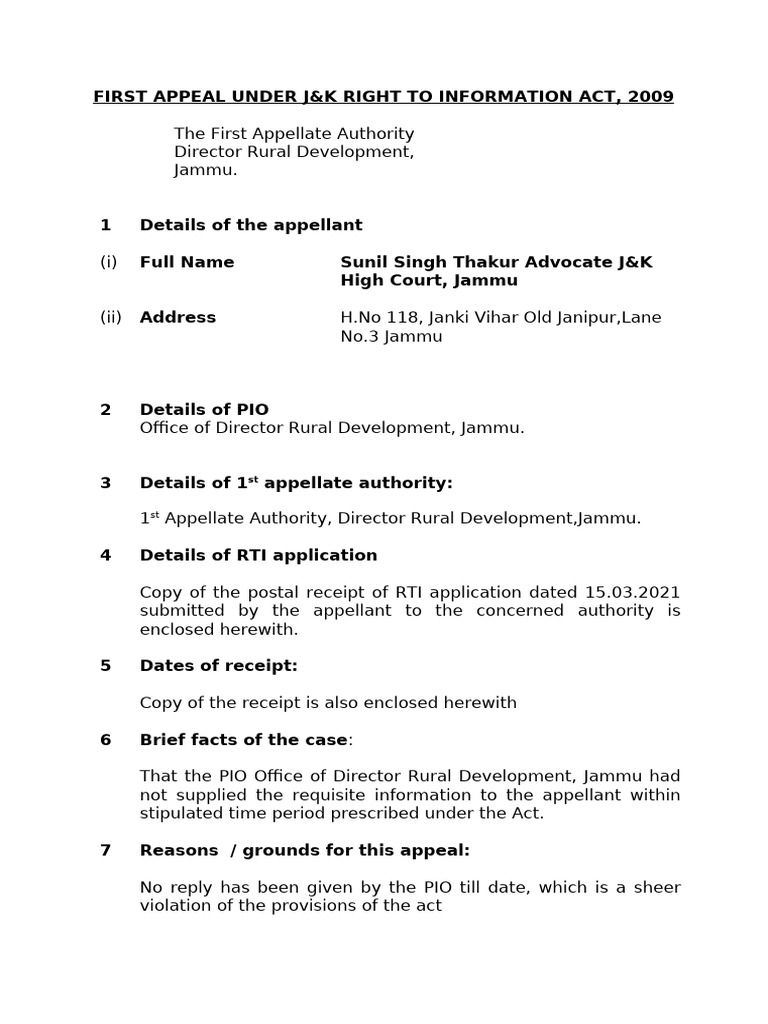
Navigating the RTI Act appeal process can seem daunting, but it is a crucial step for those seeking transparency in governance. The appeal under RTI allows citizens like Saurabh Shrivastava to challenge decisions made by public authorities regarding their Right to Information requests. Understanding how to file RTI appeal effectively empowers individuals to hold institutions accountable and obtain the information they rightfully deserve. With the right knowledge about RTI Act orders and the appeal mechanisms in place, you can enhance your chances of success significantly. This guide will break down the essentials of the RTI Act process for you, making the journey less complicated and more informative.
When individuals find their inquiries into public records blocked or inadequately addressed, they often turn to the process of lodging an RTI appeal. This procedure enables applicants to seek redress and reevaluation of the decisions made by public authorities. The appeal filed by citizens, such as Saurabh Shrivastava, exemplifies the importance of persistence in accessing information. By understanding the nuances of this process, including how appeals operate under the Right to Information framework, individuals can effectively advocate for their rights. Many are often unsure of the steps involved, but with clarity on the appeal mechanism, obtaining vital information becomes an achievable goal.
Understanding the RTI Act Appeal Process
The Right to Information (RTI) Act empowers citizens to request information from public authorities, aiming to promote transparency and accountability in governance. However, there are instances when an applicant may not receive a satisfactory response or may be denied access to information altogether. In such cases, understanding the RTI Act appeal process becomes crucial. This process allows individuals like Saurabh Shrivastava, who filed Appeal No. 6888 of 2026, to challenge adverse decisions regarding their requests and seek redress from Appellate Authorities (AAs). A well-structured RTI appeal can ensure that rightful information is obtained, thereby reinforcing the principles of the RTI Act.
To initiate an appeal under RTI, an applicant must adhere to specific procedures established by the act. Generally, a first appeal must be filed with the designated Appellate Authority within thirty days of receiving the original information request’s decision. The appeal should clearly outline the grounds for the challenge, supported by relevant facts and documents. This appeal process not only promotes a culture of accountability but also provides a legal avenue for citizens to hold government officials accountable for their decisions related to information access.
Filing an RTI appeal, such as the one submitted by Saurabh Shrivastava, requires careful attention to detail and adherence to the timelines specified in the RTI Act. It is important to frame the appeal concisely, stating the reasons for dissatisfaction with the original response. The appeal must reference the specific provisions of the RTI Act that apply to the request, while also mentioning any relevant orders or precedents that support the request for information denied. This level of detail not only strengthens the case but also illustrates the appellant’s understanding of the RTI Act process.
Moreover, the outcome of an appeal under RTI can vary significantly based on the appeal’s presentation. A well-prepared appeal could lead to favorable orders from the Executive Authority, thus ensuring that citizens receive the information they are entitled to. Additionally, if an applicant is still unsatisfied after the first appeal, they have the option to escalate their request further, including the possibility of making a second appeal before the Information Commission. Each step taken in the appeal process underlines the importance of persistence and knowledge of the RTI Act’s provisions.
Key Steps to File an RTI Appeal Successfully
Successfully filing an RTI appeal requires a systematic approach, starting from understanding the grounds for appeal to adhering to the appropriate procedures. The first step is to review the initial response received from the public authority to identify the specific areas of concern. For instance, in Saurabh Shrivastava’s appeal, it would be vital to scrutinize why the requested information was either denied or inadequately provided. Identifying these issues not only helps in articulating the appeal but also facilitates a clearer understanding of the RTI Act process, which is essential for all applicants.
Once the grounds for the appeal are identified, the next step involves drafting the appeal letter. The appeal must include essential details such as the applicant’s name, address, and the RTI application number. It should also clearly state the reasons for the appeal and any additional information that might strengthen the case. By effectively communicating the challenges faced with the original decision, applicants like Saurabh Shrivastava can enhance the likelihood that their appeal will be executed favorably by the Appellate Authority.
In addition to crafting a well-reasoned appeal, applicants must also be mindful of deadlines and submission methods when filing their appeals. The RTI Act stipulates a time frame of thirty days for first appeals, making it crucial to act promptly. Appeals can often be submitted through online platforms, post, or in-person at the designated office of the Appellate Authority, depending on the regulations of the respective state or central authority. For example, Saurabh Shrivastava would need to ensure that his appeal was filed within this timeframe and using the appropriate channel for submission.
Furthermore, keeping a record of all correspondence and maintaining a file with copies of the original RTI application and the appeal is advisable. This ensures that if the appeal requires escalation or further action, all relevant information is easily accessible. Engaging with resources such as existing RTI Act orders and successful cases can also provide valuable insights into effective appeal strategies, ultimately aiding in the successful resolution of requests for information.
Frequently Asked Questions
What is the process for filing an RTI Act appeal like the one filed by Saurabh Shrivastava?
The RTI Act appeal process involves submitting a formal appeal against the decision made by the Public Information Officer (PIO). To file an RTI appeal like Saurabh Shrivastava’s Appeal No. 6888 of 2026, you should write to the designated Appellate Authority within 30 days of receiving the PIO’s response. Include details such as your original RTI application, the reasons for your appeal, and any supporting documentation. Ensure that your appeal adheres to the provisions laid out in the RTI Act orders to improve the chances of a favorable outcome.
| Date | Case Number | Appellant | Subject |
|---|---|---|---|
| Jun 15, 2026 | 6888 of 2026 | Saurabh Shrivastava | Orders of AA under the RTI Act |
Summary
The RTI Act appeal no. 6888 of 2026 filed by Saurabh Shrivastava is an important case within the purview of the Right to Information Act. This appeal, submitted on June 15, 2026, addresses the orders of the Appellate Authority (AA) related to requests for information under the RTI Act. Analyzing such cases helps to understand the mechanisms of accountability and transparency that the RTI Act is designed to promote. Crucially, these appeals facilitate greater public insight into government operations and ensure that individuals can seek redress concerning denied information requests. Understanding the nature and implications of RTI Act appeals is essential for anyone looking to navigate the complexities of this vital legislative framework.



























