

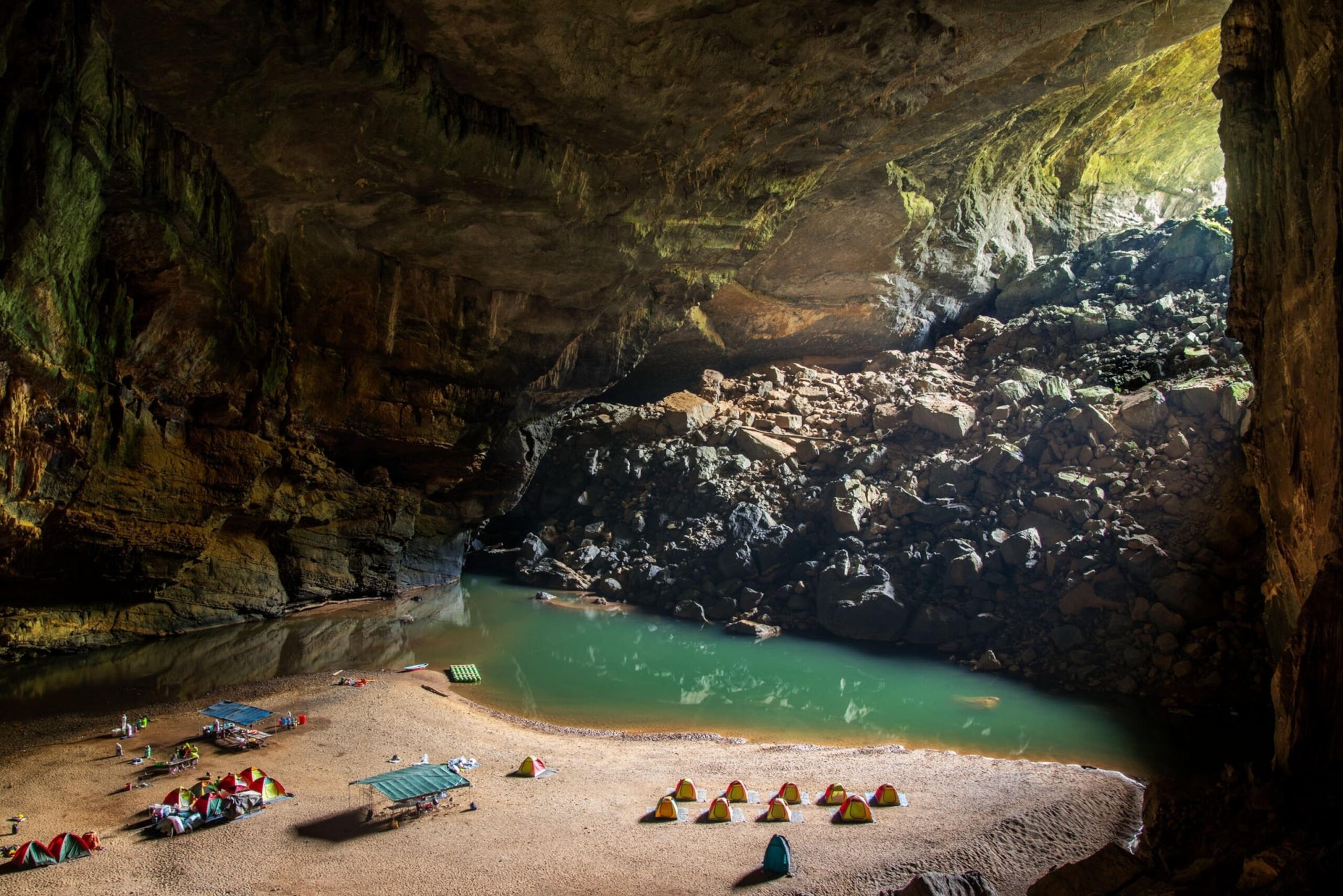
Son Doong cave, hailed as the world’s largest cave, is a stunning natural wonder nestled in Vietnam’s Phong Nha-Ke Bang National Park. Spanning an astonishing 5.6 miles, this geological marvel features caverns so vast that they can house a football field and still have room to spare. The Son Doong discovery remains one of the most intriguing tales in cave exploration, having been hidden for decades before its reopening in 2009. This massive cave hosts a unique Son Doong ecosystem teeming with life, showcasing fascinating biodiversity rarely found elsewhere. As interest in Vietnam cave tourism soars, adventurers flock to explore Son Doong, drawn by its mysteries and the thrill of traversing this enormous subterranean world.
The magnificent Son Doong cave stands out not just for its size but also for its remarkable story of rediscovery in the heart of Vietnam. Often referred to as the largest cave formation on the planet, this hidden gem emerged from obscurity after nearly two decades of being lost to time. A treasure trove of geological formations and diverse flora and fauna, the Son Doong ecosystem continues to captivate researchers and nature lovers alike. With tourism in this Vietnamese cave region booming, the thrill of exploring Son Doong is becoming a must-do adventure for thrill-seekers and nature enthusiasts worldwide. This immense cavern, with its unique features, offers an unparalleled glimpse into the mysteries concealed beneath the earth’s surface.
Exploring the Wonders of Son Doong Cave
Son Doong cave, located in Vietnam’s Phong Nha-Ke Bang National Park, offers an unparalleled adventure for both nature lovers and thrill-seekers. As the world’s largest cave, it presents an ecosystem teeming with life and unique geological features that have taken millions of years to form. The sheer scale of Son Doong can leave visitors in awe, as it is big enough to accommodate an entire forest, complete with its own weather system that allows rainfall to occur inside its vast caverns.
The experience of exploring Son Doong is unmatched by any other, captivating professionals and amateurs alike. Trekkers often describe the sense of discovery felt while navigating through its expansive passages. From its towering stalagmites to the underground rivers, every step taken reveals aspects of this stunning geological phenomenon. Guided tours allow visitors to safely traverse the rugged terrain while learning about the cave’s geological history and its importance in the broader context of Vietnam cave tourism.
The Unique Ecosystem of Son Doong Cave
The ecosystem within Son Doong is as remarkable as its size. Researchers have unveiled a complex web of life that exists within this dark, enclosed environment. This area supports various species, including newly discovered insects and plants that are exclusive to the cave. Notably, the ongoing studies conducted by the Vietnam National Museum of Nature have highlighted the discovery of unique species of land-snails, contributing to the cave’s biodiversity. These findings emphasize Son Doong’s role as a significant environment for scientific exploration and conservation.
The interplay of temperature and humidity inside Son Doong creates a microclimate that fosters unique weather patterns. Scientists believe that this internal weather can lead to occurrences of rainfall that shape the cave’s ecosystem and support its flora and fauna. Understanding this elaborate ecosystem is crucial, not only for the preservation of Son Doong but also for insights into wider biodiversity and ecological systems in subterranean environments.
The Discovery Journey of Son Doong Cave
The journey to rediscover Son Doong cave is a story of determination and chance. Originally discovered in the 1990s by Ho Khanh, the entrance to the cave became obscured by dense jungle over time, making it virtually unreachable for years. It wasn’t until a proper expedition in 2009 that adventurers were able to confirm its monumental size and unique features. This rediscovery opened the floodgates for both scientific inquiry and tourism, turning Son Doong into a global landmark.
The 2009 expedition not only reestablished Son Doong’s significance but also captivated the world’s attention, leading to its recognition by the Guinness Book of World Records in 2013. This remarkable story reflects the intertwining of local knowledge and exploratory spirit, illustrating how a single discovery can transform our understanding of natural wonders and bolster Vietnam’s reputation in the world of cave tourism.
Son Doong: A Sustainable Tourism Experience
Son Doong is a hotspot for adventure tourism, but the local government has implemented strict measures to manage visitor numbers. Only 1,000 people a year are allowed to explore the cave, a strategic move aimed at reducing the ecological footprint of tourism while highlighting the stunning beauty and ancient past of this natural wonder. This approach is crucial to sustain the integrity of the cave and protect its geological and biological integrity.
The guided expeditions, organized by companies like Oxalis Adventure, offer a carefully curated experience that includes all necessary permits, camping gear, and expert guides. The cost of approximately $3,000 per person reflects not just the thrill of exploring Son Doong but also the underlying commitment to environmental conservation. By regulating access and educating travelers, Vietnam hopes to maintain the breathtaking experience of exploring Son Doong while safeguarding it for generations to come.
Geological Marvels of Son Doong Cave
The geology of Son Doong is awe-inspiring, marked by stunning formations that took millions of years to develop. When sunlight pours into the cave through its openings, it illuminates the dazzling stalagmites and stalactites, creating a surreal atmosphere that feels otherworldly. The combination of limestone and the unique rock formations presents not just a visual feast but also a treasure trove for geologists studying the Earth’s history and the processes that shaped these monumental caves.
The ongoing research in Son Doong focuses on the understanding of cave formation processes and the implications of geological transformations over extensive periods. The cave’s dimensions and features, such as submerged passages and underground rivers, challenge scientists to unravel the mysteries of karst landscapes while providing valuable insights into natural history. Studying Son Doong enriches our knowledge of subterranean systems, adding depth to our comprehension of the planet’s geological wonders.
The Mysteries Yet to Unravel in Son Doong Cave
Even with its immense scale and unique ecosystem, scientists believe that Son Doong still harbors many secrets yet to be unveiled. Ongoing hydrological studies aim to decipher the complex network of underground rivers that flow through the cave’s interior. Some sections remain inaccessible, with cave divers tasked with uncovering submerged passages, suggesting that our understanding of Son Doong is still incompletely drawn, ripe with opportunities for discovery and exploration.
Biodiversity studies have already illuminated parts of Son Doong’s hidden natural treasure, documenting an impressive array of species. As researchers continue to explore the cave, they hope to catalog even more organisms and understand their roles within this fascinating ecosystem. The potential discovery of new species and the interconnectedness of Son Doong with other caves, such as Hang En, is a reminder that this natural wonder is still a frontier waiting to be fully explored.
Son Doong: A World of Adventure Awaits
For those seeking adventure, Son Doong offers an experience that is unparalleled in the realm of exploration. Each expedition is an opportunity to traverse through a cave filled with towering walls and unique ecosystems, showcasing the raw beauty of nature at its finest. From navigating through lush jungle teeming with life to marveling at impressive rock formations, adventurers are left speechless by the cave’s grandeur.
Equipped with helmets, headlamps, and the guidance of experienced professionals, visitors embark on a challenging journey that allows them to connect with nature in remarkable ways. These thrilling experiences not only encourage exploration but also foster a deeper appreciation for natural wonders, inspiring future generations to advocate for the conservation of places like Son Doong.
Son Doong’s Impact on Local Communities
The discovery and subsequent popularity of Son Doong have significantly influenced the surrounding local communities. As tourism has grown, so has the economic benefit for residents, providing job opportunities in guiding, hospitality, and support services. This positive impact underscores the potential of sustainable tourism, demonstrating how careful management can lead to both conservation and community empowerment.
Moreover, the cultural exchanges that occur due to global interest in Son Doong promote awareness of the region’s stunning natural beauty and rich heritage. Local inhabitants have the opportunity to share their stories and traditions, bridging the gap between visitors and the local culture while fostering a sense of pride in their homeland.
The Cultural Significance of Son Doong Cave
Beyond its physical grandeur, Son Doong Cave holds cultural significance for the people of Vietnam. For many locals, it is a hidden gem that is linked to stories and legends passed down through generations. Embracing the cave as part of their heritage reinforces the importance of preserving and respecting natural sites, which play a fundamental role in shaping identity and history.
As more attention is drawn to Son Doong, it serves as a reminder of the connection between nature and culture. The cave not only offers a glimpse into ancient geological processes but also showcases the rich tapestry of life, tradition, and narrative that defines the region. Preserving Son Doong is not just about protecting a natural wonder; it’s also about safeguarding the cultural legacy that it embodies.
Frequently Asked Questions
What makes Son Doong cave the world’s largest cave?
Son Doong cave, located in Vietnam, is recognized as the world’s largest cave due to its immense size, stretching 5.6 miles in length and reaching heights comparable to a 65-story building. Its vast caverns are wide enough to house a football field and even the Great Pyramid of Giza. The cave’s unique geological formation and extensive ecosystem, including jungles and rivers within its chambers, contribute to its global distinction.
| Key Points | Details |
|---|---|
| Location | Vietnam’s Phong Nha-Ke Bang National Park, Quang Binh Province. |
| Size | 5.6 miles long, as high as 65 stories, large enough to fit a football field and a half. |
| Discovery | Discovered by Ho Khanh in the early 1990s and confirmed in 2009 by a team of explorers. |
| Ecosystem | Houses rivers, jungles, weather clouds, and even new species like the recently discovered land snail. |
| Tourism | Limited to 1,000 visitors a year due to conservation efforts; expeditions cost $3,000 per person. |
| Ongoing Research | Hydrologists are studying underground rivers and biodiversity; many areas remain unexplored. |
Summary
Son Doong cave is a mesmerizing natural wonder, known not only as the world’s largest cave passage but also as a hidden gem nestled within the dense jungles of Vietnam. With its staggering length of 5.6 miles and soaring heights that can exceed 65 stories, it has captured the fascination of adventurers and scientists alike. This extraordinary cave is home to a vibrant ecosystem—boasting jungles, rivers, and even clouds within its expansive chambers, creating a unique environment ripe for discovery. Despite its grandeur, Son Doong was largely unknown until its rediscovery after being hidden in the jungle for decades. Now recognized for its breathtaking scale and biodiversity, this cave continues to reveal secrets as researchers unlock its mysteries, promising that the stunning beauty of Son Doong will only grow deeper with time.



























