

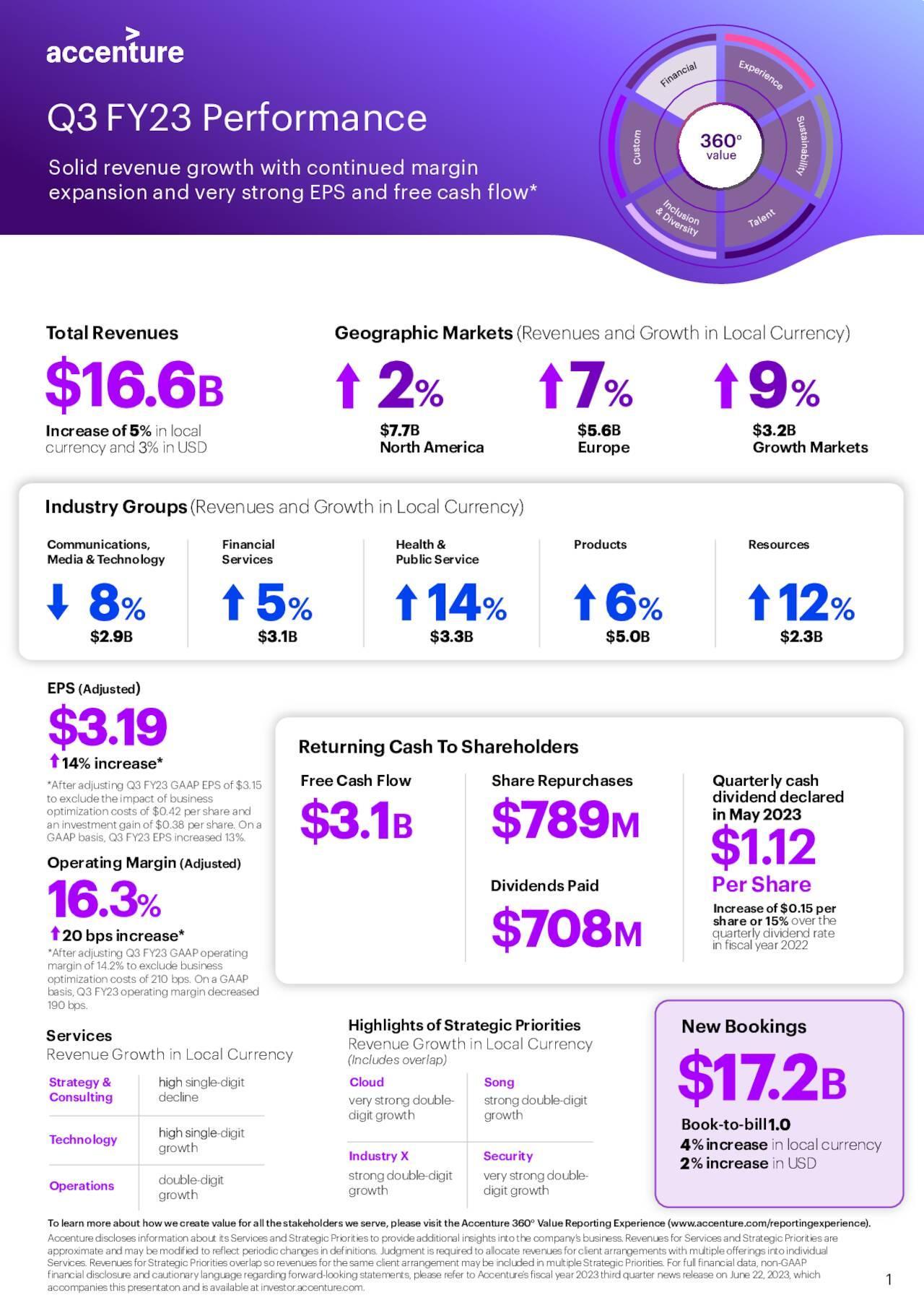
In its Q3 results 2026, Accenture has faced significant challenges, leading to a downward revision of its revenue guidance amidst a 5.6% fall in the Nifty IT index, now trading at 26,997 points. The global macroeconomic climate, coupled with growing conflict in the Middle East, has contributed to uncertainty, prompting Accenture to announce an approximate $100 million impact on its revenue, as highlighted by CFO Angie Park. This forecast marks a stark contrast to the previously optimistic projections made earlier this fiscal year, indicating a shift in expectations driven by external pressures. As IT stocks continue to decline, industry leaders are left grappling with these market dynamics that stem from both regional conflicts and changing client budgets. The ripple effect of these developments raises concerns about the future performance of not just Accenture but the entire IT sector, as indicated by statements from top executives on the growing impact of these geopolitical issues.
Examining Accenture’s performance in the third quarter of fiscal 2026 reveals a company navigating a tumultuous landscape defined by increased geopolitical tensions and the ongoing evolution of technology spending. Recently, the longstanding issues stemming from the conflict in West Asia have defined the challenges faced by Accenture, contributing to a notable retraction in its revenue forecasts. The impact of the Nifty IT index’s decline is palpable, reflecting similar downturns among major competitors as financial uncertainty looms across the sector. Accenture’s Chief Financial Officer, alongside other executives, referenced these fluctuations in IT stocks and client spending patterns, emphasizing the widening ramifications on revenue growth. With the company’s leadership acknowledging the necessity for strategic adaptations, it becomes clear that the broader IT market may continue to face turbulence stemming from global events and internal transformations.
Accenture Q3 Results 2026: Navigating Economic Challenges
In its Q3 FY2026 results, Accenture Plc highlighted significant challenges attributed to global macroeconomic uncertainty and the ongoing conflict in the West Asian region. Notably, the company reported a revenue shortfall of approximately $100 million, which stemmed from both direct impacts on its Middle East operations and indirect effects felt across various international markets. Such developments contributed to a considerable decline in the Nifty IT index, which plummeted by 5.6% as investors reacted to the revised revenue guidance from the tech giant. This turbulence in the market underscores the fragile state of IT stocks amidst geopolitical unrest, making Accenture’s earnings call a focal point for analysts and investors alike.
The impact of the Middle East conflict on Accenture’s performance signals a broader trend within the IT industry, where companies are beginning to adapt to adverse conditions. CFO Angie Park described the company’s updated revenue growth forecast as being between 3% and 4% in local currency for the full fiscal year 2026, a notable reduction from earlier predictions of 3% to 5%. This downward adjustment illustrates the complexities faced by global consulting firms in the wake of geopolitical tensions, where a decrease in discretionary spending has forced a reevaluation of revenue expectations.
The Decline of IT Stocks Amidst Market Turbulence
The recent fall in the Nifty IT index serves as a stark reminder of how interconnected the tech sector is with global events. Accenture’s lowered revenue guidance due to geopolitical conflicts has reverberated across the market, affecting other major players like Infosys, TCS, and Tech Mahindra. Specifically, Infosys saw the steepest decline at 7.7%, illustrating the pervasive impact of lost revenue forecasts. As uncertainties loom over the economic environment, investors are increasingly cautious, leading to a pronounced decline in IT stocks, which reflects broader market sentiments regarding stability and growth prospects expected in the industry.
With IT stocks facing downward pressure, industry analysts are closely monitoring the implications of these trends. The correlation between a falling Nifty IT index and individual company performance, as seen with Accenture and its peers, emphasizes the sensitivity of stock valuations to macroeconomic signals. As uncertainties persist, companies may need to pivot their strategies, exploring resilient alternatives in pricing and service delivery to combat revenue pressures. This scenario sets the stage for potential long-term shifts in how IT firms operate and compete in increasingly volatile markets.
Insights from Accenture’s CFO on Future Performance
During the recent Q3 earnings call, Accenture CFO Angie Park provided key insights into the company’s financial outlook amidst a challenging landscape. The anticipated growth range of 3% to 4% for FY2026—particularly after accounting for a 1% impact from federal business—reveals a cautious approach to forecasting. Park’s emphasis on the need for adaptability highlights how businesses must recalibrate amidst both direct and indirect ramifications of geopolitical issues such as the Middle East conflict. Her remarks reflect a commitment to navigating uncertain waters, indicating that while short-term stability is threatened, long-term prospects may remain intact with strategic adjustments.
Furthermore, the acknowledgment of delayed decisions regarding managed services underscores Accenture’s proactive measures in managing risks. Overall, the CFO’s statements suggest that while short-term performance is impacted, there is a robust framework in place to harness opportunities that arise from current challenges. This situation provides a spotlight on the importance of flexible strategies and the need for organizations to be resilient, as those who adeptly manage transitions can emerge stronger in the competitive landscape of IT consulting.
The Impact of the Middle East Conflict on Consulting Firms
Accenture’s Q3 FY2026 report sheds light on the significant ramifications the ongoing Middle East conflict poses not only for its own operations but for the consulting sector as a whole. Julie T. Sweet, Accenture’s CEO, detailed an approximate $400 million decline in sales attributable to regional disturbances, affecting both direct consulting services in the Middle East and broader global market perceptions. The ripple effect of such conflicts tends to restrain decision-making processes within many firms, leading to delays in critical financial decisions and budget allocations. This scenario raises concerns about the sustainability of growth targets amidst unpredictable geopolitical climates.
Moreover, the indirect fallout of the conflict has appeared in spending patterns, influencing client decisions on discretionary investments. Companies have been particularly conservative, channeling budgets toward essential operations rather than expanding service contracts or embarking on new initiatives. In this light, consulting firms like Accenture must refine their focus on aligning service offerings with immediate client needs, emphasizing efficiency and value amidst constraints. This dynamic necessitates a careful balancing act for consulting firms operating in regions affected by conflict, requiring innovative approaches to service delivery to maintain client trust and satisfaction.
Adapting to Rising AI Costs: A New Challenge for IT Firms
As Accenture navigates the complexities arising from external conflicts and economic pressures, rising AI costs present another layer of challenge. The ongoing shift toward integrating artificial intelligence into business processes represents a transformative opportunity; however, clients’ budget reallocations in favor of AI investments have compelled firms to adapt. According to research analyst Ashis Dash, while client budgets maintain stability, there is a trend of reassigning cost-saving measures toward AI initiatives, hinting at a demand for innovative solutions that can enhance efficiency at lower operational costs.
This transitional phase within the IT sector is indicative of a broader evolution in consumer priorities where firms may defer traditional IT enhancements to allocate funds for new AI technologies. As organizations grapple with these changes, consulting firms must pivot towards more cost-effective AI optimizations to retain competitiveness. By focusing on strategic service innovations that harness AI potential, while managing cost dynamics, Accenture and its peers can navigate toward a more sustainable operational model that aligns with emerging market trends.
Forecasting Revenue: Accenture’s Strategic Adjustments
In light of the recent macroeconomic challenges, Accenture’s adjustment of its revenue projections illustrates the need for strategic recalibration in uncertain times. The company’s earnings outlook reflects a cautious stance, integrating the potential ramifications of both the Middle East conflict and escalating AI service costs. This new reality calls for a robust understanding of market trends, which necessitates timely adjustments in operational strategies and revenue forecasts. As such, the focus on maintaining a balance between expected growth and risk management will be paramount for Accenture to navigate the latter half of FY2026 effectively.
Moreover, the dialogue surrounding revenue forecasts has shifted from optimistic growth predictions to an emphasis on adaptability and resilience. Accenture’s approach in communicating these revisions underscores transparency while also setting realistic expectations for stakeholders. The proactive stance taken by leadership emphasizes a clear understanding of market volatility and demonstrates a commitment to optimizing services, even amidst financial tightening. Moving forward, Accenture’s path will heavily rely on strategic agility as it aims to mitigate the impacts of these fluctuating economic conditions on its revenue trajectory.
Geopolitical Uncertainty: A Recurring Theme in Corporate Strategy
Geopolitical uncertainties have emerged as a recurring theme in corporate strategy, particularly for multinational firms like Accenture. The recent decline in revenue attributed to the Middle East conflict exemplifies how external factors can severely impact business operations across borders. As markets react to instability, consulting firms must consider the implications of such dynamics in their long-term planning. Companies now find themselves in a landscape where assessing geopolitical risks is as critical as evaluating economic trends, necessitating holistic approaches to strategy that incorporate risk management principles.
In this context, Accenture’s response to these geopolitical tensions can serve as a case study for other consulting firms facing similar pressures. The need for agility in decision-making, alongside a strategic pivot to align with changing market expectations, underscores the importance of proactive corporate governance. As firms balance global operations with local insights, understanding the nuances of geopolitical impacts will shape their strategic trajectories, enabling them to not only survive but thrive, even amidst challenging external conditions. This evolving landscape calls for a reevaluation of risk assessment frameworks, fundamentally altering the approach firms take in navigating their futures.
Client Needs in a Volatile Market: The Role of IT Consulting
As the IT consulting market grapples with the fallout from recent geopolitical events, understanding client needs has become more essential than ever. The dynamics of client engagement have shifted as firms face pressure to deliver immediate value and adaptability in their service offerings. Accenture’s recent insights into the impact of declining revenue have highlighted the necessity of aligning consulting strategies with evolving client priorities, particularly in sectors facing operational enhancing challenges, such as emerging AI technologies and the ramifications of decreasing discretionary budgets.
The ability to anticipate and respond to shifting client demands will be critical for consulting firms looking to position themselves favorably in the current climate. By exploring new opportunities and optimizing existing services, firms can reinforce their relevance in the marketplace. Accenture’s focus on understanding the complexities of client spending patterns is vital for developing effective solutions that address immediate needs while retaining the long-term relationship. In this volatile environment, the responsiveness to client challenges will undoubtedly shape the future of IT consulting.
Frequently Asked Questions
What were Accenture’s Q3 results for fiscal 2026 and how did they impact the Nifty IT index?
Accenture’s Q3 results for fiscal 2026 indicated a lower revenue guidance due to macroeconomic challenges and the conflict in the Middle East, contributing to a 5.6% decline in the ten-share Nifty IT index, which fell to 26,997 points.
How did the Middle East conflict affect Accenture’s revenue in Q3 FY2026?
Accenture reported an approximate $100 million revenue impact in Q3 FY2026 due to the conflict in the Middle East, which affected both direct and indirect consulting work. This impact is expected to increase in the following quarter.
What is Accenture’s new revenue guidance following their Q3 results for FY2026?
Following the Q3 results for FY2026, Accenture revised its revenue growth forecast to between 3% to 4% in local currency, down from the previous guidance of 3% to 5%, primarily due to the impacts of the Middle East conflict and other macroeconomic uncertainties.
Which IT stocks declined alongside Accenture following the Q3 results announcement?
Following Accenture’s Q3 results announcement, the IT sector saw declines, with Infosys dropping 7.7%, TCS, LTM, and Tech Mahindra nearly falling by 5%. The Nifty IT index overall indicated a broader decline in IT stocks.
What did Accenture’s CFO mention regarding the impact on their revenues due to the Middle East conflict?
Accenture’s CFO, Angie Park, mentioned that the company anticipates a revenue growth range of 3% to 4% for fiscal 2026, acknowledging an estimated impact from ongoing conflicts that is projected to affect performance in the upcoming quarters.
What are some reasons for Accenture not meeting their revenue targets in Q3 FY2026?
Accenture did not meet revenue targets in Q3 FY2026 due to the financial impact of the Middle East conflict, which led to about $100 million in revenue loss, as well as rising AI-related infrastructure costs that shifted client budgets from traditional spending.
How did the performance of software stocks like Oracle contrast with Accenture’s Q3 results?
While Accenture’s Q3 results led to a significant decline in many IT stocks, Oracle (OFSS) was notable for remaining in positive territory, highlighting the differing impacts across the IT sector during this period.
What did CEO Julie T. Sweet indicate about future impacts on Accenture’s business?
CEO Julie T. Sweet highlighted that Accenture expects greater impacts from the Middle East conflict in Q4 FY2026, particularly affecting discretionary spending and causing delays in decision-making in the EMEA region.
How are company budgets impacted by AI according to Accenture’s analysis?
According to Accenture’s analysis, while client budgets remain stable, companies are reallocating savings towards AI initiatives rather than significantly increasing overall budgets, which is influencing the firm’s revenue targets.
| Key Point | Details |
|---|---|
| Nifty IT Index Performance | Fell by 5.6%, trading at 26,997 points. |
| Accenture Revenue Guidance | Lowered revenue forecast due to macroeconomic uncertainty and conflict in West Asia. |
| Impact of West Asian Conflict | Approximately $100 million revenue impact expected to increase in the next quarter. |
| Growth Forecast | Expected revenue growth of 3% to 4% in local currency for FY2026, down from previous guidance of 3% to 5%. |
| Other Companies’ Performance | Infosys dropped 7.7%, while TCS, LTM, and Tech Mahindra each fell nearly 5%. Oracle was the only stock in positive territory. |
| Postponed Services Decisions | Major managed services decisions delayed to FY2027 due to company-specific reasons. |
| AI Cost Impact | Increasing costs for AI impacting overall revenue targets and consulting work. |
Summary
The Accenture Q3 results 2026 highlight significant challenges faced by the company due to geopolitical uncertainties and rising costs, particularly in AI. With the Nifty IT index declining sharply, Accenture has adjusted its revenue guidance, forecasting a growth rate of 3% to 4% instead of the previously anticipated range. The quarterly results reveal an approximate $100 million hit from the West Asian conflict, which is expected to impact future revenues further, illustrating the interconnectedness of global events and corporate performance. As companies pivot their budgets towards AI, Accenture is navigating these financial hurdles while dismissing some managed services decisions until FY2027.



























