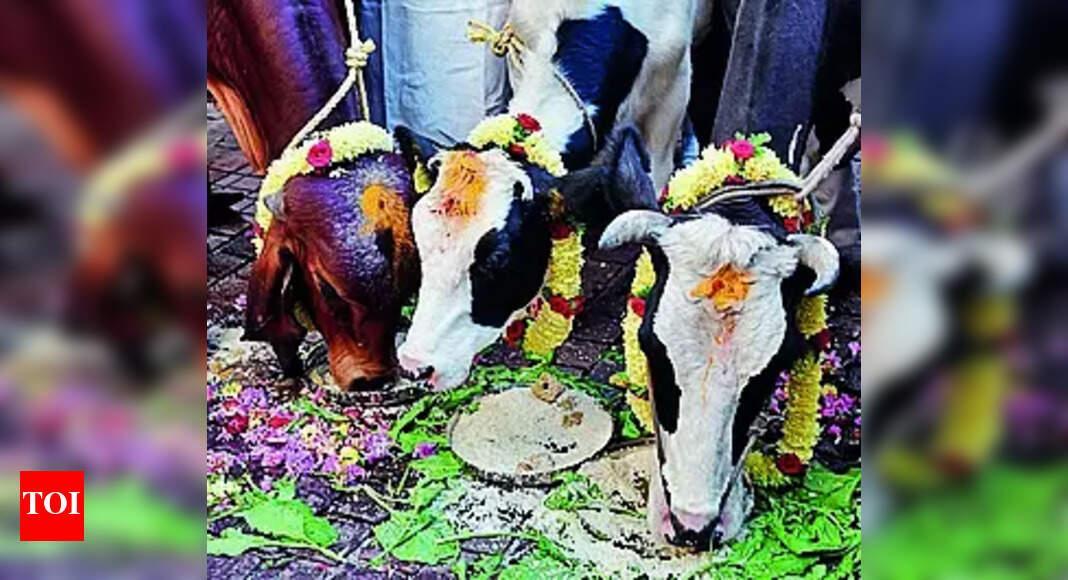
The cow, revered as “Rashtra Mata” or national mother, stands at the heart of India’s cultural identity and spiritual ethos. This iconic symbol reflects the deep-rooted sentiments within Indian society, where cow protection transcends mere advocacy and evolves into a call for recognition. Influenced by the BJP’s firm stance on cow protection in India, social leaders like Zeeshan Ansari strive to emphasize the sacred status bestowed upon cows, arguing that official acknowledgment of this status is essential for preserving social harmony. Ansari’s passionate plea, articulated in his unique letter to Prime Minister Modi, underscores the pressing need for clarity on the government’s position regarding cow protection. As the cow continues to symbolize not just sustenance but a broader cultural significance, acknowledging it as “Rashtra Mata” may resonate deeply across the diverse tapestry of Indian life.
The concept of the cow as the nation’s maternal figure reflects a longstanding tradition in India, often encapsulated in the term “national mother cow”. This belief resonates strongly within various communities, underlining the cow’s integral role in everyday livelihoods and religious practices. With ongoing discussions around cow protection policies and the cultural implications highlighted by activists and political leaders alike, the narrative surrounding this sacred animal remains significant. The recent appeal by Zeeshan Ansari, who uniquely addressed the Prime Minister about cow advocacy, is a testament to the urgency of this dialogue. Such movements within India not only call for the recognition of cows’ religious importance but also advocate for a united stance amidst varying interpretations by political entities.
Understanding Cow as Rashtra Mata: Cultural and Religious Significance
In Indian culture, the cow is regarded with deep reverence and is often seen as a symbol of motherhood. The notion of declaring the cow as ‘Rashtra Mata’ or the national mother resonates with many communities that view the animal as a source of sustenance and support. Historically, the cow has played a vital role in agriculture and sustenance, providing milk and various dairy products essential for many families across the country. Thus, the current movement to protect the cow elevates its status from a mere farm animal to a symbol of cultural identity and pride, reflecting the sentiments of millions who consider it an integral part of their heritage.
The call for the cow to be officially recognized as the Rashtra Mata aligns with the ideals of cow protection prevalent in India. This sentiment has been echoed by many political leaders and community activists, including the recent efforts by Samajwadi Party leader Zeeshan Ansari. By emphasizing the need for clarity from political parties like the BJP on their position regarding cow protection, Ansari’s letter highlights a growing demand for acknowledgment of the cow’s sacred status. It underscores the complex interplay between politics, identity, and the cultural significance of cows, which has been a topic of active discourse in Indian society.
Political Dynamics Surrounding Cow Protection in India
The political landscape in India has seen a significant focus on cow protection, particularly with the ruling Bharatiya Janata Party’s (BJP) stance on the matter. The party’s leaders frequently advocate for cow welfare, intertwining it with Hindu cultural values, thus garnering support from a significant voter base. However, the varying statements from BJP members regarding cow-related policies have sparked debates about the consistency and authenticity of their stance. From more liberal policies that allow for certain exemptions to strong anti-slaughter laws, the political communication surrounding cows remains a contentious issue, with advocates such as Zeeshan Ansari calling for a straightforward proclamation of the cow as the national mother.
The discourse around cow protection serves as a litmus test for broader societal values, encompassing religious tolerance and the rights of various communities, including those who do not share the same reverence for cows. Advocates argue that the recognition of the cow as Rashtra Mata would not only honor this cultural symbol but also push for more robust protective measures against cattle slaughter. This implies a significant shift in the political narrative, as leaders must reconcile the cultural significance of cows with the diverse perspectives of India’s multifaceted population, ultimately illustrating the ongoing struggle over national identity and inclusivity.
Zeeshan Ansari’s Unique Appeal for Cow Recognition
Zeeshan Ansari’s emotional appeal to Prime Minister Modi reflects the urgency felt by many in the community regarding cow protection. His bold approach, writing a letter in his own blood, embodies a compelling symbol of commitment and urgency, aiming to push the agenda for cow recognition as Rashtra Mata. By taking such a drastic step, Ansari not only provokes conversation around cow protection but also challenges the political landscape to define its values clearly. This approach highlights how personal beliefs, religious identity, and political action converge in the realm of cultural significance associated with the cow.
Moreover, his appeal emphasizes the nuances of communal ties wherein individuals from diverse backgrounds, including Muslims, are expressing solidarity with the cultural sentiments surrounding the cow. Ansari’s actions can be seen as a strategic call for inclusiveness and understanding, pushing the BJP to clarify its stance on cow protection while urging broader national conversations. This intersectionality between personal faith and political activism underscores a unique moment in Indian socio-political discourse, where cow protection moves beyond mere policy advocacy to become a deeper discussion about identity and unity in diversity.
Cow Protection: A Core Issue in BJP’s Political Strategy
For the Bharatiya Janata Party (BJP), cow protection has emerged as a central theme embedded in its larger political strategy, appealing to its core Hindu nationalist base. By positioning themselves as protectors of the cow, the BJP effectively taps into deep-rooted cultural beliefs that resonate with many Indian citizens. This political strategy has not only been pivotal during electoral campaigns but also serves as a powerful tool to consolidate support among various demographic groups who regard cow protection as an essential aspect of their cultural identity.
However, there remains a paradox within this strategy as the BJP’s rhetoric often faces scrutiny regarding implementation. Advocates for cow protection are in a constant dialogue with party leaders to ensure that the promises made resonate with actual policies and practices. The contrasting statements from different BJP leaders, such as those mentioned by Ansari, highlight the complexities within the party’s narrative—balancing religious sentiments with the political realities of a diverse and pluralistic society. This discourse reflects a growing need for coherence in policy-making regarding cow protection and the broader implications that arise from the cow’s cultural significance in India.
The Societal Impact of Recognizing Cows as National Symbols
Recognizing cows as Rashtra Mata could have profound social implications on India’s cultural landscape. Such a declaration would not only solidify the cow’s status within Hindu traditions but also encourage greater societal awareness about the importance of animal welfare in general. By elevating cows to a national symbol, it would foster a protective ethos that may extend to other animals, thereby promoting broader discussions on ethics surrounding animal rights and ecological sustainability.
Simultaneously, this recognition presents challenges in a country marked by significant religious diversity. While many support the idea of cow protection, others view it as a potential infringement on personal freedoms and dietary choices. This tension necessitates a delicate balance between honoring cultural sentiments and ensuring respect for diverse beliefs across communities. The debate surrounding cow protection underscores deeper issues related to identity, altruism, and the coexistence of various cultural narratives within India’s rich tapestry.
Addressing Misconceptions Around Cow Protection Advocacy
Advocacy for cow protection is often misunderstood as merely a religious issue confined to Hindu communities. However, the broader implications of such advocacy extend to ethical discussions about animal rights and welfare. Many activists, including leaders like Zeeshan Ansari, emphasize that cow protection transcends religious boundaries, presenting a united front calling for a national conversation about the ethical treatment of animals. This perspective challenges the narrative that cow-related policies serve only a singular community, illustrating the universal nature of compassion and responsibility across all society.
Furthermore, as discussions around cow protection evolve, it opens avenues for dialogue that bridge divides among various groups. The current discourse encourages a critical examination of how cultural symbols can unify disparate communities around shared values of respect and compassion for all living beings. As individuals from different backgrounds come together to advocate for cow protection, it ultimately fosters a more inclusive environment where diverse perspectives are valued and respected, enhancing the social cohesion necessary for a pluralistic society.
BJP’s Evolving Position on Cow Welfare
The BJP’s evolving position on cow welfare reflects a complex interplay of ideological commitment and political pragmatism. From advocating stringent laws against cow slaughter to implementing programs aimed at promoting cow health and welfare, the party has consistently reinforced its association with cow protection. The strong emphasis on cows as symbols of Indian identity plays into the broader narrative of nationalism promoted by the BJP, aiming to consolidate their base by prioritizing policies that resonate with traditional values.
However, the challenge remains in balancing these commitments with the diverse opinions held by India’s multi-religious population. As highlighted by Ansari’s public plea for clarity, the BJP faces scrutiny over inconsistent messaging surrounding cow-related policies. This underscores the necessity for the party to address both communal concerns and global perspectives on animal rights, emphasizing inclusivity while maintaining its core ideologies around cow welfare. The ongoing dialogue about cow protection not only impacts political strategies but also reflects the broader socio-cultural values of contemporary India.
Community Engagement in Cow Protection Initiatives
Community engagement is a crucial factor in the success of cow protection initiatives across India. Local efforts, fueled by grassroots organizations, often emphasize education about the importance of cows in agriculture, economy, and culture. Through workshops, fairs, and community discussions, activists aim to foster a greater understanding of the broader implications of cow protection, thus allowing communities to actively participate in preserving this cultural symbol. This collective involvement boosts empathy and encourages support for policies aimed at protecting cows, aligning local efforts with national aspirations.
In the context of recent developments, the community’s role becomes all the more critical, as individuals like Zeeshan Ansari urge political leaders to take a stand on cow recognition. By mobilizing local networks, community members are empowered to voice their perspectives, making cow protection not just a political issue but a collective societal responsibility. This grassroots momentum not only strengthens the call for cows to be recognized as Rashtra Mata but also fosters a culture of mutual respect and compassion towards all living beings, aligning with India’s rich traditions of non-violence and reverence for life.
The Future of Cow Protection and Its Implications
The future of cow protection in India hinges on the delicate interplay of cultural significance, political commitment, and societal values. As cow protection continues to be a pivotal issue, discussions around its future are increasingly dynamic, influenced by both grassroots movements and legislative initiatives. The ongoing conversations reflect broadening awareness of animal rights and compassion, illustrating how cow protection transcends traditional boundaries and resonates with contemporary ethical considerations.
Additionally, the potential recognition of cows as Rashtra Mata could catalyze substantial changes in policy frameworks, prompting more robust measures for cow welfare and protection. Such a move would galvanize both support and opposition, requiring policy-makers to navigate a complex landscape of social values and beliefs. The challenge lies in aligning the cultural heritage surrounding cows with the diverse narratives within Indian society, ultimately shaping a more inclusive dialogue that bridges divides and promotes a collective sense of responsibility towards all creatures.
Frequently Asked Questions
Why is the cow considered as ‘Rashtra Mata’ in India?
The cow is revered as ‘Rashtra Mata’ or national mother in India due to its deep cultural and religious significance in Hinduism. It symbolizes non-violence, motherhood, and sustenance, playing a pivotal role in agricultural society. Many people, including prominent political figures, highlight cow protection as integral to Indian heritage, which has sparked discussions on its formal recognition by the government, particularly from groups like the BJP advocating for cow protection.
| Key Point | Details |
|---|---|
| Zeeshan Ansari’s Letter | Wrote a letter in his blood to PM Modi, urging for cow to be declared ‘Rashtra Mata’. |
| Purpose of the Letter | To seek clarity on BJP’s stance regarding cow protection. |
| Cultural Significance | Ansari emphasized the cow’s sentimental importance in Indian households, mentioning rituals like offering the first roti to the cow. |
| Role of the Community | Ansari stated that he initiated this due to his Muslim background, seeking unity on cow protection across communities. |
| BJP Leaders’ Comments | Referencing BJP leaders eating roti with cows, Ansari demands a formal recognition of the cow’s cultural status. |
Summary
The cow as Rashtra Mata holds immense cultural and religious significance in India, reflecting the deep-rooted traditions and values cherished by many communities. This recent initiative by Samajwadi Party leader Zeeshan Ansari emphasizes the call for recognition of the cow as a national symbol, addressing its importance in Indian households and the sentiments it invokes among people. The demand for the cow to be officially acknowledged as the ‘Rashtra Mata’ transcends political lines and seeks to unify communities in honoring this revered animal, further prompting a national conversation on the importance of cow protection. Ansari’s unique approach in writing to the Prime Minister showcases an urgent plea for clarity and commitment from the ruling party regarding its cultural responsibilities, which could significantly influence the collective socio-political landscape in India.