

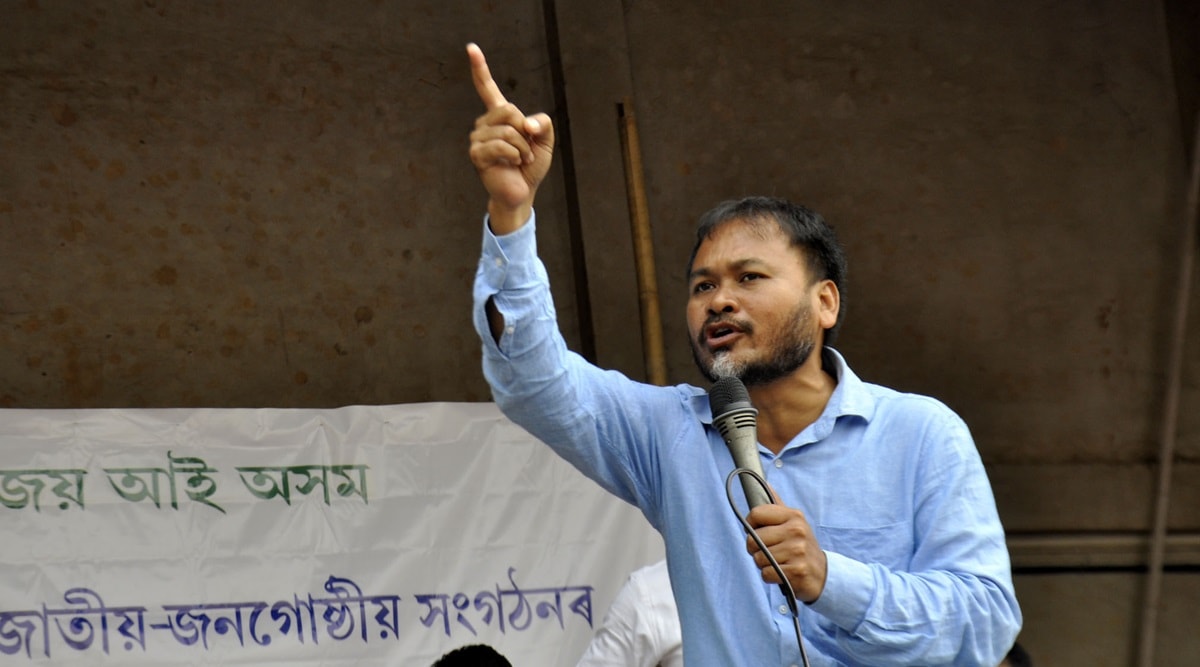
As the Assam assembly elections 2024 draw near, the state’s political landscape is gearing up for an intense showdown, primarily framed as a battle between the Bharatiya Janata Party (BJP) and the formidable ‘three Gogois’. With April 9 looming, the stakes have never been higher, putting Assam elections news front and center as voters anticipate the competing visions for their future. At the heart of this contest is a rivalry not only rooted in party ideologies but also in personal histories, notably highlighted by figures like Gaurav Gogoi, who seeks to challenge the dominance of Chief Minister Himanta Biswa Sarma. Meanwhile, Akhil Gogoi’s emergence as a prominent figure adds a layer of complexity to the already dynamic electoral environment. This election season will reveal whether Congress’s coalition efforts can effectively counter the BJP’s prevalent strategy of identity and developmental politics in Assam, potentially reshaping the future of the region for years to come.
The 2024 assembly polls in Assam represent a critical juncture in the state’s governance and socio-political dynamics, with emerging narratives shaping the electoral framework. As the competition heats up, a significant focus is on the major political entities involved, specifically the BJP’s unwavering grip versus the collective efforts of regional parties united under the banner of the ‘three Gogois’. With prominent political leaders like Gaurav Gogoi and Akhil Gogoi stepping into the spotlight, voters are keenly observing their stances and promises as the elections approach. The implications of these elections extend beyond mere party rivalry; they encapsulate the very essence of Assam’s evolving identity and the power struggles that underscore its future. As the electoral drama unfolds, the anticipation surrounding the electoral outcome underscores the importance of active citizen engagement in shaping the political discourse.
The 2024 Assam Assembly Elections: A Defining Moment
As the 2024 Assam Assembly elections approach, the political dynamics in the state have reached a fever pitch. The upcoming elections on April 9 are expected to be a crucial contest primarily between the ruling Bharatiya Janata Party (BJP) and the principal opposition forces led by the three prominent Gogois: Gaurav Gogoi, Akhil Gogoi, and Lurinjyoti Gogoi. This election season is pivotal; it not only determines governance in Assam but also sets the tone for regional politics and socio-economic development for years to come.
Elections in Assam have historically been charged with significant political rivalry, making 2024 no exception. Factors such as regional identity, past governance records, and the ongoing discourse on corruption plays a substantial role in shaping voters’ perceptions. The contest represents a heightened urgency for the BJP to maintain its dominance amid rising opposition alliances, especially with the Congress attempting to unify regional and Left forces to counter the BJP’s formidable campaign.
BJP vs Congress Assam: A Clash of Titans
The battle between the BJP and Congress in Assam is emblematic of larger national trends and regional sentiments. The BJP has leveraged its strong grassroots presence, emphasizing development and identity politics to rally voters. Conversely, the Congress, led by figures like Gaurav Gogoi, seeks to awaken memories of past governance successes during the tenure of his father, Tarun Gogoi. This back-and-forth sets up a fascinating clash of ideologies and strategies as both parties vie for the hearts of the Assamese electorate.
The rivalry is as much about the present political landscape as it is about legacies and future aspirations. Gaurav Gogoi’s criticisms of the current government’s accountability measures have become a focal point of the election discourse. Meanwhile, the BJP, spearheaded by chief minister Himanta Biswa Sarma, emphasizes stability and progress under its governance framework. This dynamic will undoubtedly play a crucial role in shaping the election results.
Gaurav Gogoi: Leading the Congress Rejuvenation
Gaurav Gogoi has emerged as a prominent face of the Congress party in Assam, representing a new wave of leadership within the party. With deep ties to the political lineage of Tarun Gogoi, Gaurav is tasked with reviving the party’s fortunes while appealing to a younger demographic. His ability to articulate issues pertinent to Assamese society, combined with critiques of the incumbent government, positions him as a formidable challenger in the upcoming elections.
As the campaigning intensifies, Gogoi’s narrative focuses on transparency, inclusivity, and development, which resonate with many voters disillusioned by previous BJP policy decisions. By highlighting the need for accountability and questioning the BJP’s accomplishments, he aims to carve out a niche for Congress in a contest dominated by identity politics and populist narratives. Gaurav’s leadership may be pivotal for Congress if they hope to reclaim lost ground and rouse the spirit of opposition amongst the electorate.
Akhil Gogoi: The Voice of the Activist
Akhil Gogoi stands out as a fascinating candidate in the Assam elections, known for his activism and strong stance on various social issues. His transition from an activist to a political leader resonates with many young voters who see him as a beacon of change. His strong advocacy for farmers’ rights and environmental issues appeals to a broad base of voters, making him a significant contender in the upcoming elections.
Akhil’s campaign is heavily centered around grassroots engagement, mobilizing support through community-driven measures and local issues that affect daily lives. While his political journey has not been without challenges, including legal battles and incarceration, his resilience continues to inspire a loyal following. As he approaches the assembly elections of 2024, Akhil Gogoi embodies the aspirations of many who demand a break from traditional political norms and a fresh approach to governance.
Lurinjyoti Gogoi and the Assam Jatiya Parishad: Regional Identity in Focus
Lurinjyoti Gogoi, representing the Assam Jatiya Parishad (AJP), has emerged as a key player focused on regional identity politics, which is especially resonant in Upper Assam. His commitment to addressing local issues reflects a growing trend where regional identity becomes a significant factor in electoral success. Despite the AJP’s struggles to gain considerable electoral traction, Lurinjyoti’s influence in certain regions remains impactful, proving that localized concerns can shape the broader political landscape.
Under Lurinjyoti’s leadership, the AJP attempts to mobilize voters around themes of cultural identity and regional pride, diverging from the mainstream narratives offered by larger parties like the BJP and Congress. As the elections draw near, this emphasis on regionalism may endear him to voters who feel their unique challenges are overlooked by incumbent powers. His approach illustrates the complexity of voter sentiments in Assam and sets the stage for a battle of ideals in the assembly elections.
Upper Assam: Battleground for Electoral Aspirations
Upper Assam is set to be a battleground in the 2024 elections, with its demographic and socio-economic factors playing critical roles in shaping voter decisions. Historically, this region has been influenced by multiple factions vying for power, but it remains pivotal for any party aiming for significant electoral success. The BJP’s previous victories in this region lend weight to their strategy, while opposition parties see this area as a key territory for potential gains.
For the BJP, the focus remains on consolidating support through development narratives and promises of infrastructure improvements, while the opposition, including Congress and AJP, are keen to highlight local grievances and restore faith in regional governance. As both sides ramp up their campaigning efforts, ensuring a meaningful outreach to citizens in Upper Assam could determine the outcome of the assembly elections. Understanding local issues and responding to them effectively will be crucial in swaying undecided voters.
BJP’s Strategy: Identity Politics and Development Rhetoric
The BJP’s electoral strategy in Assam centers on a mix of identity politics and development narratives, which have played a pivotal role in their recent successes. By framing issues around regional pride and cultural identity, the BJP seeks to solidify its base while appealing to Assamese nationalistic sentiments. This approach not only rallies traditional supporters but also attempts to attract undecided voters who prioritize local identity in their electoral decisions.
Simultaneously, the BJP emphasizes development as a cornerstone of its campaign, presenting a vision of a progressive Assam that thrives on economic prosperity and infrastructure growth. This dual strategy aims to present a comprehensive package that encourages Assam’s voters to envision a future shaped by stability and growth, ensuring that their governance has historically been rooted in decisive action for the region. As the BJP continues to deploy this strategy leading into the elections, the effectiveness of their messaging will be critical in determining their electoral fate.
Opposition Unity: Strength in Numbers or Fragility?
The opposition’s unity in Assam presents a complex tapestry of collaboration and conflict among its various parties as they prepare for the assembly elections. The coalition of Congress, AJP, and other regional forces signals a concerted effort to challenge the BJP’s dominance. However, the persistent question remains: can these diverse groups work collaboratively without descending into infighting, or will their inherent differences compromise their electoral viability?
Coalition dynamics suggest that while seeking common ground may strengthen their position against a formidable opponent, it also exhibits the fragility of unity in Assam’s ever-evolving political landscape. The success of this opposition alliance hinges on its ability to articulate a cohesive vision while addressing the distinct needs of their respective voter bases. Navigating these complexities will be essential as they strive to mount an effective challenge in the upcoming assembly elections.
Critical Insights: Data Behind the Political Maneuvering
Analyzing the financial backgrounds of candidates for the 2024 Assam assembly elections reveals significant trends in political expenditure and candidate wealth. The increase in average assets—from Rs 4.17 crore in 2021 to Rs 7.52 crore in 2026—signals a broader trend of escalating political financing that has implications for electoral competition, accessibility, and transparency. Such financial dynamics may explicitly influence candidate selection among voters, adding further complexity to their choices.
This data not only reflects the changing landscape of Assam’s electoral politics but also raises questions about the influence of wealth on democratic participation. As parties gear up for elections, understanding how these financial metrics interact with voter behavior and public sentiment will be crucial to creating effective campaigns that resonate with the electorate. Such insights provide a glimpse into the interplay of money and politics in shaping the outcomes of the assembly elections.
The Real Stakes of Assam’s 2024 Elections
The 2024 Assam Assembly elections are not merely about power; they reflect deeper societal narratives, aspirations, and the evolving political geography of the state. This election cycle promises to unveil underlying tensions and demand accountability from all sides. For many Assam residents, it is about ensuring that their voices are heard amidst a backdrop of political maneuvering, false promises, and ideological battles.
Ultimately, the elections will serve as a litmus test for the region’s future direction—whether it will continue along the paths of populism and identity politics or pivot toward progressive governance that addresses citizens’ real concerns. The outcome may significantly alter Assam’s political landscape for years to come, making it imperative for all stakeholders to engage meaningfully with one another and with the electorate.
Frequently Asked Questions
What are the key highlights of the Assam assembly elections 2024?
The Assam assembly elections 2024 are set for April 9, featuring a fierce competition primarily between the Bharatiya Janata Party (BJP) and the Congress, with the latter rallying regional and Left forces to redefine the political landscape in Assam. Notable figures include Gaurav Gogoi, a prominent Congress leader, and Himanta Biswa Sarma representing the BJP.
How is the political landscape in Assam changing with the lead-up to the elections?
Leading up to the Assam assembly elections 2024, the political landscape is characterized by a rivalry between the BJP and Congress, highlighted by the emergence of the ‘three Gogois’ – Gaurav Gogoi, Akhil Gogoi, and Lurinjyoti Gogoi, who are attempting to unify regional support against the BJP’s dominant position.
What strategies is the BJP deploying in the Assam assembly elections 2024?
The BJP’s strategy for the Assam assembly elections 2024 focuses on blending identity politics with development narratives to consolidate voter support, following a successful electoral strategy in previous elections.
How significant is the role of Gaurav Gogoi in the upcoming elections?
Gaurav Gogoi, being the son of former Chief Minister Tarun Gogoi and a key leader in Congress, plays a crucial role in shaping the party’s strategy against the BJP in the Assam assembly elections 2024, emphasizing issues of corruption and governance.
Who are the main contenders in the Assam assembly elections 2024?
The main contenders in the Assam assembly elections 2024 include Himanta Biswa Sarma of the BJP, and Gaurav Gogoi, alongside Akhil Gogoi, who is representing an activist-led challenge, significantly shaping the electoral narrative.
What challenges does the opposition face in the Assam elections?
In the Assam assembly elections 2024, the opposition, primarily Congress, faces significant challenges in uniting regional forces and overcoming the BJP’s established dominance, which has roots in successful governance narratives.
What impact could Akhil Gogoi have in the Assam assembly elections 2024?
Akhil Gogoi, known for his activist background, could mobilize voter sentiment around issues of social justice and regional identity, potentially influencing outcomes in key constituencies during the Assam assembly elections 2024.
How are asset increases among candidates relevant to the Assam assembly elections 2024?
The increase in average assets of candidates from Rs 4.17 crore in 2021 to Rs 7.52 crore in 2026 signifies the rising influence of economic power in the political arena, which is vital to consider in the context of the Assam assembly elections 2024.
What narratives are shaping the Assam assembly elections 2024?
In the Assam assembly elections 2024, narratives of identity, regionalism, and governance are defining the political discourse, illustrating the evolving nature of Assam’s political landscape and the alliances formed in anticipation of the elections.
How might the outcome of the Assam assembly elections 2024 affect regional politics?
The outcome of the Assam assembly elections 2024 could potentially reshape regional politics, either reinforcing the BJP’s dominance or facilitating a resurgence of Congress and other local forces, altering alliances and policy directions for the future.
| Key Points | Details |
|---|---|
| Political Landscape | The upcoming Assam assembly elections on April 9 see a contest primarily between BJP and the three Gogois, as Congress unites regional and Left forces. |
| The 3 Gs vs BJP | Himanta Biswa Sarma, Assam’s CM, asserts BJP’s transparency versus the Gogois’ alleged secrecy in their political approaches. |
| Gaurav Gogoi’s Challenge | Gaurav Gogoi questions the integrity of Sarma’s governance, claiming his family made questionable land acquisitions. |
| Akhil Gogoi’s Role | Akhil Gogoi, known for activism, positions himself as a potential challenger to established political norms. |
| Regional Dynamics | Lurinjyoti Gogoi underscores the importance of regional identity, though his party, AJP, faces electoral difficulties. |
| Upper Assam’s Significance | Securing voter support in Upper Assam is vital for opposition parties to present real competition against the BJP. |
| BJP’s Strategy | The BJP’s campaign merges identity politics, development efforts, and a focus on maintaining political control. |
| Opposition Coalitions | Though united against BJP, opposition coalitions face challenges that threaten their effectiveness and unity. |
| Candidate Wealth Trends | There’s been an 80% increase in the average assets of candidates, from Rs 4.17 crore in 2021 to Rs 7.52 crore in 2026. |
| Broader Implications | The election highlights deeper shifts in Assam’s political landscape and the narratives influencing its future. |
Summary
The Assam assembly elections 2024 are set to redefine the state’s political dynamics, emerging as a critical contest between the BJP and the united front of the three Gogois. As voters weigh their choices on April 9, key themes of identity politics, development, and regional influence will dominate discussions. The outcome of these elections not only determines governance in Assam but also signifies evolving narratives that will shape the state’s future. With a considerable rise in candidate wealth and the significance of Upper Assam as a strategic battleground, every vote will count in this high-stakes political contest.



























