

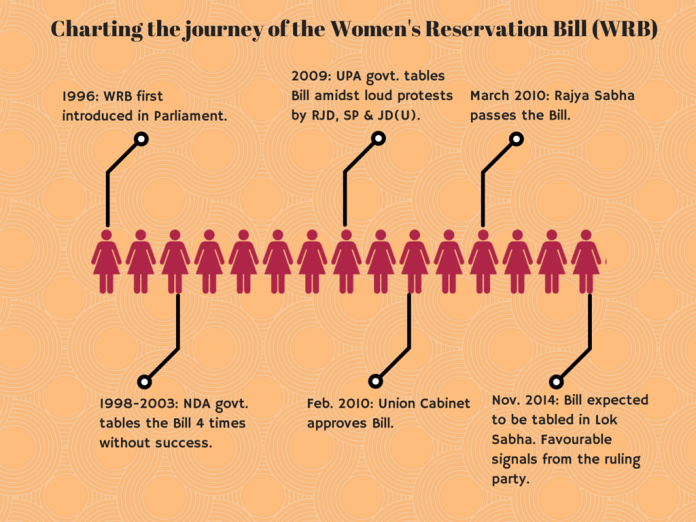
The delimitation proposal has become a contentious issue that highlights the ongoing tensions between the Congress party and the Modi government. As the ruling party moves forward with this initiative, designed to implement the much-debated women’s reservation law, Congress accuses their political adversaries of employing strategic distraction tactics. They argue that the proposal is skewed, favoring larger and more populous states, which could exacerbate existing inequalities in parliamentary representation. Critics contend that this government push is more about consolidating power and deflecting attention from pressing issues than it is about empowering women. Such a tactic raises questions about the political strategy of the Modi administration, as it seeks to navigate the complex landscape of electoral reforms and public opinion.
The recent discourse surrounding the electoral boundary adjustments, particularly in relation to the women’s quota legislation, has sparked significant debate among political circles. Terms like electoral redistricting and constituency delineation are increasingly utilized to describe the aims of the current government, as many view it as an attempt to manipulate voter demographics. Amidst accusations from the Congress party, which claims the initiative is an elaborate smokescreen for the Modi administration, the ramifications of these changes are under intense scrutiny. This ongoing discussion not only reflects the nuances of political maneuvering but also unveils deeper issues related to representation and gender equality in governance. The conversation is essential as it explores the intersection of politics, social justice, and the governmental authority in shaping future electoral outcomes.
Understanding the Delimitation Proposal: A Weapon of Mass Distraction
The delimitation proposal put forth by the Modi government has ignited a significant debate within India’s political landscape, particularly regarding its implications for the women’s reservation law. Critics, including the Congress party, have vehemently argued that this initiative serves as a strategic distraction rather than a genuine attempt to enhance representation. The argument is that while the proposal ostensibly aims to empower women by ensuring their representation in legislative bodies, it may inadvertently exacerbate existing disparities among states, particularly favoring the more populous regions such as Uttar Pradesh. As a result, this raises concerns about whether the proposal truly serves the intended purpose or is merely a political strategy to divert attention from other pressing issues facing the government.
Additionally, the Congress party’s assertion that the delimitation proposal is a ‘weapon of mass distraction’ (WMD) highlights the critical perception that the Modi government is attempting to placate the electorate without addressing the systemic inequalities present in Indian politics. By pushing for changes that benefit larger states, the government might be perceived as offering minimal gains to underrepresented women in smaller states. Thus, the focus on this proposal could be viewed as an effort to garner political support and deflect criticism from the ongoing socio-economic challenges that the nation grapples with, ultimately hindering the substantial progress toward gender equality in political representation.
The methodology of delimitation—redrawing the boundaries of electoral constituencies—has historically been contentious in India, and the current proposal is no exception. Political analysts note that the criteria for delimitation may unintentionally favor states with larger populations and well-established political structures. Consequently, this could lead to an entrenched political landscape that marginalizes voices from regions that are already underrepresented. The Congress party’s criticism hinges on the perspective that instead of empowering women across the board, the proposal might consolidate power in the hands of few states that already hold significant electoral weight. Such a situation raises questions about the efficacy of the women’s reservation law as a tool for genuine empowerment rather than merely serving to adjust the allocation of existing power dynamics.
Furthermore, the Congress party posits that the Modi government’s focus on the delimitation proposal could be a strategic maneuver to distract the public from other controversial issues, such as economic challenges, unemployment, and rising inflation. By framing the delimitation proposal as a progressive step toward inclusivity for women, the government may seek to consolidate votes and strengthen its political position, all the while avoiding accountability for its governance failures. In this light, the discourse surrounding the delimitation proposal is not merely an administrative issue but a crucial intersection of politics, gender, and representation in 21st-century India.
The Impact of Women’s Reservation Law on Political Representation
The Women’s Reservation Law is crafted to ensure that women have a definitive stake in India’s political arena, but its successful implementation hinges on efficient political frameworks like delimitation. As the Congress party emphasizes, if the delimitation process disproportionately favors larger states, it could dilute the intended benefits of the women’s reservation law. Empowering women requires an equitable approach, and without a careful consideration of how boundaries are redrawn, there is a risk that the law might not achieve its goal of increasing women’s political participation across all states in India. This underscores the importance of a fair and representative delimitation process that resonates with the spirit of the Women’s Reservation Law, rather than merely enhancing the advantages of already dominant political entities.
Moreover, as political dynamics evolve, the Congress party’s critique comes amid concern for the increasing disparity among states in terms of political representation. If more populous states gain disproportionately more seats and influence, the very fabric of democracy could be affected. Women from smaller states, who might benefit less from this process, may find themselves further marginalized in political discourses. Therefore, the implementation of the Women’s Reservation Law must be accompanied by a thoughtful approach to delimitation that empowers all regions equally, ensuring that the inclusion of women leads to a broader transformation of societal structures and political engagement.
Historically, discussions regarding women’s representation in Indian politics have been punctuated by critiques of how legislation like the Women’s Reservation Law interacts with existing socio-political structures. The application of delimitation in this context could determine whether women’s representation translates into actual power or remains a tokenistic gesture. As the Congress party argues, if the government’s focus lies predominantly on a proposal that may serve politically advantageous motives, the repercussions for women in politics will be significant. Ensuring that women are not just represented on paper, but can actualize their political rights demands a critical reevaluation of existing electoral frameworks and boundaries.
In addition, understanding the complexities of this issue is essential for the broader electorate as they navigate the implications of the delimitation proposal tied to the Women’s Reservation Law. If the grounds for delimitation continue to favor powerful states while marginalizing smaller regions, the intention behind enacting a women’s reservation could be overshadowed by political maneuvering. The key is to foster an environment that fortifies women’s representation, empowering them to influence legislative processes and policy-making in a meaningful way, rather than allowing current political strategies and distractions to dictate the outcome.
Frequently Asked Questions
What is the Congress party’s criticism of the Modi government’s delimitation proposal in relation to the women’s reservation law?
The Congress party has criticized the Modi government’s delimitation proposal, claiming it serves as a ‘Weapon of Mass Distraction’ from pressing issues. They argue that the proposal disproportionately benefits populous states, thereby misrepresenting the impact of the women’s reservation law. This, according to Congress, will only increase the representation of already populous states like Uttar Pradesh, further widening the gap in parliamentary representation and misleading the citizens.
| Key Point | Details |
|---|---|
| Congress Criticism | The Congress party has accused the Modi government of pushing a delimitation proposal that unfairly favors larger, populous states. |
| Distraction Tactics | Congress labeled the proposal as a ‘Weapon of Mass Distraction,’ suggesting it’s a strategy to mislead the public. |
| Political Imbalance | Currently, Congress holds 40 seats in Parliament while Uttar Pradesh has 80, indicating a significant representation disparity. |
Summary
The delimitation proposal has become a focal point of contention, with Congress accusing the government of employing the initiative as a diversionary tactic. This initiative, meant to implement the women’s reservation law, seems to exacerbate existing political imbalances by favoring larger states. As the dialogue continues, it’s crucial to consider how such proposals can ensure equitable representation across all demographics.



























