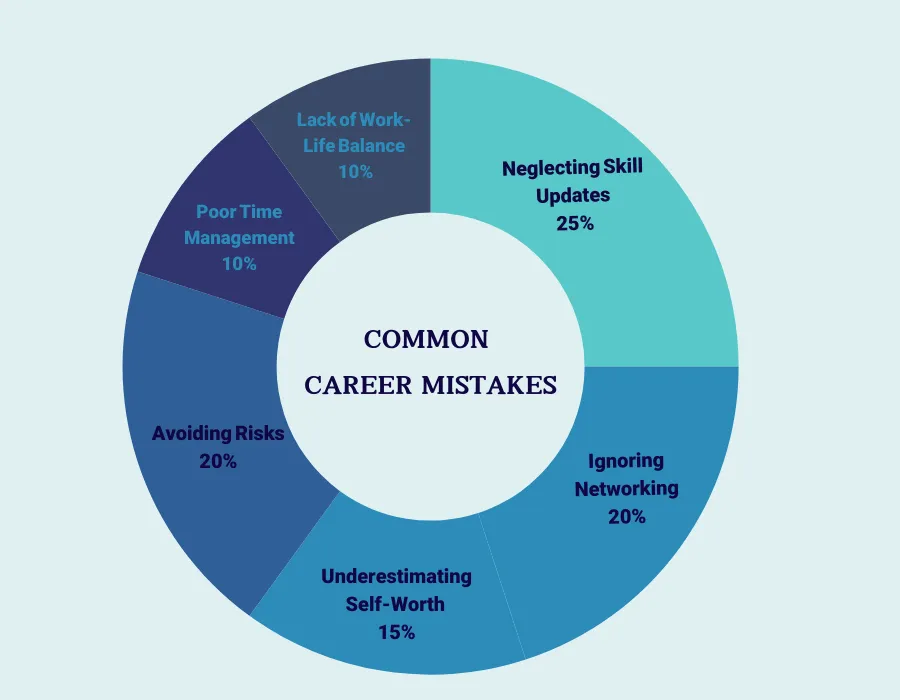
Career mistakes can significantly hinder professional growth, leading many capable individuals to feel stuck in their careers. While intelligence and talent can shine in interviews and presentations, they do not always guarantee successful progression in the workplace. Common pitfalls such as overthinking, fear of failure, and hesitating to embrace new challenges can stifle potential, preventing high-achieving professionals from realizing their ambitions. Noticing these hindrances is the first step toward overcoming career challenges and making smart career moves. In this article, we will explore seven key career mistakes, along with strategies for personal development to help you transform feedback into actionable steps for growth.
Navigating the complexities of one’s professional journey often involves encountering various obstacles that can derail even the most promising careers. These stumbling blocks, frequently overlooked or underestimated, can be the result of subtle missteps rather than blatant errors. From prioritizing titles over substantive learning opportunities to underestimating the power of networking and interpersonal relationships, many individuals find themselves at a standstill. By recognizing these roadblocks and adopting a mindset focused on continuous improvement, professionals can empower themselves to pivot towards more favorable outcomes. This discussion will examine seven common misjudgments along with their potential solutions, ultimately fostering an environment for sustained professional advancement.
Understanding Career Mistakes That Hinder Growth
In the fast-paced world of professional development, making errors can often be viewed as a detrimental setback. Yet, it’s vital to recognize that these career mistakes, when acknowledged, can become pivotal teaching moments. Many high-achieving individuals unwittingly sabotage their potential for success by failing to confront simple missteps. This oversight might stem from an overintellectualization of their capabilities, where they may think, ‘I know better than to make this mistake,’ only to find themselves repeating the same patterns. Identifying these missteps is the first step towards overcoming career challenges.
Career mistakes such as waiting too long to pursue opportunities or overlooking feedback can stifle professional growth. Being aware of these patterns allows for a strategic shift in perspective. By addressing these common pitfalls—like the tendency to wait for the perfect moment before taking action—individuals can learn to embrace uncertainty and take calculated risks. Ultimately, understanding and rectifying these career missteps will not only enhance personal development but also enable one to make smarter career moves that open doors to new opportunities.
The Role of Feedback in Career Advancement
Feedback is an essential component of career growth, yet many professionals struggle with accepting it constructively. Misinterpreting feedback as a personal critique rather than as a tool for improvement can lead to professional stagnation. To foster personal development, it’s crucial to cultivate a mindset that views feedback as an avenue for growth rather than judgment. Embracing feedback can facilitate learning and help in refining skills that are pertinent in navigating career challenges effectively.
Furthermore, engaging with feedback can significantly transform one’s approach to professional growth. When individuals actively seek out constructive criticism, they send a clear message that they are committed to their development. This proactive stance can lead to the establishment of stronger relationships with mentors and colleagues, enhancing networking opportunities that are essential for career advancement. Therefore, integrating feedback into one’s career strategy is not just about improving performance; it’s also about building a resilient professional identity.
Building Relationships Alongside Skills
In today’s competitive job market, merely having a robust skill set is often insufficient for penetrating the upper echelons of one’s career. While technical expertise is undeniably valuable, prioritizing relationship-building is equally important for sustainable success. Professionals who focus solely on advanced training or certifications may find themselves isolated, missing out on the significant opportunities that come from networking and interpersonal interactions. Emphasizing connections can enable professionals to uncover pathways and resources that otherwise would remain inaccessible.
Moreover, collaboration can amplify personal development as working alongside others often leads to newfound insights and shared learning experiences. Developing strong professional networks can facilitate smart career moves by creating an environment where idea exchange thrives. One’s ability to connect authentically with others, while also staying committed to skill enhancement, is crucial in overcoming career obstacles and accelerating growth.
Overcoming Impatience in Your Career Journey
A common mistake that many ambitious individuals make is underestimating the power of patience in their career advancement. The desire for immediate results can lead to premature decision-making, such as abandoning projects or opportunities at the first sign of difficulty. It’s essential to cultivate the understanding that significant career growth is often gradual and requires sustained effort over time. Recognizing that the initial stages of any new venture may feel slow allows individuals to remain committed when the journey gets tough.
By shifting focus from quick results to consistent progress, professionals can develop a more resilient approach to career challenges. Committing to a minimum timeline for exploration in new roles or projects can foster a deeper engagement with the work and lead to meaningful growth. This mindset helps maintain motivation and nurtures an environment where innovation can thrive, thereby increasing the likelihood of achieving long-term career success.
Taking Risks versus Playing It Safe
In a world that often rewards conformity, the fear of not being liked can lead many to play it safe in their careers. While seeking approval can feel comforting, it often limits one’s capacity to express unique ideas or pursue innovative approaches. Leaders and high performers are frequently those who take calculated risks rather than simply conforming to the status quo. Thus, understanding the importance of challenging oneself can transform one’s professional trajectory.
Instead of prioritizing likability, focusing on trustworthiness and integrity can be a game-changer in career development. When professionals allow themselves to step beyond their comfort zones, they not only cultivate confidence but also enhance their reputation as thought leaders within their organizations. Over time, taking calculated risks can build a legacy where one is remembered for their substantial contributions rather than a tendency to agree with every prevailing idea.
Navigating the Perils of Comparison
The habit of comparing your career progress to others can be remarkably harmful. High-achieving individuals often fall into the trap of measuring their journey against those who seem to have already reached their peak. Such comparisons can lead to feelings of inadequacy and self-doubt, which only serve to impede personal development. It is important to realize that each person’s path is influenced by unique circumstances, experiences, and opportunities.
To combat this tendency, one must shift the focus from external metrics to personal growth. Celebrating one’s milestones, no matter how small, can be a powerful antidote to the negativity induced by comparison. By concentrating on what you can control—your skills, efforts, and qualifications—you set the stage for intelligent career development that aligns with your authentic self, resulting in positive professional growth.
Frequently Asked Questions
What are common career mistakes that hinder professional growth?
Common career mistakes that inhibit professional growth include waiting to feel fully ready before taking action, prioritizing job titles over genuine learning, taking feedback personally instead of using it constructively, neglecting relationships while building skills, giving up too early on challenging pursuits, playing it safe to be liked rather than trusted, and comparing your journey to others. Recognizing and addressing these pitfalls can significantly enhance your ability to overcome career challenges and make smart career moves.
| Career Mistake | Description | Solution |
|---|---|---|
| Waiting to feel ready | Many delay action until they feel ready, which often never happens. | Treat ‘ready’ as a verb; take the first step now. |
| Choosing titles over real learning | Focusing on job titles instead of skill acquisition leads to a shaky career. | View every role as a learning opportunity, prioritize skills over titles. |
| Taking feedback personally | Interpreting feedback as a personal attack hinders growth. | Use feedback constructively to improve; dissociate your worth from your work. |
| Ignoring relationships | Focusing solely on skills can lead to missed networking opportunities. | Value relationships as part of professional growth. |
| Giving up too early | Impatience causes many to quit before success emerges. | Commit to time spent on a project before assessing its merit; focus on effort. |
| Playing safe to be liked | Desire to be liked may deter decisive action and risk-taking. | Aim to be trusted over liked; take calculated risks openly. |
| Comparing your journey with others | Comparing yourself to others can create unnecessary pressure. | Recognize everyone has their unique timeline; focus on your own progress. |
Summary
Career mistakes are often subtle yet impactful missteps that hinder even the smartest professionals from achieving the growth they desire. Acknowledging and addressing these common pitfalls can lead to a meaningful transformation in one’s career. Whether it’s the reluctance to act due to perfectionism, placing too much value on titles, or the tendency to take criticism to heart, these behaviors are more common than one might think. By shifting our perspective on readiness, focusing on skills over titles, embracing feedback constructively, prioritizing relationships, maintaining perseverance, embracing risks, and recognizing our unique journeys, we can reclaim our path to success and fulfillment in our careers.