

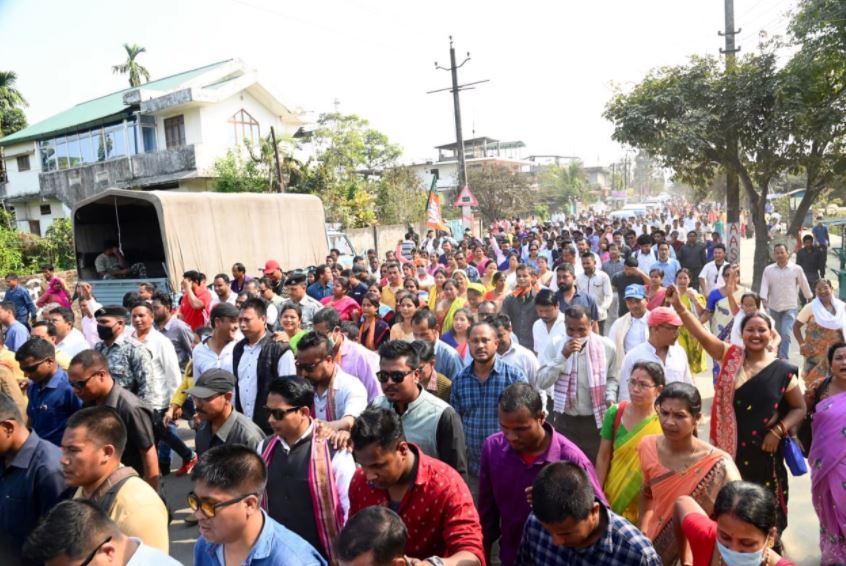
In a significant move to encourage voter participation, the Assam assembly election paid holiday on April 9 has been officially announced for all registered voters in Dimapur’s Chumoukedima District. This initiative, aligning with the polling day holiday framework, ensures that those employed in various sectors, including trade, industry, and casual jobs, can exercise their democratic rights without the worry of losing pay. The decision is rooted in the provisions of the Representation of the People Act, which underlines the importance of civic engagement during the Assam elections 2026. Employers are mandated to comply with this order, reflecting a commitment to facilitating a high turnout at the polls. As the election approaches, similar measures are anticipated not just in Assam but potentially extending to the Nagaland elections, promoting a more inclusive voting environment.
The recent declaration regarding the paid holiday for voters highlights the importance of facilitating democratic participation during crucial electoral events. Dubbed a polling day holiday, this initiative is aimed at ensuring that all eligible individuals can partake in the electoral process without facing financial penalties from their employers. It’s a legal requirement, as outlined in national electoral legislation, to provide citizens with the opportunity to engage in significant events like the Assam assembly election. As we look forward to the Assam elections 2026, such measures increase the likelihood of robust voter turnout while fostering an atmosphere of civic responsibility. Furthermore, it’s a reminder that such policies could also be mirrored in upcoming contests, like the Nagaland elections, encouraging a more engaged electorate across Northeast India.
Importance of Paid Holidays for Voter Participation
Voter participation is a cornerstone of a thriving democracy, and creating conditions that facilitate it is essential. The declaration of a paid holiday on polling day, as announced for the Assam assembly election, underscores the significance of encouraging individuals to exercise their voting rights. By ensuring that all registered voters, regardless of their employment type, can take time off to vote, the government acknowledges the integral role that every citizen plays in shaping their community and country.
This initiative not only aims to boost turnout at the polls but also reflects the broader objective of simplifying the voting process. When individuals feel empowered and supported in their choice to vote, it enhances overall civic engagement. Moreover, such measures adhere to the guidelines laid out in the Representation of the People Act, which advocates for ensuring accessible elections, thereby strengthening the democratic fabric.
Assam Assembly Election Paid Holiday: What It Means for Employers and Employees
The announcement of a paid holiday for the Assam assembly elections carries significant implications for both employers and employees. Employers in the Nagaland region must prepare to adapt their business operations in light of this directive, ensuring that their workforce can participate in the electoral process without financial repercussions. It is imperative for businesses, irrespective of size, to comply with the directive that mandates time off for all eligible voters.
However, the notification does outline specific exclusions for certain types of employment—primarily those roles where an absence could lead to safety risks or substantial operational disruptions. For these employers, effective communication and planning are vital to manage workforce changes while still facilitating civic responsibility. This balance will support higher voter turnout as citizens feel both the obligation and freedom to fulfill their democratic duties on April 9.
Navigating the Polling Day Holiday: Guidelines for Employers
With the official declaration of a paid holiday for polling day on April 9, employers in the region of Nagaland must navigate the compliance requirements set forth by the District Commissioner. These guidelines are crucial not just for adhering to legal mandates but also for fostering a positive work culture that encourages civic engagement. It is vital for employers to clearly communicate the significance of the holiday to their employees, thereby motivating them to utilize this opportunity to vote.
Employers should also consider implementing flexible work arrangements or incentives, encouraging employees to vote during specific times that do not disrupt business operations. By demonstrating support for employee participation in the democratic process, employers contribute to a culture that values civic responsibility, which can also enhance employee morale and loyalty.
Encouraging Voter Engagement in Assam Elections 2026
As the Assam elections approach in 2026, fostering a culture of voter engagement becomes increasingly important. Communities must be mobilized to not only understand the significance of their vote but also to feel empowered to participate. Initiatives like paid holidays on polling days are just one aspect of a broader strategy to increase voter turnout and participation. Educating voters about the issues at stake and the impact of their choices is paramount in motivating them to head to the polls.
Moreover, collaborative efforts between local administrations, civil society, and educational institutions can further enhance voter awareness. Campaigns that highlight the relevance of voting in shaping local and national policies are crucial. By boosting awareness of voting rights and the importance of participation in the electoral process, particularly among younger voters, Assam can ensure that the 2026 elections witness robust voter engagement.
The Role of Paid Holidays in Promoting Democratic Values
Paid holidays for polling days serve to promote democratic values by ensuring that all citizens have equal opportunity to exercise their franchise without financial stress. This, in turn, fortifies the principle of universal suffrage that every citizen has the right to vote without barriers. Such measures illustrate a commitment to protecting individual rights and empowering citizens to engage in critical civic duties, thereby enhancing the integrity of the electoral process.
Additionally, recognizing the need for paid holidays according to the Representation of the People Act aligns state policies with democratic ideals. When the government takes steps to remove obstacles to voting, it not only encourages higher participation rates but also strengthens public trust in electoral institutions. Thus, promoting these holidays is less about logistical adjustments and more about reinforcing the belief that every vote has value and that every citizen’s voice matters.
Balancing Business Needs and Voter Responsibilities on Election Day
With the polling day holiday in place for the Assam assembly elections, employers face the dual challenge of ensuring their business needs are met while supporting their employees’ voting responsibilities. It is essential for business owners to strategize effectively, creating schedules that allow for adequate staffing while also accommodating employees who wish to cast their votes. Dialogue between management and staff can facilitate understanding and create workable solutions that benefit everyone.
Planning for such contingencies may require advance approval of shift adjustments, rescheduling meetings, or even implementing a short closure during the busiest voting hours. By prioritizing voter participation and allowing employees to fulfill their civic duties, businesses can play a pivotal role in strengthening democracy and building a socially responsible brand reputation in their community.
Impact of the Polling Day Holiday on Voter Psychology
The declaration of a paid holiday for the polling day can have significant psychological effects on voter behavior. With the state officially recognizing and facilitating the act of voting, individuals may feel more motivated to participate, viewing it as both a civic duty and a collective responsibility. This proactive approach can foster a sense of community and shared purpose among voters, contributing to stronger voter turnout as individuals rally not just for their rights, but also for their collective future.
Moreover, the knowledge that they have the day off encourages more people to engage in discussions about the elections, leading to increased awareness and informed choices at the polls. Empowerment through guaranteed time off helps alleviate the barriers that many face when trying to vote, thus fostering a culture of political engagement that can lead to more informed societal decisions overall.
How Nagaland Elections Align with Assam’s Paid Holiday Policy
The recent announcement of a paid holiday for the Assam assembly elections resonates beyond state boundaries, reflecting a shared commitment in the Northeast towards facilitating voter participation. Just as Assam gears up for its election, neighboring states like Nagaland must consider similar initiatives to ensure that all eligible voters can exercise their rights without financial concerns. This alignment not only promotes democracy but also fosters regional solidarity in the electoral process.
Furthermore, as both Assam and Nagaland prepare for forthcoming elections, collaborative measures can bolster voter turnout and engagement across state lines. Discussions between electoral officials in both regions could pave the way for standardizing practices that prioritize citizen participation, considering each state’s unique challenges. As such, the paid holiday policy serves as a model that could inspire broader reforms in the election systems of the region.
Understanding the Legislation Behind the Paid Holiday for Elections
The paid holiday declared for the Assam assembly elections is rooted in the Representation of the People Act, designed to ensure that every eligible voter can participate in the electoral process without hindrance. This legislation outlines the rights and responsibilities associated with voting and emphasizes the importance of making elections accessible to all segments of society. By adhering to such legislation, local authorities reinforce their commitment to democratic principles.
It is also essential for voters to familiarize themselves with the provisions of this act, understanding their rights as citizens. Awareness of these legal frameworks can empower individuals to hold employers accountable and ensure compliance with electoral mandates. Knowledge about their voting rights can foster a sense of agency among the electorate, ultimately leading to increased participation and satisfaction in the democratic process.
Frequently Asked Questions
What is the significance of the paid holiday on polling day for the Assam assembly election?
The paid holiday on polling day, April 9, for the Assam assembly election is significant as it ensures that all registered voters, including those in Nagaland, can participate in the electoral process without financial penalties from their employment. Instituted under Section 135B of the Representation of the People Act, 1951, this initiative aims to enhance voter participation and safeguard the democratic rights of citizens, especially in light of the upcoming Assam elections 2026.
| Key Points | Details |
|---|---|
| Polling Day Holiday | April 9 is declared a paid holiday for Assam assembly election in Chumoukedima. |
| Eligibility | All registered voters employed in business, trade, industrial, or other establishments in Nagaland. |
| Exclusions | Voters whose absence could pose a danger or result in significant loss to their employment. |
| Employer Compliance | All employers are instructed to comply with this paid holiday order. |
| Legal Basis | The order is issued under Section 135B of the Representation of the People Act, 1951. |
Summary
The Assam assembly election paid holiday ensures that all eligible voters can take part in the electoral process without any hindrance. Announced by the Chumoukedima District Commissioner, this initiative aims to promote participation among registered voters employed in various sectors within Nagaland. By designating April 9 as a paid holiday, the order emphasizes the importance of civic duty, allowing employees to engage in voting. Exceptions are made where absence from work could lead to significant operational risks for employers, indicating a balanced approach to facilitate voting while considering business needs. Overall, this legislative measure reflects a commitment to uphold democratic values, encouraging every eligible individual to exercise their right to vote in the upcoming election.



























