

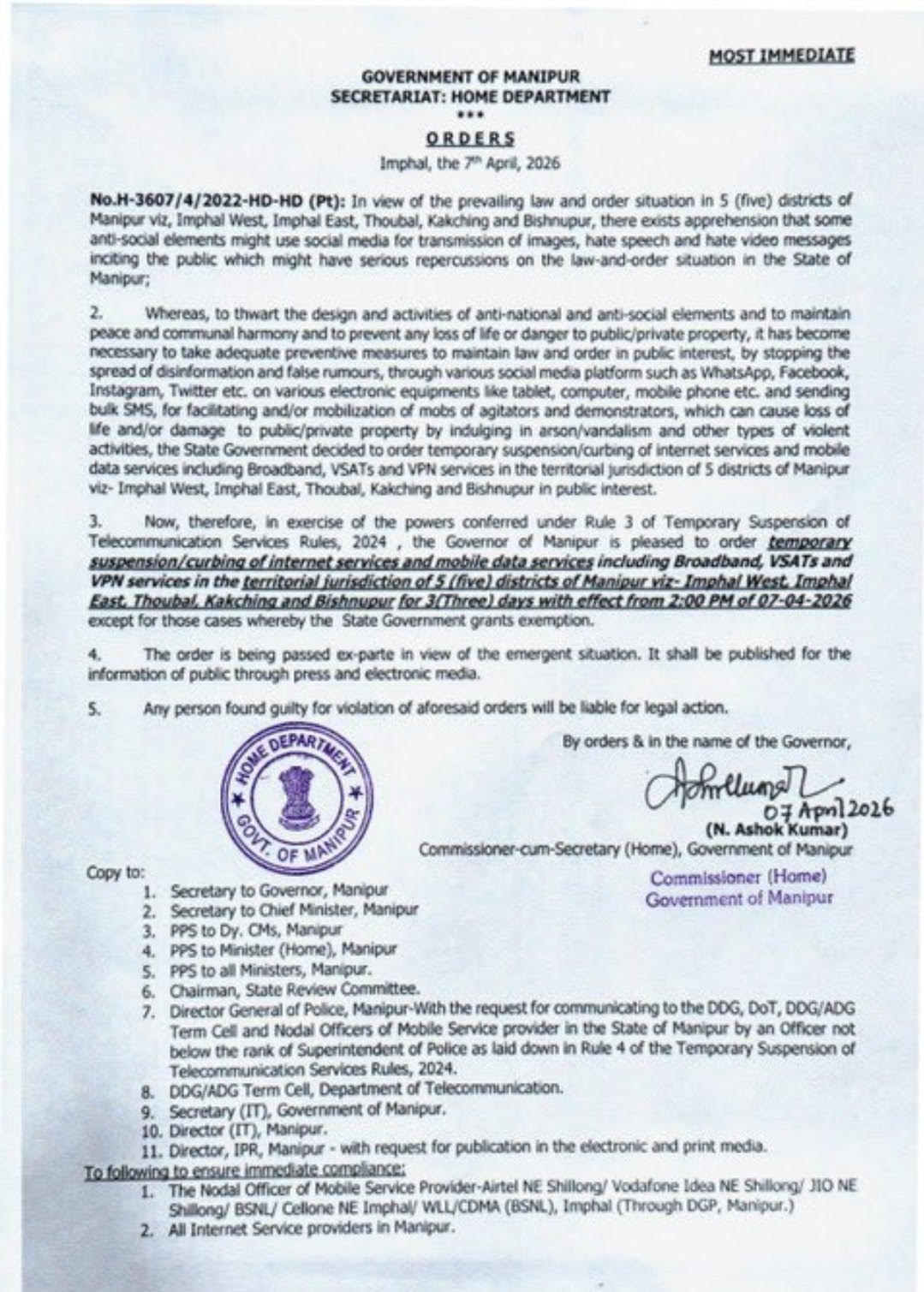
The recent internet shutdown in Manipur has stoked unrest in the region, particularly following a tragic bomb attack that claimed the lives of two young children. This incident, which occurred in the volatile Moirang valley, has prompted the government to implement a curfew in Bishnupur and suspend mobile internet services across five districts to prevent further escalation. Authorities have justified the restrictions on internet services in Manipur as necessary to curb the spread of misinformation amid mounting tensions and protests in response to the tragedy. With the violent repercussions of the bomb blast still unfolding, the curfew and shutdown have become contentious points of discussion, raising questions about civil liberties and security. As anger continues to simmer, residents are left grappling with the implications of these measures on daily life and communication in an already tumultuous environment.
In the wake of a devastating incident that rocked this northeastern state, Manipur has faced severe security challenges, leading to a suspension of digital communications and the enforcement of curfews. A recent explosion in the Moirang region, which resulted in the deaths of innocent children, has sparked widespread protests and unrest. The government’s move to halt internet services and control movement seeks to maintain order while addressing the potential for misinformation and civil disorder. Local authorities fear that the ongoing tensions between various communities might exacerbate the situation, further complicating efforts to restore normalcy. As the situation unfolds, the balance between public safety and individual rights remains a critical concern for citizens and officials alike.
The Consequences of the Manipur Internet Shutdown
The decision to implement an internet shutdown in Manipur following the tragic bomb attack is a measure that sparks considerable debate. With mobile internet services suspended across five districts, including the critical areas of Imphal East and Bishnupur, residents have found themselves cut off from vital communications. The government cited the need to control the spread of disinformation and rumors as the primary reason for this drastic action. However, many inhabitants argue that this shutdown only exacerbates the already heightened tensions in the state, leaving families in the dark during a time of crisis.
The long-term implications of such internet restrictions can lead to a breakdown in community communication, especially when citizens require updates and support during emergencies. Furthermore, the curfew imposed to maintain order can hinder the ability of individuals to seek medical assistance or find refuge during unrest. While authorities emphasize the need to restore peace following the bomb attack that killed two children in Moirang valley, the repercussions of this internet blackout could inadvertently fuel more unrest as people express their frustrations through protests and civil disorder.
Impact of the Moirang Valley Unrest on Local Communities
The Moirang valley unrest has significantly affected the local communities, particularly in an area already marked by tension between the Meitei and Kuki populations. The bomb blast that claimed the lives of two innocent children has not only ignited outrage but has also led to destructive protests, with people resorting to setting fire to vehicles in their grief and anger. Such acts of protest signify a growing frustration among the residents, who feel their safety is compromised and that their voices are being stifled amid the violence.
As the situation escalates, the harmony within these communities faces a critical threat. The use of explosives in residential areas raises fears and anxieties, making it difficult for families to feel secure in their own homes. Additionally, with curfews and internet blackouts in place, the ability to organize peaceful demonstrations or express grievances diminishes. The atmosphere of distrust and fear is palpable, pushing residents towards increasingly desperate measures as they seek justice for the tragic incident that has taken their loved ones.
Government’s Response to the Violence in Manipur
In the wake of the bomb attack in Manipur, the government’s response has been decisive, albeit controversial. Chief Minister Y Khemchand Singh labeled the attack as an ‘act of terror’ and vowed to pursue justice vigorously against those responsible. Political leaders are calling for a collective effort to combat the rising tide of violence and ensure the safety of local communities. However, the effectiveness of these measures is under scrutiny, especially in light of the immediate curfew and internet shutdown that have left many feeling more isolated than protected.
While the government’s goal to restore order is commendable, the approach of imposing sweeping restrictions can have unintended consequences. Critics argue that heavy-handed tactics such as the curfew can foster animosity between citizens and law enforcement. Instead of calming tensions, this could lead to more violent confrontations, as evidenced by the events following the bomb blast that saw security forces clashing with protestors. Moving forward, a more nuanced strategy that includes dialogue and community engagement may be necessary to heal the rifts within Manipur and prevent further violence.
Understanding the Protests Following the Bomb Attack
The protests in Manipur following the bomb attack highlight the community’s deep-seated frustrations and calls for accountability. The tragic loss of two children in a violent act has mobilized residents to express their anger against perceived government inaction and security failures. Protestors, feeling the weight of their grief, took to the streets to register their dissent, often resulting in violent clashes with law enforcement. These protests are not merely a reaction to the bomb blast; they underscore a larger narrative of discontent that has been brewing in the region due to long-standing ethnic tensions.
Many locals feel marginalized, and the government’s fast-tracked curfew combined with the internet shutdown can be seen as efforts to suppress their voices rather than address the root causes of their unrest. Activists and community leaders are calling for a more profound investigation into the incident and safer conditions for all citizens. By highlighting the need for unity and peaceful resolution, these protests aim to transform the tragedy into a catalyst for meaningful change in the region, promoting dialogue among the conflicting communities.
The Role of Media Coverage in the Manipur Crisis
Media coverage plays a vital role in shaping the narrative surrounding the Manipur crisis, particularly following the bomb attack that shocked the community. Journalists covering the unrest face substantial challenges, with reports of harassment and risk due to the violent protests. The difficulty of reporting under such dangerous conditions highlights an essential aspect of the crisis: the need for transparency and the dissemination of accurate information. While some media outlets highlight the humanitarian aspects of the bombing and the subsequent unrest, others may sensationalize the violence, leading to further panic and misunderstandings among the public.
As the situation continues to evolve, responsible journalism becomes more crucial than ever. By shedding light on the complexities of the conflict between the Meitei and Kuki communities, media coverage can help foster understanding and empathy instead of division. Conversely, misleading narratives can fuel existing tensions and escalate violence, making it imperative for journalists to maintain integrity in their reporting. The way the story of Manipur is told can either bridge gaps or deepen wounds, emphasizing the tremendous responsibility media professionals carry during crises of this nature.
The Implications of Curfew in Manipur
The curfew imposed in Manipur as a reaction to the violence following the bomb attack presents numerous implications for daily life. Residents find themselves under constant restriction, with the freedom to move and communicate curtailed by official measures. The impact of such a curfew extends beyond safety concerns; it disrupts normal family activities, educational institutions, and local businesses. For many, this state of emergency derails not only daily routines but also community relationships that depend on interaction and connection.
Furthermore, the psychological toll of living under a curfew can lead to widespread anxiety and fear among the population. As individuals are forced to remain indoors, with limited access to news and updates due to the internet shutdown, uncertainty envelops communities. While authorities assert that these measures are necessary to ensure public safety after the tragic incident, residents often feel more isolated and vulnerable during a time when the need for solidarity is paramount.
Examining The Security Forces’ Response in Manipur
The response of security forces to the unrest in Manipur following the bomb attack has been a point of contention. While their primary role is to maintain order and protect citizens, the use of force in riot situations often raises ethical questions. The reported incidents of gunfire during protests not only resulted in injuries but also heightened public distrust towards law enforcement agencies. Observers note that while security forces aim to restore calm, aggressive tactics can sometimes inflame tensions further, leading to more violent clashes.
Moreover, the actions of the security forces can have lasting implications on community-police relations. In regions fraught with ethnic tensions, mistrust can be deepened when force is applied indiscriminately. It is crucial for the security apparatus to engage with community leaders and emphasize dialogue as part of their strategy moving forward. An approach that prioritizes community safety without resorting to excessive force is essential for rebuilding trust and ensuring that similar tragedies do not occur again.
Historical Context of Unrest in Manipur
Understanding the historical context of unrest in Manipur is essential to grasp the dynamics behind the recent events. This northeastern state has a complex history marked by ethnic strife and grievances between communities. The tensions between the Meitei and Kuki populations have been fueled by socio-economic disparities and issues over land and political representation. Over the years, sporadic violence has plagued the region, often igniting larger conflicts that disrupt the social fabric of Manipur.
The bomb attack that led to the tragic deaths of the two children in Moirang is yet another tragic chapter in a long-standing saga of violence. It starkly reflects the unresolved issues among the communities and the urgent need for dialogue to foster reconciliation. Understanding this backdrop helps explain why the community actively protests against perceived injustices and struggles amid ongoing instability. As Manipur faces these significant challenges, acknowledging and addressing the historical grievances may pave the way for a more peaceful future.
The Future of Peace and Stability in Manipur
As Manipur grapples with the aftermath of the bomb attack and subsequent unrest, the future of peace and stability hinges on several crucial factors. Authorities must navigate the delicate balance between maintaining security and restoring trust among the communities. This requires not just immediate security measures, such as the curfew and internet shutdown, but also longer-term strategies focused on community engagement and reconciliation. Building bridges between the conflicting groups will be vital for fostering a sense of shared identity and purpose.
Community-driven initiatives that promote dialogue and cooperation can help break down barriers and heal wounds from past grievances. Additionally, ensuring that justice is served for the victims of violence will be critical in rebuilding faith in local governance and the rule of law. The path to stability is undoubtedly challenging, but with sustained efforts and a commitment to inclusivity, authorities can work towards a comprehensive resolution that honors the needs and aspirations of all communities in Manipur.
Frequently Asked Questions
What led to the Manipur internet shutdown in April 2026?
The Manipur internet shutdown in April 2026 was triggered by a deadly bomb attack that killed two children in the Moirang valley. In response to the escalation of violence and unrest, the government imposed a three-day mobile internet suspension across five districts to prevent the spread of disinformation and maintain public order.
How does the curfew in Manipur relate to the recent bomb attack?
The curfew in Manipur was imposed in Bishnupur following a bomb attack that killed two children. Authorities deemed it necessary to curb potential unrest and violence stemming from the community’s outrage over the tragic incident, reinforcing security measures in the area.
Which districts in Manipur were affected by the internet services suspension?
The suspension of internet services in Manipur affected five districts: Imphal East, Imphal West, Thoubal, Kakching, and Bishnupur. This action was taken to avoid chaos and prevent the spread of rumors after the deadly bomb attack.
What were the public reactions to the Manipur bomb attack?
Public reactions to the Manipur bomb attack included protests and violent outbursts, with locals setting fire to oil tankers and engaging in clashes with security forces. The tragic loss of the two children incited widespread anger and grief in the community.
What measures are being taken to ensure peace in Manipur following the unrest?
In response to the unrest in Manipur, authorities have implemented a curfew and suspended internet services to maintain order and prevent misinformation. Security forces have been deployed to manage protests and restore calm in the affected areas.
Why did the government impose an internet blackout in Manipur after the bomb blast?
The government imposed an internet blackout in Manipur after the bomb blast to control the spread of false information and prevent further disturbances. The authorities aimed to mitigate the tension arising from the protests and violence following the tragic incident in the Moirang valley.
What impact did the internet shutdown have on the residents of Manipur?
The internet shutdown in Manipur significantly impacted residents, restricting communication and access to vital information. It heightened the sense of uncertainty amid the curfew and protests, making it challenging for people to stay informed about the situation and coordinate with each other.
Is the internet services suspension in Manipur a common response to violence?
Yes, the suspension of internet services in Manipur is a common governmental response to incidents of violence and unrest. Such measures are intended to maintain public order by reducing the risk of misinformation and preventing the escalation of conflicts.
What are authorities saying about the bomb attack in Manipur?
Authorities, including Chief Minister Y Khemchand Singh, have condemned the bomb attack in Manipur as a barbaric act of terror. They emphasize the need to hold those responsible accountable and assure the public that violent acts will not be tolerated.
| Key Points | Details |
|---|---|
| Incident | A bomb blast killed two children and injured their mother in Moirang, Manipur. |
| Government Response | Mobile internet services were suspended for three days in five districts, and a curfew was imposed in Bishnupur. |
| Affected Areas | Imphal East, Imphal West, Thoubal, Kakching, and Bishnupur were specifically identified as affected. |
| Rationale for Shutdown | The government cited the need to control the spread of disinformation and prevent public disturbances. |
| Public Reaction | Protests erupted, leading to violence with locals setting fire to fuel tankers and attacking police. |
| Official Statements | Chief Minister Y Khemchand Singh condemned the attack, labeling it a ‘barbaric act’ of terrorism. |
| Consequences | 19 people were injured, and one person was confirmed dead amidst protests and police actions. |
Summary
The recent Manipur internet shutdown was a crucial response to escalating tensions in the region following a deadly bomb attack that claimed the lives of two children. This incident, coupled with the ensuing violence and protests, underscores the fragility of law and order in Manipur. The government’s decision to restrict internet access was aimed at preventing further unrest and controlling the spread of misinformation. As the situation develops, the focus remains on restoring peace and addressing the underlying conflicts in this sensitive area.



























