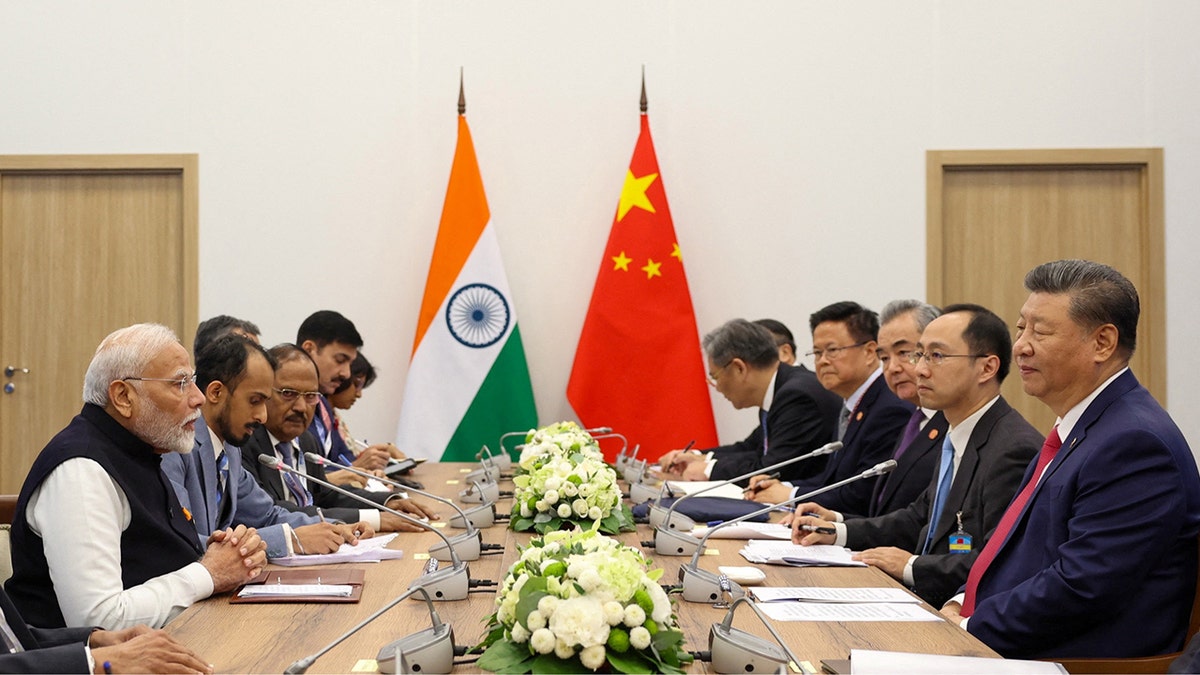
China India Relations: Tensions Rise Over Arunachal Pradesh Names
China India relations have been under scrutiny as tensions flare over territorial disputes, particularly in Arunachal Pradesh. Recently, China has taken a provocative step by assigning new names to various locations in this disputed area, a move that India firmly rejects as an attempt to manipulate its sovereignty. The ongoing India China border dispute reflects deeper issues surrounding China India territorial claims, and the reluctance of both nations to compromise has only heightened tensions. Notably, the naming dispute over Arunachal Pradesh is not just a question of identity; it embodies the geopolitical intricacies of bilateral relations between China and India. As both nations navigate these turbulent waters, the international community watches closely, aware that the implications of their relationship extend far beyond their borders.
The relationship between China and India is characterized by a complex history and a series of contentious encounters over land and territorial integrity. Both countries have engaged in ongoing skirmishes and disputes that encapsulate the challenges of their diplomatic ties, including the well-documented naming dispute concerning Arunachal Pradesh. As China persists in asserting its alternative nomenclature for locations within this contested region, India stands firm in defense of its claims. The implications of these developments on bilateral ties are profound, as they spotlight the delicate balance between cooperation and conflict in the region. By understanding the nuances of these interactions, one can appreciate the broader context of Sino-Indian relations amidst various geopolitical challenges.
The Naming Dispute in Arunachal Pradesh: Historical Context
The naming dispute between India and China over Arunachal Pradesh has its roots in a complex historical context. India asserts that Arunachal Pradesh is an integral part of its territory, a claim that is not only based on historical ties but also on legal grounds. On the other hand, China refers to the region as Zangnan, arguing that it is part of its sovereign territory. This disagreement has fueled tensions and has been a persistent point of contention in bilateral relations between China and India.
The significance of this naming dispute extends beyond mere semantics. It highlights the larger issue of territorial claims that both nations hold within their border disputes. With China publishing various names for locations in Arunachal Pradesh since 2017, India has persistently rejected these attempts, labeling them as an effort to alter historical realities. This continued friction exemplifies how territorial claims can affect diplomatic interactions and serve as a backdrop for deeper geopolitical differences.
China-India Territorial Claims and Their Implications
China and India have long-standing territorial claims that contribute to their bilateral relations dynamics. The most prominent flashpoints include not only Arunachal Pradesh but also other contentious areas along the India-China border, such as Aksai Chin. These territorial disputes have significant implications for national security, regional stability, and military posturing, as both countries continue to bolster their presence along the borders.
The implications of these claims extend to various aspects, including economic engagement and diplomatic momentum. While both nations have expressed a desire to improve their bilateral relations, underlying tensions from territorial disputes create a hurdle that complicates cooperation on broader trade and economic initiatives. The ongoing naming disputes and border disagreements serve as constant reminders of the unresolved issues that can derail diplomatic progress.
Recent Developments in India-China Relations
In the latest developments, China has asserted its resolve to strengthen its relations with India, even while engaging in actions that are perceived as provocative by New Delhi. The assertion of sovereignty through renaming locations in Arunachal Pradesh, coupled with the establishment of new counties in strategically sensitive areas, indicates a broader strategy by China to solidify its claims in disputed regions. These actions have elicited strong responses from India, reinforcing the notion that diplomatic progress is often overshadowed by border tensions.
Despite the diplomatic tone from both sides, the reality of the current situation is that these incidents contribute to an atmosphere of mistrust. India’s external affairs ministry has firmly reiterated its stance against China’s changing place names, characterizing such actions as attempts to manipulate narratives regarding territorial integrity. As the two countries navigate this delicate geopolitical landscape, it remains to be seen how they can balance ongoing border disputes while attempting to foster a more cooperative bilateral relationship.
Bilateral Relations Between China and India: A Complex Web
Bilateral relations between China and India are characterized by a complex web of cooperation and conflict. On one hand, both countries share a commitment to economic collaboration and regional stability. On the other hand, historical grievances and disputes over territorial claims create a recurring cycle of tension. The relationship has evolved over decades, with periods of dialogue often interrupted by incidents along the contested borders, such as the recent border skirmishes and naming disputes in Arunachal Pradesh.
The path forward for China-India relations appears to be fraught with challenges. While diplomatic channels remain open, the existence of deep-rooted territorial disputes complicates progress in various sectors, from trade to military cooperation. As China continues to promote its territorial claims, India remains steadfast in rejecting these assertions. This ongoing tug of war illustrates the inherent difficulties in forging a stable bilateral relationship in the face of historical territorial issues.
The Role of National Sovereignty in China-India Relations
National sovereignty plays a pivotal role in shaping the interactions between China and India, especially concerning territorial disputes like those involving Arunachal Pradesh. Each country staunchly defends its claimed territories, viewing any actions perceived as undermining sovereignty—such as China’s renaming efforts—as provocations that cannot be overlooked. This rigid adherence to national sovereignty contributes to a precarious balance in diplomatic exchanges, often leading to escalated tensions.
The assertion of sovereignty is not just a matter of national pride but also a crucial component of internal governance for both countries. By reinforcing claims over disputed regions, both China and India aim to strengthen their positions domestically. However, this strategy also complicates their broader international relationships, as external observers watch closely to understand how these sovereign claims can impact regional stability and security dynamics in Asia.
Impacts of Territorial Disputes on Security in Asia
Territorial disputes between China and India have direct implications for security across Asia. The tensions along the border, particularly in Arunachal Pradesh and Aksai Chin, raise concerns for surrounding nations and can fuel regional arms races. As both countries invest in military capabilities to assert their claims, neighboring countries may feel compelled to bolster their own defense mechanisms in response, potentially leading to an escalation in arms and military posturing.
Moreover, the security implications extend beyond the immediate borders of China and India; they resonate throughout the entire Asia-Pacific region, influencing diplomatic alignments and military strategies. Asian countries are increasingly navigating the complex web of alliances formed in response to the perceived threat from territorial disputes. As China seeks to expand its influence, India’s efforts to assert sovereignty in contested areas will play a critical role in shaping the future security paradigm in Asia.
The Geopolitical Landscape: China, India, and Beyond
The geopolitical landscape surrounding China and India reveals much about the broader dynamics of international relations in the region. With both nations emerging as significant global players, their interactions are closely monitored by other world powers. Issues arising from the China-India border disputes, including the naming controversy in Arunachal Pradesh, serve as critical touchpoints in the geopolitical chess game that includes the United States, Russia, and other regional powers.
The geopolitical landscape is further complicated by alliances and partnerships that both China and India are cultivating. For instance, India’s relationships with the United States and Japan, contrasted with China’s ties to countries in its sphere of influence, create a multi-layered environment in which territorial disputes exacerbate existing rivalries. Understanding these relationships is essential for comprehending the implications of bilateral relations between China and India not just regionally, but on a global scale.
The Economic Dimension of China-India Relations
The economic dimension of China-India relations is often viewed as a potential area of cooperation amid ongoing disputes. Despite territorial tensions, both economies are highly interdependent, with significant trade volumes exchanged annually. This interdependence is marked by a potential for collaboration that could help mitigate some of the negative impacts of border disputes. However, the reality is that economic engagements are often overshadowed by political and military frictions.
While the economic ties between China and India present opportunities for mutual growth and development, the persistent border tensions, including the recent naming disputes, can create a backdrop of uncertainty. Companies operating in either country often face challenges stemming from the geopolitical climate, which can impact investment decisions and long-term business strategies. For bilateral relations to truly flourish economically, a resolution to underlying territorial issues is essential to build an atmosphere of trust.
Cultural Exchange Between China and India: Building Bridges Amidst Tensions
Cultural exchanges between China and India represent a softer dimension of their bilateral relations, often providing a platform for dialogue and understanding despite ongoing tensions. Initiatives such as educational exchanges, cultural festivals, and people-to-people relations enable both nations to promote goodwill and recognize shared historical ties. By fostering cultural appreciation, there is potential for easing the strain created by territorial disputes.
However, cultural exchanges are not immune to the impacts of national disputes, particularly in light of recent confrontations over border issues. As tensions escalate, cultural programs may face setbacks or reduced engagement. Nevertheless, the strength of cultural connections, such as mutual interests in art, literature, and philosophy, can serve as a foundation for building resilience in the bilateral relationship and may ultimately contribute to resolving deeper political disagreements.
Frequently Asked Questions
What is the significance of the China India border dispute in bilateral relations between China and India?
The China India border dispute is a critical issue affecting bilateral relations between China and India. This dispute stems from differing territorial claims, particularly over regions such as Arunachal Pradesh and Aksai Chin. It creates tension in diplomatic dialogues and impacts economic cooperation between the two nations.
How does China’s naming dispute in Arunachal Pradesh affect China India relations?
China’s naming dispute in Arunachal Pradesh complicates China India relations, as India views these name changes as attempts to undermine its sovereignty. This ongoing issue highlights the underlying territorial tensions and has prompted strong responses from Indian officials, straining diplomatic ties between the two countries.
What are the main territorial claims involved in the China India relations?
The main territorial claims involved in China India relations include China’s assertion of sovereignty over Arunachal Pradesh, referred to as Zangnan by Beijing, and India’s claim over Aksai Chin. These territorial disagreements continue to hinder constructive relations and pose challenges to peace in the region.
What recent developments have impacted China India bilateral relations?
Recent developments impacting China India bilateral relations include China’s decision to rename locations in Arunachal Pradesh and establish new administrative counties in disputed areas. India’s strong rejection of these actions underscores the ongoing tensions between the two countries regarding territorial claims.
Why does India reject China’s claims over Arunachal Pradesh in the context of China India relations?
India rejects China’s claims over Arunachal Pradesh as it views these assertions as illegitimate and contrary to its sovereignty. Indian officials argue that China’s attempts to rename places do not alter the factual status of the territory, thus reflecting the complexities of China India relations.
How does the naming dispute in Arunachal Pradesh reflect the broader challenges in China India relations?
The naming dispute in Arunachal Pradesh exemplifies the broader challenges in China India relations by illustrating how territorial disputes can escalate tensions. It serves as a reminder of the historical complexities and mutual distrust that hinder cooperation and dialogue between the two nations.
What role does Aksai Chin play in the context of China India border disputes?
Aksai Chin is a significant area of contention in China India border disputes, as China administers this region while India claims it as part of its territory. This dual claim contributes to ongoing tensions in China India relations and complicates efforts at achieving a peaceful resolution.
What reactions have both countries given regarding the border disputes in their bilateral relations?
Both countries have issued strong statements regarding border disputes, with China reaffirming its territorial claims, such as those over Arunachal Pradesh, and India firmly rejecting these claims. These reactions illustrate the conflicting narratives and the challenges of negotiating a peaceful resolution in China India relations.
| Key Point | Details |
|---|---|
| China’s Position on India Relations | China maintains that its policy regarding India remains unchanged, despite naming controversies. |
| Naming Dispute | China has recently renamed locations in Arunachal Pradesh, a move India strongly opposes. |
| India’s Rejection | India considers the renaming as an attempt by China to create false narratives regarding Indian territory. |
| Chinese Administrative Changes | China has created a new administrative county in Aksai Chin, heightening tensions. |
| Bilateral Relations Outlook | China expresses hope for continued stable bilateral relations despite ongoing tensions. |
| Historical Context of Disputes | China has been renaming places in Arunachal Pradesh since 2017; India consistently rejects these actions. |
Summary
China India relations continue to be strained amid naming disputes and territorial claims. Despite Beijing’s assertion that its relationship with India remains unchanged, India’s strong rejection of China’s recent actions reveals deep-seated tensions. The ongoing disputes over Arunachal Pradesh and newly created counties in contested areas illustrate the complexities of their interactions. Both nations’ diplomatic efforts are crucial in managing these differences to foster a more stable bilateral relationship.














