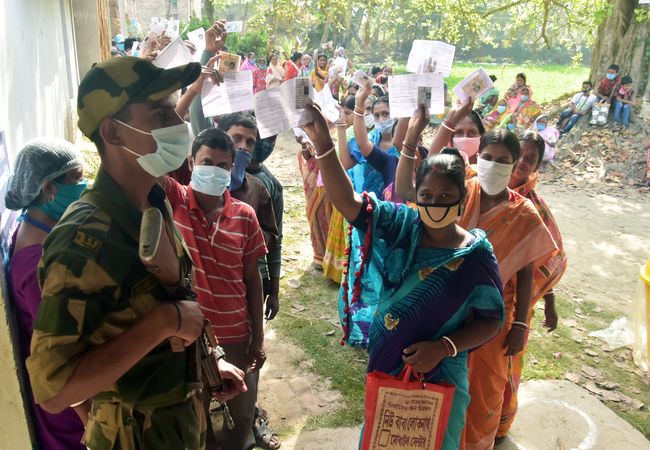
The Nandigram elections have emerged as a focal point in the West Bengal polls, showcasing a fierce competition between BJP’s Suvendu Adhikari and the Trinamool Congress led by Chief Minister Mamata Banerjee. In this politically charged atmosphere, Adhikari’s past ties with the region and his narrative of standing with the local residents since 2004 resonate strongly among the electorate. With identity politics playing a pivotal role, the stakes are high as Adhikari’s supporters rally behind him, promising to secure victory despite challengers. The upcoming elections here are not just about party loyalty but also about the complexities of community dynamics amidst changing demographics. As the campaign intensifies, all eyes are on Nandigram—a battleground where votes may reflect deeper societal undercurrents influencing West Bengal’s political landscape.
As the political arena heats up in Nandigram, this constituency stands at the crossroads of significant electoral battles that define the West Bengal region. The local races this time are marked by the return of Suvendu Adhikari, an influential figure who previously triumphed over Mamata Banerjee, igniting notable interest among voters. The ongoing clash between the Bharatiya Janata Party (BJP) and the ruling Trinamool Congress (TMC) reveals a landscape dominated by issues of identity and community affiliations that are shaping voter sentiments. The resonance of Adhikari’s message, along with the historical ties to the area, highlights the critical nature of these elections in deciding the future governance of West Bengal. With each party striving to solidify its base, Nandigram becomes emblematic of the broader political tensions and strategies that characterize this crucial electoral season.
The Political Landscape of Nandigram Elections
The Nandigram elections have become a focal point of political tussles, particularly spotlighting the clash between the BJP’s Suvendu Adhikari and the ruling Trinamool Congress led by Mamata Banerjee. As the elections approach, the presence of Trinamool flags is omnipresent, signifying the party’s deep roots and the local support it seeks to maintain. Adhikari’s previous victory in 2021 against Banerjee has set the stage for a rematch that promises to be just as contentious. The political narrative here is not merely based on party loyalty but is heavily entwined with identity politics that play a crucial role in influencing voter behavior in this region.
In the context of West Bengal polls, the significance of Nandigram cannot be understated. This constituency is emblematic of the larger battle between grassroots identity and political allegiance. With Adhikari capitalizing on his past association with the locality and the residents’ memory of his earlier stands, the dynamics of these elections illustrate how intertwined local history and individual charisma can sway public opinion. Moreover, the vow of loyalty expressed by supporters suggests that personal connections are outweighing traditional party affiliations, especially as identity politics increasingly shapes perceptions and voting patterns.
As Adhikari rallies his supporters, he references past struggles and collective memory, which resonate deeply within the Nandigram populace. His assertion, ‘I am the same Suvendu,’ evokes nostalgia and solidarity among voters who remember his commitment during critical moments in local history. This strategy leverages identity politics, compelling voters to reflect on their shared experiences and forge a connection with Adhikari beyond mere political alignment. His speeches have been noted for merging past grievances with current promises, effectively rekindling trust and encouraging voter turnout.
Conversely, the Trinamool Congress is banking on its existing infrastructure and the charisma of Mamata Banerjee to retain its foothold in Nandigram. The party’s efforts to counter the BJP narrative focus on community welfare initiatives and resonating themes of security and progress. However, challenges arise, particularly concerning controversies around Muslim voter roll removals, which have been perceived as attempts to fracture the existing electoral base. This undercurrent of distrust amidst demographic dynamics is a crucial element as the Nandigram elections unfold.
Suvendu Adhikari: A Charismatic Force in Nandigram
Suvendu Adhikari’s emergence as a pivotal figure in Nandigram during the elections has been marked by his dynamic communication and connecting abilities with the local electorate. His speeches emphasize not only his familiarity with the region but also his active engagement during significant events that have shaped the community. Adhikari’s strategy hinges on portraying himself as a reliable figure amidst changing political tides, especially as he reminds voters of his grassroots activism. In a political landscape dominated by identity politics, his focus on engaging with the electorate’s concerns lays down a framework that appeals to their sense of continuity and loyalty.
The backdrop of Nandigram, characterized by its significant political history, profoundly influences Adhikari’s approach. He effectively utilizes narratives from past movements, appealing to historical sentiments largely based on collective memories of struggle against injustices faced by locals. The juxtaposition of his past with the current scenario serves to cement his identity as a dedicated advocate for the community, crucial for mobilizing the electorate in a highly polarized environment where Mamata Banerjee’s Trinamool Congress has historically had a stronghold.
Adhikari’s current campaign allows him to interact directly with voters, tapping into their aspirations while navigating the challenges posed by his opponents and controversies. Claims of threats to migrant workers, purportedly stemming from his camp, add layers of complexity to his political standing. Nonetheless, Adhikari has framed these moments as attacks against him and, by extension, his supporters, rallying them further in his defense. Drawing clear lines between himself and the ruling party, he hopes to consolidate his base by advocating a message of unity against perceived opposition encroachments.
As the final stages of the Nandigram elections progress, the effectiveness of Adhikari’s charismatic appeal will be put to the test against Mamata Banerjee’s established political machinery. The stakes are high, and the emerging narratives of identity, loyalty, and political vision will ultimately determine the electoral outcome in this pivotal constituency.
The Role of Identity Politics in West Bengal Elections
Identity politics have taken center stage in the West Bengal elections, most notably in regions like Nandigram, where demographic intricacies influence voter decision-making. This electoral cycle highlights how personal and community identities shape preferences, bringing issues of ethnicity, religion, and local history to the forefront. For candidates like Suvendu Adhikari, leveraging identity politics means resonating with voters’ past experiences and communal ties, especially in an area marked by struggles and a fierce loyalty to leaders who have fought on their behalf. This interconnectedness between personal identities and political affiliations cultivates a vibrant but often contentious electoral atmosphere.
Conversely, the Trinamool Congress, led by Mamata Banerjee, has also invoked identity politics but through a different lens, focusing on the cohesive identity of the Bengali people and promoting a narrative of unity against perceived external threats. This approach is aimed at reinforcing loyalty among traditional supporters while countering the BJP’s narrative. The challenge lies in maintaining a balanced approach; while Banerjee’s tactics aim to preserve her base, they also risk alienating segments of the electorate feeling marginalized due to policies impacting specific communities directly.
The interplay of identity politics is intricately linked to the broader discourse of belonging and representation within West Bengal. In Nandigram, this manifests as a reflection of historical struggles, with voters often drawn toward candidates who appear to acknowledge their plight and align with their narratives. As Suvendu Adhikari campaigns fiercely, emphasizing his commitment to stand by the residents of Nandigram, it stirs sentiments of collective identity that can significantly sway electoral outcomes.
Furthermore, the internal conflicts and accusations exchanged during these elections add layers to the identity politics narrative, making it essential for voters to navigate through platforms and personas to find representatives who genuinely reflect their concerns. In an atmosphere of heightened polarization, the appeal to identity politics serves not only as a strategy for garnering votes but also as a means for individuals to assert their place within the larger socio-political framework of West Bengal.
Frequently Asked Questions
What are the key issues surrounding the Nandigram elections in 2026?
The Nandigram elections in 2026 are primarily focused on identity politics, a significant factor influencing voter sentiment. With Suvendu Adhikari of the BJP contesting against Mamata Banerjee of the Trinamool Congress, the electoral battle is intensified by local dynamics, including past victories and community relationships. Allegations regarding voter rolls and threats to minority communities have also sparked critical discussions among the electorate.
| Aspect | Details |
|---|---|
| Election Context | Suvendu Adhikari from BJP is competing in the Nandigram elections against a backdrop of intense identity politics and the legacy of previous elections. |
| Suvendu Adhikari’s Background | Adhikari was a loyalist and previous contender who defeated Chief Minister Mamata Banerjee in 2021 and emphasizes his long-standing connection with Nandigram residents. |
| Political Tensions | The election atmosphere is characterized by a strong Trinamool Congress presence, and tensions surround political allegiances, particularly among Muslim voters. |
| Voter Sentiment | Adhikari claims to have the trust of the workers and has their assurances to uphold his campaign visibility in Nandigram. |
| Controversies | Allegations surrounding voter removal and public threats towards migrant workers have created unrest and discomfort in the Muslim community. |
Summary
The Nandigram elections are a pivotal moment in West Bengal’s political landscape, marked by the resurgence of identity politics and intense rivalries. Suvendu Adhikari’s campaign reflects a deep-rooted connection with the local electorate, as he emphasizes his past efforts and commitment to the people of Nandigram. However, the political climate is laced with controversy and tension, particularly among communities that feel threatened by current politics. With his promise to safeguard the interests of voters, Adhikari seeks to unify factions within Nandigram while simultaneously facing the challenges posed by rival parties, particularly the Trinamool Congress. As the elections approach, the dynamics within Nandigram will be crucial to observe, given its historical significance in shaping West Bengal’s political narrative.