

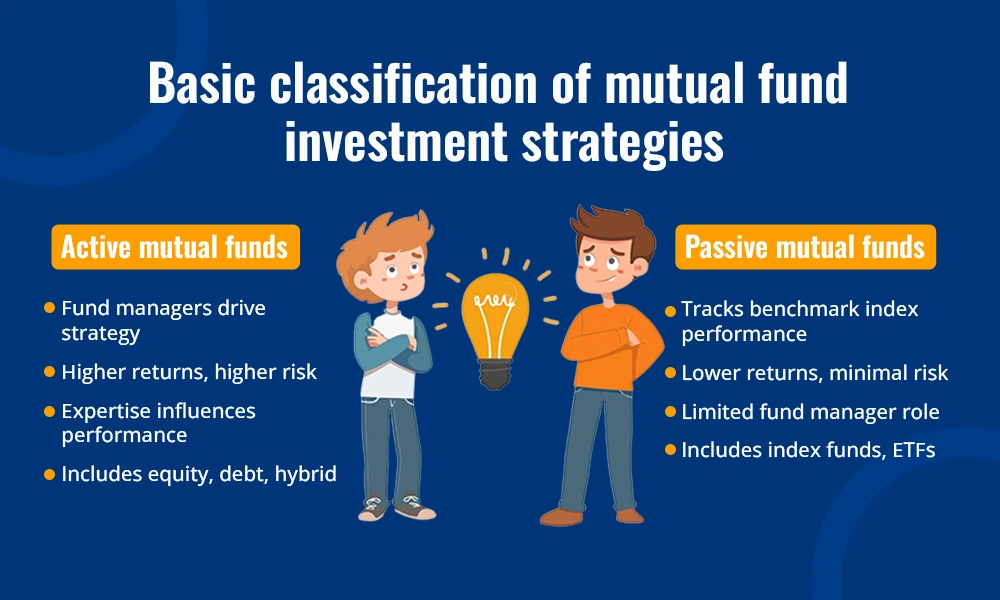
When it comes to investing, understanding the nuances between index vs active mutual funds can significantly impact your financial growth and retirement planning. Index funds aim to mirror the performance of specific market indices and typically feature lower fees, making them attractive for long-term investors focused on portfolio diversification strategies. On the other hand, active mutual funds deploy specific active mutual fund strategies with fund managers aiming to outperform benchmarks and deliver higher returns. Many experts advocate for a combination of both strategies to optimize returns while mitigating risks in a dynamic market landscape. Consequently, this approach can fulfill diverse investing goals, including those related to investing for early retirement.
Navigating the world of mutual funds often leads investors to ponder the merits of passive versus actively managed funds. These financial instruments play a crucial role in shaping one’s asset allocation and overall financial strategy, particularly in the context of retirement preparation. Passive funds are designed to track market performance, offering an efficient, low-cost way to attain exposure to broad market segments, while their active counterparts involve strategic decision-making to potentially generate alpha returns. By integrating both variants into your investment portfolio, you can leverage the advantages of each, achieving a balanced approach that aligns with your financial objectives. Ultimately, crafting a robust financial plan that includes both index and active funds can enhance your ability to reach your retirement goals.
Understanding Index Fund Performance
Index funds, often lauded for their simplicity and cost-efficiency, have become a popular choice for many investors. Their primary goal is to replicate the performance of a specific market index, such as the S&P 500 or the Nifty 50, as closely as possible. This passive investment strategy allows investors to gain exposure to a diversified portfolio without incurring high management fees commonly associated with actively managed funds. Over the long haul, index funds have historically demonstrated moderate yet stable returns, making them an attractive option for long-term financial planning, including saving for retirement.
However, it’s essential to note that index fund performance can fluctuate with market conditions. While they often outperform many actively managed funds over extended periods due to lower fees and less trading, short-term volatility can impact returns. Investors must maintain a disciplined approach, understanding that these funds are built for steady growth over time, ultimately fitting into broader portfolio diversification strategies aimed at wealth accumulation.
Active Mutual Fund Strategies for Enhanced Returns
Active mutual funds, by contrast, engage fund managers who make strategic decisions about which securities to buy and sell based on extensive research and market analysis. These funds aim to outperform a benchmark index by actively managing the portfolio, hence the term ‘active funds’. Such strategies can lead to higher potential returns if executed correctly, particularly in volatile market conditions. However, these funds usually come with higher expense ratios due to management fees and trading costs.
Investing in active mutual funds may appeal to those looking for alpha returns, particularly in sectors or segments where active management can outperform due to less market efficiency, like mid-cap and small-cap stocks. Fund managers can identify undervalued assets and take advantage of market trends that passive funds might miss. As investors evaluate these strategies, they should consider their financial goals, risk tolerance, and the implications for long-term financial planning.
Combining Index and Active Funds for Retirement Planning
For investors aiming for an early retirement, it is crucial to consider a balanced approach to fund selection. Combining index and active mutual funds offers a unique opportunity to capitalize on the strengths of both strategies. While index funds provide cost-efficient and reliable market performance, active funds can leverage analytical insights to enhance returns within less efficient market segments. Crafting a portfolio that includes a blend allows investors to benefit from the overall market rise while also exploring areas where skilled managers may provide significant alpha.
Moreover, utilizing this combination can enhance portfolio diversification strategies. For example, a core holding in index funds for large-cap stocks can be complemented by a selection of actively managed funds focused on sectors where opportunities for high growth exist. This dual approach caters to varying risk appetites and can adapt according to changing market landscapes, aligning more closely with one’s retirement objectives.
Financial Planning for Retirement with Mutual Funds
Effective financial planning for retirement requires foresight, discipline, and a solid investment strategy. Mutual funds, with their various options, present a versatile tool that can align with individual goals and risk tolerances. Whether opting for index funds for their simplicity or active funds for potential higher returns, understanding how these funds perform within the context of your overall financial strategy is critical. Building a diversified portfolio that includes both types of funds ensures that investors are well-positioned to navigate market uncertainties.
Additionally, integrating mutual funds into retirement planning necessitates a focus on continuous learning and adjustment. As markets evolve, so too should investment strategies. Regular portfolio reviews and reallocating assets based on performance and market trends will enhance the likelihood of reaching retirement goals. Investors should also consider tax implications and how they affect overall returns when choosing between index and active funds.
Investment Discipline: Key to Retirement Success
One of the most significant aspects of successfully utilizing index and active mutual funds in your retirement strategy is maintaining investment discipline. The financial markets can be unpredictable, and fluctuations can lead to emotional reactions that may derail carefully laid plans. Investors are often tempted to make impulsive decisions during market downturns, but sticking to a well-thought-out investment strategy is crucial for long-term success. Keeping the focus on goals and risk tolerance will help maintain discipline over time.
Consistency in contributions, coupled with a balanced approach of combining index and active funds, builds resilience in your investment portfolio. Maintaining a long-term perspective allows your investments to weather market cycles and grow through compounded returns, ultimately leading to a secure financial future. By leveraging the strengths of both investment strategies, investors can build a robust retirement corpus that stands the test of time.
Navigating Market Volatility with a Balanced Investment Approach
Market volatility is an inherent aspect of investing, but with the right strategies, investors can navigate these fluctuations effectively. Utilizing both index and active mutual funds provides a compelling approach to mitigate risks associated with market downturns. Index funds typically maintain stability as they passively track market indices, while active funds can capitalize on opportunities that arise during volatile periods by strategically reallocating assets.
During times of uncertainty, having a well-diversified portfolio that includes both types of funds allows investors to capitalize on the lower costs of index funds while potentially benefiting from the targeted strategies of active funds. This balance can enhance overall portfolio resilience, equipping investors with the tools necessary to weather storms in the financial markets while staying on track toward their retirement objectives.
The Role of Asset Allocation in Fund Selection
Asset allocation is a critical element in crafting a successful investment strategy, especially when choosing between index and active mutual funds. A well-diversified portfolio that considers individual risk tolerance, time horizon, and financial goals lays a strong foundation for long-term performance. For example, a younger investor may opt for a higher percentage in equities, leveraging the growth potential of both index funds and actively managed options, while someone closer to retirement might shift towards more stable investments.
Furthermore, determining the right mixture of index vs active mutual funds in your allocation strategy can significantly influence your portfolio’s growth trajectory. By understanding which fund types perform best under various market conditions, investors can enhance their financial planning strategies and optimize returns while minimizing risks associated with market volatility.
Evaluating Costs in Mutual Fund Investments
When investing in mutual funds, understanding the cost structure is essential as it directly impacts net returns. Index funds generally have lower expense ratios due to their passive management style, making them a cost-effective choice for long-term investors. These lower costs can compound over time, adding significant value to your overall investment portfolio as you prepare for retirement.
Conversely, active funds typically come with higher fees, owing to the active management and research involved. It’s crucial for investors to evaluate whether the potential for higher returns justifies these costs. By analyzing past performance, considering expense ratios, and aligning these factors with your financial goals, you can make informed decisions that enhance your retirement readiness.
The Importance of Continuous Education in Investing
Investors must continually educate themselves about market trends, financial products, and investment strategies to make informed decisions. The landscape of investing is constantly evolving, with new information emerging regularly about the efficacy of index and active mutual funds. By staying up-to-date with market movements and investment research, individuals can enhance their financial literacy, enabling better investment choices tailored to their retirement strategies.
Moreover, engaging with financial advisors, attending investment workshops, and following industry experts can further deepen your understanding of how to incorporate various fund strategies effectively. Continuous learning not only nurtures investment discipline but also empowers investors to adapt their strategies as necessary, ensuring they remain on track to meet their retirement goals and successfully manage their portfolios.
Frequently Asked Questions
What is the difference between index funds and active mutual funds?
Index funds and active mutual funds differ primarily in management style. Index funds passively track a specific market index, such as the Nifty 50, aiming to replicate its performance. Conversely, active mutual funds involve fund managers making strategic choices about which securities to buy or sell, with the goal of outperforming the index. This active involvement often results in higher fees for active funds, whereas index funds typically have lower costs.
How do index fund performance and active mutual fund strategies compare?
Index fund performance is generally predictable and aligns closely with the benchmark index, providing moderate returns at lower costs. In contrast, active mutual fund strategies seek to outperform the index through selective investment choices. While some active funds can achieve higher returns, studies show that many fail to consistently beat their benchmarks after expenses, making index funds a viable alternative for cost-conscious investors.
Can I use both index funds and active mutual funds for financial planning for retirement?
Yes, incorporating both index funds and active mutual funds can enhance your financial planning for retirement. Using index funds for stable, low-cost exposure to major market sectors can complement active funds that target higher growth in mid and small-cap segments. This diversified approach helps align your investment strategies with your risk appetite and long-term retirement goals.
What are some portfolio diversification strategies involving index vs active mutual funds?
Effective portfolio diversification strategies often include a mix of index funds and active mutual funds. Investors can allocate a core portion of their portfolio to low-cost index funds that offer broad market exposure while using active funds to capture growth in specific sectors or asset classes. This balance allows for reduced volatility and improved overall return potential.
How can index funds aid in investing for early retirement?
Index funds can aid in investing for early retirement by providing low-cost, diversified investment options that generally yield steady returns over time. Their passive nature minimizes management fees and allows for simple buy-and-hold strategies, which can support wealth accumulation without extensive monitoring. Including index funds as part of your retirement portfolio can help ensure consistent growth while allowing you to capitalize on long-term market trends.
| Key Aspect | Index Funds | Active Funds |
|---|---|---|
| Fund Type | Passive investment that tracks a specific index | Managed by fund managers who actively select stocks |
| Cost Structure | Generally lower costs due to passive management | Higher management fees due to active decision-making |
| Performance Expectations | Moderate but stable returns aligned with the index | Aims to outperform the benchmark index for higher returns |
| Investment Strategy | Mirrors the performance of a chosen index | Follows a predetermined investment strategy to generate alpha |
| Ideal For | Long-term investors focusing on cost efficiency | Investors seeking higher returns and willing to accept risk |
Summary
In the discussion of Index vs Active Mutual Funds, it’s crucial to understand that the choice is not strictly binary. Instead, balancing both strategies can enhance your investment portfolio, depending on individual goals and market conditions. Index funds offer a cost-effective way to track market performance, while active funds provide opportunities for potentially higher returns through strategic stock selection. It’s all about aligning these funds with your investment objectives for effective wealth building.



























