

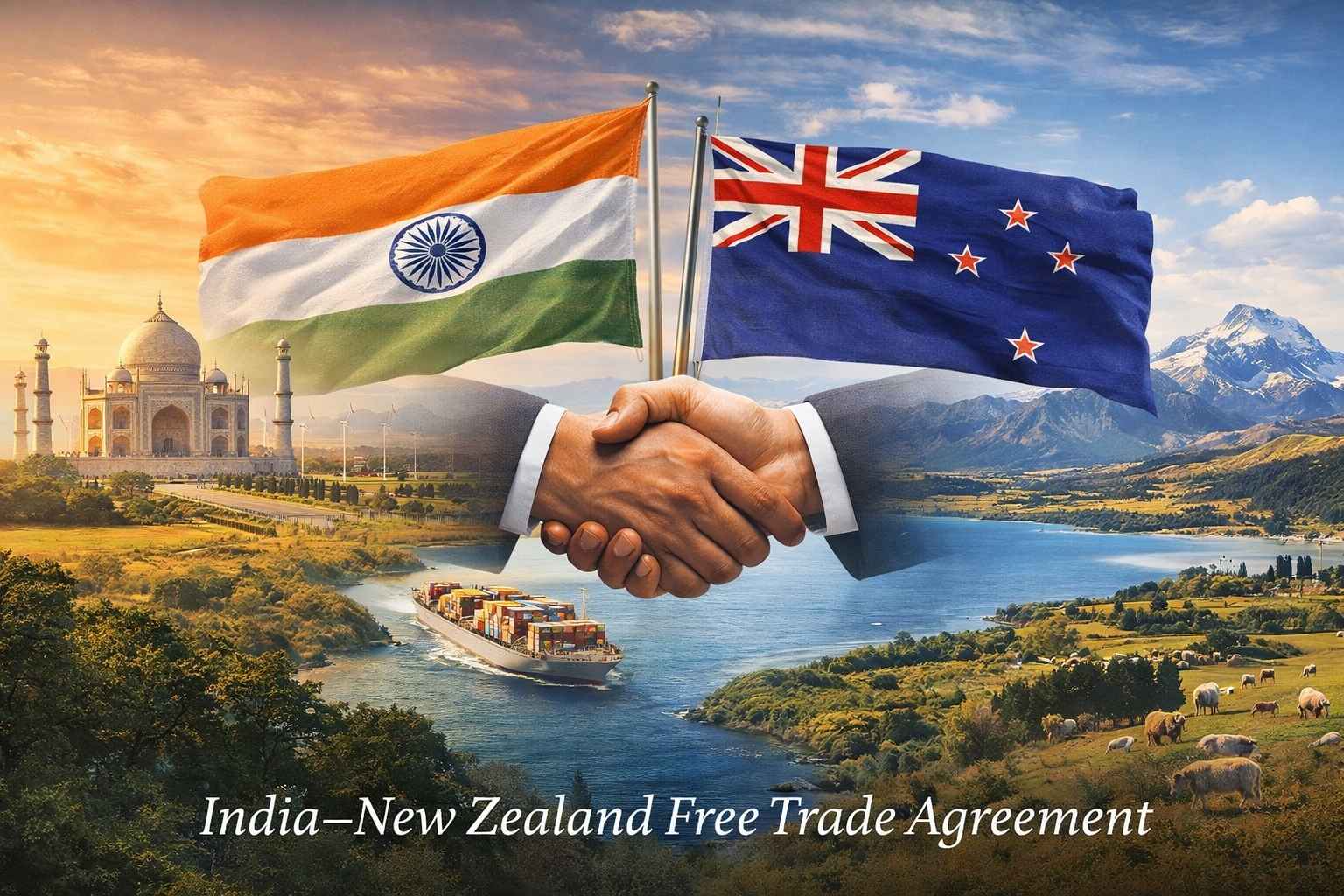
The India New Zealand Free Trade Agreement marks a significant milestone in the economic relations between the two countries, formalizing a commitment to enhance bilateral trade growth and investment opportunities. Set to be signed on April 27 at Bharat Mandapam, this pivotal trade pact has been designed to stimulate economic engagement and promises to double trade figures to approximately $5 billion over the next five years. As both nations navigate current global trade uncertainties, the agreement provides exporters with a strategic advantage, facilitating smooth access to crucial markets. With duty-free entry for Indian goods entering New Zealand and substantial tariff reductions on New Zealand’s exports, the benefits of this free trade agreement are poised to impact various sectors, from agriculture to technology. Overall, the India New Zealand economic relations will thrive as this pact not only fosters trade but also opens pathways for significant investments in India’s burgeoning market.
The recently established trade agreement between India and New Zealand signifies an important step towards strengthening economic links and promoting trade efficiencies. By instituting this bilateral pact, both nations are looking to leverage investment opportunities and enable smoother bilateral exchanges. The initiative outlines a cooperative framework aimed at facilitating increased import and export activities, ultimately ramping up economic momentum in these diverse markets. By addressing both traditional and contemporary sectors, this free trade arrangement sets the stage for a diversified engagement, ensuring mutual benefits for businesses and consumers alike. As we delve deeper, it becomes clear that the advantages inherent in this agreement could have far-reaching implications for trade dynamics in the region.
Overview of the India New Zealand Free Trade Agreement
The India New Zealand Free Trade Agreement marks a significant milestone in the economic relations between the two nations. Set to be formalized on April 27 at Bharat Mandapam, this deal aims to strengthen bilateral ties by unlocking comprehensive trade and investment opportunities. Under the leadership of Union Commerce Minister Piyush Goyal and New Zealand Trade Minister Todd McClay, the agreement is expected to double the current bilateral trade from approximately $2.5 billion to $5 billion over the next five years. This ambitious target reflects a mutual commitment to enhance economic collaboration and navigate the complexities of global trade dynamics.
In addition to increasing trade volumes, the India New Zealand trade pact emphasizes the importance of fostering investment flows, with New Zealand projected to invest nearly $20 billion in India over the next 15 years. As both countries continue to explore innovation and joint ventures, businesses on both sides can benefit from the enhanced market access and reduced tariffs that the agreement promises. With a focus on sectors such as infrastructure, manufacturing, and services, this trade pact aims to create a robust environment for economic growth in both nations.
Benefits of the India New Zealand Trade Pact for Exporters
One of the primary benefits of the India New Zealand Free Trade Agreement is the provision of duty-free entry into New Zealand for Indian businesses. This removes significant cost barriers, allowing exporters to effectively compete in the New Zealand market. Additionally, the reduction or elimination of tariffs on about 95% of New Zealand’s exports to India creates valuable opportunities for Indian consumers to access a wider variety of goods, including premium products like wines, timber, and seafood. These favorable terms not only incentivize exports but also encourage a more diversified import strategy.
The trade pact is particularly crucial for Indian exporters as it provides a much-needed boost amidst the uncertainties brought on by global trade disruptions. By formalizing easier market access, Indian businesses can better plan their export strategies, potentially tapping into new markets and expanding their reach. Furthermore, the elimination of non-tariff barriers, through enhanced regulatory coordination, strengthens exporters’ capacities to comply with international standards, effectively facilitating smoother trade flows.
Investment Opportunities in India Post Pact
The India New Zealand Free Trade Agreement paves the way for substantial investment opportunities in India, projected at nearly $20 billion over the next 15 years. This influx of capital is anticipated to spur growth across various sectors, including infrastructure, healthcare, and technology. With New Zealand’s commitment to invest, Indian entrepreneurs can leverage partnerships to enhance operational efficiency, drive innovation, and explore new market segments. The agreement also promotes greater collaboration in sectors like manufacturing and services, offering Indian businesses avenues to adopt best practices and improve their competitiveness.
Moreover, the agreement creates a framework that encourages joint ventures and foreign direct investment (FDI) in India. By streamlining the regulatory environment and providing clearer pathways for investment, New Zealand’s companies will find it easier to establish operations and collaborate with Indian firms. This not only solidifies economic ties between the two countries but also contributes to job creation and skill development within India, making it an attractive destination for foreign investment.
Bilateral Trade Growth between India and New Zealand
One of the key aims of the India New Zealand Free Trade Agreement is to significantly boost bilateral trade between the two countries. By targeting for trade to double to around $5 billion in five years, both nations signal their willingness to deepen economic ties. This ambitious goal is supported by the removal of barriers, which allows for products from both sides to flow more freely and efficiently. Enhanced trade relations are crucial, given the current global economic climate, which presents both challenges and opportunities for international trade.
The agreement specifically addresses tariff reductions on a wide array of goods, enabling easier market access for exporters from both countries. Indian businesses gain the benefit of a diversified market in New Zealand, while New Zealand exporters can capitalize on access to India’s vast consumer base. Such initiatives not only promote economic growth but also foster mutual understanding and collaboration between the two countries, laying the groundwork for sustained bilateral trade development.
Labor Mobility Initiatives in the Trade Agreement
The inclusion of labor mobility provisions in the India New Zealand Free Trade Agreement is a notable feature that enhances the scope of economic engagement between the two countries. New Zealand’s commitment to establish a temporary work pathway allowing up to 5,000 Indian professionals to work in various sectors underscores the importance of skilled labor exchange. This initiative addresses labor shortages in New Zealand while providing Indian professionals with valuable international experience and exposure. Fields like information technology, healthcare, engineering, and education stand to benefit significantly from this labor mobility.
Furthermore, this scheme not only facilitates cultural exchange but also enhances the skill sets of Indian professionals through exposure to international best practices. As these workers contribute to the New Zealand economy, they simultaneously develop a network that can lead to further business collaborations back in India. By fostering such connections, the trade agreement supports long-term economic benefits for both nations, contributing to a vibrant workforce and increased productivity.
Agricultural Cooperation within the Trade Pact
Agricultural cooperation is a pivotal aspect of the India New Zealand Free Trade Agreement, which includes an Agri-Technology Action Plan designed to improve agricultural productivity and quality. Both parties have committed to enhancing their agricultural practices, particularly in crops like apples, kiwifruit, and honey. This collaboration allows Indian farmers to benefit from advanced agricultural technologies and innovations, ultimately leading to improved yields and better quality produce.
The plan also encompasses providing Indian farmers with necessary training and technical assistance in areas such as supply chain management and food safety standards. By equipping farmers with the tools to enhance product quality and meet international safety requirements, the trade pact positions India’s agricultural sector for success in global markets. This agricultural cooperation ultimately strengthens the food supply chain and ensures that Indian produce can compete more effectively on the international stage.
Elimination of Non-Tariff Barriers in the Agreement
One of the critical focuses of the India New Zealand Free Trade Agreement is the elimination of non-tariff barriers that often impede efficient trade. The pact lays out provisions for regulatory coordination, simplifying customs procedures, and enhancing sanitary and phytosanitary standards. This comprehensive approach not only streamlines trade processes but also helps to mitigate potential disputes arising from compliance with divergent regulations.
By addressing these non-tariff barriers, the agreement seeks to ensure that goods from both countries can enter each other’s markets more smoothly and quickly. Indian exporters, for example, will benefit from clearer guidelines and simpler customs clearance, which can significantly reduce delays and costs associated with exporting to New Zealand. Likewise, New Zealand exporters will find that Indian market entry becomes less cumbersome, paving the way for expanded trade and better bilateral relations.
The Role of Geographical Indications in Trade
An important aspect of the India New Zealand Free Trade Agreement is the commitment to recognize and strengthen India’s Geographical Indications (GIs). By updating regulatory frameworks to facilitate the registration of Indian wines and spirits, this initiative not only protects cultural heritage but also promotes the unique qualities of Indian products on global platforms. This protection is essential for maintaining the integrity of products and allows for an added layer of marketing potential.
The recognition of GIs fosters trust and assures consumers of the authenticity of products, enhancing their appeal in overseas markets. As Indian businesses stand to gain recognition for their unique offerings, this aspect of the trade pact supports village economies and empowers local producers. The emphasis on geographical indications underscores a broader commitment to promoting Indian cultural products while simultaneously enhancing trade relations with New Zealand.
Future Prospects for India New Zealand Trade Relations
The future prospects for India New Zealand trade relations look promising following the establishment of the comprehensive Free Trade Agreement. With a clear roadmap set out to double trade volume, both nations are likely to experience significant economic growth over the coming years. The conclusion of a long-negotiated agreement signifies strengthened political and economic ties, fostering an environment of collaboration and mutual support.
As bilateral cooperation unfolds, new investment opportunities will arise, driving innovation and competitiveness in both countries. The trade pact not only opens doors for increased export-import activity but also lays the groundwork for sustainable economic growth. As both India and New Zealand embrace this partnership, they can set an example for other nations on mutually beneficial trade relations based on shared interests—ultimately paving the way for global economic resilience.
Frequently Asked Questions
What are the key benefits of the India New Zealand Free Trade Agreement?
The India New Zealand Free Trade Agreement is designed to enhance economic relations by doubling bilateral trade to around $5 billion within five years. Key benefits include duty-free access for Indian businesses in New Zealand, reduced tariffs on NZ exports like wool and seafood to India, and new investment opportunities in various sectors including infrastructure and manufacturing. Additionally, the agreement fosters labor mobility for up to 5,000 Indian professionals each year, promoting growth in multiple industries.
| Key Points |
|---|
| India and New Zealand to formalize Free Trade Agreement on April 27, promoting economic engagement. |
| Target to double bilateral trade to $5 billion in five years and boost investment flows. |
| New Zealand plans to invest $20 billion in India over 15 years in infrastructure, manufacturing, and services. |
| Indian businesses gain duty-free access to New Zealand; 95% of New Zealand’s exports to India face reduced tariffs. |
| Sensitive sectors like dairy and sugar are excluded from tariff concessions to protect domestic producers. |
| New Zealand to open up to 5,000 temporary work visas annually for Indian professionals in various sectors. |
| Agreement includes an Agri-Technology Action Plan for improved agricultural productivity and cooperation. |
| New Zealand to enhance recognition of Indian Geographical Indications for wines and spirits. |
| The deal addresses non-tariff barriers and aims to streamline customs and sanitary standards. |
Summary
The India New Zealand Free Trade Agreement represents a significant step towards deepening economic ties and facilitating trade between the two nations. Set to be formalized on April 27, this agreement, following extensive negotiations, aims not only to boost bilateral trade to $5 billion but also to create investment opportunities amounting to $20 billion from New Zealand into various sectors in India. With provisions for duty-free market access and a strong focus on agricultural cooperation, the pact enhances the landscape for exporters and improves labor mobility for Indian professionals in New Zealand. In summary, this agreement is a critical endeavor to foster resilience amidst global trade challenges, ensuring sustainable growth and development for both countries.



























