

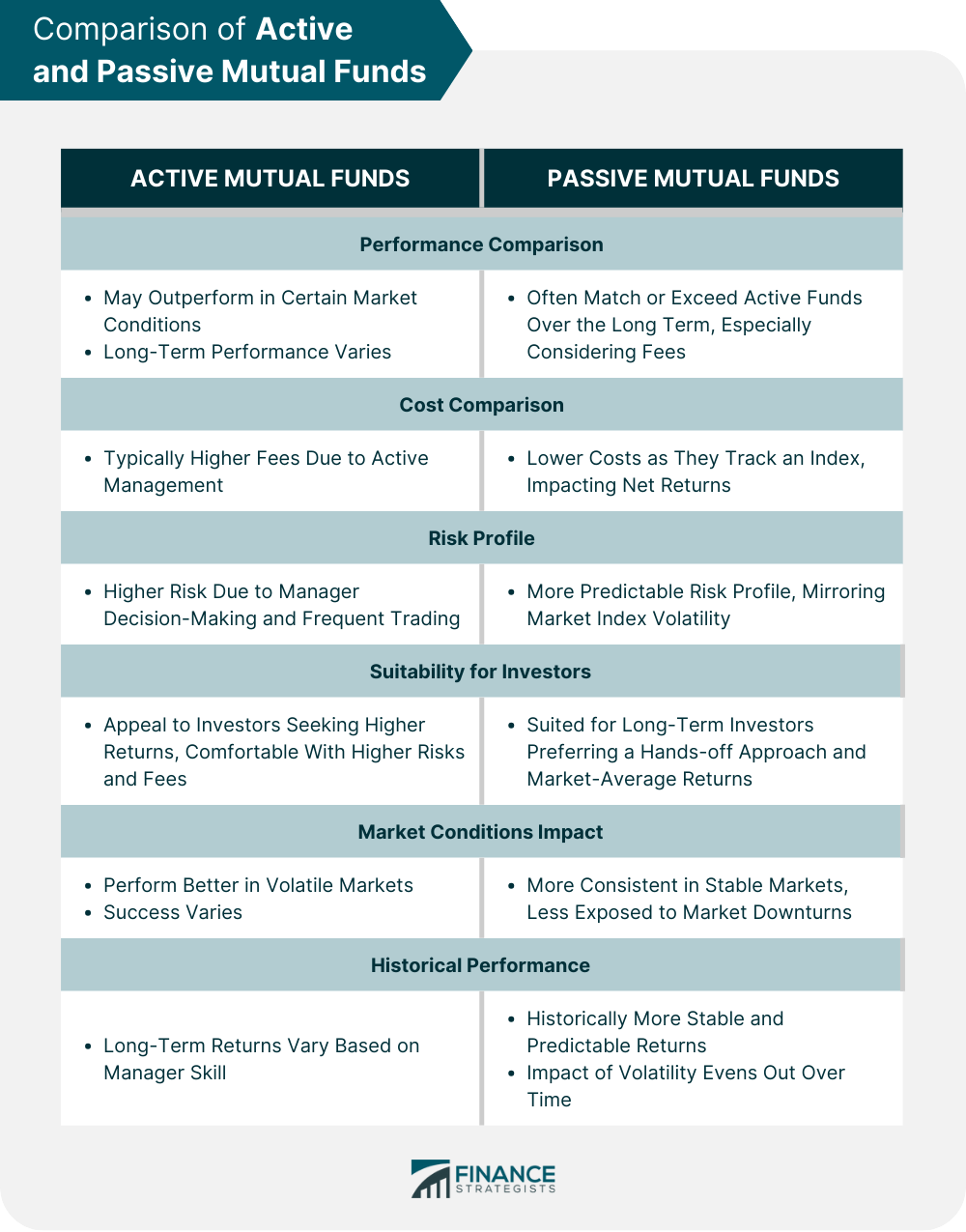
Blending active and passive funds is an innovative investment strategy that allows investors to create resilient portfolios capable of weathering market volatility. As financial markets increasingly respond to geopolitical events rather than traditional fundamentals, this hybrid approach can cater to diverse financial goals and risk appetites. Active mutual funds bring dynamic management and the ability to respond to market fluctuations, while passive mutual funds offer cost-effective exposure to a broad market index. By thoughtfully combining these two strategies, investors can optimize their portfolio management techniques and enhance long-term wealth creation. Embracing this synergy not only provides potential for growth but also helps in navigating the complexities of today’s unpredictable economic landscape.
The integration of actively managed and index-tracking funds represents a dual approach in investment portfolios, aimed at reinforcing strategies for achieving financial success. Known colloquially as a “hybrid investment strategy,” this method capitalizes on the strengths of actively managed funds, which provide tactical adjustments to changing market conditions, while leveraging the stability of index funds that minimize costs. This combination is essential for effective portfolio management as it aligns with various investment objectives. As investors face unprecedented market shifts, it’s imperative to consider blending these two types of funds to balance returns against risk exposure. Thus, adopting this blended strategy could serve as a fundamental tactic in pursuing optimal financial outcomes.
The Importance of Blending Active and Passive Mutual Funds
Blending active and passive mutual funds is a strategy that can significantly enhance an investor’s portfolio during unpredictable market conditions. Active mutual funds, managed by professional fund managers, seek to outperform benchmark indices by leveraging in-depth market analysis and timely decision-making. In contrast, passive mutual funds aim to replicate the performance of a specific index with minimal management, often resulting in lower fees. By integrating both approaches, investors can harness the strengths of active management, especially during volatile times, while benefiting from the cost-effective, diversified nature of passive funds.
This balanced allocation allows investors to align their portfolios with personal financial goals, risk appetites, and investment horizons. For instance, during periods of market turbulence influenced by geopolitical events, having a portion of actively managed funds can result in better sector exposure management, while passive funds help maintain a steady growth trajectory. This dual strategy not only contributes to wealth creation over the long term but also ensures that portfolios remain resilient against market fluctuations.
Navigating Market Volatility with Strategic Investments
As global events increasingly sway financial markets, investors must adopt strategic investment approaches to mitigate risk and enhance performance. The volatility in markets, influenced by factors like geopolitical tensions and economic uncertainties, underscores the need for a well-diversified portfolio. Investors are encouraged to blend active mutual funds, which provide nuanced market insights, with passive funds that offer broad exposure to the market index. This strategic mix allows for better resilience in the face of market upheaval, enabling investors to pursue their financial targets methodically.
Moreover, investors should continuously assess their portfolio management strategies to suit shifting market conditions. A disciplined approach to asset allocation, where investments are adjusted according to both risk tolerance and time horizon, is crucial. By focusing on the long-term financial goals, investors can avoid the pitfalls of reactive decision-making during market downturns. Emphasizing sound investment strategies not only cultivates stability during turbulent times but also cultivates a pathway for future growth through both active and passive investments.
Long-Term Wealth Creation with Active and Passive Funds
Achieving long-term wealth creation is a primary objective for many investors, and effectively combining active and passive fund strategies can significantly contribute to this goal. Active funds can provide dynamic management that adjusts to market movements, potentially capitalizing on short-term opportunities during periods of volatility. On the other hand, passive funds contribute stability and consistency, ensuring that an investor’s capital is not overly exposed to the risks associated with active fund management. This dual approach can lead to more robust portfolio performance over various market cycles.
Investors should remain focused on their individual financial goals, using a mix of both fund types to create a well-balanced portfolio that is resilient in times of market stress. By leveraging the strengths of active mutual funds to navigate difficult market conditions and relying on passive funds for lower costs and diversification, investors can enhance their potential for wealth accumulation. Thus, the strategic combination of these investment strategies underlines the importance of a tailored approach to financial planning.
Understanding Financial Goals Through Diversification
When considering investment strategies, defining and understanding financial goals is paramount. Investors typically have diverse objectives, whether it be retirement savings, wealth building, or funding education. Diversifying between active and passive mutual funds allows individuals to not only meet these goals but also adapt to changing life circumstances and market conditions. Active funds can be prioritized when aggressive growth is desired, while passive funds can stabilize portfolios against market dips.
This comprehensive approach to portfolio management encourages a focus on long-term outcomes rather than short-term gains. Utilizing both types of funds provides a layer of flexibility that allows adjustments to be made in response to both personal financial shifts and broader market fluctuations. By having a clear perspective on financial goals and a strategy that includes both active and passive investments, investors are better positioned to withstand market volatility and reach their financial aspirations.
Mitigating Risks with a Balanced Fund Strategy
Risk management is a key component of any investment strategy, especially in environments marked by high volatility. By adopting a blended approach that incorporates both active and passive mutual funds, investors can effectively mitigate risks associated with market fluctuations. Active management offers the potential for higher returns during uncertain times by making tactical moves that capitalize on prevailing market trends. In contrast, passive investments maintain a steady presence in the market, providing a safety net against extreme volatility.
Additionally, using a mix of fund types allows investors to stay diversified across different asset classes and sectors, reducing the overall risk profile of their portfolios. This balance is vital for navigating the complexities of market conditions shaped by external factors, such as geopolitical events and economic shifts. With a focus on maintaining a diversified investment strategy, investors can safeguard their portfolios while optimizing for growth, thereby reinforcing the importance of a balanced fund strategy.
The Role of Research in Investment Decisions
Research plays a critical role in making informed investment decisions, particularly when it comes to choosing between active and passive funds. Investors must rely on thorough market analysis, historical performance data, and current economic trends to determine which approach aligns best with their financial goals. Active mutual funds, which depend on skilled fund managers, require investors to understand the efficacy of these managers and their past track records. Equally, understanding the underlying index and the costs associated with passive funds is key to ensuring they align with investment objectives.
Utilizing research tools and resources can empower investors to make more educated selections, ultimately leading to better portfolio outcomes. Analytical insights can help investors identify market inefficiencies that active funds may exploit while also providing clarity on the stable returns passive funds typically offer. Therefore, diligent research and an informed approach are fundamental components of effective portfolio management that drive success in achieving financial goals.
Market Conditions and Their Impact on Fund Performance
Market conditions greatly influence the performance of both active and passive mutual funds. High volatility, often resulting from external events such as geopolitical tensions or economic upheaval, can challenge fund performance, prompting investors to reassess their strategies. Active funds typically thrive in volatile environments due to their ability to adjust holdings dynamically based on real-time market analysis. On the other hand, passive funds may encounter difficulties during sharp downturns, as they are designed to mirror the index rather than beat it.
Understanding these dynamics allows investors to strategically allocate their resources in anticipation of market movements. During uncertain times, maintaining a combination of both active and passive strategies can enhance resilience and provide the adaptability needed to respond to sudden market changes. As conditions evolve, so too should investment strategies, positioning investors to capture potential gains while minimizing losses.
The Psychological Factors in Investment Decisions
Psychological factors can heavily influence investment decisions, often leading to biases that may impact portfolio performance. Understanding one’s own biases as an investor is critical when blending active and passive fund strategies. For example, behavioral tendencies such as loss aversion can lead investors to shy away from actively managed funds during downturns, despite their potential for recovery in volatile markets. Recognizing these emotional responses is essential in order to maintain a disciplined approach to investing.
Moreover, having a well-structured portfolio that includes both active and passive funds can help buffer against emotional decision-making. A diversified strategy provides stability and consistency, allowing investors to adhere to their long-term investment goals without being swayed by short-term market fluctuations. By staying focused on their financial objectives and employing a balanced investment strategy, investors can enhance their chances of success, regardless of market psychology and sentiment.
The Future of Active and Passive Investment Strategies
As markets continue to evolve, so too will the strategies employed by investors. The interplay between active and passive mutual funds is expected to become more pronounced in the future, especially as investors seek out tailored investment solutions that meet their unique preferences. Regulatory changes, advancements in technology, and market dynamics are likely to shape the landscape for both types of funds, making it essential for investors to remain aware of emerging trends that could impact their strategies.
Investors will benefit from being versatile in their approach, tailoring their portfolios to include a mix of active and passive funds that reflect current market conditions and personal financial aspirations. The capacity to adapt to future market environments, all while leveraging the strengths of both active and passive strategies, will be integral to successful long-term wealth creation. As more information becomes available and investment tools evolve, understanding how to blend these two approaches effectively will be a powerful asset for investors.
Frequently Asked Questions
What are the benefits of blending active and passive mutual funds in portfolio management?
Blending active and passive mutual funds provides a strategic approach to portfolio management, allowing investors to leverage the strengths of both strategies. Active mutual funds can dynamically adjust to market volatility, offering potential protection against downturns by managing sector exposure. In contrast, passive funds provide low-cost, diversified exposure, ensuring that investors remain invested over the long term without the risk of underperformance. This blend helps in achieving financial goals while maintaining a balanced and resilient portfolio.
How can investors determine the right blend of active and passive funds based on their investment strategies?
To determine the appropriate blend of active and passive funds, investors should assess their financial goals, risk tolerance, and investment horizon. A strategic mix may vary, with active funds providing value during volatile periods while passive funds ensure cost-effective market exposure. Analyzing past performance, understanding market conditions, and considering the impact of external factors can guide investors in optimizing their investment strategies.
Can blending active and passive funds help in achieving financial goals during market volatility?
Yes, blending active and passive funds can significantly aid in achieving financial goals during times of market volatility. Active funds can respond quickly to market changes, thus mitigating risks, while passive funds provide a stable growth trajectory. This combined approach allows investors to remain resilient amidst uncertainty and pursue long-term wealth creation, as emphasized by ICRA Analytics.
What is the rationale behind combining active and passive mutual funds in a portfolio?
The rationale for combining active and passive mutual funds lies in their complementary benefits. Active funds, managed by professionals, can navigate unpredictable market conditions by capitalizing on opportunities and mitigating risks. Meanwhile, passive funds offer diversification and low costs, making them a core part of a balanced investment strategy. Together, they create a well-rounded portfolio capable of withstanding market fluctuations and aligning with individual financial goals.
How does market volatility influence the choice between active and passive mutual funds?
Market volatility influences the choice between active and passive mutual funds by highlighting the strengths of each approach. In volatile environments, active mutual funds can provide tactical advantages through dynamic sector exposure and adjusting holdings in reaction to rapid market changes. Conversely, passive funds remain a reliable option for long-term investors seeking consistent market returns without the risks associated with active management. This interplay suggests a blended approach can best cater to varying market conditions while aligning with individual risk appetites.
| Aspect | Active Funds | Passive Funds |
|---|---|---|
| Management Style | Dynamic management by fund managers | Track a specific index with minimal management intervention |
| Cost Effectiveness | Typically higher fees due to active management | Lower fees due to minimal management |
| Market Performance | Potential for higher returns in volatile markets through strategic decisions | Expected to mirror market returns; less risk of fund manager underperformance |
| Investment Strategy | Involves intensive research and expertise | Focuses on diversification and low-cost investing |
| Investor Involvement | More active decision-making required by investors | Less active involvement; passively managed portfolio |
Summary
Blending active and passive funds is an essential strategy for investors navigating the uncertainties of today’s markets. As outlined by ICRA Analytics, utilizing a combination of these fund strategies allows for a resilient and well-balanced portfolio amidst geopolitical tensions and market volatility. Active funds provide the opportunity to dynamically manage risks and capitalize on market conditions, while passive funds deliver cost-effective, diversified exposure. By considering one’s goals, risk tolerance, and investment horizon, investors can create a robust investment approach that enhances long-term wealth creation even in unpredictable market environments.



























