

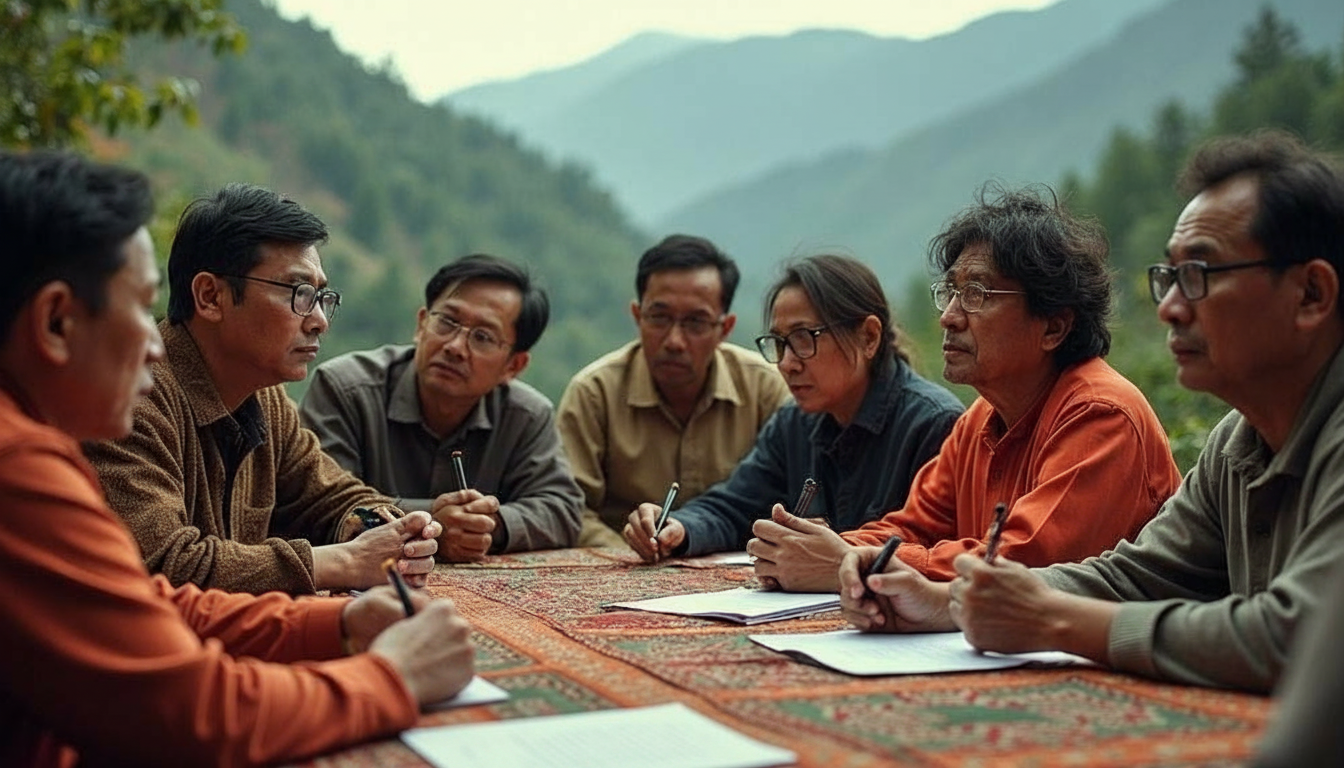
The FNTA agreement Nagaland stands at the center of a significant political controversy, with the Eastern Nagaland Peoples’ Organisation (ENPO) vehemently accusing the Nagaland government of undermining its core principles. Accusations have arisen that the government is attempting to dilute the provisions of this crucial Frontier Nagaland Territorial Authority pact, which was designed to enhance governance and development in the region. Despite earlier commitments made during negotiations, the ENPO now calls for the FNTA Bill to be passed without alterations, emphasizing the need for stability in Nagaland governance issues. As tensions mount, the organization is convening an important meeting, bringing together various stakeholders including political party leaders, to discuss the implications of these actions. This situation raises questions about territorial authority in Nagaland and the potential impact of these accusations on the region’s future.
The Frontier Nagaland Agreement has become a pivotal topic of discussion following serious allegations against the Nagaland state government. As the ENPO highlights concerns regarding modifications to the accord that promises self-governing status, the narrative unfolds around accusations of dilution and misrepresentation of the original intentions of the pact. This raises broader questions surrounding the governance framework in Nagaland, particularly regarding local autonomy and development. Such developments also underline the complexities of political negotiations that seek to satisfy all parties involved in the region. The upcoming meetings aim to address these governance challenges, and it will be crucial to monitor how this dispute unfolds in the coming days.
Accusations Against the Nagaland Government Regarding the FNTA Agreement
The Eastern Nagaland Peoples’ Organisation (ENPO) has voiced strong accusations against the Nagaland government, claiming that it is attempting to dilute the provisions of the Frontier Nagaland Territorial Authority (FNTA) agreement. This allegation stems from the ENPO’s interpretation of actions taken by the state government that contradict the commitments made during previous negotiations. The organization warns that any modifications to the FNTA, which was designed to provide the Eastern Nagaland region with self-governing authority, could undermine the essence of this crucial agreement and lead to greater governance issues within Nagaland.
In their statement, the ENPO emphasized the importance of adhering strictly to the terms of the memorandum of agreement (MoA), signed on February 5, 2026. The essence of the FNTA lies in its promise of legislative, executive, and financial autonomy for Eastern Nagaland. Any attempt by the Nagaland government to alter these key provisions is seen as a betrayal of the commitments made, igniting concerns among the local population, who feel that their developmental aspirations are at stake. This underscores the broader context of Nagaland governance issues, which have been a point of contention for years.
The Significance of the Frontier Nagaland Territorial Authority
The Frontier Nagaland Territorial Authority (FNTA) is not merely a legal framework; it symbolizes the aspirations of the people of Eastern Nagaland for greater autonomy and self-governance. The establishment of this authority is intended to empower local communities, allowing them to address their unique developmental challenges more effectively. Largely viewed as a potential solution to ongoing governance issues, the FNTA was born out of extensive negotiations, signifying a glimmer of hope for the residents who have historically felt marginalized by the state government.
The establishment of the FNTA is critical because it aims to provide autonomy in an area where governance has traditionally been centralized, often neglecting local interests. By granting legislative powers, the FNTA holds the promise of directly addressing the needs of the community. The ENPO’s insistence on the unaltered passing of the FNTA Bill represents a commitment to ensuring that the agreement fulfills its intended purpose, rather than being diluted into a framework that fails to address the core developmental needs of Eastern Nagaland.
Upcoming ENPO Meetings and Political Implications
The ENPO has organized a central executive council meeting in light of the recent accusations against the Nagaland government, indicating the urgency and seriousness of the situation. This meeting, set to convene shortly, will bring together key political figures, including Rajya Sabha MP Phangnon Konyak, to discuss the implications of the accusations and the future of the FNTA agreement. In addition, the invite extended to all members of the Eastern Nagaland Legislators’ Union (ENLU) suggests that a united front is being sought to address the grievances surrounding the governance issues that plague the region.
Prior to the central meeting, a consultative gathering will take place, signifying a strategic move to rally support from political party leaders and members of tribal councils from Eastern Nagaland. By involving these parties, the ENPO is looking to secure a collaborative approach toward defending the FNTA agreement and resisting any dilution of its provisions. This level of proactive engagement reflects the heightened importance of political solidarity in safeguarding the interests of the Eastern Nagaland population, particularly as they confront governmental discrepancies regarding the FNTA.
The Role of Political Parties in the FNTA Discussion
Political parties in Nagaland play a vital role in shaping the discourse surrounding the Frontier Nagaland Territorial Authority (FNTA). With the ENPO urging political leaders to participate in discussions, it has become clear that cross-party collaboration is essential for addressing the accusations against the Nagaland government. By uniting, these political entities can present a cohesive stance on the FNTA, protecting the aspirations of Eastern Nagaland’s communities. The involvement of political party leaders, as well as tribal councils, highlights the importance of collective action in response to governance concerns.
The call for participation from leaders of various political parties is a strategic move by the ENPO to ensure that all stakeholders are invested in the outcome of the FNTA discussions. It illustrates an understanding that the resolution to governance issues cannot rest solely with one organization but requires a united political front. With the looming threat of alterations to the FNTA, the emphasis on a strong political coalition signifies a proactive approach to safeguarding the rights and needs of the people of Eastern Nagaland.
Implications of Altering the FNTA Agreement
Any attempt to alter the provisions outlined in the Frontier Nagaland Territorial Authority (FNTA) agreement could have far-reaching implications for the governance of Eastern Nagaland. The ENPO strongly believes that such changes would not only dismantle the commitments made during negotiations but also lead to a significant distrust in the government’s ability to uphold agreements. This sentiment resonates throughout the local community, which has long felt disenfranchised and is now voicing their concerns regarding potential dilution of the autonomy promised under the FNTA.
The repercussions of modifying the FNTA terms could extend beyond governance issues, influencing the socio-economic development of the region. For years, Eastern Nagaland has dealt with multiple challenges, including limited resources and developmental neglect. Local leaders argue that the FNTA is crucial for establishing a governance framework that effectively addresses these historical grievances. Thus, any shift away from the signed agreement would not only hinder progress but also exacerbate existing tensions within the community.
Clarification from the Nagaland Government on FNTA
Despite the gravity of the accusations brought forth by the ENPO, the Nagaland government has yet to provide any clarification or response regarding the suggested alterations to the Frontier Nagaland Territorial Authority agreement. This silence is troubling for many, as it raises questions about the government’s commitment to transparency and accountability in governance matters. A lack of communication will likely worsen perceptions of the government, heightening distrust among the local populace.
The absence of an official statement from the Nagaland government opens the floor to speculation and debate regarding their true intentions concerning the FNTA agreement. Many members of the community feel anxious about the potential impact of the government’s inaction. To quell such fears and foster a sense of security among the population of Eastern Nagaland, it is imperative that the government promptly articulates its position on the FNTA, reinforcing its dedication to honoring the established agreement.
Historical Context of Nagaland Governance
The historical context of governance in Nagaland has been marked by a complex interplay of tribal authority, state intervention, and regional aspirations. For decades, communities have sought greater autonomy, desiring a governance structure reflective of local needs and priorities. This longstanding aspiration has culminated in the demand for the Frontier Nagaland Territorial Authority, envisioned as a means to provide self-governance that directly addresses the issues faced by the population.
As discussions surrounding the FNTA gain prominence, it is essential to recognize the historical grievances that have shaped current demands for autonomy. The legacy of central governance often being perceived as neglectful has fueled a drive for change among tribal councils and local organizations. The ENPO’s actions and the emphasis on passing the FNTA agreement without dilution reflect a broader quest for empowerment and self-determination that resonates deeply within the socio-political fabric of Nagaland.
Future Prospects for Eastern Nagaland Under the FNTA
The prospects for Eastern Nagaland under the Frontier Nagaland Territorial Authority appear promising, provided that the provisions remain intact and unaltered. Should the Nagaland government commit to upholding the principles of the FNTA, communities will likely experience a renewed sense of empowerment and opportunity for development. The potential for legislative and financial autonomy could transform the region’s governance landscape, allowing for policies tailored specifically to the needs of the local populace.
However, achieving these prospects hinges on a united effort among political parties, community organizations, and local leaders. A cooperative approach is essential in advocating for the FNTA agreement and ensuring it is not diluted. As negotiations progress and the political landscape evolves, the ability to maintain solidarity and push for unimpeded implementation of the FNTA will ultimately define the future trajectory of governance in Eastern Nagaland. Without this, the hopes and aspirations tied to the FNTA may remain unfulfilled.
Frequently Asked Questions
What are the key provisions of the FNTA agreement in Nagaland?
The FNTA agreement, known as the Frontier Nagaland Territorial Authority pact, outlines provisions for establishing a self-governing territorial authority with legislative, executive, and financial autonomy specifically for Eastern Nagaland. It aims to address significant governance and developmental challenges faced by this region.
Why is the ENPO accusing the Nagaland government regarding the FNTA pact?
The Eastern Nagaland Peoples’ Organisation (ENPO) accuses the Nagaland government of attempting to dilute the core provisions of the FNTA agreement. They claim the government has taken a ‘U-turn’ on earlier commitments made during negotiations, potentially undermining the agreement’s foundational goals for self-governance.
What did the ENPO request from the Nagaland government regarding the FNTA Bill?
The ENPO has urged the Nagaland government to pass the FNTA Bill in the state assembly without any modifications or dilutions of the original terms agreed upon in the memorandum of agreement, to ensure the interests of Eastern Nagaland are fully protected.
How does the FNTA agreement aim to improve governance in Nagaland?
The FNTA agreement aims to enhance governance in Nagaland by granting the Eastern Nagaland Territorial Authority legislative, executive, and financial powers, thereby enabling it to directly address local developmental issues and governance concerns that have long affected the region.
What upcoming meetings did the ENPO schedule to discuss the FNTA agreement issues?
The ENPO has scheduled a central executive council meeting to discuss concerns related to the FNTA agreement. They will also hold a consultative meeting with political party leaders and representatives from Eastern Nagaland to strategize regarding the government’s stance on the FNTA Bill.
Are there any significant political figures involved in the ENPO’s FNTA discussions?
Yes, notable political figures such as Rajya Sabha MP Phangnon Konyak and members of the Eastern Nagaland Legislators’ Union (ENLU) have been invited to the ENPO meetings to discuss the FNTA agreement and other governance topics affecting Eastern Nagaland.
What implications does the FNTA agreement hold for the future of Nagaland’s governance?
The FNTA agreement holds significant implications for Nagaland’s governance by potentially establishing a precedent for self-governing authorities within the state. It may empower Eastern Nagaland to better control its resources, legislative actions, and development priorities, fostering a more effective governance framework.
| Key Points | Details |
|---|---|
| Accusation by ENPO | The Eastern Nagaland Peoples’ Organisation (ENPO) accuses the Nagaland government of attempting to dilute the Frontier Nagaland Territorial Authority (FNTA) agreement. |
| U-turn Claims | The ENPO states the government has made a U-turn on prior commitments made during negotiations regarding the FNTA. |
| Demand for FNTA Bill | The ENPO urges the Nagaland government to pass the FNTA Bill without any dilution of the agreement’s provisions. |
| Foundation of the FNTA | The FNTA is designed as a self-governing authority with legislative and financial autonomy for the people of eastern Nagaland. |
| Central Executive Council Meeting | ENPO will convene a meeting with political leaders and various delegations to discuss FNTA involvement. |
| Government’s Stance | As of now, the Nagaland government has yet to issue a clarification regarding the accusations made by the ENPO. |
Summary
The FNTA agreement Nagaland is a crucial framework aimed at providing legislative, executive, and financial autonomy to eastern Nagaland, as proposed in the memorandum of agreement. The Eastern Nagaland Peoples’ Organisation’s concerns highlight the vital importance of maintaining the integrity of the FNTA Bill without alterations, ensuring it addresses the governance and development needs of the region. As negotiations continue amidst claims of a government U-turn, it remains essential for stakeholders to engage in constructive dialogue to uphold the spirit of the agreement.



























