

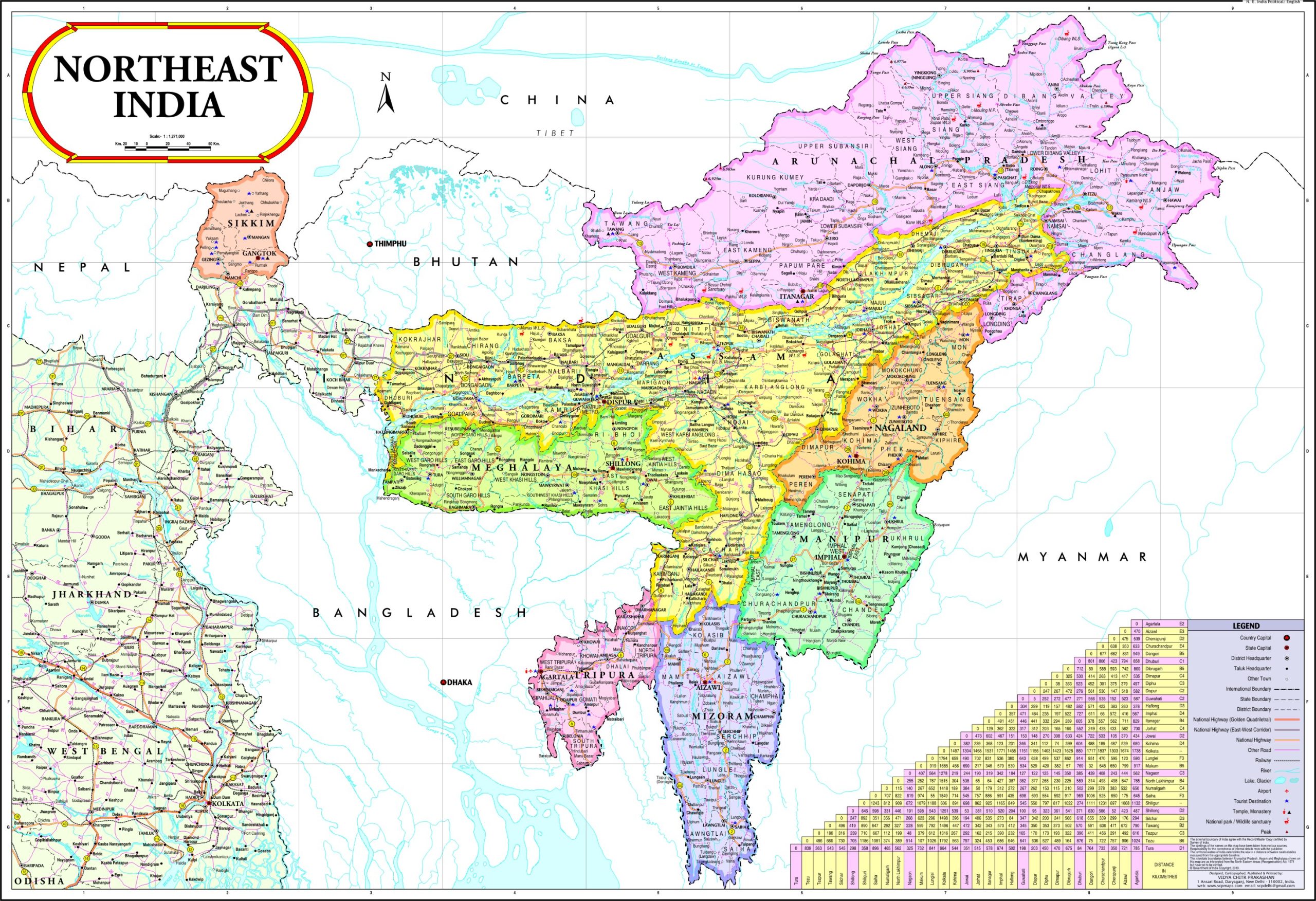
The India–Myanmar relationship is crucial for India’s strategic presence in Southeast Asia, particularly under the Act East Policy that aims to strengthen ties in the region. As Myanmar grapples with a political crisis, the implications for Northeast India become increasingly significant, as stability in Myanmar directly impacts trade and connectivity initiatives vital for India’s foreign policy. Through multiple connectivity projects, India seeks to integrate the Northeastern states with larger Southeast Asia markets, but the ongoing turmoil in Myanmar threatens these ambitions. Notably, significant infrastructure initiatives like the India–Myanmar–Thailand Trilateral Highway emphasize the importance of these bilateral ties in reshaping commerce and regional dynamics. Therefore, understanding the complexities of the India–Myanmar relationship is essential for navigating the geopolitical landscape of Asia and ensuring enhanced connectivity across this vibrant region.
In exploring the intricate ties between India and Myanmar, one must recognize how pivotal this connection is for enhancing regional cooperation and infrastructure development. This bilateral interaction serves as a vital link in advancing India’s broader foreign policy goals, which include not only strengthening trade routes but also responding to the Myanmar crisis. The Act East Policy has emerged as a framework aiming to transition Northeast India into a gateway for Southeast Asia, fostering significant regional connectivity. As instability within Myanmar continues to challenge these infrastructure projects, the need for strategic foresight in India’s approach becomes clearer. Ultimately, the relationship between India and its eastern neighbor underscores the region’s potential while highlighting the obstacles posed by geopolitical realities.
India-Myanmar Relationship: A Strategic Overview
The India-Myanmar relationship is pivotal in shaping India’s Act East Policy, particularly due to Myanmar’s geographical position as a land bridge to Southeast Asia. This partnership is not merely a diplomatic formality; it fundamentally impacts economic corridors and bilateral trade connections. As India aims to bolster its influence in Southeast Asia, Myanmar remains a critical player in this strategy, providing essential trade routes and acting as a conduit for Indian goods and services to reach wider markets within ASEAN. The relationship encompasses various dimensions, including political, cultural, and economic factors, reflecting a deep-rooted interdependence between the two neighbors.
However, the relationship is currently under stress due to ongoing political turmoil in Myanmar, which has exacerbated challenges in executing infrastructure plans vital for connectivity. India’s stake in Myanmar’s stability is considerably high, given the ongoing security concerns that have arisen from complexities within Myanmar’s interior conflicts. The failure to ensure political stability not only hampers India’s strategic aspirations in Northeast India but also impacts broader economic growth prospects that could benefit both nations. Thus, the India-Myanmar relationship is a double-edged sword—offering immense potential for growth while simultaneously presenting significant geopolitical risks.
Impact of Myanmar’s Crisis on Northeast India
The crisis unfolding in Myanmar has profound implications for India’s Northeast region, as these areas are integrally linked to the broader economic and political dynamics of Southeast Asia. The unrest in Myanmar has stymied progress on critical infrastructure projects, such as the India-Myanmar-Thailand Trilateral Highway, which is envisioned as a lifeline for trade and connectivity in Northeast India. This critical infrastructure is intended to facilitate easy movement of goods and people, but ongoing instability hampers these aspirations, limiting the potential for economic growth and regional integration.
Furthermore, the economic aspirations of states like Assam, Manipur, and Mizoram are intricately tied to stability in Myanmar. Local entrepreneurs and businesses heavily rely on successful cross-border trade, which in turn is affected by the ability to secure safe passage and consistent engagement with Myanmar. With Myanmar embroiled in conflict and uncertainty, investment initiatives stagnate, hindering the development of logistics and market access that could significantly elevate the Northeast’s profile in regional supply chains. Hence, Myanmar’s crisis underscores the fragility of the connections that India’s Act East Policy seeks to underpin.
Connectivity Challenges in India’s Act East Policy
India’s Act East Policy, aimed at enhancing connectivity across the Northeast towards Southeast Asia, faces substantial hurdles, primarily arising from Myanmar’s internal conflict. This policy was designed to reposition the Northeastern states as central hubs in trade and commerce, aligning their progress with broader regional dynamics. The ambition of creating robust transport corridors is repeatedly undermined by the harsh geopolitical realities, with Myanmar’s instability acting as a significant roadblock. Initiatives like the Kaladan Multi-Modal Transit Transport Project exemplify the complexities involved; despite being well-conceived, their operational success is contingent on political stability in Myanmar.
The geographical isolation that once characterized Northeast India is gradually being countered by strategic transportation initiatives. However, the effectiveness of these initiatives remains compromised as long as the Myanmar crisis persists. Besides infrastructure, geopolitical strategy must adapt to focus on building resilience within Northeastern economies themselves. To actualize meaningful connectivity and integration with Southeast Asia, there is an urgent need for policies that address local economic development, enhancing the Northeast’s capability to navigate external uncertainties. Facilitation of local industries and sectors must occur concurrently with infrastructure development to create a balanced approach toward realizing the goals of the Act East Policy.
Economic Ramifications of Myanmar’s Political Instability
The economic fallout from Myanmar’s ongoing political instability is echoing throughout Northeast India, where the anticipation of increased trade and investment has been met with frustration. Historically, investments into infrastructure and logistics were expected to yield economic dividends, reducing the distance between Northeastern markets and major Southeast Asian players. Yet, recent disruptions have thwarted these expectations, leading to economic stagnation in local economies that heavily rely on cross-border commerce. The interplay between geoeconomic strategies and local aspirations is more pronounced now, as businesses grapple with the uncertainty and challenge of trading through volatile routes.
Moreover, the Northeast’s potential as a gateway hinges not only on physical connectivity but also on economic resilience that can withstand such geopolitical shocks. As discussions about economic growth in states like Mizoram and Manipur correlate with Myanmar’s stability, local policymakers must prioritize resilience-building efforts—fostering sectors such as agriculture, manufacturing, and digital economies that can thrive independently. In this context, a balanced approach integrating both infrastructure initiatives and localized economic strategies is essential to untangle from geopolitical disarray, thus ensuring that aspirations for the Northeast’s development remain robust in the face of challenges from the Myanmar crisis.
Strategic Importance of Infrastructure Development
Infrastructure development in Northeast India is not just about physical roads, bridges, and transport corridors; it embodies a strategic vision that ties into India’s broader foreign policy objectives. The region’s connectivity to Myanmar is instrumental for facilitating trade and forging substantial partnerships with Southeast Asian nations. As infrastructure improves, the expectation is that it will alleviate the economic isolation previously experienced by the Northeastern states. Enhanced infrastructure is posited as a vehicle for accelerating growth and ensuring that the Northeast can partake actively in regional developments.
However, the realization of this vision is contingent on a stable geopolitical landscape. The ongoing crisis in Myanmar continues to underscore the lessons that infrastructure projects alone cannot guarantee success without the necessary political stability. India’s strategic investment in connectivity initiatives must be married with a holistic understanding of the political realities of its neighbors. This synergy will be critical in not only promoting infrastructure development but also in realizing the larger integration goals sought through the Act East Policy.
The Role of Trade in Regional Integration
Trade has emerged as a cornerstone of regional integration in the context of India’s Act East Policy, especially regarding its ties with Myanmar. The development of trade routes is expected to facilitate smoother transactions between India and Southeast Asian markets, thereby creating a network of interdependency that could fortify economic ties. The reality is that robust trade not only promotes economic prosperity but also fosters understanding and cooperation between nations, making it an essential element of India’s foreign policy towards Myanmar and beyond.
Nevertheless, the precarious nature of Myanmar’s political landscape poses risks to these trade endeavors. The volatile environment significantly complicates logistics and supply chain management, often leading to delays and elevated risks for traders. For Northeast India, which stands to benefit immensely from strengthened trade relations due to its proximity to Myanmar, these challenges must be navigated with strategic foresight. Continued engagement and trade facilitation efforts should focus on nurturing resilient channels that can withstand the shocks of political upheaval, thereby ensuring that aspirations for broader regional integration do not falter.
Adapting to Geopolitical Realities: Lessons Learned
In light of the Myanmar crisis, India is confronted with the vital need to recalibrate its approach toward the Northeast within the framework of its Act East Policy. The challenges posed by Myanmar’s internal strife have highlighted that geopolitical realities cannot be ignored or fit into a purely economic narrative. Policymakers must recognize that instability can stymie even the most well-crafted strategies for infrastructure development and economic growth. Historical reliance on the assumption that connectivity would automatically yield results must evolve to account for contextual complexities.
Moreover, these insights urge a diversification of approaches in engaging with Myanmar. India’s strategy might benefit from exploring multinational collaborations that share risks associated with instability and foster collaborative resilience. By integrating local perspectives and expertise, India can better navigate the landscape of Northeast India’s aspirations while balancing geopolitical realities. This adaptive resilience will equip India not only to face challenges but also to capitalize on opportunities when stability is restored, thus securing a brighter future for both the Northeast and its engagement with Southeast Asia.
Long-term Vision for the Northeast Region
The road ahead for Northeast India encompasses a long-term vision beyond mere connectivity. While the infrastructure projects and trade relations with Myanmar and Southeast Asia remain crucial, the region’s comprehensive development demands a commitment to sustainability and self-sufficiency. Emphasizing local economic resilience in conjunction with proposed connectivity initiatives will allow the Northeast to flourish irrespective of changing geopolitical climates. For India, this entails fostering socio-economic development that encourages entrepreneurship, local manufacturing, and a strong agricultural base that can adapt to turbulent external factors.
Thus, the focus should not exclusively rest on external linkages but also on internal capacity-building efforts that enhance the region’s ability to thrive independently. As India continues to project itself into the East through its Act East Policy, recognizing the long-term vision involves reshaping how the Northeast engages in the larger narrative of regional integration. Thus, a thorough understanding of internal dynamics alongside strategic external relations will be pivotal to ensuring sustainable growth and prosperity, thus fostering a resilient Northeast that can respond diligently to the vicissitudes of India’s geopolitical landscape.
The Future of India’s Engagement with Southeast Asia
The shifting geopolitical tides necessitate a re-evaluation of India’s engagement strategy with Southeast Asia through the lens of Myanmar’s ongoing disruption. As border dynamics evolve and countries reassess their roles within regional frameworks, India remains at a crossroads where its historical ties and future aspirations must be harmonized. The relationship with Myanmar will continue to play a decisive role in shaping India’s prospects in the region; a stable Myanmar is vital for facilitating India’s continued efforts to enhance its standing across Southeast Asia.
Yet, in projecting future strategies, India must balance its ambitions with the realities posed by Myanmar’s political landscape. Seeking alternative pathways—such as bolstering maritime connections and diversifying trade partnerships—will provide flexibility and resilience. The lessons learned from the current crisis may ultimately foster a more pragmatic approach towards regional engagement that acknowledges that progress is multifaceted, necessitating patience and adaptability to the sequential unfolding of stability in Myanmar. This holistic view will be important as India reaffirms its commitment to the East, with an eye on sustainable growth for Northeastern states.
Frequently Asked Questions
How does the political situation in Myanmar affect India’s Act East Policy and the Northeast India region?
The political instability in Myanmar significantly impacts India’s Act East Policy, which aims to enhance connectivity and trade between India and Southeast Asia through the Northeastern states. As Myanmar serves as India’s land bridge to Southeast Asia, ongoing disturbances disrupt critical infrastructure projects such as the India–Myanmar–Thailand Trilateral Highway and the Kaladan Multi-Modal Transit Transport Project. These projects are vital for boosting trade and economic integration in the Northeast. Thus, the success of India’s strategic ambitions in the region hinges on achieving stability in Myanmar.
| Key Points | Details |
|---|---|
| Importance of Myanmar | Myanmar is India’s only land bridge to Southeast Asia, making it crucial for India’s Act East Policy. |
| Challenges of the Act East Policy | Instability in Myanmar affects trade, connectivity, and economic plans for the Northeastern states. |
| Connectivity Projects | Projects like the India-Myanmar-Thailand Trilateral Highway aim to enhance trade and mobility but face implementation issues due to internal conflicts in Myanmar. |
| Economic Growth Prospects | Discussions around regional connectivity are tied to investments and market access in regions like Assam and Manipur. |
| Geopolitical Realities | Infrastructure development cannot be separated from the political scenario in Myanmar, which impacts investment prospects in Northeast India. |
| Future Considerations | A balanced approach focusing on both infrastructure and economic resilience is necessary for long-term success amidst Myanmar’s turmoil. |
Summary
The India-Myanmar relationship plays a pivotal role in determining the success of India’s Act East Policy, particularly in how it shapes strategic connections between Northeast India and Southeast Asia. Myanmar serves as the crucial link that facilitates various overland connectivity initiatives aimed at enhancing trade and regional integration. However, ongoing instability and internal conflicts within Myanmar pose significant challenges to these aspirations, potentially hindering economic growth and connectivity in the Northeastern states. Thus, while infrastructure development is necessary, it is equally important for India to focus on enhancing economic resilience and adapting to the shifting geopolitical landscape. Ultimately, sustained engagement and stability in Myanmar are vital for fulfilling India’s broader strategic goals in the region.



























