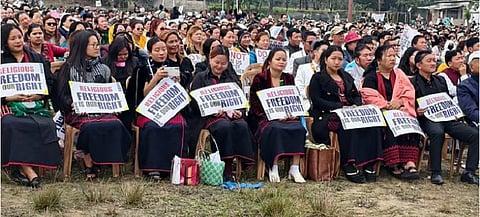
The Arunachal Pradesh anti-conversion law has emerged as a focal point of contention in the state’s socio-political landscape. Originally enacted in 1978 as the Arunachal Pradesh Freedom of Religion Act (APFRA), its implementation has now been thrust into the spotlight following a directive from the Gauhati High Court for the state government to formalize its rules. The Christian community in Arunachal Pradesh, alarmed by this development, has strongly opposed any moves to enforce legislation that they believe threatens their religious freedom and could undermine social harmony. The Arunachal Christian Forum, a prominent representative body for Christians in the region, has voiced concerns over the potential consequences of this law, citing fears of division and unrest. As debates continue, the implications for constitutional rights and communal relationships within the state remain paramount.
The legislative discourse surrounding the anti-conversion statute in Arunachal Pradesh reflects broader tensions regarding religious expression and community dynamics. Known formally as the Arunachal Pradesh Freedom of Religion Act, this statute has faced scrutiny by local religious groups, particularly during its proposed enforcement phase. Advocates for indigenous faiths argue that without such regulations, the extinction of traditional beliefs is imminent amidst rising conversion rates to Christianity. Meanwhile, the tensions heightened by the Arunachal Christian Forum’s protests illustrate the deep-seated fears surrounding the impact of the law on religious coexistence. As calls for dialogue intensify, the state grapples with balancing diverse religious practices while maintaining societal harmony.
The Arunachal Pradesh Anti-Conversion Law: A Historical Overview
The Arunachal Pradesh Freedom of Religion Act (APFRA) was enacted in 1978 with the intent of regulating conversions to protect indigenous faiths and ensure religious harmony within the state. Despite being on the books for nearly five decades, the law has yet to be enforced, leading to ongoing debates about its implications for religious freedom. Initially, the legislation aimed to address concerns of coercion within conversion practices, but critics argue that its potential implementation may disproportionately target the Christian community, which has seen significant growth over recent decades.
With recent legal adjustments and directives from the Gauhati High Court, the state government is now expected to actualize the provisions of the APFRA. This has escalated discussions surrounding religious freedoms in Arunachal Pradesh, particularly among the Christian population, which has experienced notable demographic shifts. The push for enforcement is perceived not only as a regulatory challenge but also as a pivotal moment for social coexistence and the re-evaluation of religious identity within the state.
Christian Community Responses to the APFRA
In light of the potential implementation of the APFRA, the Arunachal Christian Forum has emerged as a vocal opponent, expressing deep concerns about the implications for the Christian community in the state. Their memorandum to Chief Minister Pema Khandu emphasizes their fears that the law, if enacted, could infringe on their constitutional rights and undermine the peaceful coexistence that has characterized Arunachal Pradesh’s diverse population. They argue that the law could ignite tensions between religious groups, ultimately threatening the social harmony they strive to uphold.
The community’s opposition is fueled by a perception of urgency and a fear of unintended consequences. The Arunachal Christian Forum has called for an immediate halt to the formulation of rules associated with the APFRA, urging the government to instead engage in meaningful dialogue with all stakeholders involved. This response reflects broader anxieties about balancing the preservation of indigenous faiths while ensuring religious freedom for all, echoing sentiments shared across various demographic groups in the region.
Legal Implications of the Arunachal Pradesh Freedom of Religion Act
The legal landscape surrounding the APFRA has attracted considerable attention, especially following the recent ruling by the Gauhati High Court. This order has mandated the state to expedite the creation of operational rules, sparking debates around the balance between legislative intent and practical enforcement. Legal experts highlight the delicate nature of implementing such a law, specifically concerning human rights and freedom of religion. The potential penalties for violations, including imprisonment for coercing conversions, suggest that the law was designed to deter unethical practices but may also curtail personal freedoms.
Furthermore, the impending implementation of the APFRA raises questions about the standards of proof and the potential for misuse. Critics warn that the law may be weaponized against minority groups, particularly the Christian population, leading to discrimination under the guise of protecting indigenous faiths. Legal challenges are anticipated, which is likely to prompt a dialogue about the role of religious freedom as a foundational right that must be preserved while also protecting cultural identities.
Cultural Perspectives on Religious Conversion in Arunachal Pradesh
The cultural fabric of Arunachal Pradesh is intricately woven with diverse faith practices, and the issue of religious conversion is profoundly sensitive across communities. Many indigenous groups, including the Indigenous Faith and Cultural Society of Arunachal Pradesh (IFCSAP), have voiced their concerns about what they perceive as a threat to their traditional beliefs and practices. The IFCSAP has documented an alarming trend in conversions, which they argue endangers the survival of indigenous faiths, suggesting that swift legislative action is crucial to safeguarding their cultural heritage.
Conversely, the Christian community argues for their right to religious expression and the autonomy of individual beliefs. The historical context of conversion practices in Arunachal Pradesh shows a rich tapestry of cultural exchanges; yet, recent changes in demographics reflect shifting allegiances. This ongoing dialogue echoes broader global discussions on religious freedom, tolerance, and the tension between modernization and traditional cultural identities.
The Role of the Government in Upholding Religious Freedom
The government of Arunachal Pradesh finds itself at a crossroads, tasked with upholding the law while respecting the diverse religious affiliations of its citizens. The pressure from various groups, particularly non-Christian entities advocating for the enforcement of the APFRA, places the state in a challenging position where it must balance competing interests. The BJP-led administration, keen on maintaining social stability, is faced with criticisms from both sides: one advocating for stronger religious protections and the other demanding religious freedoms.
As the state moves forward, stakeholders emphasize the need for an inclusive approach that considers the voices of all communities, particularly the marginalized Christian population. Failure to engage in genuine dialogue could exacerbate existing tensions and undermine the foundational principles of religious freedom enshrined in the constitution of India. The government’s actions will determine the future landscape of religious coexistence in Arunachal Pradesh, highlighting the dynamic interplay between legislative measures and cultural identity.
Impacts of the Arunachal Pradesh Anti-Conversion Law on Indigenous Faiths
The introduction of the APFRA has generated discussions around its potential impacts on indigenous faiths within Arunachal Pradesh. Proponents of the Act argue that it is necessary to protect these traditional belief systems from being overshadowed by the growing Christian community. They describe a dire need to safeguard cultural heritage and prevent what they see as the dilution of indigenous identities due to the increasing conversions, which rose significantly in the last few decades. This demographic change has prompted a rallying cry to fortify indigenous beliefs against perceived encroachments.
However, critics of the APFRA warn that labeling the provisions as protective may inadvertently lead to discrimination against Christians and others. Many local leaders believe that inclusivity and dialogue, rather than divisive legislation, should be the path forward in addressing concerns regarding religious conversion. They argue that the focus should shift towards fostering respect for all religions and encouraging interfaith dialogue to promote understanding and coexistence, vital components of Arunachal Pradesh’s diverse societal fabric.
Previous Legal Precedents Surrounding the APFRA
Historically, legal challenges surrounding the APFRA have illuminated ongoing tensions relating to religious freedom in Arunachal Pradesh. The Act itself has been the subject of scrutiny since its inception, with advocates for religious liberty questioning its necessity and fairness. Previous legal precedents have often involved balancing individual rights with collective cultural protections, showcasing the politically sensitive nature of enforcing such a law in a diverse landscape characterized by rapid demographic changes.
The rulings by the Gauhati High Court play a critical role in shaping the current legal discourse, emphasizing the need for a delicate approach that honors the rights of minority communities while addressing the concerns of those advocating for indigenous faith protections. As legal discussions unfold, the outcomes will undoubtedly resonate throughout Arunachal Pradesh’s socio-political landscape, influencing public perceptions and policymaking regarding religious freedom and conversion practices.
The Demographic Shift in Religious Adherence in Arunachal Pradesh
The demographic trends in Arunachal Pradesh reveal significant changes in religious adherence over the past few decades, prompting shifting tensions around the APFRA. The growth of the Christian population from less than 1% in 1971 to over 30% in 2011 suggests a profound transformation in the religious landscape of the state. This rapid increase has raised alarms among advocates for indigenous faiths who fear extinction without proactive legislative measures such as the APFRA.
Conversely, the decline in indigenous faith practitioners and other minor religions raises urgent questions about the sustainability of cultural diversity in Arunachal Pradesh. Many community leaders assert that conversations surrounding the APFRA should also address the reasons behind these demographic shifts. Strategies promoting inclusive practices and respect for all religious beliefs could provide a way forward that honors the plurality of identities in the state.
Future Implications of the Anti-Conversion Law
The future implications of the Arunachal Pradesh Freedom of Religion Act hinge on how it is implemented and perceived by various communities within the state. As the government develops operational rules, the fear among the Christian community is palpable, with many apprehensive that stringent enforcement may exacerbate existing societal divides. The call for public discussions indicates a desire not just for legislative transparency, but for a broader engagement that fosters inclusion and negotiation amongst varying viewpoints.
Looking ahead, the challenge lies in creating a legal environment that safeguards individual choice while promoting interfaith harmony. Ongoing dialogue, cooperation, and mutual respect between different religious communities can serve as foundational elements to navigate the complexities posed by legislation like the APFRA. The success of this endeavor will ultimately determine Arunachal Pradesh’s trajectory toward embracing its rich cultural and religious diversity while addressing the concerns of all its people.
Frequently Asked Questions
What is the Arunachal Pradesh anti-conversion law (APFRA 1978) and its current status?
The Arunachal Pradesh Freedom of Religion Act (APFRA) was enacted in 1978 to regulate conversions in the state. Although it has remained largely unimplemented for decades, a recent directive from the Gauhati High Court has prompted the State Government to formulate rules for its enforcement. The Arunachal Christian Forum, representing the Christian community, has expressed strong opposition to this move.
How does the Arunachal Pradesh anti-conversion law affect religious freedom?
The Arunachal Pradesh anti-conversion law, APFRA 1978, is viewed by many, including the Arunachal Christian Forum, as a threat to religious freedom. Once enforced, it could impose penalties for conversions and create an atmosphere of fear among the Christian community, which may hinder their ability to practice their faith freely.
What is the response of the Arunachal Christian Forum regarding the APFRA 1978 rules?
The Arunachal Christian Forum has strongly opposed the ongoing rule-making process for the APFRA 1978. They argue that the government’s actions could lead to social unrest and violate the constitutional rights of Christians in the state. The forum has set a 15-day ultimatum for the government to halt the process and engage in discussions with stakeholders.
Why do some groups support the implementation of the Arunachal Pradesh anti-conversion law?
Supporters of the Arunachal Pradesh anti-conversion law, notably groups like the Indigenous Faith and Cultural Society of Arunachal Pradesh (IFCSAP), argue that it is necessary to protect indigenous faiths from being overshadowed by rising conversion rates, particularly to Christianity. They believe that without the APFRA, traditional beliefs might face extinction.
What potential impact could the enforcement of the Arunachal Pradesh anti-conversion law have on the Christian community?
The enforcement of the Arunachal Pradesh anti-conversion law (APFRA 1978) could significantly impact the Christian community by criminalizing conversions, thus infringing on their right to religious expression. The Arunachal Christian Forum warns that this would escalate tensions and disrupt the social harmony that exists among the diverse populations of Arunachal Pradesh.
How has the Gauhati High Court influenced the situation regarding the anti-conversion law in Arunachal Pradesh?
The Gauhati High Court played a pivotal role by directing the Arunachal Pradesh government to formulate and notify rules for the APFRA 1978. This decision has reignited discussions about the law, leading to protests from the Christian community and concerns over the implications for religious freedom and social harmony in the state.
What arguments are made against the Arunachal Pradesh anti-conversion law?
Critics, particularly from the Arunachal Christian Forum, argue that the Arunachal Pradesh anti-conversion law is discriminatory, targeting Christians unfairly and threatening their religious freedoms. They claim that the law, if enacted, could provoke societal tensions and is a divisive measure that undermines the peaceful coexistence of various faiths in Arunachal Pradesh.
What action has the Arunachal Christian Forum proposed in response to the APFRA 1978 rules development?
In response to the development of rules for the Arunachal Pradesh anti-conversion law (APFRA 1978), the Arunachal Christian Forum has proposed that the government cease the rule-making process and engage in comprehensive discussions with all stakeholders about the repeal of the law. They have given a 15-day deadline for action before escalating their protests.
How has public opinion shifted regarding conversion rates in Arunachal Pradesh?
Public opinion regarding conversion rates in Arunachal Pradesh is polarized. Some community leaders cite an increase in Christianity—rising from less than 1% in 1971 to over 30% in 2011—as a threat to indigenous faiths. Conversely, many in the Christian community perceive the Arunachal Pradesh anti-conversion law as a violation of their rights and an attempt to suppress their faith.
| Key Points |
|---|
| The Arunachal Pradesh anti-conversion law, formally known as the Arunachal Pradesh Freedom of Religion Act (APFRA), was enacted in 1978 but has not been implemented until now. |
| In September 2024, the Gauhati High Court instructed the Arunachal Pradesh government to create rules for enforcing the APFRA. |
| The Arunachal Christian Forum is strongly opposed to the law and submitted a memorandum to Chief Minister Pema Khandu demanding a halt to the rule-making process. |
| The forum set a 15-day ultimatum for the government to stop the process or face protests, citing fears about the potential negative impacts on religious freedom and social harmony. |
| Supporters of the law, like the Indigenous Faith and Cultural Society of Arunachal Pradesh (IFCSAP), argue that indigenous faiths are under threat due to rising conversions, particularly to Christianity. |
| The Christian population in Arunachal Pradesh has increased significantly from less than 1% in 1971 to over 30% in 2011, while adherence to indigenous faiths has decreased. |
| The APFRA includes penalties for conversions deemed coercive or deceitful, including imprisonment. |
Summary
The Arunachal Pradesh anti-conversion law has sparked significant controversy, especially among Christian groups who fear its implications for religious freedom. Originally enacted in 1978 but not enforced, the law’s recent push towards implementation prompted strong opposition from the Arunachal Christian Forum, which highlights concerns about constitutional rights and social harmony. They argue that implementing the Arunachal Pradesh Freedom of Religion Act without broader consensus could lead to unrest. The conflicting views reflect ongoing tensions between different religious communities in Arunachal Pradesh, underscoring the complexity of the issues surrounding the anti-conversion law.