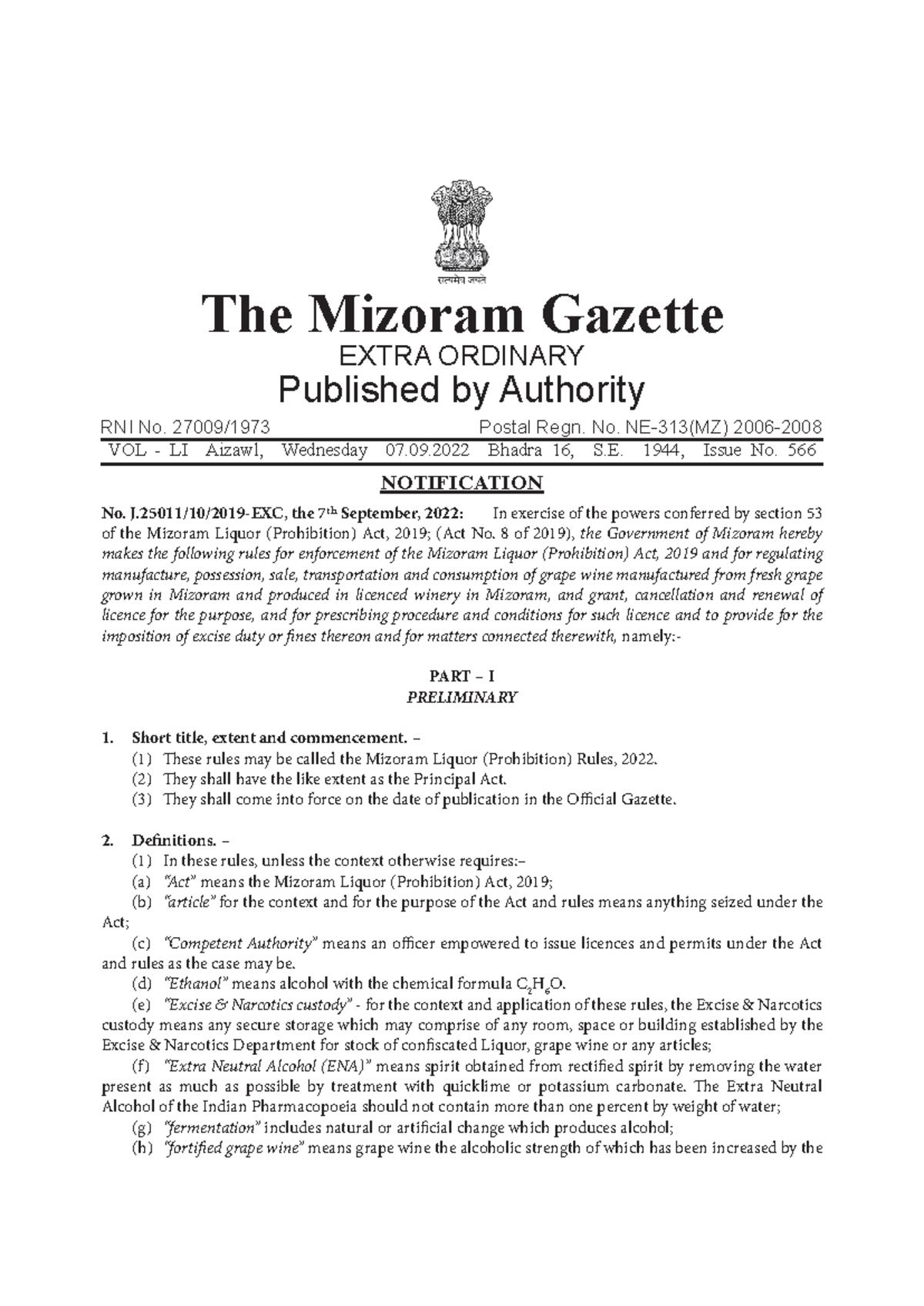
In Mizoram, liquor laws have undergone significant changes recently, particularly with the government’s latest notification that permits the consumption and possession of alcohol for health purposes. This amendment, known as the Mizoram Liquor Prohibition (Amendment) Act, 2025, aims to address the balance between public health and personal freedoms. While Mizoram has a history of strict liquor prohibition, the new regulations reflect a shift towards understanding the nuances of alcohol consumption for medicinal benefits. Additionally, the Mizoram government is keen on promoting responsible alcohol regulations that cater to individual health needs, marking a transformative step in Mizoram liquor laws. This overview will delve into the implications of these changes on Mizoram’s society and the ongoing conversation surrounding alcohol consumption in the state.
Exploring the legislative landscape of alcohol use in Mizoram reveals a complex interplay of tradition and modernity, particularly through its recent legal adjustments. Known for its stringent measures against alcohol sale and consumption, Mizoram has now opened a dialogue on health-related alcohol use, as indicated by recent policy shifts. The state’s alcohol regulations, once focused solely on prohibition, are evolving to include provisions for health-related exceptions. This changing approach prompts a reevaluation of how Mizoram addresses liquor prohibition amidst rising discussions about health and wellness. Such developments indicate a broader trend in which the Mizoram government is beginning to accommodate varied perspectives on alcohol consumption, highlighting the need for informed conversation around health liquor consumption.
Overview of Mizoram Liquor Laws
The Mizoram Liquor Prohibition (Amendment) Act, 2025, marks a significant shift in the region’s stance on alcohol consumption. Under Section 45 B(1), individuals now have the legal right to consume and possess liquor for health-related reasons. This amendment reflects a broader understanding of alcohol usage within the community, particularly in scenarios where it is deemed necessary for improving health outcomes. Furthermore, this change indicates the government’s recognition of individual rights while balancing them with community values.
Historically, Mizoram has maintained strict liquor prohibition laws to discourage alcohol consumption across the state. However, the recent government notification serves as a pivotal moment in Mizoram’s approach to alcohol regulations, paving the way for licensed medical facilities to recommend specific alcoholic beverages for therapeutic purposes. Ultimately, this amendment aims to facilitate responsible consumption while addressing the public health aspect associated with alcohol.
Health Implications of Mizoram Liquor Consumption
The Mizoram government’s decision to permit controlled liquor consumption on health grounds can be seen as a well-considered move in recognizing the therapeutic benefits of alcohol. Research has often linked moderate alcohol intake to certain health benefits, such as improved cardiovascular health and stress reduction. By officially allowing liquor consumption for health reasons, the state acknowledges these findings, promoting a more balanced perspective on alcohol within the public discourse.
Nonetheless, it is crucial to approach such a significant change with caution. While the amendment allows for regulated alcohol consumption under specific conditions, public awareness and education regarding responsible drinking practices must accompany it. Moreover, continuous monitoring and evaluation of the program’s impact on community health and well-being will be essential in addressing potential misuse or health risks associated with alcohol consumption.
Mizoram Alcohol Regulations and Community Impact
The introduction of the Mizoram Liquor Prohibition (Amendment) Act, 2025, presents both opportunities and challenges for Mizoram’s communities. On one hand, it opens avenues for individuals who may benefit from alcohol for health rehabilitation purposes. This provision allows for a more nuanced understanding of alcohol consumption, potentially reducing the stigma associated with it, especially when used in a medical context.
On the other hand, relaxing liquor laws also raises concerns about community health and safety. There must be clear regulations in place to ensure that the consumption of alcohol does not lead to addiction or social issues commonly associated with excessive drinking. The Mizoram government must implement awareness campaigns alongside the amendment to educate the public about the risks of alcohol consumption, ensuring that citizens make informed choices.
The Role of Government Notifications in Alcohol Policy
Government notifications play a crucial role in shaping public perception and practical implementation of alcohol policy in Mizoram. The recent notification by the Mizoram government, which allows for the regulated consumption of liquor for health purposes, not only informs the public about the legal framework but also sets a precedent for future regulations. Such notifications can be viewed as catalysts for broader discussions on alcohol consumption norms within society.
Furthermore, the responsible dissemination of such information is vital. Communities need to understand not just the legal framework but also the health implications of this newly established law. The Mizoram government is tasked with providing adequate guidance and support systems to ensure that these policies are not only understood but also implemented effectively, ensuring the well-being of its citizens.
Balancing Prohibition and Health in Mizoram
Balancing Mizoram’s long-standing prohibition on liquor with the recent amendments for health reasons presents a unique challenge for policymakers. The amendment highlights a shift from a blanket prohibition to a more targeted approach that acknowledges individual health needs without compromising community values. Such a balanced policy could potentially reduce illicit alcohol trade while addressing health-related concerns through legitimate channels.
However, achieving this balance requires thoughtful engagement with the community and stakeholders involved in public health. The Mizoram government must actively include health professionals, community leaders, and the general public in discussions surrounding the effects of this new amendment. By fostering open dialogue, the government can better align its policies with the needs and values of its citizens, ultimately leading to a healthier and more responsible approach to alcohol consumption.
Public Response to Mizoram’s Alcohol Amendment
The public response to the Mizoram government’s notification regarding liquor consumption for health purposes has been mixed. While some community members celebrate this shift as a progressive step toward recognizing personal health needs, others express concern over the potential for increased alcohol abuse under the new regulations. This divergence in opinions underscores the complexities surrounding alcohol regulations in culturally conservative societies like Mizoram.
Furthermore, public forums and discussions can play an essential role in shaping the future of these policies. Engaging with diverse perspectives can shed light on community sentiments and encourage the government to consider specific regulations catering to local needs. Such dialogues are essential for maintaining a balance between health benefits and the risks of alcohol consumption, ensuring community well-being remains a priority.
Enforcement Challenges in Mizoram Alcohol Regulations
Enforcing the new guidelines under the Mizoram Liquor Prohibition (Amendment) Act poses challenges for local authorities. With the introduction of the health-related exceptions, there is a need for clear criteria and processes to ascertain which individuals qualify for alcohol consumption based on health grounds. This complexity risks creating loopholes that could potentially be exploited, leading to illegal consumption or distribution of alcohol.
Moreover, local law enforcement agencies will require training and resources to navigate this new legal landscape effectively. Establishing robust monitoring systems and compliance mechanisms will be essential to ensure that the regulation is adhered to while minimizing the risks associated with alcohol consumption. The government’s success in this endeavor will rely heavily on the collaboration between health authorities and law enforcement to ensure a practical and safe implementation.
Future of Alcohol Regulations in Mizoram
Looking ahead, the trajectory of alcohol regulations in Mizoram will largely depend on the outcomes of the recent amendments and how effectively they are implemented. The Mizoram government must remain attentive to the community’s feedback and health statistics to adapt and refine its approach to alcohol regulation. This dynamic landscape may call for further amendments if current regulations are found to inadequately address public health or social issues.
Through continued research, education, and community engagement, there is potential for developing a sustainable model of alcohol regulation that respects cultural values while promoting individual health requirements. The balance achieved in Mizoram could serve as a template for other regions with similar social contexts, demonstrating that even historically prohibitive laws can evolve to meet contemporary health needs.
Frequently Asked Questions
What are the current Mizoram liquor laws regarding consumption on health grounds?
The current Mizoram liquor laws allow individuals to consume and possess liquor on health grounds as per the recent government notification under Section 45 B(1) of the Mizoram Liquor Prohibition (Amendment) Act, 2025.
How does the Mizoram liquor prohibition affect health-related exceptions?
Under the Mizoram liquor prohibition, there are exceptions for health-related consumption as outlined in the Mizoram Liquor Prohibition (Amendment) Act, 2025, allowing individuals to consume and possess alcohol for medicinal purposes.
What is the significance of the Mizoram government notification regarding alcohol consumption?
The Mizoram government notification is significant as it permits individuals to legally consume and possess liquor for health reasons, marking a change in the state’s approach to alcohol regulations under the Mizoram Liquor Prohibition Act.
Are there any restrictions on alcohol consumption under the Mizoram liquor regulations?
Yes, while the Mizoram liquor regulations allow for consumption on health grounds, they still maintain strict controls and prohibitions on general liquor consumption to curb misuse and promote public health.
What does Section 45 B(1) of the Mizoram Liquor Prohibition (Amendment) Act entail?
Section 45 B(1) of the Mizoram Liquor Prohibition (Amendment) Act allows for the consumption and possession of liquor for health purposes, thereby providing a legal framework for individuals needing alcohol for medical reasons.
Can individuals apply for special permissions under Mizoram liquor laws for health liquor consumption?
Yes, individuals may need to apply for special permissions under the Mizoram liquor laws if they wish to consume liquor on health grounds, as stipulated in the recent amendments aimed at regulating alcohol for health-related uses.
| Key Point | Details |
|---|---|
| Government Notification | The Mizoram government issued a notification regarding the consumption and possession of liquor. |
| Health Grounds | Individuals are now allowed to possess liquor for health reasons. |
| Legal Framework | This decision is based on Section 45 B(1) of the Mizoram Liquor Prohibition (Amendment) Act, 2025. |
Summary
Mizoram liquor laws have recently evolved to permit the consumption and possession of liquor for individuals citing health reasons. This significant shift by the Mizoram government, instigated through a notification under the Mizoram Liquor Prohibition (Amendment) Act, 2025, marks a notable change in the state’s approach to liquor regulation. The legislation now recognizes the necessity for maintaining certain health standards while allowing responsible liquor consumption.