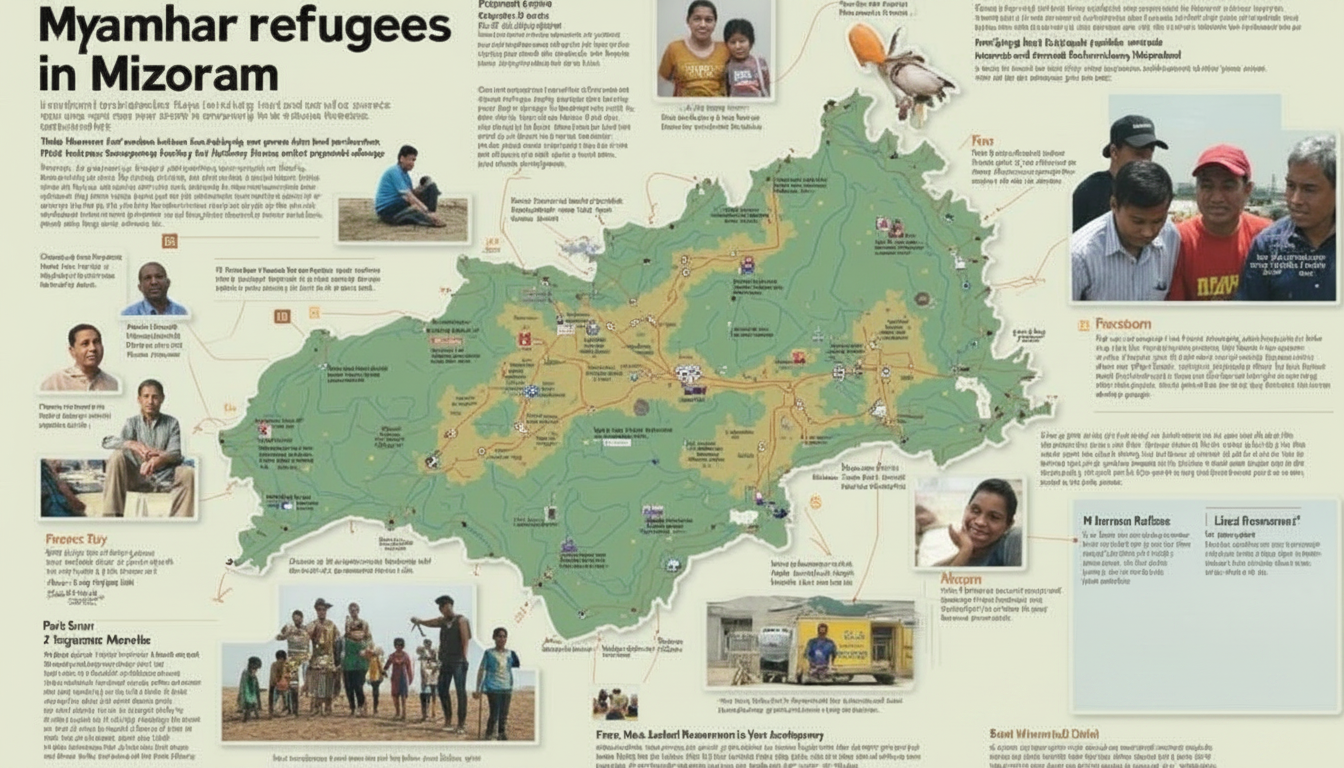
Mizoram refugees have become a central concern as the humanitarian crisis in Myanmar continues to escalate, causing a significant influx of displaced people into the state. The ongoing Myanmar conflict has seen over 40,000 individuals seeking refuge in Mizoram, seeking safety from political instability and violent conflict. Mizoram Chief Minister Lalduhoma has articulated the challenges posed by this situation, warning that the increasing number of refugees is straining local resources and services. With the potential for further migrations if conditions worsen across the border, Mizoram finds itself at a critical juncture. The state’s deep-rooted cultural connections with these communities make it a sanctuary for those fleeing turmoil, yet the pressure on infrastructure rises as border issues between India and Myanmar remain unresolved.
The recent surge in asylum seekers from the conflict in Myanmar, known as the Myanmar refugee crisis, has highlighted the urgent need for humanitarian assistance in the region of Mizoram. As more families cross over to escape the dire circumstances of their homeland, the state grapples with the realities of accommodating these displaced individuals. Concerns about the humanitarian situation in Mizoram are increasingly voiced by officials, including the Mizoram Chief Minister, as local resources face unprecedented demands. The border issues between India and Myanmar complicate the situation further, making effective management of these new arrivals a pressing challenge. The ongoing conflict has not only transformed the demographic landscape of border areas, but it also raises questions about the long-term implications for both the local population and the incoming refugees.
The Current Humanitarian Situation in Mizoram
Mizoram is currently facing a significant humanitarian crisis as it becomes a haven for individuals fleeing the ongoing conflicts in Myanmar. The rising numbers of displaced people have strained the state’s resources, with local authorities highlighting the challenges posed by the influx. This situation has become critical, as the Mizoram Chief Minister, Lalduhoma, has pointed out, emphasizing the necessity for immediate measures to handle the burden on public services and infrastructure. The humanitarian situation calls for both state and central government intervention to ensure the well-being of both refugees and local residents.
As reports indicate that over 40,000 Myanmar nationals have sought sanctuary in Mizoram, the implications of this influx are profound. Communities that were once stable now face demographic shifts and increased pressure on essential services. Local health care, education, and housing are at risk of being overwhelmed, and measures such as biometric registration for refugees are essential to maintain order and provide aid. Understanding the humanitarian complexities of this situation is crucial for anyone looking to comprehend the broader impact of the Myanmar conflict and the responses required by the Mizoram government.
Mizoram Refugees: The Struggles and Challenges
The plight of Mizoram refugees highlights the deep challenges faced by those escaping violence and instability in Myanmar. Each individual’s story reflects a desperate search for safety amidst turmoil, making the transition to life in Mizoram both daunting and filled with uncertainties. As displaced families settle into border villages like Zokhawthar, their integration into the local community brings both hopes for a fresh start and worries about cultural assimilation and resource allocation. Local residents often find themselves caught between empathy for the newcomers and concern over the stresses placed on their own everyday lives.
The challenges experienced by Mizoram refugees extend beyond immediate physical needs. Long-term factors like emotional trauma, employment opportunities, and social acceptance play critical roles in the successful rehabilitation of these individuals. Local non-governmental organizations and community groups have stepped up to offer support, yet the coordination of aid remains crucial as the state grapples with the prospect of sustained refugee presence. The ongoing humanitarian situation in Mizoram is a reminder of the need for effective policies addressing border issues with Myanmar, as well as support infrastructure that can accommodate both displaced individuals and local populations.
Addressing border issues with Myanmar requires a comprehensive approach. Authorities are exploring various strategies, including enhanced border management, to ensure both security and the humane treatment of refugees. However, these efforts must be balanced with the realities on the ground, where many families urgently need access to basic services and stability. Stakeholders, including NGOs and government agencies, must collaborate closely to ensure that any measures taken to manage border dynamics do not compromise the humanitarian needs of those seeking refuge.
In the face of the mounting crisis, the role of the Mizoram administration is crucial. Officials are now tasked with not only providing immediate aid to displaced people but also formulating long-term strategies that prevent future crises. With ongoing conflict in Myanmar showing little sign of resolution, proactive planning will be essential to manage resources effectively and support the growing refugee population. Innovative solutions in collaboration with neighboring states can help alleviate the pressures felt by Mizoram, while also upholding India’s commitment to providing refuge for those fleeing persecution.
Addressing Border Management and Security Issues
The porous border between India and Myanmar poses unique challenges, particularly in the context of the ongoing humanitarian crisis. As tensions continue to rise in Myanmar, the Indian government has recognized the need for enhanced border management strategies to prevent illegal crossings while still addressing humanitarian needs. The Mizoram Chief Minister has voiced concerns about the inadequacy of existing systems and the potential for escalating security challenges if measures are not prioritized. This complex dynamic thus necessitates a delicate balancing act between enforcing borders and protecting vulnerable populations.
Efforts such as border fencing are being implemented to mitigate security risks; however, the effectiveness of these measures in a humanitarian context remains debatable. Local communities have historically shared strong ethnic ties with individuals across the border, making strict border control not only a security challenge but also an ethical dilemma. Consequently, any strategies devised must be cognizant of the long-standing relationships between these communities to ensure that the security measures do not inadvertently exacerbate tensions or push displaced individuals into even more precarious situations.
The Role of Mizoram in Refugee Housing and Support
Mizoram has emerged as a crucial refuge for those fleeing Myanmar, with local government and civil society playing essential roles in offering support to displaced families. The government’s initiatives, such as biometric registration, aim to facilitate access to resources and services for refugees while allowing for better demographic management. Local leaders and communities are mobilizing to provide essential support, including food, shelter, and medical care, often stretching their own capabilities in an effort to assist their neighbors in need.
The generous response from the people of Mizoram showcases a remarkable spirit of solidarity and humanity. Communities have opened their homes to house displaced individuals, demonstrating resilience in the face of challenges. However, this has also exposed the vulnerabilities of local infrastructure, prompting calls for larger-scale support from national and international organizations. As the humanitarian situation evolves, it will be vital for the state and central government to work together to ensure sustained support from external entities to maintain the balance between welcoming refugees and addressing local needs.
Long-Term Implications of Displacement on Mizoram’s Development
The long-term implications of the influx of displaced people from Myanmar into Mizoram are profound and multifaceted. As local resources become increasingly strained, the state must navigate the challenge of integrating large numbers of refugees into its economic and social fabric. Without appropriate planning and intervention, the state’s development could be adversely affected, with potential impacts on sectors such as education, healthcare, and employment. Addressing these challenges proactively will be essential for preventing long-term socio-economic impacts on both the refugee population and local communities.
Furthermore, the psychological and social ramifications of such displacement cannot be overlooked. Successfully integrating refugees while maintaining social cohesion within Mizorams’ diverse populations will require a thoughtful approach, including community-led initiatives that foster mutual understanding and support. Collaboration among government authorities, non-profit organizations, and the local population will be critical in creating an environment conducive to rehabilitation and growth for everyone involved.
The Need for International Support and Cooperation
Given the rising number of displaced people in Mizoram, there is an urgent need for international support to address the humanitarian crisis effectively. The complex situation calls for a coordinated response from global organizations, governments, and NGOs to provide necessary resources and expertise. Humanitarian assistance in areas like food, health care, and psychological support is critical to ensure both stability for the refugees and protect local populations who are deeply affected by ongoing challenges.
International cooperation can also enhance efforts to bolster border management strategies, ensuring that they are sensitive to humanitarian needs while maintaining national security. By working collectively to address the root causes of displacement, the international community can support sustainable solutions that facilitate a peaceful and equitable resolution to the conflicts affecting Myanmar. Continued advocacy and collaboration across borders will be essential to ensure that Mizoram can manage the influx of refugees effectively while maintaining its commitment to human rights and humanitarian principles.
Community Response to the Refugee Crisis in Mizoram
Communities in Mizoram have demonstrated remarkable resilience and warmth in response to the refugee crisis, rising to the occasion to support their neighbors fleeing violence in Myanmar. Local initiatives have emerged, where volunteers have organized food drives, medical camps, and educational support for children among the refugees. This community-driven response reflects the cultural ties and shared histories between the people of Mizoram and those crossing the border. Such solidarity is vital in creating an immediate support network for the displaced individuals.
However, this grassroots response must be met with organized logistical support from the government to prevent burnout among volunteers and ensure that the needs of refugees are met comprehensively. Capacity building, resource allocation, and partnership with humanitarian organizations can help strengthen community initiatives and ensure that efforts are sustainable. Empowering local communities with the tools and knowledge to aid refugees effectively will lead to better integration and long-lasting positive outcomes for both the local residents and displaced individuals.
Future Perspectives on Refugee Management in Mizoram
Moving forward, effective refugee management in Mizoram will require a multi-faceted approach that addresses immediate needs while planning for the future. The state government, alongside local communities and international support, must establish sustainable pathways for refugees, focusing on integration, employment opportunities, and access to services. By formulating policies that reflect the needs of both displaced individuals and local populations, Mizoram can create a robust framework that promotes harmony and cooperative coexistence.
Anticipating future challenges, it is crucial to adapt to the evolving landscape of migration and displacement. The Mizoram administration must remain vigilant and responsive to changes in the geopolitical climate surrounding Myanmar. Engaging with regional stakeholders and employing innovative solutions will be essential to address the complexities surrounding border issues and the humanitarian situation without compromising the safety and dignity of all individuals involved.
Frequently Asked Questions
What are the main challenges faced by Mizoram refugees from Myanmar?
Mizoram refugees fleeing the Myanmar conflict face significant challenges, including limited access to basic necessities such as food, shelter, and healthcare. The increasing number of displaced people has also placed immense pressure on local resources and infrastructure in Mizoram, leading to concerns about the sustainability of support systems in response to the humanitarian situation.
How has the humanitarian situation in Mizoram evolved due to displaced people from Myanmar?
The humanitarian situation in Mizoram has deteriorated due to the influx of displaced people from Myanmar. The state government is grappling with the needs of over 40,000 refugees, leading to heightened demands on public services and local infrastructure, particularly in border areas like Zokhawthar, which houses a substantial refugee population.
What measures is the Mizoram Chief Minister taking regarding the influx of refugees?
Mizoram Chief Minister Lalduhoma has been vocal about the increasing number of refugees due to the Myanmar conflict. He has expressed concerns regarding the humanitarian situation, prompting the state government to initiate biometric registration for refugees and closely monitor border issues to manage the influx and mitigate potential challenges.
Why do refugees prefer Mizoram as their destination from Myanmar?
Refugees prefer Mizoram as a destination due to its ethnic and cultural ties with communities across the border in Myanmar. Additionally, the porous border facilitates easier crossing for those fleeing the ongoing political turmoil and armed conflicts, making Mizoram a crucial haven for displaced families seeking safety.
What actions are being taken to address border issues between India and Myanmar in relation to refugees?
To address border issues and manage the situation with Myanmar refugees, the Central Government is advancing border fencing projects along the India-Myanmar frontier. This aims to strengthen border management while also providing a framework to oversee the movement of displaced people and enhance security measures.
How is the local population in Mizoram affected by the presence of displaced people from Myanmar?
The local population in Mizoram is significantly impacted by the presence of displaced people from Myanmar, particularly in border villages. Areas like Zokhawthar have seen demographic changes and strain on public services and infrastructure due to the sudden influx, raising concerns about communal harmony and resource allocation.
What role does biometric registration play in managing Mizoram refugees?
Biometric registration is crucial for managing Mizoram refugees as it helps authorities in tracking and providing assistance to displaced individuals. This process enables the state government to better understand the scale of the humanitarian situation and coordinate response efforts more effectively.
What is the estimated number of Myanmar nationals seeking refuge in Mizoram?
More than 40,000 Myanmar nationals have sought refuge in Mizoram as a result of the escalating violence and conflict in their home country. This significant number highlights the urgent humanitarian situation and the need for ongoing support and resources to accommodate these displaced people.
| Key Points | Details |
|---|---|
| Concern over influx of refugees | Mizoram’s Chief Minister Lalduhoma highlighted the pressure on state resources due to the rising number of people fleeing from Myanmar. |
| Ongoing instability in Myanmar | Political turmoil and armed conflicts have triggered a steady influx of displaced people into Mizoram. |
| Border fencing initiatives | The Central Government is progressing with border fencing projects to bolster control and security along the India-Myanmar border. |
| Significant population changes | Zokhawthar village has experienced a demographic shift with an increase from under 3,000 to several thousand due to the refugee situation. |
| Biometric registration measures | The state government has implemented biometric registration for refugees as part of its response to the ongoing crisis. |
| Regional context and the 1,643-km border | Mizoram is part of the northeastern states of India that share a long border with Myanmar, contributing to its role as a refuge. |
| Concerns over long-term impacts | Authorities are closely monitoring the humanitarian, administrative, and security challenges posed by the refugee situation. |
Summary
Mizoram refugees are receiving increasing attention as the state grapples with the challenge of accommodating thousands of displaced individuals from Myanmar. Chief Minister Lalduhoma’s acknowledgment of the humanitarian crisis emphasizes the urgent need for resources and support as the situation unfolds. With ongoing conflicts in Myanmar, the number of refugees seeking asylum in Mizoram is expected to rise, further straining local infrastructures and services. This ongoing crisis not only impacts the refugees but also raises significant concerns for Mizoram’s long-term social and economic stability, requiring concerted efforts from both state and central authorities to ensure a balanced approach to refugee management.