

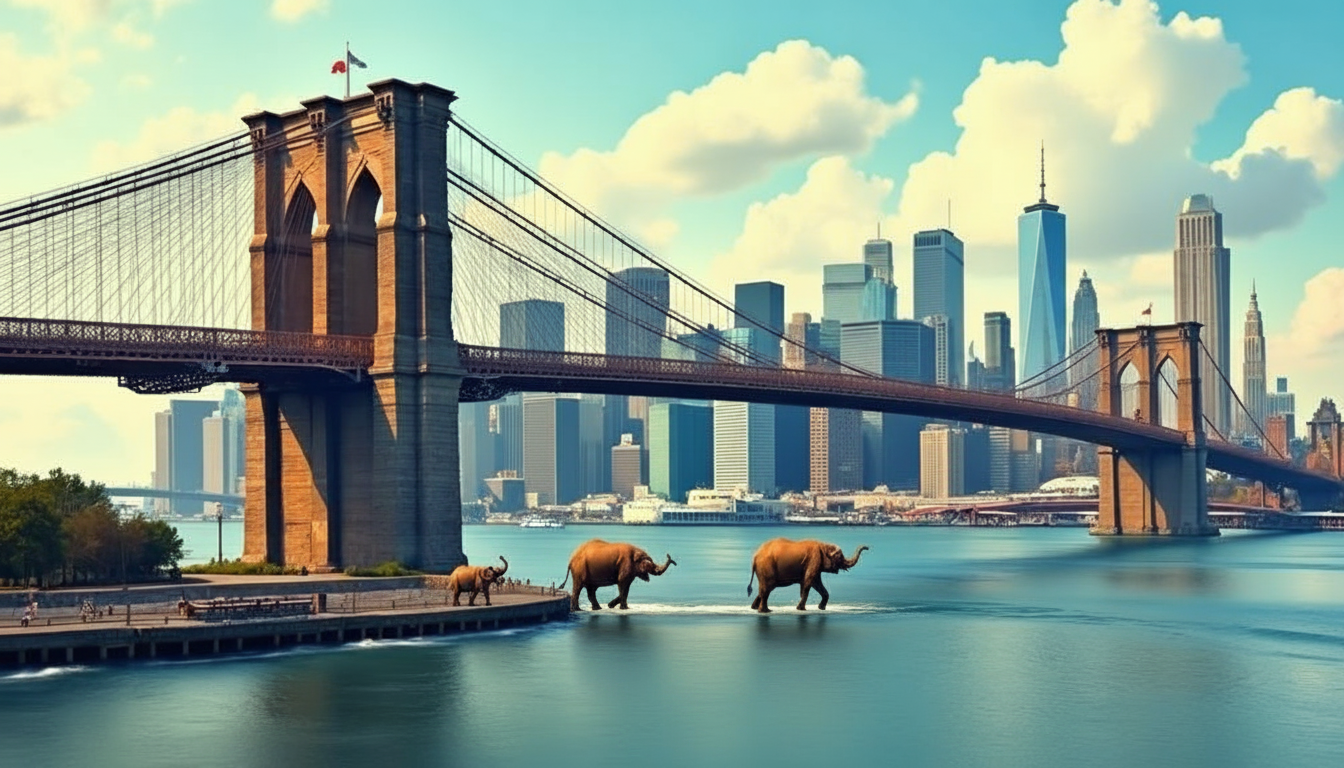
The Brooklyn Bridge, an iconic landmark of New York City, stands as a testament to the ingenuity of 19th-century engineering. Completed in 1883, this architectural marvel was the first to span the East River, connecting the bustling boroughs of Manhattan and Brooklyn. With its remarkable history, the Brooklyn Bridge has captivated countless visitors and history enthusiasts alike, offering a glimpse into the past with intriguing stories and fun facts about its construction and design. Beyond its structural beauty, the bridge is also a sanctuary for wildlife, home to a variety of birds, including the majestic peregrine falcons. Moreover, the Brooklyn Bridge has consistently served as a platform for social change, witnessing numerous protests that echo the evolving narrative of the city and its people.
Often recognized as a pivotal structure in urban engineering, this suspension bridge not only enhances New York’s skyline but also plays a crucial role in its cultural fabric. The bridge’s construction, deemed an engineering wonder, reflects a historical shift in architectural design, utilizing galvanized steel wire that set the stage for future advancements in bridge-building. Wildlife enthusiasts celebrate the Brooklyn Bridge for its unexpected role as a refuge for birds and other species amidst the urban landscape. Meanwhile, its wide pathways provide a setting for public demonstrations, cementing its status as a venue for communal expression and advocacy throughout its extensive history. The Brooklyn Bridge is indeed a multidimensional symbol of resilience and innovation, drawing fascination from visitors and locals alike.
Brooklyn Bridge History: From Inception to Icon
The Brooklyn Bridge’s history is as rich and layered as its intricate design. Conceived by John A. Roebling in the 1850s, the project marked the beginning of an ambitious journey that culminated in 1883. It was not merely a bridge; it was a symbol of progress and innovation in engineering. This remarkable structure bridged the gap between Brooklyn and Manhattan, ushering in a new era of connectivity for New York City. The bridge’s inauguration was celebrated with a grand event, where thousands of people walked across it, signifying the promise of unity and expansion in a rapidly growing metropolis.
Beyond its initial construction, the Brooklyn Bridge has endured the test of time, surviving natural disasters and even the impacts of urban development. Over the decades, it has become a beloved landmark and an integral part of New York’s identity, often featured in movies, literature, and artworks. Its stories of triumph and tribulation echo the resilience of the city it serves, making it a focal point of both nostalgia and progress for locals and tourists alike.
Architectural Wonders of Brooklyn Bridge
The architectural design of the Brooklyn Bridge is an exceptional blend of Gothic and engineering prowess. Designed by Roebling’s son, Washington Roebling, the bridge features iconic granite towers that rise majestically above the East River. These towers are adorned with pointed arches that pay homage to Gothic architecture, creating an awe-inspiring silhouette against the city skyline. The innovative use of steel cables not only ensured the structure’s resilience but also introduced a new phase in architectural design that influenced countless bridges worldwide.
The aesthetic appeal of the Brooklyn Bridge is matched only by its functional brilliance. Spanning 1,595.5 feet, its sweeping main span was a groundbreaking venture into suspension bridge design. Each feat of engineering was meticulously planned, from the precise dimensions of the steel cables to the strength of the anchorages. This combination of beauty and function has led the Brooklyn Bridge to be regarded as a profound accomplishment in architecture, often regarded as a true testament to human ingenuity.
Wildlife at Brooklyn Bridge: Nature in an Urban Playground
Beyond being an engineering marvel, the Brooklyn Bridge serves an essential role as a habitat for various wildlife species. Urbanization can pose many threats to animal populations, yet the bridge’s architectural features have created an unlikely environment for birds such as peregrine falcons and various species of pigeons. The towers of the bridge provide a safe nesting area, aiding in the resurgence of these impressive birds that nearly faced extinction among urban landscapes.
Birdwatchers and nature enthusiasts flock to the bridge, not only to admire its historic architecture but also to observe the thriving wildlife. The juxtaposition of stunning architecture and flourishing nature within this iconic city landscape exemplifies the balance that can be achieved between urban life and environmental sustainability. This unique aspect of the Brooklyn Bridge adds to its allure, inviting visitors to appreciate both the legacy of human achievement and the unyielding spirit of nature.
Brooklyn Bridge: A Stage for Protests and Social Movements
The Brooklyn Bridge has become more than just an intriguing piece of infrastructure; it has emerged as an essential platform for social change and protests. From the suffragists of the early 20th century to modern-day movements, the expansive walkway has borne witness to countless demonstrations advocating for freedom, equality, and justice. These historical moments have not only decorated the bridge with narratives of political action but have also enhanced its symbolic significance as a space for the public’s voice.
As a result, each protest adds to the Brooklyn Bridge’s rich tapestry of social activism. Today, activists continue to utilize its prominent location to draw attention to critical social issues. The bridge’s enduring presence stands as a reminder that it is not only a feat of engineering but also a living testament to the spirit of advocacy that flows through the veins of New Yorkers. This legacy of activism signals the bridge’s unique role in shaping societal change throughout history.
Fun Facts About Brooklyn Bridge: Surprising Tidbits
The Brooklyn Bridge is not just celebrated for its architectural and engineering accomplishments; it is also home to many fun and quirky facts that keep tourists and locals entertained. One of the most astonishing anecdotes is the crossing of 21 elephants and 17 camels in 1884, designed to demonstrate the bridge’s strength (and provide a memorable spectacle). This eccentric event showcased the bridge’s capabilities while indulging a crowd that eagerly gathered to witness history in the making.
Moreover, the Brooklyn Bridge is continuously evolving, attracting diverse visitors and retaining a revered status in American culture. From its daily foot traffic that echoes the footsteps of millions to its nighttime light displays that captivate onlookers, the bridge is a living monument that thrives on fascinating narratives. These layers of history and delight combine to form a unique tapestry of experiences that continues to draw people to the bridge, ensuring that its story remains vibrant and captivating.
Frequently Asked Questions
What are some fun facts about Brooklyn Bridge?
The Brooklyn Bridge, inaugurated in 1883, is an engineering marvel that spans 1,595.5 feet and was the first to utilize steel cables. It’s known for hosting unique events in history, such as the crossing of 21 elephants and 17 camels in 1884. Besides its architectural significance, the bridge serves as a sanctuary for wildlife, including peregrine falcons. Additionally, the Brooklyn Bridge has been a notable site for protests throughout its history, reflecting its importance as a public space.
| Key Point | Details |
|---|---|
| 1. An Engineering Wonder | Inaugurated in 1883, the Brooklyn Bridge was the first to span the East River and is one of the longest suspension bridges in the world at 1,595.5 feet. |
| 2. A Birdy Haven | The bridge now serves as a sanctuary for peregrine falcons and other birds, highlighting both nature’s resilience and the bridge’s legacy. |
| 3. Protestors’ Space | Daily, it accommodates over 103,051 vehicles, 28,845 pedestrians, and has a history of being a significant protest space. |
| 4. Innovative Steel Cables | The Brooklyn Bridge was the first to use galvanized steel wire in its cables, allowing for a lightweight design that influenced future bridge construction. |
| 5. Urban Legends | In 1884, 21 elephants and 17 camels crossed the bridge, demonstrating its strength and creating a unique piece of trivia. |
Summary
The Brooklyn Bridge stands as a testament to architectural brilliance and historical significance in New York City. Since its completion in 1883, it has not only connected the boroughs of Manhattan and Brooklyn, but has also become an iconic symbol of resilience and innovation. From hosting wildlife to serving as a platform for social change, the Brooklyn Bridge has woven itself deeply into the fabric of urban life. Its remarkable design, pioneering use of materials, and fascinating anecdotes, like the crossing of 21 elephants, continue to captivate the hearts of visitors and locals alike, making it a must-see landmark.



























