

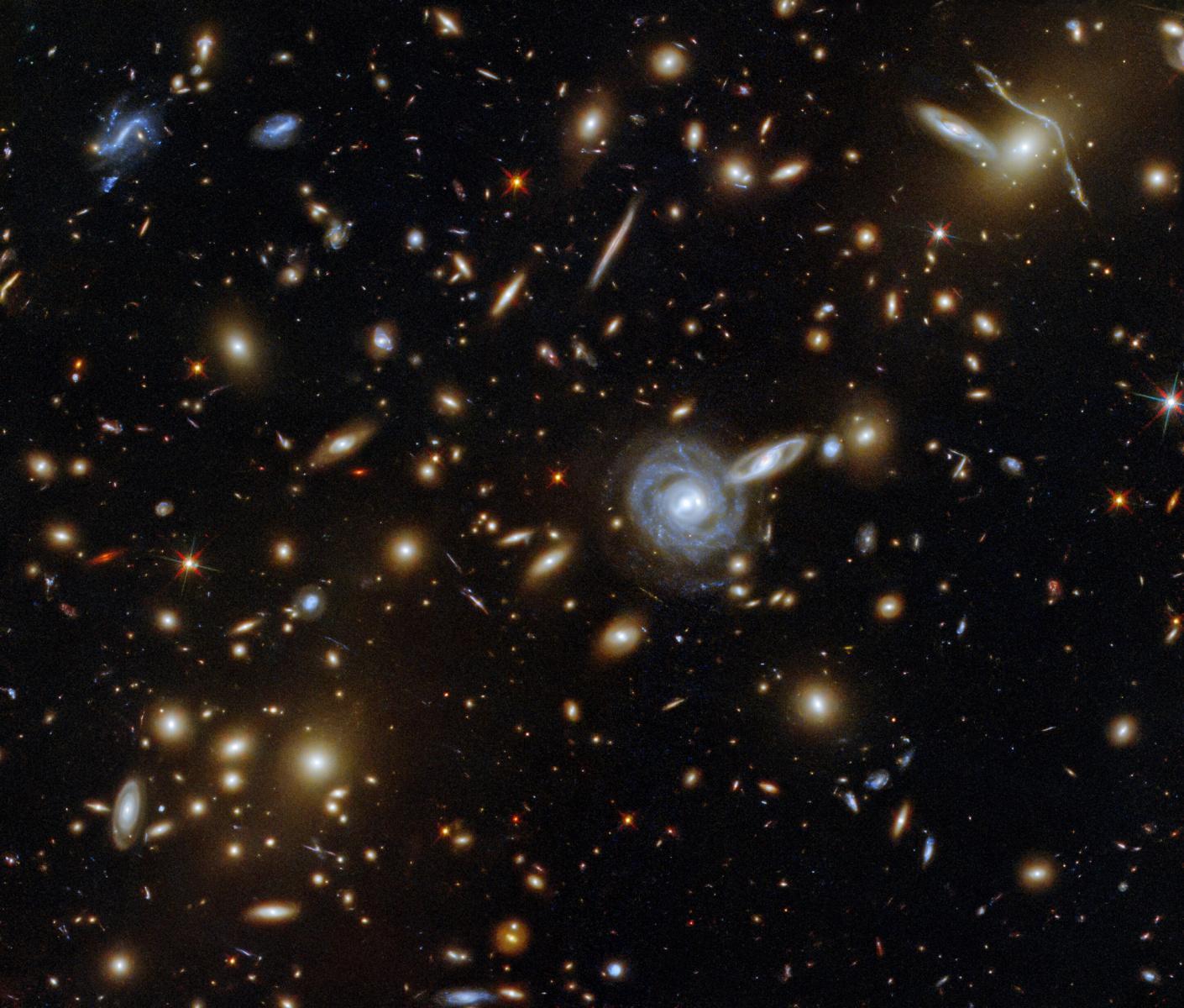
The Hubble swarm of galaxies has captured the awe of scientists and space enthusiasts alike. Recently, NASA’s Hubble Space Telescope unveiled a stunning image that showcases this densely packed cluster, one of the largest structures in the universe. In this spectacular view, the immense gravitational forces of the galaxies bend and magnify light from distant celestial bodies that lie behind them. This phenomenon, known as gravitational lensing, not only illuminates far-off galaxies but also reveals the intricate distribution of matter within the galaxy cluster. As these massive structures create significant space-time distortions, they open new avenues of understanding in our exploration of the cosmos.
The remarkable formation of galaxies, often referred to as a celestial swarm, encapsulates a collection of cosmic entities embedded in one of the universe’s colossal structures. With the assistance of the advanced NASA Hubble telescope, astronomers are able to observe this cluster in astounding detail. The property of gravitational lensing enables researchers to track the bending and magnifying effects of these prominent cosmic forms on light from more distant objects. This allows scientists to probe deeper into the nature of massive structures in space and shed light on the unseen matter that contributes to their composition. As these galaxy clusters warp the fabric of space-time, they serve as natural laboratories for understanding the vast and intricate universe around us.
Exploring the Hubble Swarm of Galaxies
NASA’s Hubble Space Telescope has once again pushed the boundaries of our understanding of the universe with its striking image of a swarm of galaxies. This collection of galaxies, varying in shape and size, reflects a vivid snapshot of cosmic evolution. By capturing myriad forms within this gravitationally bound cluster, the Hubble demonstrates the stunning diversity of galactic structures, from elliptical giants to spirals with prominent arms. Each galaxy in this cosmic ensemble tells its own story, shaped by interactions and the immense gravity exerted by its massive neighbors.
The Hubble’s keen observations not only showcase the visual beauty of these galaxies but also provide essential data for astronomers. The intricate gravitational relationships within the swarm enable scientists to study the dynamics of galaxy formation and eventually, the large-scale structure of the universe. As these galaxies compete for gravitational dominance, they contribute to a relatively recent understanding of how matter interacts on both a galactic and universal scale.
The Mechanism of Gravitational Lensing in Galaxy Clusters
One of the most captivating outcomes of the Hubble’s observations is the phenomenon of gravitational lensing. This occurs when massive structures, like galaxy clusters, warp the fabric of space-time, causing light from more distant galaxies to bend and magnify. Hubble’s capacity to capture these events offers a direct glimpse into the hidden universe, revealing galaxies that would otherwise remain undetected. The intricacies of this light distortion not only enhance our viewing capabilities but also serve as a tool for measuring the mass within these galactic gatherings, shedding light on the elusive dark matter.
Gravitational lensing enables astrophysicists to map the distribution of matter within galaxy clusters, including both visible and dark components. By studying how light paths distort, researchers can infer the total mass of these cosmic entities, advancing our comprehension of the universe’s structure. This remarkable process not only illustrates the interconnectedness of cosmic systems but also exemplifies the complex physics governing massive structures in space. Through Hubble’s visionary lens, we gain insights into the vastness and intricacy of our universe.
Implications of Hubble’s Study on Cosmic Evolution
Hubble’s in-depth analysis of the swarm of galaxies opens new avenues for understanding cosmic evolution. The insights gained from examining the formation and interaction of these galaxies improve our knowledge of the universe’s emergent properties. The unique composition of each galaxy, combined with the influences of neighboring galaxies, allows scientists to trace back the evolutionary history of the cosmos. This connects the present-day observations with theorized events from billions of years ago, illuminating the paths of star formation and merger events that have shaped the universe.
Moreover, studying such massive structures enriches our understanding of dark matter and its role in shaping the universe. The Hubble’s findings suggest that the gravitational influences exerted by dark matter significantly contribute to the formation and stability of these galactic clusters. By leveraging the power of next-generation telescopes alongside Hubble’s capabilities, the astronomical community continues to piece together the vast puzzle of cosmic history, helping to establish a clearer narrative of the universe’s evolution.
The Importance of Infrared Observations in Cosmic Studies
Hubble’s capabilities extend beyond the visible spectrum, allowing scientists to harness the power of infrared observations. Features that evade detection in visible light can become visible and clearer at infrared wavelengths. This is crucial for analyzing galaxies embedded within dense clusters, where intergalactic dust and gas can obscure light. The Hubble’s ability to penetrate these obscuring barriers unveils critical details about the structural composition and age of the galaxies, leading to more profound insights regarding their evolutionary paths through cosmic time.
With its advanced infrared instruments, the Hubble telescope can observe and categorize galaxies that are significantly distant and faint, thus broadening our understanding of the timing of galaxy formation. These observations are instrumental in discerning the relationships between galaxies in clusters and their distant counterparts, helping researchers outline their growth patterns and interactions over billions of years. Such detailed studies pave the way for future astronomical investigations, which aim to unravel the mysteries surrounding the origins of galaxies and their eventual fate.
Understanding Massive Structures in Space Through Hubble’s Lens
Understanding massive structures in space, such as galaxy clusters, is pivotal to modern astrophysics. Observations made by the Hubble Space Telescope have provided profound insights into how these colossal entities form and evolve. The intricate gravitational interplay between galaxies within a cluster not only determines their individual trajectories but also plays a significant role in the growth of the structure itself. Hubble captures the symphonic dance of stars and gas, painting a detailed picture of these formidable structures that hold the key to various cosmic phenomena.
Through its observations, Hubble has redefined our comprehension of how large-scale structures like galaxy clusters impact their surrounding environments. As clusters hold immense quantities of dark matter and gas, they serve as laboratories for exploring fundamental questions about the universe’s evolution. By theorizing how these structures influence the growth and behavior of galaxies, we gain insight into the nature of gravity and its role in cosmic architecture. Hubble’s contributions continue to illuminate the vital connections between cosmic structures and the broader universe.
The Evolutionary Path of Galaxies Within Clusters
The evolutionary path of galaxies is a fascinating subject, one that Hubble has explored extensively through its observations of galaxy clusters. Within these cosmic gatherings, galaxies undergo a myriad of transformations influenced by gravitational interactions, mergers, and environment. As galaxies collide and assimilate, they can morph from spiral forms into elliptical shapes over vast timescales, illustrating the dynamic character of galactic evolution. The Hubble’s detailed surveys allow astronomers to map these changes, deepening our understanding of galaxy life cycles.
Additionally, studying the evolutionary pathways of galaxies within clusters contributes insights into the broader theoretical frameworks of cosmology. These observations help scientists hypothesize about the initial conditions of the universe and how such conditions fostered the rich tapestry of formations we observe today. The intricate dance of galaxies also points to the ubiquitous influence of dark matter in shaping each galaxy’s narrative, as the gravitational pull from unseen mass alters the course of development across cosmic history.
Hubble’s Unveiling of Cosmic Mysteries Using Advanced Technology
The technologies employed by the Hubble Space Telescope have been pivotal in unveiling the mysteries of the cosmos. With its high-resolution cameras and spectrographs, Hubble captures detailed images and spectral data that enhance our understanding of distant objects and larger cosmic structures. Groundbreaking advancements in these instruments allow scientists to detect subtle variations in light, leading to discoveries that reshape our understanding of the universe and its fundamental components.
From revealing hidden galaxies to penetrating dust clouds surrounding nascent stars, Hubble’s technological prowess has reshaped the landscape of contemporary astronomy. Each observation contributes to a greater understanding of the intricacies of the universe, laying the groundwork for future explorations with next-generation telescopes. As technology continues to evolve, Hubble’s legacy will undoubtedly inspire further developments in space science, pushing the frontiers of what we know about the cosmos.
The Role of Hubble in the Continued Study of Galaxy Formation
Hubble’s role in the ongoing study of galaxy formation is invaluable, providing a wealth of data that informs much of current astronomical research. By meticulously observing various galaxy clusters, Hubble enables scientists to seek correlations between environment, morphology, and evolution. These observations help clarify the processes of galactic assembly, including the impact of gravitational forces and interactions on galaxy shape and development. Thus, Hubble stands as a key player in unraveling the processes that govern galactic formation.
The insights gained from Hubble observations also fuel theoretical models that seek to explain the formation of structures in the universe. As the telescope continues to provide rich data on galaxy distributions and properties, astronomers can refine their simulations of cosmic evolution. This symbiotic relationship between observation and theory is essential, fostering a deeper understanding of the origins of the galaxies that populate our universe and helping scientists piece together the intricate puzzle of cosmic history.
Impacts of Hubble’s Discoveries on The Future of Astronomy
The discoveries made by the Hubble Space Telescope have profound implications for the future of astronomy. As Hubble reveals the vastness and complexity of the universe, researchers are prompted to refine their investigative approaches and harness more advanced technology to probe further beyond the observable realm. Hubble acts as both a foundation stone and a guide for the next generation of space telescopes, influencing upcoming missions designed to explore cosmic phenomena at unprecedented scales.
These ongoing advancements in astronomy aim to eliminate existing gaps in our understanding and explore uncharted domains within the universe. Hubble’s legacy serves as an inspiration to scientists and enthusiasts alike, reinforcing the importance of curiosity and inquiry in unraveling cosmic mysteries. Every new observation adds to the ever-growing tapestry of knowledge, paving the way toward exciting revelations about the origins and complexities of the cosmos we inhabit.
Frequently Asked Questions
What is the significance of the Hubble swarm of galaxies observed by NASA?
The Hubble swarm of galaxies represents one of the universe’s largest structures, showcasing a dense collection of galaxies whose gravitational forces not only bend light but also magnify distant celestial objects. This gravitational lensing allows scientists to study the distribution of mass within galaxy clusters, including dark matter that is not directly observable, enhancing our understanding of cosmic evolution and structure.
| Key Points | Details |
|---|---|
| Hubble sees a swarm of galaxies | NASA’s Hubble Space Telescope has captured a detailed image of a massive structure filled with numerous galaxies. |
| Gravitational lensing | The gravity of these galaxies bends and magnifies light from more distant cosmic objects. |
| Distribution of matter | By measuring light bending, scientists can estimate the distribution of visible and dark matter within the cluster. |
| Infrared wavelengths | Features difficult to detect in visible light are revealed in infrared, aiding in tracing cosmic structures’ evolution. |
| Insights into the universe | Hubble’s observations of the swarm of galaxies provide crucial data about the structure and evolution of the universe. |
Summary
The Hubble swarm of galaxies represents a stunning glimpse into one of the universe’s largest and most intriguing structures. This densely packed cluster not only showcases a diverse array of galaxies but also plays a pivotal role in the phenomenon of gravitational lensing. As Hubble observes these galaxies, it utilizes their immense gravitational fields to unveil hidden cosmic objects that are otherwise obscured from our view. Moreover, the ability to analyze the paths of light bending allows scientists to map the distribution of both visible and dark matter within these galactic structures. By employing infrared observations, Hubble reveals critical details about the formation and evolution of cosmic systems, deepening our understanding of the universe’s architecture. This exploration not only ignites curiosity but also enhances our knowledge of how galaxies interact and evolve across vast cosmic distances.



























