

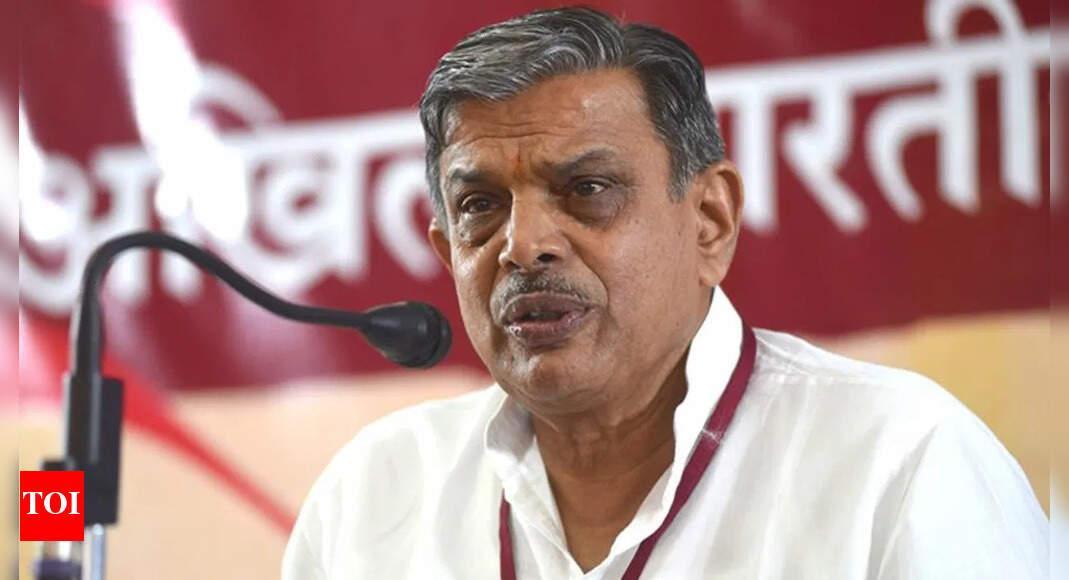
Rashtriya Swayamsevak Sangh (RSS) chief Mohan Bhagwat recently addressed a meeting in Thiruvananthapuram, commemorating the centenary of the organization. His remarks came amidst discussions sparked by the general secretary, Dattatreya Hosabale, who advocated for renewed India-Pakistan dialogue, igniting debate within political circles. Bhagwat unambiguously supported Hosabale’s comments, emphasizing the importance of open communication while affirming that the RSS does not dictate an independent foreign policy. Instead, the RSS aligns its perspective with the Bharatiya Janata Party (BJP) and the central government’s stance on international relations, particularly concerning neighboring Pakistan. In light of these discussions, Bhagwat’s speech highlights the organization’s evolving role in shaping national dialogue around sensitive issues.
In recent dialogues, the chief of the Rashtriya Swayamsevak Sangh, Mohan Bhagwat, has taken center stage in discussions regarding India’s foreign relations, notably its stance towards Pakistan. The ongoing conversations advocate for diplomacy and dialogue, particularly following the controversial statements made by Dattatreya Hosabale about engaging in talks with Pakistan. This discourse illustrates a shift in strategic narratives, as the BJP and RSS navigate complex geopolitical landscapes without declaring independent foreign policies. As the RSS marks 100 years of its establishment, Bhagwat’s endorsements of such dialogues resonate with broader questions of national integrity and security. These topics not only invoke discussions about governance but also about the cultural frameworks that define India’s approach on the global stage.
Mohan Bhagwat Advocates for Dialogue in South Asia
During a recent lecture in Thiruvananthapuram, RSS chief Mohan Bhagwat emphasized the importance of maintaining communication channels in South Asia, particularly stating that India should not completely shut the door to dialogue with Pakistan. This statement came in light of a controversial remark made by Dattatreya Hosabale, the organization’s general secretary, advocating for talks with Pakistan. Bhagwat’s call represents a significant shift in the discourse within the RSS, aligning with a more conciliatory approach towards India’s neighboring countries while upholding national security concerns.
The underlying message from Bhagwat reflects a nuanced understanding of regional dynamics and the necessity of diplomatic engagement. By supporting Hosabale’s view, Mohan Bhagwat positions the RSS more in line with broader sentiments that prioritize dialogue as a means of conflict resolution. This approach not only highlights challenges in the bilateral relations between India and Pakistan but also resonates with calls for peace and stability in the region, crucial for fostering economic and social development.
The Role of RSS in Shaping BJP Foreign Policy
The Rashtriya Swayamsevak Sangh plays a pivotal role in shaping the ideological framework within which the Bharatiya Janata Party (BJP) operates, particularly regarding foreign policy strategies. Key figures like Mohan Bhagwat and others within the RSS contribute to a chorus that aligns with the central government’s stance, ensuring that any international dialogue, especially concerning Pakistan, adheres to national interests and security protocols. Despite the controversy surrounding the idea of dialogue, the RSS’s influence suggests a commitment to a balanced approach in geopolitical discussions.
Furthermore, the RSS’s assertion that it does not possess an independent foreign policy underscores its strategic alignment with the Indian government under the BJP. This symbiotic relationship ensures that messages coming from the RSS, such as those encouraging dialogue with Pakistan, are carefully framed to reflect the government’s official position. As a result, statements by leaders like Mohan Bhagwat and Dattatreya Hosabale become critical touchpoints in understanding the broader implications for India’s diplomatic engagements, particularly in times of heightened tension.
Understanding the Controversy Around India-Pakistan Dialogue
The dialogue concerning India and Pakistan has historically been fraught with tensions, and recent remarks from RSS leaders have reignited this debate. While Dattatreya Hosabale’s suggestion to engage in talks with Pakistan may seem progressive, it is layered with complexities specific to historical grudges and national security dilemmas. Mohan Bhagwat’s support for this stance signifies not only a departure from more hardline perspectives traditionally held by some factions but also an acceptance that dialogue could potentially ease long-standing hostilities.
Critics argue that any discourse with Pakistan must be approached with caution, given the unique challenges and conflicts present. However, advocates for dialogue, including Bhagwat and Hosabale, believe that reconciliation is essential for long-term peace. They posit that addressing issues diplomatically rather than through military means could pave the way for a more stable South Asian region, emphasizing the significance of sustained conversations and mutual respect.
Impact of RSS Leadership on Indian Politics
Mohan Bhagwat’s recent speech in Kerala, which marked a pivotal moment for the RSS, showcases the organization’s growing influence on contemporary Indian politics. As the RSS chief, Bhagwat’s words carry substantial weight, not only within the organization but also in the political framework of the BJP, which often seeks to balance nationalist sentiments with pragmatic governance. The perceived shift in rhetoric around India-Pakistan relations signals a possible redefining of traditional hardline stances, mirroring the evolving political landscape.
This leadership dynamic is crucial as it shapes public perception and influences policy decisions. With leaders like Bhagwat advocating for dialogue while still aligning with the BJP’s broader foreign policy, there is potential for a strategic recalibration that could alter future engagements with neighboring nations. This underscores the powerful role that the RSS continues to play in molding the narrative around national security while seeking to navigate complex diplomatic relationships.
Dattatreya Hosabale: A Catalyst for Change within RSS
Dattatreya Hosabale’s comments advocating for dialogue with Pakistan have positioned him as a potentially transformative figure within the RSS. By openly challenging the status quo, Hosabale has sparked discussion among traditionalists and modernists within the organization regarding the best approach to foreign policy. His beliefs that dialogue is necessary for peaceful coexistence resonate with key demographics within India who seek a move away from perpetual hostility.
This progressive stance suggests that Hosabale is not just a follower of established RSS ideologies but rather a leader who may push for a more nuanced approach to national and regional issues. His alignment with Mohan Bhagwat further suggests a united front that could serve to recalibrate the RSS’s influence in Indian politics and its relationship with the BJP, ultimately aiming for an empowered India that balances assertive nationalism with diplomatic engagement.
The Future of India-Pakistan Relations in Light of RSS Views
As we look towards the future of India-Pakistan relations, the voices emerging from the RSS, particularly those of Mohan Bhagwat and Dattatreya Hosabale, will undoubtedly play a significant role. Acknowledging the challenges faced, the RSS’s advocacy for dialogue could open avenues for renewed talks, provided that both nations are willing to engage in constructive dialogue free from animosities of the past. This potential shift signifies a desire for peace and collaboration rather than continued confrontation.
The future interactions will likely reflect the balancing act that the RSS and BJP must perform—maintaining nationalistic fervor while seeking opportunities for dialogue. The key lies in fostering a political climate that encourages meaningful communication, which can lead to breakthroughs in long-standing disputes. With Mohan Bhagwat’s influence, there is hope for a recalibrated strategy towards Pakistan that could reshape the trajectory of bilateral relations in the years to come.
Analyzing the RSS’s Long-term Vision for South Asia
The RSS has long envisioned a transformed South Asia, where nations collaborate to address mutual concerns such as economic development, security, and regional stability. Mohan Bhagwat’s recent speeches have hinted at this broader vision, which places India as a potential leader in fostering a cooperative regional environment. By supporting open dialogues with countries like Pakistan, the RSS may aim to establish a foundation for a more integrated South Asian community.
This long-term vision necessitates a re-evaluation of entrenched ideologies and a willingness to engage in dialogue, even with adversaries. The challenge remains in balancing national security with diplomatic engagement. However, if the RSS continues to promote a progressive vision under leaders like Bhagwat and Hosabale, the potential for a more harmonious South Asia could become a tangible reality, benefiting millions across the region.
RSS and Its Societal Impact on National Politics
The impact of the Rashtriya Swayamsevak Sangh extends beyond politics into the social fabric of India, demonstrating how ideology shapes public sentiment and policy. The leadership of Mohan Bhagwat has been instrumental in aligning the goals of the RSS with the broader aspirations of Indian society, particularly among its youth and grassroots movements. As issues such as relations with Pakistan become prominent, the RSS could leverage its societal influence to garner support for its vision of dialogue-oriented politics.
By engaging communities in discourse about peace and cooperation, the RSS’s approach may resonate with citizens who prioritize harmony over conflict. This grassroots engagement can effectively translate into political capital for the BJP, as public opinion increasingly favors diplomatic methods to resolve tensions. Thus, the RSS aims to not only shape policy but also foster a cultural narrative that values dialogue and reconciliation in the pursuit of national unity.
Conclusion: The Changing Landscape of RSS Ideology
The discussions around dialogue with Pakistan, spearheaded by figures like Mohan Bhagwat and Dattatreya Hosabale, signify a remarkable shift in RSS ideology as it adapts to contemporary challenges. This evolution reflects broader societal sentiments in India, navigating through nationalistic fervor while allowing space for diplomacy. The RSS, with its extensive network and societal influence, stands at the forefront of shaping India’s narrative concerning international relations.
As we observe these ideological shifts, it becomes apparent that the RSS is not merely a political entity but a living organism that evolves with the changing political landscape. The potential for fostering constructive dialogue with Pakistan could act as a litmus test for the RSS, challenging its members to embrace a forward-thinking approach while ensuring that the overarching goals of national integrity and security remain intact.
Frequently Asked Questions
What is Mohan Bhagwat’s stance on India-Pakistan dialogue as expressed in recent speeches?
Mohan Bhagwat, the chief of the Rashtriya Swayamsevak Sangh (RSS), recently supported calls for dialogue with Pakistan made by RSS General Secretary Dattatreya Hosabale. During a lecture marking the 100-year celebrations of the RSS, Bhagwat emphasized that India should not completely shut the door on conversations with its neighbor, reflecting a nuanced view within the organization regarding foreign policy and regional relations.
| Key Points |
|---|
| Mohan Bhagwat’s lecture during RSS 100-year celebrations in Thiruvananthapuram |
| Support for Dattatreya Hosabale’s remarks about dialogue with Pakistan |
| BJP’s clarification on RSS not having an independent foreign policy |
Summary
RSS Mohan Bhagwat has played a pivotal role during significant events in the history of the Rashtriya Swayamsevak Sangh, as evidenced by his recent lecture marking the organization’s 100-year celebrations in Thiruvananthapuram. The gathering highlighted Bhagwat’s support for his general secretary Dattatreya Hosabale, who advocated for dialogue with Pakistan, a move that stirred considerable public debate. This situation underlines the RSS’s alignment with the Bharatiya Janata Party’s (BJP) foreign policy stance, reflecting the organization’s position on critical national and international issues. The atmosphere around these discussions reflects the RSS’s commitment to a cohesive approach toward India’s diplomatic relations, ensuring that it operates in synergy with the government while addressing controversial topics with a unified front.



























