

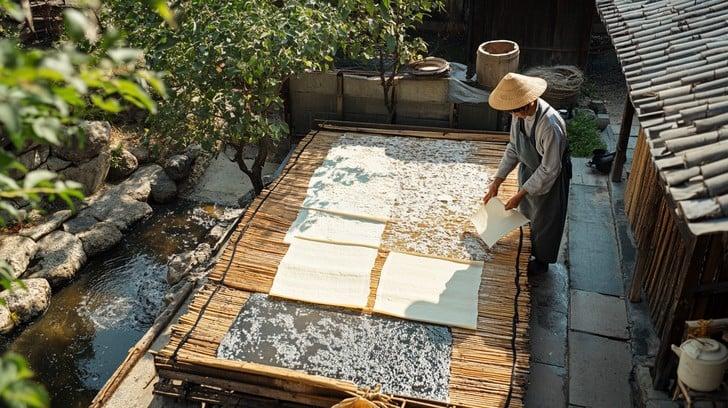
Mon Shugu paper, a testament to the rich heritage of Arunachal Pradesh crafts, has been meticulously handcrafted by the Monpa community for over a millennium. Nestled at breathtaking altitudes in Tawang, this unique paper-making tradition is revered for its durability and historical significance, particularly in the reproduction of sacred Buddhist manuscripts. The painstaking process involves using local shrubs and bamboo screens, culminating in sheets that can withstand the test of time in harsh mountain climates. Despite its rich history, many in India remain unaware of Mon Shugu paper’s crucial role in the transmission of culture and spirituality through traditional paper-making techniques. As demand for handmade paper resurges, this ancient art form offers a vibrant connection to the past and a hopeful glimpse into a sustainable future.
Renowned for its exquisite craftsmanship, the handmade paper tradition of Mon Shugu stands as a cultural emblem of the Monpa people, who have preserved this ancient art through generations. This traditional paper, often utilized for creating Buddhist texts and manuscripts, showcases the intricate methods of paper-making that have become synonymous with the region’s heritage. In a world increasingly dominated by mass production, these artisanal techniques not only reflect the natural resources of Arunachal Pradesh but also evoke the spiritual connection to the practices of remote Himalayan communities. As interest in artisanal crafts grows, the revival of Mon Shugu paper serves as a bridge between past and present, illustrating the vital role such crafts play in cultural preservation.
The Rich Craftsmanship of Arunachal Pradesh Crafts
Arunachal Pradesh is renowned for its rich cultural heritage and traditional crafts, particularly the unique handmade paper crafted by the Monpa community. This age-old technique has been passed down through generations, preserving the intricate processes involved in creating high-quality paper. Using local resources such as the inner bark of the Shugu Sheng shrub, artisans have maintained this traditional art form, making it integral to the region’s identity. The skillful hands that work on creating Mon Shugu paper incorporate techniques that echo a time when craftsmanship was not just a trade, but a way of life.
The craftsmanship observed in Arunachal Pradesh crafts is not limited to paper alone; it reflects a symbiotic relationship between the environment and culture. This relationship is visible in the materials used, from natural shrubs to ash water, showcasing sustainable practices that resonate with contemporary eco-friendly movements. By integrating tradition with modernity, the artisans of Arunachal Pradesh continue to inspire a new appreciation for handmade crafts, emphasizing the importance of preserving such artisanal knowledge in a rapidly changing world.
Mon Shugu Paper: A Testament to Tradition
Mon Shugu paper stands as a testament to the unwavering tradition of handmade paper-making in the Monpa community of Arunachal Pradesh. Revered not only for its durability but also for its historical significance, this paper has been the chosen medium for prized Buddhist manuscripts. Artisans have mastered the art of crafting paper that can withstand the ravages of time, featuring unique properties that ensure its longevity. As sacred texts inscribed onto Mon Shugu have survived for centuries, the paper itself symbolizes spiritual and cultural continuity within the Monpa community.
The revival of Mon Shugu paper-making in recent years, led by passionate locals and supported by initiatives aimed at cultural preservation, has breathed new life into this ancient craft. With renewed interest from the younger generation, there is hope that the intricate knowledge required for making Mon Shugu will continue to thrive. Workshops and training programs are now being established, allowing artisans to share their skills, ensuring that the tradition of making this special paper will flourish for future generations while keeping the spirit of the Monpa community alive.
The Monpa Community and Its Paper-Making Legacy
The Monpa community of Arunachal Pradesh, living in the idyllic heights of Tawang, has cultivated a remarkable legacy through their ancient paper-making traditions. For over a millennium, they have created Mon Shugu paper, an artisanal craft that reflects not just their skills but also their cultural and spiritual heritage. The community’s dedication to maintaining their traditional practices amidst modern challenges underscores their connection to this craft, which is seen as integral to their identity.
Despite facing competition from mass-produced paper, the Monpa community remains committed to their heritage. Recent efforts to revitalize this craft have brought together artisans, social workers, and cultural organizations, sparking a renewed interest in this unique tradition. By fostering a sense of community pride and resilience, the Monpa are not just preserving a way of life but are also inspiring future generations to take part in their cultural legacy, ensuring that the art of Mon Shugu paper-making continues to be celebrated.
The Importance of Handmade Paper Traditions
Handmade paper traditions, particularly those that have emerged in the remote areas like Arunachal Pradesh, offer invaluable insights into cultural practices and environmental stewardship. These traditions, such as those observed in the creation of Mon Shugu paper, highlight the combination of artistry and sustainability, where local resources are utilized to create something enduring and meaningful. Each sheet of paper carries with it a unique narrative of the land, its flora, and the people who dedicate their lives to this craft.
Moreover, the importance of these handmade paper traditions cannot be understated, especially in a world increasingly dominated by mass production. The delicate balance between preserving traditional methods while innovating for contemporary use is vital. Reviving interests in handcrafted goods, especially among the youth, can bridge the gap between history and modernity, encouraging a deeper appreciation for the skills and stories behind such crafts. As more people seek authentic experiences, the rich heritage of handmade paper-making traditions shines brightly, offering pathways to sustainable practices and cultural pride.
Buddhist Manuscripts and Mon Shugu Paper
Mon Shugu paper has played a significant role in the preservation of Buddhist manuscripts, reflecting the spiritual essence of the Monpa community. Traditionally used for inscribing sacred texts, this handmade paper’s durability and resistance to decay made it the ideal choice for monks and scholars. The ability of Mon Shugu to survive for centuries without fading ensures that the teachings and rituals of Buddhism continue to be recorded and shared across generations, highlighting the importance of quality materials in religious practices.
The connection between Mon Shugu paper and the production of Buddhist manuscripts showcases a unique intersection of art, spirituality, and tradition. As these manuscripts are not merely texts, but vessels of culture and belief, the quality of the paper used is paramount. Recent initiatives aiming to revive Mon Shugu production emphasize not only the technical aspects of paper-making but also the cultural narratives that these manuscripts embody. By fostering a renaissance in the crafting of Mon Shugu paper, the Monpa community reaffirms their devotion to their heritage and religious practices.
Sustainable Practices in Traditional Paper-Making
Sustainability is at the heart of traditional paper-making practices found in Arunachal Pradesh, particularly with the Monpa community’s production of Mon Shugu paper. By utilizing local materials like the inner bark of the Shugu Sheng shrub and employing natural methods for processing, the artisans minimize their ecological footprint. This approach reflects a deep understanding of the interconnectedness between their craft, the environment, and the need for preserving natural resources for future generations.
Furthermore, the sustainable practices adopted by the Monpa paper-makers serve as a powerful example within contemporary discourse on environmental conservation. The use of biodegradable materials and the avoidance of harmful chemicals commonly found in industrial paper production resonate strongly with today’s eco-conscious consumers. As the world seeks greener alternatives, the lessons learned from the Monpa community’s traditional methods can inspire broader shifts towards sustainable and ethical practices in various industries, emphasizing the relevance of artisanal crafts in the modern economy.
Revitalization Efforts for Monpa Handmade Paper
Revitalization efforts for the Monpa handmade paper craft have gained momentum in recent years, driven by a collective commitment to preserving their cultural heritage. Recognizing the threat posed by industrial paper products, local artisans, social activists, and cultural organizations have collaborated to create initiatives aimed at reinvigorating interest in Mon Shugu paper. These programs focus on educating the community about the historical significance of their craft while promoting its relevance in today’s marketplace.
Workshops and training sessions have been established, allowing younger members of the community to learn the intricacies of Mon Shugu production. By providing hands-on experience and practical knowledge, these initiatives foster a sense of pride and continuity among the Monpa people. Additionally, as the demand for artisanal products increases, the revival of Mon Shugu paper can also support local economies, creating new opportunities for the generation while ensuring the sustainability of this treasured craft.
Cultural Significance of Mon Shugu Paper in Arunachal Pradesh
The cultural significance of Mon Shugu paper in Arunachal Pradesh extends beyond its utility as a writing medium; it is woven into the very fabric of Monpa identity and spirituality. This paper, used for recording prayers and sacred texts, holds profound meaning for the community as a physical representation of their beliefs and traditions. The meticulous process involved in its creation also underscores the respect for craftsmanship, where every detail speaks to a long lineage of knowledge and reverence.
As the world becomes more homogenous with globalization, the preservation of such unique cultural artifacts like Mon Shugu paper becomes vital. These documents not only serve religious purposes but also encapsulate the rich heritage and stories of the Monpa people. By fostering awareness and creating avenues for cultural exchange, this ancient craft can find its rightful place in the larger narrative of world heritage, helping communities across the globe to appreciate the richness that arises from maintaining local traditions.
The Future of Handmade Paper Traditions
Looking to the future of handmade paper traditions, particularly those exemplified by Mon Shugu paper, presents both challenges and opportunities. As modernity continues to influence the artisanal landscape, the need for innovation while maintaining authenticity becomes paramount. Local artisans in Arunachal Pradesh are exploring new techniques and designs that integrate traditional methods with contemporary aesthetics, appealing to both local and global markets.
Additionally, creating awareness about the ecological benefits of handmade paper can cultivate a more conscious consumer base. As people increasingly seek sustainable options, the story behind Mon Shugu paper can resonate deeply, attracting those who value both quality craftsmanship and environmental responsibility. The future of handmade paper traditions rests on the ability of communities to adapt while staying true to their roots, ensuring that treasures like Mon Shugu not only survive but thrive in the years to come.
Frequently Asked Questions
What is Mon Shugu paper and its significance in Arunachal Pradesh crafts?
Mon Shugu paper is a traditional handmade paper crafted by the Monpa community in Arunachal Pradesh. This unique paper is revered for its durability and ability to preserve Buddhist manuscripts for centuries, making it crucial in the region’s cultural heritage and spiritual practices.
How is Mon Shugu paper made using traditional techniques?
Mon Shugu paper is made from the inner bark of the Shugu Sheng shrub. The bark is boiled in ash water, beaten into a pulp, spread on bamboo screens, and dried naturally under the sun. This meticulous process highlights the unique handmade paper traditions of the Monpa community.
What role does Mon Shugu paper play in Buddhist manuscripts?
Mon Shugu paper has historically been used to create sacred Buddhist manuscripts, as its durable sheets can survive the test of time without tearing or fading. This makes it an essential material for monks and scholars across Buddhist monasteries.
Why is the craft of Mon Shugu paper making at risk?
The traditional craft of Mon Shugu paper making faced decline due to the influx of cheap industrial paper, which overshadowed handmade paper traditions. However, efforts have been made to revive this 1,000-year-old craft and support the artisans in Arunachal Pradesh.
How are local communities working to revive Mon Shugu paper making today?
In recent years, initiatives led by social workers and organizations have helped establish a Monpa handmade paper unit in Tawang, Arunachal Pradesh. This has provided opportunities for local artisans, particularly women, to relearn and practice the art of producing Mon Shugu paper.
What cultural heritage does Mon Shugu paper represent for the Monpa community?
Mon Shugu paper embodies the rich cultural heritage of the Monpa community in Arunachal Pradesh. It serves as a link to their historical practices, religious beliefs, and the transmission of knowledge through centuries, particularly in the context of Buddhist rituals and teachings.
Where can I find Mon Shugu paper for purchase or support local artisans?
Mon Shugu paper can often be found at local markets in Arunachal Pradesh, and various online platforms may also offer it to support the artisans. Purchasing directly from local producers helps sustain the tradition of handmade paper making in the region.
What makes Mon Shugu paper unique compared to other types of paper?
The uniqueness of Mon Shugu paper lies in its handmade production process, natural ingredients, and exceptional longevity. Unlike conventional papers, Mon Shugu can withstand harsh mountain climates, making it ideal for preserving important texts and manuscripts.
Are there any workshops available to learn about Mon Shugu paper making?
Yes, local initiatives in Arunachal Pradesh sometimes offer workshops and hands-on experiences related to Mon Shugu paper making. Engaging in such activities helps promote the craft and offers a deeper understanding of the Monpa community’s traditions.
What is the importance of preserving Mon Shugu paper traditions?
Preserving Mon Shugu paper traditions is vital for maintaining the cultural identity and heritage of the Monpa community. It ensures the continuity of unique craftsmanship that has been practiced for over a millennium and upholds the significance of Buddhist cultural practices.
| Key Point | Details |
|---|---|
| Location | Tawang, Arunachal Pradesh, at over 10,000 feet altitude |
| Craft’s History | Mon Shugu paper-making has been practiced for over 1,000 years by the Monpa community. |
| Materials Used | Made from the inner bark of the Shugu Sheng shrub, boiled in ash water to create pulp. |
| Unique Qualities | Survives centuries without tearing, fading, or decaying, ideal for sacred Buddhist scriptures. |
| Historical Importance | Supplied paper to Buddhist monasteries across Tibet and Bhutan via Himalayan trade routes. |
| Current Status | Craft faced decline due to mass-produced paper; revival efforts began in 2020 under Maling Gombu. |
| Revival Efforts | A handmade paper unit established in Tawang; local artisans and youth are relearning the craft. |
Summary
Mon Shugu paper is a vital part of the cultural heritage of Arunachal Pradesh that deserves wider recognition. This 1,000-year-old craft showcases the extraordinary skills of the Monpa community and highlights the importance of preserving traditional papermaking techniques in the face of industrialization. With renewed efforts to revive Mon Shugu, there is hope for the continuity of this unique art form that carries significant historical and spiritual value.



























