

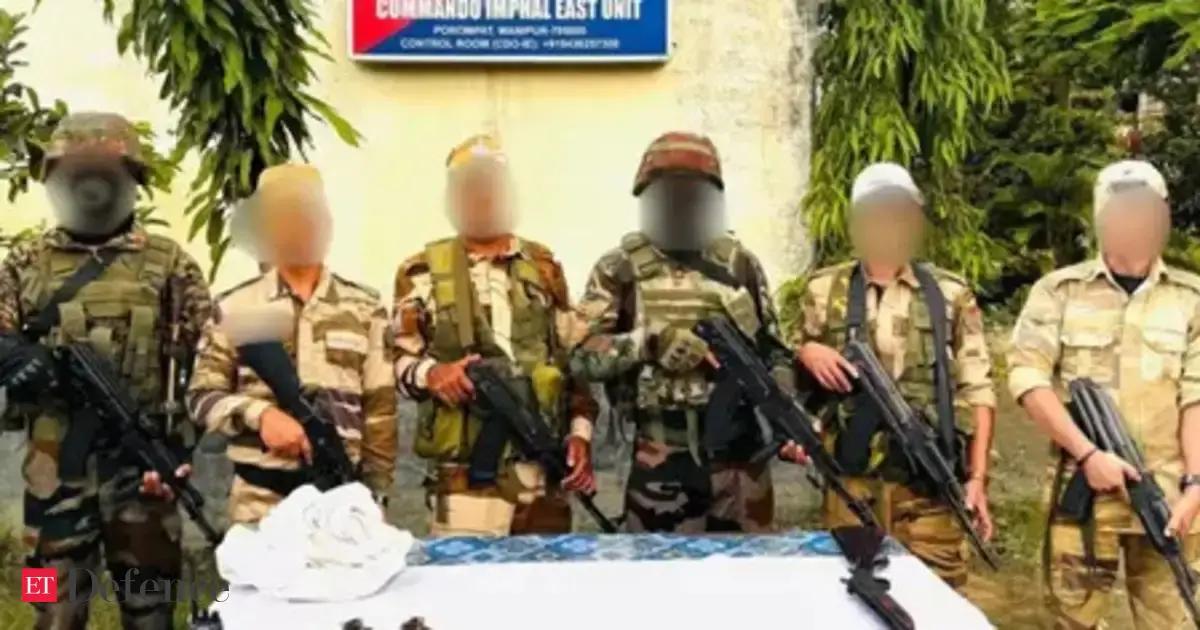
In a significant breakthrough, a Manipur militant was arrested by the Goa Crime Branch, marking the end of a two-decade-long pursuit. Nongthongbam Ingo, also known as Krishna or Lal, is a prominent figure within the proscribed insurgent group People’s Liberation Army (PLA) and had been absconding for 20 years under charges filed under the Unlawful Activities (Prevention) Act (UAPA). His arrest in Margao not only underscores the relentless efforts of law enforcement but also highlights the ongoing challenges posed by insurgencies in the region. Ingo’s apprehension stemmed from intelligence gathered during the arrest of two of his associates linked to an extortion case under UAPA in Manipur’s Thoubal district. This operation sheds light on the intricate web of insurgent activities that continue to affect the stability in Manipur and emphasizes the commitment of authorities in tackling such threats.
The recent capture of Nongthongbam Ingo, a notable member of a banned armed faction, has reverberated across law enforcement agencies in India. For years, this self-styled Lieutenant Colonel associated with the People’s Liberation Army (PLA) eluded authorities while allegedly engaged in unlawful activities under the stringent guidelines of the UAPA. His detention by the Goa Crime Branch not only illustrates the tenacity of police operations but also brings to the forefront the persistent issue of militancy in Manipur. As the case unfolds, it raises critical questions regarding the long-standing struggle against insurgent groups impacting regional security. This development serves as a stark reminder of the complexities involved in addressing radical and militant issues within the subcontinent.
Arrest of Manipur Militant: A Major Breakthrough
The recent arrest of Nongthongbam Ingo, a long-sought militant from the People’s Liberation Army (PLA), marks a significant breakthrough in law enforcement efforts to curtail insurgent activities in Manipur and beyond. The Goa Crime Branch’s action against Ingo, who had been evading authorities for two decades, highlights the persistent threat posed by insurgent groups in the region. His apprehension underlines the efficiency of the combined operations between the Manipur Police and Goa’s law enforcement, utilizing actionable intelligence to combat ongoing tensions fueled by these militant factions.
Ingo’s arrest under the Unlawful Activities (Prevention) Act (UAPA) is not merely a local incident but reflects a larger war against terrorism and militancy that has plagued northeastern India for years. His identification as a self-styled Lieutenant Colonel in the PLA reaffirms the intricate hierarchy within these insurgent groups and the need for systematic approaches to dismantle their structures. The implications of this arrest resonate well beyond the borders of Goa, signaling a commitment to national security and the rule of law.
The Implications of UAPA on Insurgent Activities
The Unlawful Activities (Prevention) Act, commonly referred to as UAPA, plays a crucial role in India’s legal framework to tackle insurgent activities and terrorism. The arrest of Nongthongbam Ingo under UAPA sets a precedent in prosecuting individuals associated with organized militant outfits such as the People’s Liberation Army (PLA). This act allows for severe repercussions for those engaged in terrorist acts or supporting terrorism, contributing to the overarching aim of preserving public order and national integrity.
Moreover, UAPA’s provisions include stringent measures aimed at preventing the growth of insurgent movements and dismantling their support networks. The capture of Ingo, particularly after other arrests linked to extortion cases under the same law, illustrates a concerted effort by law enforcement to disrupt financing and recruitment channels utilized by groups like the PLA. It is vital for police and judicial systems to rigorously implement UAPA to deter similar activities and provide a safer environment for citizens in sensitive areas like Manipur.
History and Activities of the People’s Liberation Army
Formed in the late 1970s, the People’s Liberation Army (PLA) has been a key player in the insurgency landscape of Manipur. Established with the goal of establishing a sovereign state for the Manipuri people, the PLA has conducted numerous operations against state forces, leading to ongoing violence and instability in the region. Understanding the origins and ideologies of such groups is essential in formulating effective counterinsurgency strategies.
The activities of the PLA have, over the years, involved not just direct confrontations with security forces but also illegal practices such as extortion and recruitment of young individuals into their ranks. The arrest of Nongthongbam Ingo signifies not only a blow to the operational capabilities of the PLA but also symbolizes a larger ideological battle against extremism. By curbing the influences of such insurgent groups, authorities aim to foster a more peaceful and secure environment for the local population in Manipur.
Goa Crime Branch Takes Decisive Action
The Goa Crime Branch’s role in apprehending Nongthongbam Ingo is commendable and showcases the importance of collaboration among various law enforcement agencies to confront organized crime and terrorism. By leveraging intelligence from Manipur police, Goa’s Crime Branch executed a successful operation that led to the swift capture of a long-wanted insurgent. Their actions reaffirm the commitment of law enforcement not just to local jurisdictions but to national security as a whole.
This operation not only emphasizes the proactive stance taken by the Goa Crime Branch but also reflects the extensive networks and resources available to disrupt militant plots. The efficiency and effectiveness displayed in tracking down Ingo ensure that similar insurgent activities will be scrutinized more rigorously in the future. Such decisive action serves as a deterrent for other militants operating in various states, pushing them towards reconsidering their paths.
Nongthongbam Ingo’s Background and Criminal History
Nongthongbam Ingo, also known by aliases like Krishna and Lal, has been a prominent figure within the People’s Liberation Army (PLA) for two decades. His extensive criminal history underlines the depth of his involvement in insurgent activities, notably in orchestrating attacks against security forces and maintaining the operational integrity of the PLA. His status as a self-styled Lieutenant Colonel further emphasizes the ascension of individuals within radical organizations who perpetuate violence for ideological ends.
Being on the run for so long not only illustrates Ingo’s evasion skills but also points to the operational challenges faced by law enforcement agencies over the years. His arrest is a beneficial leap toward unraveling the conspiracies and networks that sustain insurgent activity. As authorities dive deeper into his background and connections, there could be further arrests shedding light on the inner workings of the PLA and its recruitment strategies.
The Legal Journey Ahead for Ingo under UAPA
The apprehension of Nongthongbam Ingo under the UAPA initiates a pivotal phase in his legal journey as he faces serious charges related to terrorism and insurgency. With the backdrop of a 20-year pursuit, the proceedings will certainly draw significant attention both legally and socially, as the community navigates the implications of such a high-profile case. Legal experts predict that this case could set pivotal milestones in the enforcement of UAPA against insurgents and the broader interpretation of the law.
As the investigation progresses, the Goa Crime Branch will likely present evidence of Ingo’s affiliations and actions to substantiate the charges under UAPA. His fate will hinge on how effectively the prosecution can link him to terrorist activities and prove his involvement in crimes associated with the People’s Liberation Army. The outcome of this case could serve as a deterrence factor for insurgents operating in the region and reinforce the application of the law against organized crime and terrorism.
Community Reactions to the Arrest of Ingo
The arrest of Nongthongbam Ingo has sparked varied reactions from the local community in Goa and Manipur. Many citizens view this as a crucial step toward enhancing security and stability, especially considering the long-standing violence associated with the People’s Liberation Army (PLA). People express hope that such decisive actions against known militants would discourage other individuals from engaging in similar insurgent activities.
Conversely, there are voices of concern regarding the nature of policing and the enforcement of laws like UAPA, which some critics argue could lead to the misuse of power and target innocent individuals. However, community sentiments largely align in support of eradicating terrorism and insurgency. The overall atmosphere thus reflects a cautious optimism entwined with calls for transparency and accountability in operations against insurgent activities.
The Role of Intelligence in Combating Insurgency
The strategic use of intelligence has proven vital in combating insurgency within regions afflicted by groups such as the People’s Liberation Army (PLA). The successful operation that led to Nongthongbam Ingo’s arrest underscores how vital information-sharing among agencies can lead to significant breakthroughs. Law enforcement in Goa not only followed up on intelligence provided by Manipur but also utilized precise surveillance strategies to ensure Ingo’s capture without incident.
Effective intelligence work requires collaboration among diverse stakeholders, including law enforcement, anti-terrorism units, and community informants. The evidence gathered during previous arrests played a crucial role in tracing Ingo’s whereabouts, showing that a well-coordinated strategy can hinder the operations of insurgent factions. This case serves as an exemplar for ongoing and future operations aimed at dismantling larger networks supporting terrorism across India.
Future of Insurgent Groups in Manipur: Challenges Ahead
The arrest of Nongthongbam Ingo is but one of the many hurdles faced by insurgent groups operating in Manipur. The persistent efforts by law enforcement and the use of stringent laws like UAPA are creating significant challenges for these organizations. The apprehension is expected to impact recruitment drives and disrupt operational planning for groups such as the People’s Liberation Army (PLA). Without capable leaders like Ingo, the structural integrity of these insurgent factions may be severely compromised.
However, it is crucial to recognize that the challenges associated with insurgency are deeply rooted in socio-political complexities. For a comprehensive solution, the government needs to engage with communities and address underlying grievances that fuel insurgency. The balance between enforcing laws and fostering dialogue will be essential in paving the way for lasting peace and dissuading the resurgence of militant groups in the future.
Frequently Asked Questions
What led to the arrest of Nongthongbam Ingo, a Manipur militant wanted under UAPA?
Nongthongbam Ingo, a wanted member of the People’s Liberation Army (PLA) and self-styled Lieutenant Colonel, was arrested in Goa after being on the run for 20 years. His capture was facilitated by intelligence inputs that revealed his whereabouts following the arrest of two other insurgents linked to an extortion case under the UAPA.
What is the significance of the UAPA in the arrest of Manipur militants?
The Unlawful Activities (Prevention) Act (UAPA) is crucial in addressing militant activities, as it legally classifies actions that threaten national integrity and security. The arrest of Nongthongbam Ingo, charged under UAPA, underscores the government’s efforts to tackle insurgencies represented by groups like the People’s Liberation Army (PLA) in Manipur.
How has the Goa Crime Branch contributed to the arrest of Manipur militants like Ingo?
The Goa Crime Branch played a key role in apprehending Nongthongbam Ingo by acting on intelligence regarding his presence in Margao. Their proactive measures followed the earlier arrests of two individuals connected to a UAPA extortion case that ultimately provided leads to Ingo’s capture.
What impact will the arrest of Nongthongbam Ingo have on the insurgent group Manipur?
The arrest of Nongthongbam Ingo may hinder the operational capabilities of the People’s Liberation Army (PLA) in Manipur by removing a long-standing figure who had evaded law enforcement for 20 years. This could potentially disrupt their activities and discourage other militants.
What charges is Nongthongbam Ingo facing under the UAPA?
Nongthongbam Ingo faces serious charges under the Unlawful Activities (Prevention) Act (UAPA) related to his involvement with the People’s Liberation Army (PLA), a proscribed insurgent group actively engaging in militant activities against the state.
Why is Nongthongbam Ingo referred to as a self-styled Lieutenant Colonel of the PLA?
Ingo is described as a self-styled Lieutenant Colonel of the People’s Liberation Army (PLA) to indicate that he held a rank within the insurgent group without formal recognition or legitimacy, emphasizing his role within the militant organization active in Manipur.
What role did prior arrests play in the capture of the Manipur militant Ingo?
Prior arrests of two alleged insurgents in connection with an extortion case under the UAPA led to the acquisition of vital information that pinpointed Nongthongbam Ingo’s location, ultimately facilitating his arrest by law enforcement in Goa.
| Key Point | Details |
|---|---|
| Arrest Details | Nongthongbam Ingo, also known as Krishna and Lal, was arrested by the Goa Crime Branch in Margao, South Goa on June 19, 2026. |
| Background | Ingo is a member of the People’s Liberation Army (PLA), a proscribed insurgent group in Manipur, and had been on the run for 20 years. |
| Charges | He is facing charges under the Unlawful Activities (Prevention) Act (UAPA). |
| Intelligence Operation | His arrest came after police tracked his movements following intelligence inputs. |
| Previous Arrests | Authorities received information about Ingo after arresting two other insurgents connected to an extortion case under the UAPA. |
Summary
The recent arrest of a Manipur militant wanted under UAPA marks a significant breakthrough in law enforcement efforts. Nongthongbam Ingo, a member of the People’s Liberation Army, had successfully evaded authorities for 20 years before being apprehended in Goa. His capture underscores the effectiveness of intelligence operations and collaboration between police departments. Following his arrest, officials hope to further dismantle the network of insurgents operating in the region.



























