

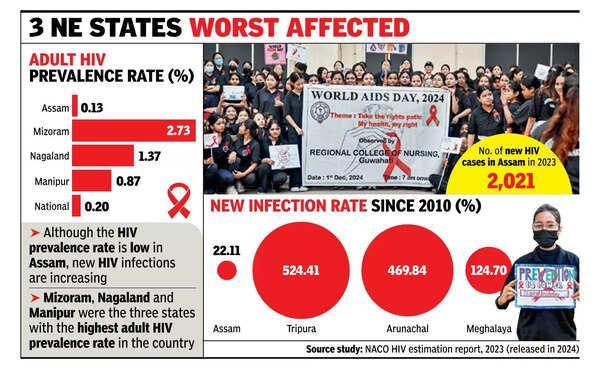
HIV prevalence Assam stands out alarmingly, making it the leading state in Northeast India with a significant number of people living with HIV (PLHIV). Current statistics reveal that approximately 33,145 individuals in Assam are affected by this condition, resulting in a prevalence rate of 0.13%. This situation highlights the critical public health challenge faced despite various HIV awareness campaigns and intervention strategies being implemented by the government. The alarming figures position Assam at the forefront of HIV cases compared to neighboring states like Mizoram, Nagaland, and Manipur. Understanding and addressing the root causes of these statistics is essential to enhancing HIV treatment Assam and ensuring a healthier future for those affected.
The state of Assam, located in Northeast India, is currently facing a pressing challenge with its high rates of HIV infection. As the state with the most substantial population of individuals living with HIV, or PLHIV, Assam’s situation exemplifies the complexity of combating this health crisis. Regional HIV statistics indicate a prevalence that underscores the need for effective treatment and preventative measures. Community-based initiatives and advocacy are critical to fostering awareness about HIV transmission and supporting those affected. The ongoing efforts to address Northeast India HIV cases demonstrate an urgent call for enhanced coordination among health authorities, NGOs, and local communities.
HIV Prevalence in Assam: A Growing Concern
Assam’s HIV prevalence not only highlights a public health crisis but also reflects the need for continued efforts in awareness and treatment. With 33,145 people living with HIV (PLHIV), Assam stands out within the Northeast due to its substantial population and unique geographical factors. The state’s estimated prevalence rate of 0.13 percent indicates a significant number of individuals affected, showcasing a disparity in healthcare access and societal support. The government and various organizations must prioritize research and outreach strategies that target this demographic effectively to improve health outcomes.
Moreover, the high HIV prevalence in Assam can be attributed to several socio-economic factors, including high mobility, urbanization, and migration patterns that lead to a lack of continuous healthcare. Addressing these factors requires a multifaceted approach that includes targeted HIV awareness campaigns aimed at both urban and rural populations. By fostering community involvement and providing education regarding transmission, prevention, and treatment options, we can mitigate the spread of HIV and support those living with the virus.
Understanding Assam HIV Statistics in the Northeastern Region
Examining Assam HIV statistics reveals not just the prevalence but also the demographic influences on the HIV epidemic in Northeast India. As the state with the highest number of PLHIV, Assam surpasses its neighbors, with substantial cases reported in Mizoram, Nagaland, and Manipur. This concentrated figure of HIV cases emphasizes the urgent need for comprehensive strategies that address the unique epidemiological landscape of Assam and its surrounding states. Moreover, understanding these statistics is crucial for policymakers to allocate resources effectively.
Furthermore, the rich tapestry of cultures in Assam also plays a role in shaping the response to HIV treatment and prevention. With variations in stigma, cultural practices, and healthcare accessibility across different communities, a one-size-fits-all solution may not be effective. Targeting campaigns that resonate culturally and educate the public about HIV can lead to better outcomes in terms of testing and treatment uptake. Stakeholders should focus on creating localized solutions that empower communities to engage actively in HIV prevention efforts.
The Role of Women in Assam’s HIV Statistics
Women make up a significant portion of Assam’s HIV statistics, emphasizing a critical aspect of the epidemic that deserves focused attention. With 6,809 women diagnosed as HIV-positive, almost half of the total cases in the Northeast are from Assam. This alarming statistic warrants tailored interventions that consider women’s unique vulnerabilities and promote gender-sensitive approaches to healthcare. Female empowerment, education, and accessible healthcare services are essential in combating the spread of HIV.
Additionally, the concerning trend of pregnant women testing positive for HIV in Assam requires immediate action to prevent parent-to-child transmission. Enhanced antenatal screening programs and treatment options must be prioritized to protect the health of mothers and their children. The emphasis on integrating maternal health services with HIV prevention is vital to ensure that no child is born with HIV. This holistic approach can significantly reduce new infections and support women living with HIV.
Impact of HIV Awareness Campaigns in Assam
HIV awareness campaigns play a crucial role in tackling the epidemic by educating the public about prevention and treatment. In Assam, efforts have become increasingly innovative, with campaigns like ‘Red Fest’ leading the charge to raise awareness through music and cultural performances. These initiatives challenge myths and misconceptions about HIV/AIDS, particularly among the youth, who are often the most vulnerable to misinformation. By capturing the attention of the younger demographic, these campaigns help foster a more informed society that advocates for HIV awareness.
Moreover, the integrated communication strategies deployed by the National AIDS Control Organisation (NACO) have proven instrumental in not only educating communities but also in reducing stigma associated with HIV. The incorporation of Information, Education and Communication (IEC) initiatives helps create a dialogue about HIV transmission and prevention, emphasizing the importance of testing and treatment. Continuous reinforcement of these messages through various media can lead to improved social acceptance and encourage individuals to seek the care they need.
HIV Treatment Access and Services in Assam
Access to HIV treatment services remains a critical issue in Assam, especially considering the high number of PLHIV. The state’s healthcare infrastructure must be fortified to ensure that antiretroviral therapy (ART) is available without interruption. Ensuring that individuals have easy access to medication is essential for managing the virus and maintaining a healthy quality of life. This requires not only government commitment but also collaborative efforts with local health organizations and community leaders to build trust and knowledge around HIV treatment.
In addition, the need for comprehensive treatment services goes hand-in-hand with ongoing education about HIV. By empowering communities through detailed information on how to navigate the healthcare system, individuals can better understand their treatment options and adhere to ART regimens. Providing training and resources to healthcare providers in Assam can further enhance the delivery of HIV treatment services, ensuring that those living with the virus receive the necessary care and support.
Combating Stigma Surrounding HIV in Assam
Stigma surrounding HIV continues to be a significant barrier to effective prevention and treatment efforts in Assam. Individuals living with HIV often face discrimination, which can deter them from seeking medical help or participating in community outreach programs. Tackling this stigma requires comprehensive advocacy to support acceptance and understanding in society. Community-driven initiatives that educate the public about HIV transmission and encourage empathy and support can change perceptions and reduce discrimination.
Furthermore, involving community leaders and influencers in these discussions can amplify the message and foster a more supportive environment for PLHIV. Educating individuals about the realities of living with HIV, combined with personal stories from those affected, can build a powerful narrative that challenges existing stereotypes. It is essential that such efforts be sustained to ensure a lasting change in community attitudes and ultimately improve health outcomes for those living with HIV in Assam.
Community Engagement in HIV Prevention Efforts
Engaging communities is vital for strengthening HIV prevention efforts in Assam. By involving local organizations and community leaders, the state can address specific needs and vulnerabilities related to HIV transmission. Tailoring interventions to fit the unique cultural and social contexts of different regions within Assam fosters ownership and promotes active participation in the fight against HIV. Such community engagement not only empowers individuals but also instills a sense of responsibility towards public health.
In addition, involving PLHIV and their families in prevention campaigns creates a platform for their voices to be heard. Their experiences can inform programs, ensuring they are relevant and effective in addressing real challenges faced by those living with HIV. Platforms for dialogue and support networks can encourage more people to come forward, seek testing, and participate in treatment programs, thereby reducing rates of transmission and enhancing overall community health.
Importance of Targeted Interventions for Vulnerable Populations
Targeting vulnerable populations in Assam is crucial for addressing the HIV epidemic effectively. Specific groups, including sex workers, men who have sex with men (MSM), and people who inject drugs (PWID), experience higher rates of HIV transmission. Customized interventions that consider the unique risks faced by these groups can significantly reduce incidence rates and enhance treatment adherence. Implementing harm reduction strategies and providing accessible health services tailored to these populations can make a meaningful impact.
Moreover, by creating safe spaces for vulnerable communities to seek help and receive education about HIV, misconceptions can be dispelled, and stigma can be reduced. Outreach healthcare teams can play an integral role in building trust and facilitating dialogue within these groups. Strengthening partnerships with NGOs and local organizations dedicated to these populations is key to developing effective prevention strategies and ensuring that resources are both available and utilized appropriately.
Future Directions for HIV Programs in Assam
Looking towards the future, the focus on HIV programs in Assam must shift towards innovative and sustainable solutions that utilize data-driven approaches to combat the epidemic. The ongoing collection and analysis of HIV statistics will inform effective public health policy and resource allocation. By maintaining a clear understanding of the evolving landscape of HIV prevalence in Assam, stakeholders can respond promptly and adaptively to emerging trends.
Additionally, encouraging collaborations between government agencies, non-profit organizations, and health experts can foster a comprehensive response to HIV. Multi-sectoral partnerships can help mobilize resources and ensure that community needs are met effectively. Ultimately, sustained commitment to education, prevention, treatment, and targeted interventions can pave the way for a future where the impact of HIV in Assam is significantly reduced.
Frequently Asked Questions
What is the current HIV prevalence in Assam as per recent Assam HIV statistics?
According to the Union Health Ministry’s report, as of 2025-26, Assam has an HIV prevalence rate of 0.13%, with approximately 33,145 people living with HIV (PLHIV) in the state, the highest among all Northeastern states.
How does Assam compare to other Northeastern states regarding HIV cases?
Assam leads the Northeastern states in HIV prevalence, with 33,145 PLHIV, followed by Mizoram with 26,321 cases, Nagaland with 23,731, and Manipur with 23,463, indicating significant public health challenges in the region.
What is being done to improve HIV awareness in Assam?
HIV awareness campaigns in Assam include state-specific multimedia strategies by the National AIDS Control Organisation (NACO), such as the ‘Red Fest,’ which uses cultural events to educate youth about HIV and combat stigma.
How are HIV treatment services structured in Assam?
HIV treatment in Assam is part of an integrated health strategy that includes prevention, care, and support services, focusing on minimizing stigma and providing uninterrupted access to antiretroviral therapy for those living with HIV.
What measures are taken to protect pregnant women from HIV in Assam?
To protect pregnant women from HIV in Assam, initiatives focus on timely antenatal screening and treatment, with dedicated programs aimed at preventing parent-to-child transmission, particularly significant given the reported 146 HIV-positive pregnant women in the state.
Why is there a higher number of women diagnosed with HIV in Assam?
Women account for a substantial portion of HIV infections in Assam due to various factors, including socio-economic conditions, stigma, and limited access to healthcare services, highlighting the need for targeted interventions.
What challenges does Assam face in combating HIV?
Assam faces challenges such as high mobility and migration, varying levels of healthcare access, and demographic factors that complicate HIV prevention and treatment efforts, necessitating continued community engagement and resource allocation.
What role do community leaders play in HIV control measures in Assam?
Community leaders are crucial in HIV control measures in Assam, participating in advocacy, capacity-building programs, and facilitating inter-departmental coordination to enhance local ownership and acceptance of HIV initiatives.
| Key Indicators | Statistics and Insights |
|---|---|
| HIV Prevalence in Assam | 0.13% of the population, with 33,145 people living with HIV (PLHIV) in the state. |
| Comparison with Other Northeastern States | Mizoram: 26,321 PLHIV, Nagaland: 23,731 PLHIV, Manipur: 23,463 PLHIV. |
| Impact of Mobility and Urbanization | High levels of mobility and urbanization complicate HIV prevention and treatment efforts. |
| Female HIV Infections in Assam | 6,809 women diagnosed with HIV in Assam, nearly half of the total diagnosed in the Northeast. |
| Pregnant Women Testing Positive | 146 pregnant women have tested HIV-positive, the highest in the Northeast. |
| NACO’s Response Strategies | Integrated strategies focusing on awareness, prevention, treatment, and stigma reduction. |
| Youth Outreach Initiatives | ‘Red Fest’ initiative uses cultural performances to raise awareness about HIV/AIDS. |
| Call for Continued Efforts | Investment in prevention, surveillance, and treatment services is critical for reversing trends. |
Summary
HIV prevalence in Assam remains a pressing public health issue, with the state having the highest number of people living with HIV in the Northeast. As indicated by the statistics, despite ongoing awareness campaigns and public health initiatives, significant gaps in diagnosis, treatment, and stigma reduction persist. To effectively combat the rising HIV burden, it is essential that Assam continues to invest in comprehensive healthcare strategies that address the unique demographic challenges in the region. Enhanced focus on women’s health, pregnant women, and vulnerable populations must be prioritized to improve health outcomes and reduce transmission rates.



























