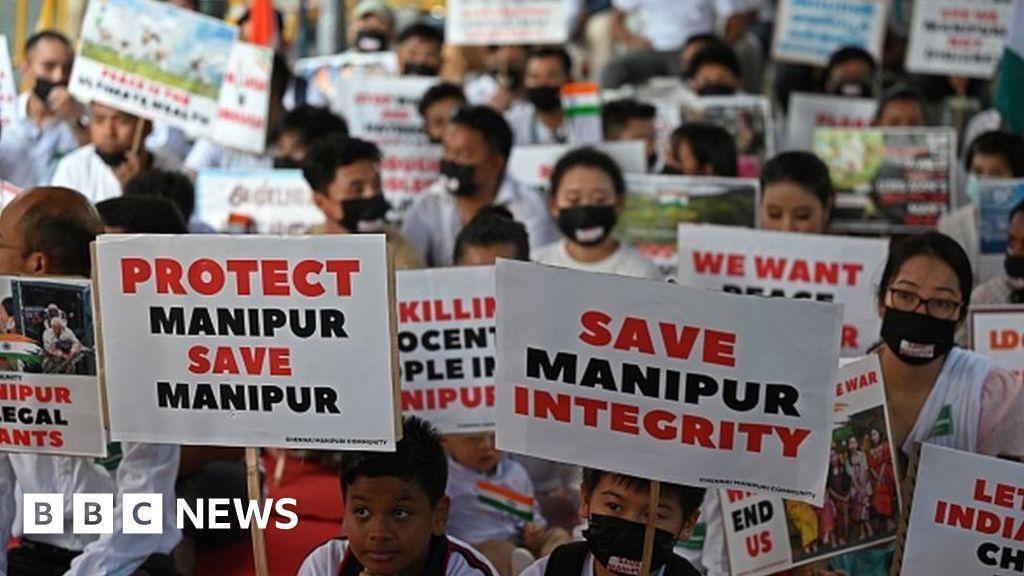
The Manipur conflict has erupted once again, reigniting tensions that have plagued the northeastern region of India for decades. On July 1, 2026, a spate of village burnings in Kamjong District, attributed to ongoing Kuki Naga violence, has drawn widespread attention and condemnation from local organizations. As accusations fly between the Kuki and Naga communities regarding who is responsible for these violent acts, the fear of escalating ethnic conflict in Manipur looms large. Reports indicate that armed groups are engaged in targeted attacks, particularly along the sensitive India-Myanmar border, heightening existing tensions that could potentially impact broader regional stability. Calls for government intervention have intensified, as residents demand accountability for the destruction that threatens not only their homes but the fragile peace in the area.
The escalating turmoil in Manipur highlights a broader ethnic strife that has historical roots in the diverse demographics of the region. Often described as a clash between Kuki and Naga interests, the recent incidents reflect a deeper struggle over identity, land, and governance. Key to understanding the dynamics is the ongoing violence along the India-Myanmar border, which has significant implications not just for local communities but also for international relationships in the area. As reports of village burnings mount, community leaders urge officials to address the underlying causes of this discord to prevent further violence. The situation remains critical, with both sides claiming victimhood in this volatile landscape that continues to evolve amidst rising tensions.
Understanding the Kuki Naga Violence in Manipur
The Kuki-Naga violence has become a pressing issue in Manipur, particularly in the Kamjong District, where recent armed confrontations have led to a series of devastating village burnings. As tensions escalate between these two ethnic communities, accusations fly regarding who is responsible for the latest outbreaks of violence. Kuki organizations have placed blame on the National Socialist Council of Nagalim (NSCN), alleging that they orchestrated attacks on Kuki villages with support from armed groups based in Myanmar. Such incidents underscore the deep-rooted ethnic conflict in Manipur, which has been exacerbated by historical grievances and territorial disputes.
Compounding the hardships faced by both communities is the fact that the state’s security apparatus seems either overwhelmed or ineffective in preventing these escalations. With armed groups operating with apparent impunity, the residents of Kamjong have found themselves caught in the crossfire of an unending cycle of retribution and violence. Recent reports suggest that the arson attacks are not isolated incidents but rather part of a broader pattern of aggression, indicating a dangerous escalation in the conflict that threatens to destabilize the entire northeastern region of India.
The Impact of Ethnic Conflict on Village Livelihoods
The recurrent village burnings in Manipur, particularly those affecting the Kuki and Naga communities, have devastating implications for local livelihoods. When homes are set ablaze, it not only displaces families but also destroys the very fabric of community life. Agriculture, which serves as the backbone of the local economy, is disrupted, as families cannot tend to their fields or livestock. This creates a ripple effect that extends beyond immediate casualties, sowing long-term economic instability and food insecurity in areas already afflicted by conflict.
Moreover, the psychological impact on the survivors of these violent incidents cannot be underestimated. Families are forced to live with trauma and fear, which can lead to further social fragmentation. The loss of property and the threat of future violence create an environment rife with anxiety, significantly affecting mental health. As the situation unfolds, it becomes increasingly clear that the ethnic conflict in Manipur is not just a political or territorial issue—it possesses profound socioeconomic consequences that will take years to heal.
Recent Incidents of Village Burnings in Kamjong District
The recent flare-up of village burnings in Kamjong District, marked by incidents involving both Kuki and Naga communities, signals a troubling resurgence of violence after a previously observed lull. Notably, the burning of Phaimol Kuki village, which reportedly destroyed around 20 houses, has drawn significant outrage from Kuki organizations. This act of aggression has been labeled a calculated attack by the NSCN, indicating a systematic effort to intimidate and cause harm. The sequence of events leading to this incident—and its aftermath—highlights the precarious situation in which the residents find themselves, caught in ethnic rivalries that reignite with alarming regularity.
Additionally, the Kuki organizations’ responses reveal a complex interplay of historical grievances and contemporary realities. Calls for an intervention from central authorities reveal an urgent desire for peace and stability in the region. However, contrasting narratives from Naga organizations paint a picture of a bid for vengeance, suggesting that such incidents are not spontaneous but deeply rooted in retaliatory actions. The re-emergence of armed conflict in the region questions the effectiveness of peace-building measures previously aimed at fostering coexistence among these communities.
Implications of India-Myanmar Border Tensions
The India-Myanmar border has been a site of heightened tensions, especially as armed groups take advantage of the porous boundaries to engage in cross-border activities. The recent resurgence of violence in Manipur can often be linked to these regional dynamics, where groups from both countries find common cause, often leading to confrontations on Indian territory. This border tension complicates the already volatile situation in Manipur, as local militancy can be easily influenced by external factors and the movements of armed groups operating in the adjacent Myanmar territory.
As ethnic conflicts heighten, the involvement of players from across the border adds layers of complexity to the situation. Armed factions such as the Shanni Nationalist Army, allegedly involved in supporting the NSCN, highlight the interconnectedness of regional conflicts that are often ignited by transnational ethnic solidarity. For the Indian government, managing these border tensions will require not only robust internal security measures in Manipur but also diplomatic engagement with Myanmar to address the roots of militancy that feed into the ethnic conflict in the region.
Calls for Intervention from the Central Government
In the face of escalating violence and instability in Manipur, there have been mounting calls for the Indian central government to take decisive action. Kuki organizations, in particular, are urging the federal authorities to launch a crackdown on armed groups like the NSCN, which they accuse of perpetrating targeted violence against their communities. Their plea is underscored by a sense of urgency following multiple incidents of village burnings that have left many families displaced and fearful. This wave of violence not only disrupts daily life but also threatens to spiral out of control if not addressed promptly.
However, responses from the central government have often been met with skepticism. Previous interventions have sometimes resulted in fleeting peace rather than long-term solutions, leaving communities to grapple with the aftermath of violence without adequate support. The complexity of ethnic relations in Manipur requires careful navigation, emphasizing the need for inclusive dialogue that addresses the root causes of conflict and promotes reconciliation. If the government wishes to restore stability in the northeastern region, it must move beyond punitive measures and invest in peace-building strategies that foster understanding and cooperation among the diverse ethnic groups.
The Role of Local Communities in Conflict Resolution
Local communities play a crucial role in mitigating ethnic conflicts in regions like Manipur, where interpersonal relationships often transcend political divides. Grassroots movements and dialogues between Kuki and Naga leaders can be instrumental in fostering a more cooperative approach to coexistence. Initiatives led by community members, such as peace councils and joint cultural events, can help to rebuild trust and foster communication, presenting a counter-narrative to the violence propagated by armed groups. These community-driven efforts serve as a vital counterbalance to the initiatives, or lack thereof, from higher authorities.
The potential for local communities to mediate peace has historical precedence in many conflict zones, suggesting that sustainable resolution often lies in empowering those most affected by violence. By harnessing traditional forms of conflict resolution, communities can contribute significantly to de-escalation efforts. This requires not only a commitment from local leaders but also support from the government to facilitate and protect these peace-building initiatives. As Manipur grapples with recurring violence, an emphasis on community-driven solutions could provide a pathway toward enduring peace.
International Attention on Ethnic Conflict in Manipur
The ongoing ethnic conflict in Manipur has recently attracted international attention, particularly as reports of village burnings and violence emerge from the region. Human rights organizations and international observers are increasingly vocal about the need for intervention and accountability regarding the actions of armed groups, both from within India and across the border in Myanmar. This global scrutiny has the potential to influence local dynamics, but it also raises questions about the responsibilities of the Indian government to protect its citizens from violence.
As discussions of human rights abuses continue, there is hope that international engagement can prompt more robust actions from the Indian government. The presence of international journalists and NGOs amplifies the voices of those affected by conflict, ensuring that their plight is not merely an internal affair hidden from the global eyes. For the future of Manipur, the manner in which local authorities address these complaints while navigating international pressure will significantly shape the outcomes of peace efforts in an area historically fraught with tension and violence.
Rebuilding Trust After Ethnic Conflict in Manipur
Rebuilding trust among ethnic communities in Manipur after cycles of violence will be a monumental task requiring commitment and resilience from both Kukis and Nagas. Recent incidents of village burnings have left deep scars on the collective psyche of these communities. For meaningful reconciliation to take place, it is imperative that both sides engage in dialogue that acknowledges past grievances while emphasizing a shared vision for the future. Educational programs that involve both communities can help children learn about the importance of cohabitation and collaboration instead of perpetuating cycles of enmity.
Furthermore, fostering inter-community projects that highlight shared interests and collective goals can also be pivotal in rebuilding relationships. Local leaders should advocate for joint participation in local governance and resource-sharing initiatives that benefit both communities. Only through such collaborative efforts can they begin to dismantle the historical animosities that have fueled the cycles of violence and pave the way for a future based on mutual respect and cooperation.
Frequently Asked Questions
What is the current situation regarding the Kuki Naga violence in Manipur?
The Kuki Naga violence has reignited in Manipur, particularly in the Kamjong District, where armed groups from both communities have been accused of burning villages along the India-Myanmar border. Recent incidents include the burning of approximately 20 houses in Phaimol Kuki village, indicating a return to conflict following a period of relative calm.
How have the recent village burnings in Manipur affected the Kuki and Naga communities?
Recent village burnings in Manipur have significantly heightened tensions between the Kuki and Naga communities. Kuki organizations report that armed groups are targeting their villages, while Naga groups accuse the Kukis of premeditated assaults, leading to claims of organized violence against both ethnic groups in an ongoing ethnic conflict.
What role does the Assam Rifles play in the Manipur conflict?
The Assam Rifles have been a central security force in Manipur, with their withdrawal from key posts, such as in Phaimol Kuki village, contributing to the vulnerability of local populations and creating a perceived power vacuum that armed groups exploited during the recent spate of violence.
What are the implications of the ethnic conflict in Manipur for the India-Myanmar border region?
The ethnic conflict in Manipur, particularly the Kuki Naga violence, has implications for the India-Myanmar border region as it destabilizes the area, allowing armed groups to operate across the borders, affecting security and potentially drawing in external influences from groups based in Myanmar.
What are the responses of the Kuki organizations to the recent attacks in Manipur?
Kuki organizations, such as the Committee on Tribal Unity and the Kuki Civil Society Organization, have condemned the recent attacks and called for decisive action from the central government against the National Socialist Council of Nagalim (NSCN) and other armed groups, asserting that these assaults threaten peace in the northeastern region.
How is the international community reacting to the Kamjong District news and the Manipur conflict?
The international community is increasingly monitoring the Manipur conflict, including the Kuki Naga violence and associated human rights concerns, as reports of village burnings and ethnic tensions draw attention to the situation. Calls for intervention or mediation are growing, particularly from human rights organizations.
What historical factors contribute to the ongoing ethnic conflict in Manipur?
The ongoing ethnic conflict in Manipur, particularly the Kuki-Naga violence, is rooted in historical grievances, political competition, and territorial disputes between the Kuki and Naga communities, exacerbated by socio-economic disparities and the complex interplay of numerous armed groups in the region.
What actions have been proposed to resolve the ethnic tension in Manipur?
Proposals to resolve the ethnic tension in Manipur include dialogues between the Kuki and Naga communities, increased government intervention to ensure security and peace, addressing grievances through political means, and international assistance to facilitate discussions among conflicting groups.
How do recent events in Manipur impact refugee populations in the region?
Recent events in Manipur, particularly the Kuki Naga violence, have led to increased displacement and insecurity for refugees along the India-Myanmar border. Instances of village burnings have destroyed refugee camps, further exacerbating the humanitarian crisis faced by displaced populations.
What role do armed groups play in the violence between Kuki and Naga communities in Manipur?
Armed groups have been central to the violence between Kuki and Naga communities in Manipur, with both sides accusing each other of orchestrating attacks and using military tactics in the ethnic conflict, which has led to cycles of reprisal attacks and deepened divisions.
| Key Points |
|---|
| Armed conflict resumed in Manipur’s Kamjong District between Kuki and Naga communities on July 1, 2026. |
| Kuki groups accused the NSCN and Shanni Nationalist Army of orchestrating attacks on Kuki villages. |
| Around 20 houses were reported burned in Phaimol Kuki village after the Assam Rifles left the area. |
| Naga organizations claimed Kuki armed groups planned the arson as a retaliatory act against their villages. |
| The situation indicates a pattern of escalating violence and raises concerns for stability in the northeast region. |
| Manipur Police have arrested members of the People’s Revolutionary Party of Kangleipak related to grenade attacks in Imphal districts. |
Summary
The Manipur conflict has erupted once again with renewed violence between Kuki and Naga armed groups, marking a troubling regression in the region’s stability. Accusations of village burnings have intensified, highlighting long-standing tensions along the India-Myanmar border. As the situation escalates, the call for government intervention grows in urgency to restore peace and prevent further dislocation of communities caught in the crossfire.