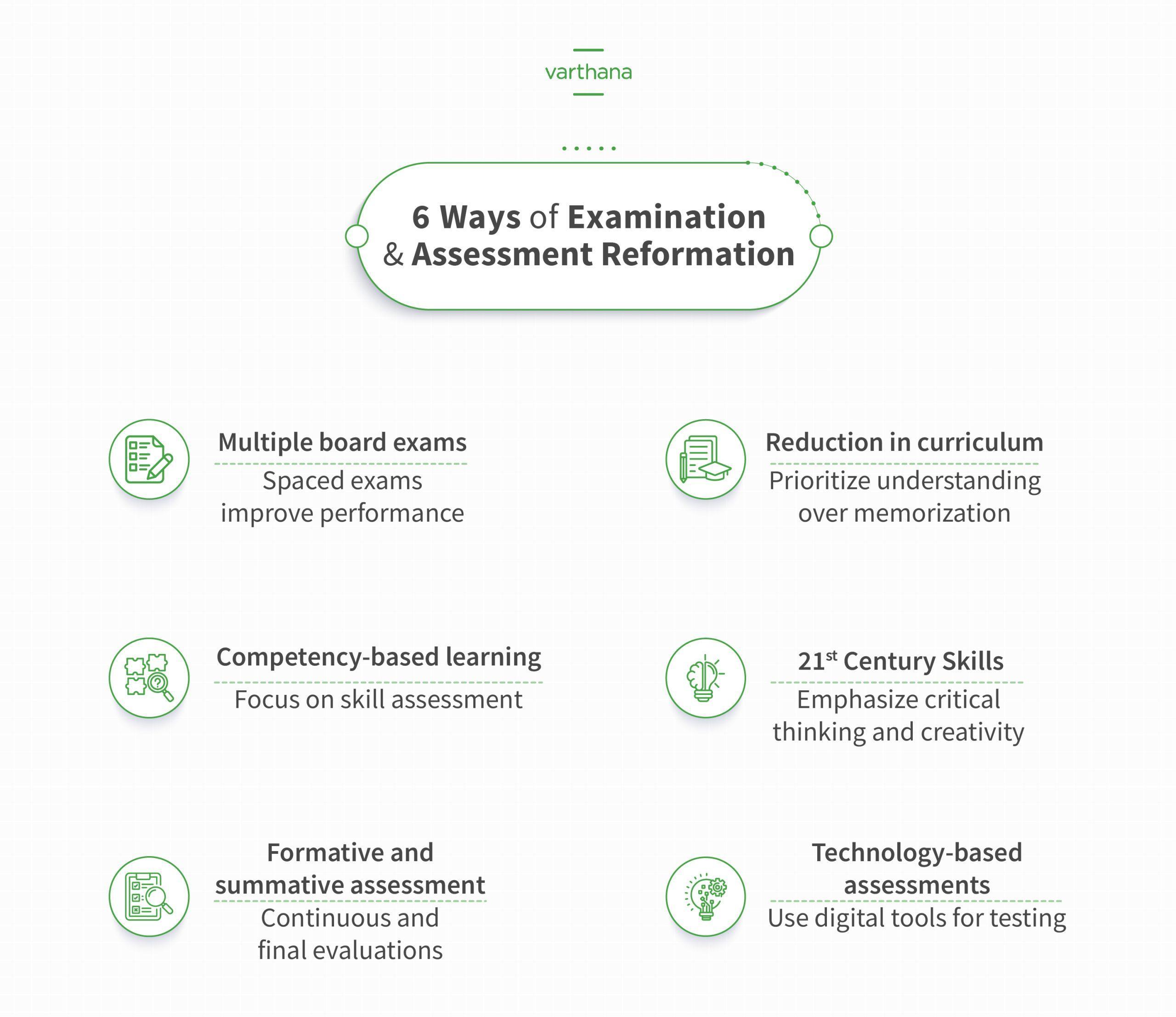
In light of ongoing controversies surrounding examinations, including significant issues with NEET-UG, the government is embarking on an ambitious journey toward examination reforms. These reforms, spearheaded by the Prime Minister’s Office and supported by the Ministry of Education, aim to reshape the landscape of academic assessments in India. With a focus on enhancing educational integrity, the proposed changes will introduce a balanced weightage system for board exam results and entrance exam scores, ideally with up to 50% consideration for board performance. Additionally, the transition towards computer-based testing promises not only to modernize exam administration but also to alleviate the stress tied to traditional, high-stakes single attempts. This comprehensive approach to entrance exam changes and education reforms is set to create a more equitable system, benefiting students preparing for vital assessments like NEET and JEE.
As the education sector faces calls for innovation, examination reforms represent a pivotal shift toward a more inclusive and effective evaluation mechanism. By prioritizing the integration of board examination performance alongside major entrance assessments, this transformation seeks to reduce the undue pressure students often experience. Additionally, the move toward adaptive computer-based testing and the possibility of multiple attempts will provide candidates with a fairer opportunity to showcase their knowledge and skills. This momentum for change heralds a new era of assessments, where the focus is not just on rote learning but on a deeper understanding of the curriculum. Such educational reforms not only aim to diversify testing methodologies but also to enhance the overall quality of education in preparation for crucial academic challenges.
Understanding the Need for Examination Reforms
Examination reforms in India have become a pressing need due to the longstanding controversies surrounding the fairness and integrity of various testing systems, including the NEET-UG. The involvement of the Prime Minister’s Office heavily highlights the urgency of instilling trust and transparency within the assessment processes. The existing paradigm has led to an over-emphasis on high-stakes single examination formats, causing immense pressure on students while fostering an unhealthy dependence on coaching institutions. The recent recommendations aim not just to alleviate this pressure but to create a more equitable and aligned system that reflects actual student capabilities and knowledge acquired through school curricula.
These proposed reforms, which include the introduction of board exam weightage in the overall assessment, aim to gradually shift the focus from entrance exams to a more balanced evaluation framework. Introducing substantial weightage to school board performance acknowledges the foundation of knowledge built across the school years and reduces the idea that success is solely determined by a few attempts at entrance examinations. Such changes are envisaged to foster a healthier educational environment where learning is prioritized over rote memorization driven by external coaching.
The Shift towards Computer-Based Testing
The transition towards computer-based testing (CBT) marks a significant change in the educational assessment landscape in India. By embracing technology, examination reforms can improve the organization and administration of exams, while simultaneously reducing the logistical challenges associated with traditional paper-based assessments. The shift ensures that the examination process is more secure and efficient, minimizing risks linked to handling physical documents and the occurrence of examination malpractices.
Moreover, CBT will enable the implementation of adaptive testing methodologies, where examination difficulty adjusts based on the test-taker’s performance. This could help in evaluating students’ true capabilities by presenting questions that align with their knowledge levels rather than a one-size-fits-all approach. Implementing CBT not only contributes to contemporary examination practices but also aligns education reforms with global standards, offering Indian students a testing experience that reflects their academic abilities more accurately.
Proposed Weightage to Board Exams in Admissions
One of the core components of the proposed examination reforms is assigning significant weightage, potentially up to 50%, to school board exams in the admissions process for higher education. This revolutionary approach aims to create a balanced merit system that assesses students holistically rather than through the narrow lens of a single entrance examination score. By integrating board exams into merit calculations, the reforms seek to encourage students to engage more meaningfully with their school studies, rather than solely preparing for entrance exams.
Furthermore, this paradigm shift is expected to mitigate prevalent issues such as inflated grading and excessive moderation that often taint the integrity of board examinations. By normalizing board exam scores and mandating the separate display of internal assessment grades, the reforms emphasize the importance of all aspects of a student’s learning journey, thereby promoting fairness and transparency in the educational process.
Incorporating Multi-Attempt Frameworks for Entrance Exams
The introduction of a multi-attempt framework for entrance exams represents a forward-thinking approach to alleviating the pressures students face in preparation for critical assessments like NEET and JEE. By allowing students to retake these examinations multiple times a year, educational reforms aim to provide learners with opportunities to reflect on their performance, learn from their mistakes, and improve their scores in subsequent attempts. Such a strategy not only reduces anxiety associated with a single chance to score well but also fosters a growth mindset among students.
This multi-attempt framework is also intended to create a less-coachable examination environment, which emphasizes aptitude over memorized content. By potentially increasing the attempts for exams like JEE from two to three or four, the educational system acknowledges the diverse pace at which students learn and enables them to better align their preparation with the curriculum. Ultimately, the reforms stress a balanced approach toward assessment, in which understanding and application of knowledge take precedence over exam-taking strategies.
Evaluating the Role of NCERT in Education Reforms
The recommendation for the National Council of Educational Research and Training (NCERT) to function as the nodal agency in aligning syllabi for JEE and NEET with standard school curricula represents a pivotal strategy in the ongoing education reforms. By establishing a cohesive framework between school education and competitive exams, NCERT can ensure that the content and structure reflect a comprehensive understanding of subjects without leaning excessively on preparatory coaching. Such alignment is crucial for reducing discrepancies between school learning and entrance examination expectations.
Moreover, NCERT’s involvement is expected to streamline educational resources, teaching methodologies, and evaluation standards across the board. This initiative aims to create an integrated educational environment facilitating smoother transitions between secondary and higher education, which could significantly enhance student preparedness when facing competitive exams like NEET and JEE. By harmonizing syllabi, the reform may represent a leap towards creating a more equitable assessment framework that accurately reflects the educational standards expected at the national level.
Addressing the Influence of Coaching Centers
The increasing reliance on coaching centers has emerged as a significant concern within the scope of examination reforms. While these institutions provide valuable support, the committee’s examination of their influence emphasizes the need for a comprehensive regulatory framework to preserve educational integrity. The proposed reforms seek to investigate the factors contributing to a culture of dependence on coaching, exploring how high-stakes entrance exams have created a market for extensive preparatory courses that may detract from authentic learning.
In tackling this issue, educational reforms aim to reassess admission criteria, incorporating not only entrance exam scores but also regular school performance. By leveling the playing field for students from varying socio-economic backgrounds, the reforms could significantly reduce the dominance of coaching centers in the academic outcome arena, ensuring that success is based on a more diversified range of achievements and learning experiences.
Encouraging Validity Through Psychometric Analysis
Psychometric analysis has emerged as a vital element in evaluating the effectiveness of standardized tests such as JEE Main, JEE Advanced, NEET-UG, and CUET. The recent recommendations to undertake a psychometric evaluation of these examinations will help assess their validity, reliability, and overall effectiveness in measuring student aptitude and knowledge. The insights gained from such analyses will serve as an essential basis for any futher modifications to testing formats and content, ensuring they are aligned with educational objectives and student needs for competitive examinations.
Furthermore, by placing a focus on the psychometric properties of entrance exams, examination reforms are committed to fostering assessments that accurately differentiate between varying levels of student capabilities. By ensuring that tests maintain their integrity while being cognizant of the educational contexts they operate within, future policies can provide students with a fair and just opportunity to showcase their learning outcomes.
Long-Term Vision for Less-Coachable Examinations
The long-term vision encapsulated in the proposed examination reforms seeks to promote a system of assessment that encourages deeper understanding and critical thinking rather than simple rote learning strategies. By steering away from overly coachable formats and towards more aptitude-oriented testing methodologies, the reforms align closely with contemporary pedagogical practices that prioritize learning outcomes and mastery of subjects. This shift recognizes that genuine knowledge should be assessed without the heavy influence of preparatory coaching strategies.
Alongside this approach is the emphasis on adaptive computer-based testing that aims to provide bespoke evaluation paths for candidates. Such testing methods can incorporate diverse question types and shift emphasis towards understanding and applying knowledge rather than merely recalling information. Ultimately, these reforms pledge to reshape the educational landscape in India, crafting a future where assessment reflects true student potential rather than compliance with coaching-driven narratives.
Frequently Asked Questions
What are the key features of the NEET-UG reforms proposed by the Ministry of Education?
The NEET-UG reforms aim to reduce the pressure of high-stakes examinations by introducing measures such as granting up to 50% weightage to board exam marks in the admission process. These reforms advocate for a closer alignment of entrance exams with school curricula to minimize reliance on coaching centers, introducing a multi-attempt framework to allow students to take exams at least twice a year, and transitioning towards computer-based testing (CBT) for better integrity and accessibility.
| Key Points | Details |
|---|---|
| Government Intervention | Prime Minister’s Office overseeing examination reforms in response to controversies, particularly NEET-UG. |
| Comprehensive Reforms | Reforms affecting both board exams and entrance tests like NEET and JEE, focusing on holistic assessment methods. |
| Weightage to School Board Marks | Proposal to give up to 50% weightage to board exam marks in admissions to reduce reliance on entrance exams. |
| Adaptive Testing | Gradual shift towards computer-based testing (CBT) with multiple attempts to alleviate pressure from single-shot examinations. |
| NCERT’s Role | NCERT proposed as the nodal agency to align school syllabi with entrance requirements to ensure uniformity. |
| Integrity of Exams | Reforms aimed at improving the integrity of board exams, tackling grading issues and moderating assessments. |
| Future Directions | Focus on less-coachable, aptitude-oriented exams that maintain rigorous standards for candidate assessment. |
| Legislative Measures for Coaching Centers | Exploration of a regulatory framework for coaching centers to ensure fairness in exam preparation. |
Summary
Examination reforms are set to reshape the landscape of educational assessments in India. The recent involvement of the Prime Minister’s Office marks a significant turning point in addressing long-standing controversies about examination methodologies, particularly surrounding pivotal tests like NEET and JEE. These reforms aim to ensure a more equitable examination process, mitigating the pressures of high-stakes, single-attempt assessments, while enhancing the integrity and reliability of the exams conducted. By integrating school board performance into the admission system and proposing adaptive testing formats, the proposed changes are designed to align educational assessments with actual learning outcomes and reduce dependency on coaching centers. The establishment of a clear framework for examination reforms not only seeks to benefit students but also to streamline the evaluation process, thus fostering a generation that is better prepared for academic and professional challenges.