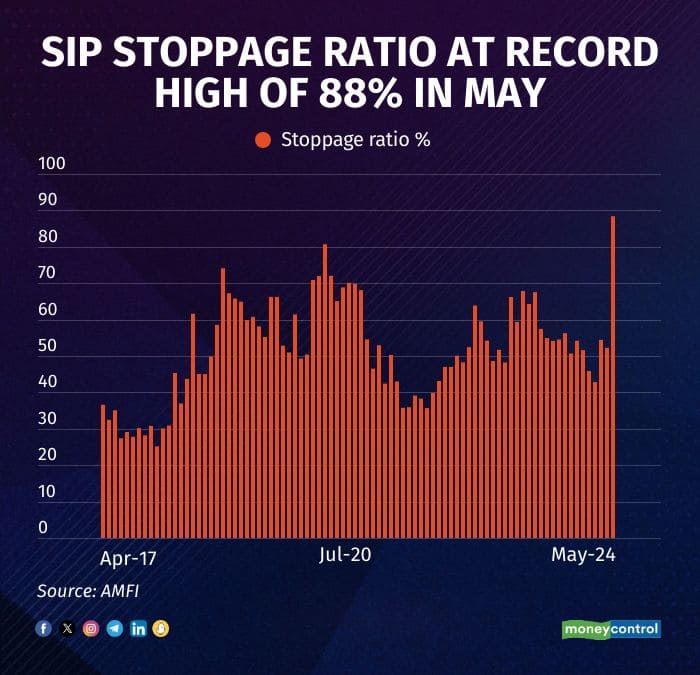
The recent spike in mutual fund SIP stoppage has raised eyebrows, particularly as contributions soar to an impressive Rs 32,000 crore in March. The SIP stoppage ratio, which soared above 100%, indicates that more SIPs are being discontinued than initiated, highlighting a potential shift in investor sentiment. This discontinuation trend, despite record SIP contributions and robust equity inflows, suggests that investors may be reassessing their long-term strategies. The Association of Mutual Funds in India (AMFI) reported that 53.38 lakh SIPs were halted compared to 52.82 lakh new registrations, showcasing a concerning imbalance. With investor participation still remarkably high, the dynamics of SIP investment trends may warrant closer scrutiny to understand the motivations behind this SIP stoppage phenomenon.
The concept of stopping SIPs, that is, halting Systematic Investment Plans, has become a notable topic in the mutual fund landscape, especially as recent data shows significant movement in investor activity. The persistent trend of SIP contributions reaching historic highs contrasts sharply with the rising discontinuation rates of these investment vehicles, prompting questions about future mutual fund inflows. Analyzing the SIP ratio, which compares the number of discontinued SIPs against those newly registered, offers valuable insights into current sentiment among investors. As the market continues to evolve, understanding the implications of these SIP investment patterns becomes crucial for both financial advisors and investors alike.
Understanding SIP Stoppage Ratio
The SIP stoppage ratio is a crucial metric that helps in assessing the health of mutual fund investments. Specifically, it measures the number of discontinued Systematic Investment Plans (SIPs) against the new registrations within a particular period. When the stoppage ratio climbs above 100%, it indicates that more investors are terminating their SIPs than those initiating new ones. This rise can serve as a warning sign regarding investor confidence and market conditions, reflecting a strategic shift in how individuals perceive their investment strategies.
In March, the SIP stoppage ratio surged to 100%, marking a significant rise from the previous month’s 76%. This shift occurred despite strong overall SIP contributions, which reached a record Rs 32,087 crore, revealing an interesting dynamic in investor behavior. As noted in the latest AMFI data, while the inflow of SIP contributions remains robust, the increase in stoppage suggests that investor sentiment may be reacting to changing financial circumstances or market volatility.
Current Trends in SIP Investments
The trends surrounding SIP investments have been increasingly positive in recent months. March 2026 saw SIP contributions rising to a historic Rs 32,087 crore, bolstered by nearly 9.72 crore active SIP accounts. Such substantial monthly inflows indicate that more investors are inclined toward systematic investments, likely influenced by a growing understanding of the benefits of regular savings over lump-sum investments. This aligns with the ongoing popularity of SIPs as a vehicle for wealth accumulation.
However, while SIP contributions reflect an optimistic trend, the peculiar rise in the SIP stoppage ratio cannot be overlooked. It highlights a potential concern where more investors are choosing to discontinue their SIPs. This dual narrative—a record in contributions juxtaposed with a rise in stoppages—could suggest that while new investors are drawn into the market, existing investors might be reassessing their strategies or facing liquidity challenges.
Analyzing the SIP investment landscape, one observes a clear shift toward focusing on sustainability and long-term wealth creation. The SIP ratio increases demonstrate that, despite short-term transactional hiccups, investors still value the potential of mutual funds in delivering significant returns over time. Consequently, SIP investment trends could continue to evolve, primarily as economic conditions fluctuate.
AMFI Data Insights on SIP Contributions
The Association of Mutual Funds in India (AMFI) plays a pivotal role in providing insights into the health of SIP contributions across the mutual fund sector. Reports reveal that mutual fund SIP inflows increased by 8% month-over-month, underscoring a sustained commitment from investors towards long-term wealth creation. This consistency also showcases the popularity of SIPs as a preferred method of investing among Indian households, especially amid volatile market conditions.
Moreover, the data from AMFI highlights not just the aggregate contributions but also the underlying investor demographics who are engaging with these funds. As more individuals recognize the advantages of systematic investing, the overall mutual fund ecosystem benefits from increased inflows coupled with a diversification in the types of investors participating in SIPs. This trend suggests a maturation in investor behavior, with a notable shift toward education on investment strategies.
Navigating Market Volatility with SIPs
Market volatility can often deter investors from making sound financial decisions. However, SIPs provide a safeguard against market fluctuations by promoting disciplined investing over the long term. The consistent monthly contributions made through SIPs mean that investors buy more units when prices are low and fewer when prices are high, ultimately averaging down the cost of entry. This averaging effect helps mitigate risk and gear towards capital growth, even amidst turbulence in financial markets.
As the mutual fund landscape adapts to increased market shifts, professionals and industry analysts encourage investors to maintain their SIPs as part of a comprehensive wealth-building strategy. The notable inflows recorded even as the SIP stoppage ratio reaches concerning levels suggest that a significant portion of the investor base remains committed to their long-term goals, reinforcing the resilience of systematic investing against market unpredictability.
The Influences Behind SIP Stoppage
Understanding the factors leading to SIP stoppage is vital for both investors and fund managers aiming to enhance retention rates. Key influences include personal financial changes, economic downturns, or simply shifts in investment strategy. When individuals face unexpected expenses or changes in income, they may feel compelled to halt their SIP contributions, opting instead to redirect funds towards immediate financial needs.
Furthermore, a growing inclination towards personalized investment decisions can lead to increased SIP stoppage as investors reassess their financial goals. The financial landscape is evolving rapidly, and many investors are looking for more dynamic avenues or higher returns, influencing their decisions to discontinue existing SIPs. A strategic approach combining investor education and flexibility in managing SIPs can address these concerns effectively.
Exploring the Long-Term Benefits of SIPs
Investing through SIPs has demonstrated long-term benefits that can significantly impact wealth accumulation over time. By contributing regularly, investors benefit from the power of compounding, which enhances the growth of investments exponentially. This becomes particularly crucial in inflationary environments where the consistent growth of assets can offset the erosion of purchasing power.
Moreover, SIPs instill a disciplined investing approach that encourages individuals to stay invested regardless of market conditions. This long-term perspective fosters greater financial resilience and empowers investors to achieve their financial goals effectively, even in the face of challenges like market volatility or personal economic situations.
Strategies to Enhance SIP Performance
To improve the performance of SIP investments, it is essential for investors to regularly review and adjust their strategies based on changing market conditions and personal financial goals. This involves assessing one’s risk tolerance and ensuring that SIP allocations align with long-term objectives, which may include retirement planning or wealth creation for other purposes.
Additionally, comprehensive research on mutual fund performance and periodic rebalancing can be instrumental in optimizing returns. Staying informed about market trends and seeking expert guidance from financial advisors can help investors make more educated decisions about their SIP investments, ultimately enhancing overall performance.
SIP and Financial Literacy: A Growing Need
As the mutual fund industry continues to grow, the need for financial literacy among investors becomes increasingly vital. Many situations prompting SIP stoppage stem from a lack of understanding of how mutual funds operate, the benefits they offer, and how systematic investing can fit into an overall financial strategy. Financial education can empower investors, helping them navigate the complexities of the market and make informed choices regarding SIP contributions.
Enhancing financial literacy also facilitates confidence in making long-term investment decisions. Initiatives aimed at educating the public about the benefits of SIPs, as well as the potential risks involved, can create a more informed investor base. This awareness can ultimately lead to healthier investment behaviors, reducing the rate of SIP stoppages as individuals feel more secure in their financial choices.
Looking Ahead: The Future of SIPs
The future of SIPs appears promising as the mutual fund sector adapts to the evolving financial landscape. With continued efforts to engage and educate investors, the adoption of SIPs is expected to grow, supported by advancements in technology and enhanced accessibility to investment platforms. These factors are likely to draw in more individual investors, bolstering mutual fund inflows further.
As investment trends shift towards sustainability, the mutual fund industry may innovate to align with investor values, continually improving investor sentiment around SIPs. This stability and innovation could lead to increased participation, thereby diminishing the SIP stoppage ratio and fostering a more resilient investment environment in the years to come.
Frequently Asked Questions
What causes mutual fund SIP stoppage among investors?
Mutual fund SIP stoppage can occur for various reasons including personal financial constraints, lack of confidence in market performance, or changes in investment strategy. As per recent data, investors may halt SIP contributions when economic conditions are uncertain, despite high contributions overall. It’s important for investors to regularly assess their SIP investment trends and adapt their strategies accordingly.
How does the mutual fund SIP stoppage ratio affect overall contributions?
The mutual fund SIP stoppage ratio indicates the health of investor participation in SIPs. A stoppage ratio over 100%, like in March 2026, suggests more SIP contributions are being stopped than are being added, which could signal a potential decline in long-term investment enthusiasm. Notably, despite the high stoppage ratio, SIP contributions remained robust at Rs 32,087 crore, indicating that a significant number of investors still prefer systematic investing.
What is the significance of monthly mutual fund SIP inflows and stoppage data?
Monthly mutual fund SIP inflows and cessation data provide insights into market trends and investor behavior. For instance, while March 2026 saw SIP inflows of Rs 32,087 crore, the SIP stoppage ratio surged to 100%. This highlights a contrast between continued high contributions and increasing SIP cessations, indicating some investors reevaluating their long-term strategies amidst market conditions.
How can investors manage mutual fund SIP stoppages effectively?
To manage mutual fund SIP stoppages effectively, investors should review their financial goals regularly and maintain emergency savings to avoid discontinuation due to financial stress. Analyzing AMFI data on SIP investment trends can help in understanding market dynamics and making informed decisions. If necessary, investors might consider adjusting their SIP amounts rather than stopping contributions entirely, ensuring continued investment in line with their financial objectives.
What trends are observed in mutual fund SIP contributions and stoppages over the past months?
Recent trends indicate a troubling rise in mutual fund SIP stoppage ratios, particularly in March 2026, where the stoppage ratio exceeded 100%. While SIP contributions reached an all-time high of Rs 32,087 crore, the number of SIPs discontinued or completed surpassed new registrations. This suggests that although many are investing, some investors are choosing to exit, prompting a closer look at SIP investment patterns.
| Key Metrics | March 2026 | February 2026 |
|---|---|---|
| SIP Stoppage Ratio | 100% | 76% |
| New SIP Registrations (in lakh) | 52.82 | 65.72 |
| SIPs Discontinued (in lakh) | 53.38 | 49.70 |
| Monthly SIP Contribution (in crore) | 32,087 | 29,845 |
| Total Mutual Fund Folios (in crore) | 27.39 | 27.05 |
| Retail AUM (in crore) | 42,88,955 | N/A |
Summary
The mutual fund SIP stoppage has reached an alarming level of 100% in March 2026, indicating that more SIPs are ceasing than being initiated. This rise in the stoppage ratio, while overall SIP contributions hit a record high of Rs 32,087 crore, suggests a concerning trend for investors. However, the sustained monthly inflow reflects continued confidence among investors in mutual fund investments in the long term. As SIP accounts approach 9.72 crore, the industry still demonstrates resilience, emphasizing the importance of understanding the factors contributing to SIP stoppage and the need for strategic investment management.