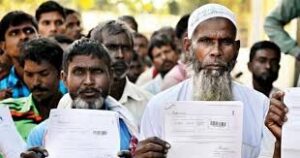
 Gerrymandering in Assam has become a contentious issue as the state gears up for the crucial Assam elections 2026. With Muslims historically forming a significant populace in many constituencies, recent boundary changes threaten their political representation significantly, dropping the number of Muslim-majority seats from 35 to approximately 20. This strategic partitioning, termed political gerrymandering, raises alarms about the ongoing communal gerrymandering tactics employed by the ruling BJP Assam. Critics argue that these tactics not only dilute the voting power of Muslims but also foster an environment of division within the diverse electorate of Assam. As the election date approaches, the stakes are high, and the ramifications of these changes will likely echo well beyond April 9, impacting the political landscape of the region for years to come.
The manipulation of electoral boundaries, often referred to as constituency reconfiguration, has sparked significant debate in Assam as political parties vie for dominance. This practice is particularly concerning for the Muslim population, which is witnessing a decrease in seats that allow for adequate representation. Such electoral strategizing can create an imbalanced playing field, particularly in contexts like Assam, where historical communal dynamics weigh heavily on election outcomes. The significance of the ongoing changes cannot be understated, as they not only affect local governance but also set precedents for how communities can be represented in broader national discourse. As the region approaches its pivotal electoral moment in 2026, the implications of constituency reconfiguration will undoubtedly remain at the forefront of political discussions.
Understanding Gerrymandering in Assam
Gerrymandering, a tactic used in political redistricting, has become a significant issue in Assam as the state prepares for the upcoming elections. The recent revision of constituency boundaries has stirred controversy, particularly among the Muslim community, which has seen a noticeable reduction in their representation within the assembly. Traditionally, Assamese Muslims have had a substantial presence in certain constituencies; however, as of the latest delimitation, their influence has been severely compromised. Political analysts have argued that this manipulation serves to suppress the voices of a demographic that represents over a third of the state’s population.
This strategic redrawing of electoral boundaries, often categorized as ‘communal gerrymandering,’ has raised alarms about the fairness of the electoral process in Assam. Major political entities, especially the ruling BJP, have been accused of engineering the landscape to diminish Muslim representation. By redistributing Hindu voters into predominantly Muslim areas, the likelihood of a Muslim candidate winning has drastically decreased, raising questions about the integrity of democratic practices in the region. These changes have left many Muslim voters like Islam Uddin feeling disenfranchised and questioning the efficacy of their participation in the electoral system.
The Impact of Political Gerrymandering on Assam Elections 2026
The ramifications of political gerrymandering in Assam extend beyond mere statistics; they have significant cultural and social implications, especially as the state gears up for elections in 2026. With legislative boundaries redrawn to favor Hindu majority populations, many former strongholds of Muslim representation, such as Katigorah and Barpeta, have been essentially disempowered. This engineered shift not only reduces the chances for Muslim candidates but also hollowed out representation that has existed for decades, fundamentally altering the political landscape and, by extension, the social dynamics of these communities.
As the BJP prepares for the upcoming elections, they are confronted with mixed reactions from the electorate. While some appreciate the party’s narrative which emphasizes the ‘protection of indigenous rights’, many Muslims feel marginalized and politically injured by the delimitation process. The upcoming elections are set to be a litmus test for both the ruling party and the opposition, as they navigate the contentious issues of representation and identity amid what many are describing as systematic attempts to undermine Muslim political power in Assam.
Muslim Representation in Assam: Challenges Ahead
Muslim representation in Assam’s legislative assembly faces unprecedented challenges following the recent delimitation exercise. Once a pillar of political strength within the state, the Muslim community has seen its representation dwindle from approximately 35 constituencies to just about 20, a drastic change that can alter the governing framework of the region. Populations that once could collectively influence electoral outcomes are now diluted, making it difficult for Muslim candidates to secure seats. This reality raises pressing concerns about equitable political representation in Assam.
As political activists take to the streets urging their communities to vote in the upcoming elections, the struggle for representation remains fraught with challenges. Historically aligned with parties like the Congress and the AIUDF, the Muslim electorate now finds itself in a precarious position, grappling with fewer viable candidates while navigating a political environment increasingly dominated by Hindu majoritarian narratives. The stakes could not be higher, as the plight of Assam’s Muslims exemplifies a broader trend in India where demographic and religious identity politics are being strategically manipulated to serve specific political agendas.
Communal Gerrymandering: A Comparative Analysis
Critics have likened the practice of communal gerrymandering in Assam to historical examples in other countries, particularly the United States. In Assam, techniques such as cracking and packing are employed to dilute the electoral influence of Muslims, drawing parallels to 18th-century racial gerrymandering. Such manipulations may lead to an environment where minority populations struggle to maintain representation or access to political power, mirroring past injustices faced in various democratic societies. This critical lens allows for a comprehensive understanding of how electoral processes can be weaponized to serve the interests of dominant groups.
By analyzing Assam’s delimitation through this comparative perspective, one can identify patterns that might be harmful not only to Muslim communities but also to the democratic integrity of the electoral process. The deliberate reshaping of constituencies by the ruling BJP echoes historical injustices where political boundaries were manipulated to exclude certain demographics. As nations worldwide grapple with similar issues, Assam serves as a case study on the implications of using electoral manipulation as a tool for majoritarian consolidation, raising urgent questions about the future of inclusive governance.
The Role of BJP in Altering Assam’s Electoral Landscape
The Bharatiya Janata Party (BJP) has been at the center of discussions regarding Assam’s changing electoral landscape, particularly in how it has approached the issue of representation for minority populations. Since coming to power, the BJP has pursued policies that many believe aim to consolidate Hindu majoritarian power at the expense of the Muslim electorate. By redrawing constituency boundaries during the delimitation process, the party not only reshapes the electoral map but also influences the political discourse, creating an environment where minority voices are systematically marginalized.
Despite these challenges, BJP representatives claim that the delimitation exercise is a neutral administrative process aimed at ensuring fair representation. However, evidence suggesting that demographic considerations have been manipulated raises serious concerns about the party’s true intentions. As the elections approach, this rhetoric will be tested against the realities facing Assam’s Muslim voters, who find themselves grappling with both historical disenfranchisement and the acute impact of contemporary political strategies.
Voting Awareness among Muslims in Assam
In the face of gerrymandering and diminishing representation, grassroots initiatives to promote voting among Muslims in Assam have taken center stage. Community leaders like Islam Uddin are working tirelessly to raise awareness about the electoral process, underscoring the importance of participation in shaping political representation. These efforts highlight a growing mobilization within the Muslim community, which recognizes that while the playing field has been altered, their civic duty remains critical to retaining a semblance of political influence.
Challenges abound, however, as active voter mobilization often runs headlong into the realities of communal gerrymandering and existing socio-political tensions. Many Muslims in Assam feel disillusioned, questioning the efficacy of their votes in a landscape that has seemingly favored the majority. Nonetheless, the determination of activists and local leaders to cultivate a culture of voting among Muslims aims not only to increase turnout but also to galvanize broader community action, potentially countering the negative impacts of the recent electoral changes.
The Future of Assam’s Political Landscape Post-Elections
With elections on the horizon, Assam’s political landscape remains in flux as residents grapple with the implications of the recent delimitation and the ongoing struggle for equitable representation. The upcoming electoral battle in 2026 is likely to serve as a pivotal moment, potentially shaping the future of Assam’s governance and civic engagement. Muslims, who face an uphill battle for representation, are mobilizing in response to the political shifts, recognizing that the outcomes of the forthcoming elections could either entrench their marginalization or pave the way for a resurgence in political agency.
As Assam voters head to the polls, the broader implications of gerrymandering and communal politics will be scrutinized far beyond the state boundaries. Observers have noted that the outcomes in Assam could set a precedent for party strategies and electoral practices across India, particularly in terms of managing communal identities and electoral demographics. The stakes are high, and the future of Assam could serve as a microcosm for national debates on representation, inclusion, and the role of identity in the complex fabric of Indian democracy.
Addressing Allegations of Boundary Manipulation
The recent allegations of boundary manipulation in Assam have ignited vigorous debate. While the BJP maintains that the delimitation process was necessary for demographic accuracy and fair representation, critics argue that the outcomes suggest a systematic effort to dilute Muslim electoral power. This contentious issue calls into question the principles of fairness and democracy that underpin the electoral process. As allegations proliferate, the Election Commission faces scrutiny regarding its methods and the transparency of its decisions, thereby spotlighting the mechanisms that govern political representation.
Moreover, Assam’s Chief Election Commissioner has yet to address these concerns comprehensively, leaving many voters feeling even more disenfranchised. As Assam approaches its elections, the interplay between electoral integrity and communal politics will be under the microscope, with many anticipating how the ramifications of these boundary changes will play out at the polls. The focus on accountability and transparency in the electoral process is essential not just for Assam but for the larger narrative surrounding democracy and representation in India.
Frequently Asked Questions
How is gerrymandering in Assam affecting Muslim representation in the 2026 elections?
Gerrymandering in Assam has significantly reduced Muslim representation ahead of the 2026 elections. Due to the redrawing of constituency boundaries, the number of seats where Muslims were previously the majority has dropped from around 35 to about 20. This manipulation, often referred to as ‘communal gerrymandering,’ has diluted the voting power of the Muslim community, making it harder for Muslim candidates to win election seats.
What role does political gerrymandering play in the Assam elections?
Political gerrymandering in Assam plays a crucial role by altering constituency boundaries to favor the BJP and reduce Muslim electoral representation. By employing strategies such as ‘cracking’ and ‘packing,’ the redistricting process has dispersed Muslim voters into Hindu-majority areas, undermining their chances of electing representatives.
How has the BJP’s strategy influenced gerrymandering in Assam?
The BJP’s strategy has heavily influenced gerrymandering in Assam by implementing boundary changes that strategically diminish Muslim representation. This approach aligns with the party’s broader goal of establishing a Hindu majority in political arenas, reflecting their majoritarian policies which have led to concerns about the political marginalization of Muslims in the state.
What are the implications of gerrymandering for Assam’s Muslim community in future elections?
The implications of gerrymandering for Assam’s Muslim community are dire. As constituency boundaries are reshaped to favor Hindu voters, Muslims are likely to find their political power further diminished in future elections, leading to reduced representation and a lack of advocacy for their interests in the state assembly.
What measures are activists taking against gerrymandering in Assam?
Activists in Assam are raising awareness about the impacts of gerrymandering on Muslim representation by organizing campaigns and encouraging voter participation. They are mobilizing communities to understand the importance of their votes and advocating for fair electoral practices to ensure their voices are heard, especially leading up to the 2026 elections.
Why is the delimitation process in Assam characterized as ‘communal gerrymandering’?
The delimitation process in Assam is characterized as ‘communal gerrymandering’ because it has been used to strategically alter electoral boundaries in a way that minimizes Muslim electoral clout while favoring Hindu-majority candidates. This tactic reflects a historical pattern of manipulating district lines to benefit a particular demographic, akin to practices seen in other global contexts.
What challenges do Muslim candidates face due to gerrymandering in Assam?
Muslim candidates in Assam face numerous challenges due to gerrymandering, including increased difficulty in securing electoral victories in newly restructured Hindu-majority constituencies. This shift decreases their chances of winning seats, thereby weakening the representation of the Muslim community in Assam’s state assembly.
How does the issue of gerrymandering in Assam compare to historical gerrymandering practices in other regions?
The issue of gerrymandering in Assam parallels historical practices in other regions, such as the racial gerrymandering in the United States, where electoral boundaries were manipulated to favor a dominant group. In Assam, similar strategies such as ‘cracking’ and ‘packing’ have been utilized to undermine Muslim representation, illustrating a continued use of gerrymandering to influence political power dynamics.
What is the public sentiment regarding gerrymandering and the upcoming Assam elections?
Public sentiment regarding gerrymandering and the upcoming Assam elections is one of concern and frustration among the Muslim community. Many feel that their political influence has been significantly weakened and are apprehensive about their ability to elect representatives who can advocate for their rights and interests amidst a backdrop of political manipulation.
How might the 2026 Assam elections be affected by the new gerrymandering practices?
The 2026 Assam elections are likely to be heavily influenced by the new gerrymandering practices, leading to a further decrease in Muslim representation and potentially solidifying Hindu dominance in the state’s political landscape. As voters adapt to the altered constituencies, the existing power dynamics may cement the BJP’s influence over Assam’s governance.
| Key Points |
|---|
| Gerrymandering in Assam has reduced Muslim representation in legislative seats from 35 to about 20. |
| The delimitation process has merged predominantly Hindu areas into Muslim-majority constituencies, altering their electoral balance. |
| Techniques like ‘cracking’ and ‘packing’ have been used to diminish the political influence of Assam’s Muslim population. |
| Political leaders and analysts describe the delimitation as ‘communal gerrymandering’, drawing comparisons to historical practices in the USA. |
| The political landscape has favored the ruling BJP, with concerns over the marginalization of over 11 million Muslims in Assam. |
Summary
Gerrymandering in Assam has greatly affected the political representation of Muslims in the state, raising serious concerns ahead of the upcoming elections. The recent redistricting process has diminished the number of constituencies where Muslims could previously elect their representatives, reducing their influence from 35 to approximately 20. This alarming trend has led to fears of political marginalization for Assam’s sizable Muslim population, with the ruling BJP party seemingly consolidating power at the expense of a historically significant community.