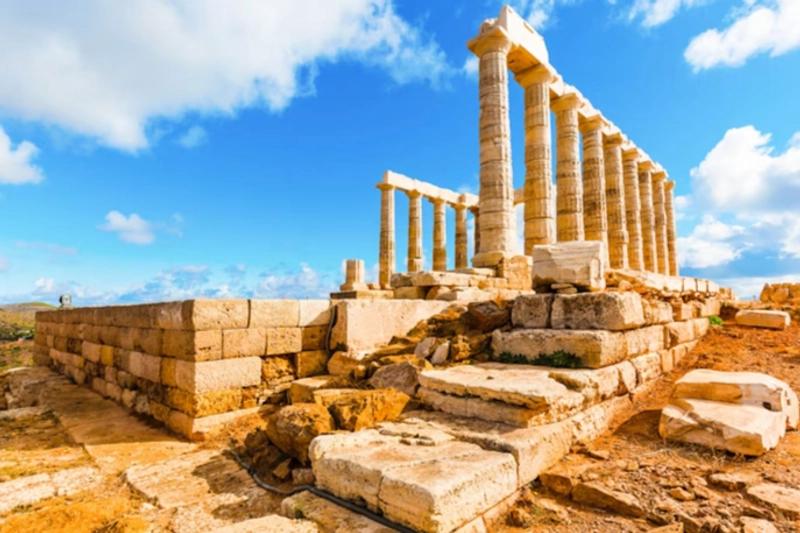
The Poseidon sanctuary, long lost to the mists of time, has reemerged from the depths of the Greek marshlands, reigniting fascination with its mysterious inscribed artifacts. Nestled within the ever-shifting landscape of the Peloponnese, this ancient site not only represents a significant archaeological discovery but also sheds light on the rich tapestry of Peloponnese history. Once a bustling center dedicated to the worship of Poseidon, the sanctuary features a striking Poseidon temple, whose architectural grandeur continues to inspire awe. Through years of careful excavation, researchers have uncovered fragments of ancient Greek temples, hinting at a once-majestic presence now partially reclaimed by nature. This revival of interest in the Poseidon sanctuary invites a deeper exploration of its historical context and the integral role it played in ancient Mediterranean culture.
Referred to in various contexts as the temple of Poseidon, the hallowed grounds associated with this deity have captivated historians and archaeologists alike. The discoveries surrounding this sacred site provide invaluable insights into ancient rituals and community life in coastal settlements. From inscribed artifacts to remnants of intricate architecture, the area is a treasure trove for those studying the evolution of religious practices in Greece. As more hidden elements of this sanctuary come to light, they promise to enhance our understanding of the social dynamics that shaped the region. Exploring the forgotten history of this marine divinity’s sanctuary offers a glimpse into the broader narrative of ancient Greek civilization.
The Forgotten Origins of the Poseidon Sanctuary
The Poseidon sanctuary, a site lost for millennia, has its roots deeply embedded in the historical narrative of ancient Greek civilization. Established as a place of worship for the god of the sea, Poseidon, its origins are shrouded in mystery. Archaeological discoveries indicate that the sanctuary was constructed at a time when Peloponnese history was marked by significant developments in religion and architecture. Temples dedicated to deities were not only places of worship but also centers of community life, drawing visitors for festivals and ceremonies. This intricate connection between the people and their gods led to the construction of immense structures that encapsulated the cultural zeitgeist of the era.
Recent archaeological excavations around the marshlands of the Peloponnese have provided valuable insights into the sanctuary’s origins. Inscribed artifacts uncovered at the site not only serve as historical records but also hint at the functionality and significance of the sanctuary. These artifacts reflect a blend of religious devotion and everyday life, illustrating how the ancient Greeks honored Poseidon while interacting with the sacred environment surrounding them. The discoverable remnants paint a vivid picture of a thriving community whose beliefs were intertwined with the natural world.
How Archaeologists Traced the Hidden Poseidon Sanctuary
The quest to rediscover the Poseidon sanctuary involved meticulous efforts from archaeologists, historians, and local enthusiasts. Early exploration relied on ancient geographical accounts, which provided clues about the sanctuary’s potential whereabouts. However, the shifting landscapes of the Peloponnese often obscured the paths that ancient writers described. Using advanced technology, including ground-penetrating radar and aerial drones, archaeologists embarked on a fascinating journey to unveil the hidden layers of history buried beneath the marshlands, leading them closer to the mythical site that had eluded researchers for generations.
As excavations commenced, what initially appeared as fragmented remnants began to reveal the outline of a significant sanctuary complex. With every layer of soil removed, more evidence of the site’s grandeur came to light. The discovery of various inscribed artifacts provided crucial context and validation for the long-standing tales of the Poseidon temple. Each piece unearthed not only enriched our understanding of the structure’s religious purpose but also illuminated the architectural techniques of the time. The collective efforts to trace the hidden Poseidon sanctuary not only enhance Peloponnese history but also reaffirm the meticulous spirit of exploration that defines archaeology.
What the Poseidon Sanctuary’s Unusual Design Reveals
The architectural design of the Poseidon sanctuary offers profound insights into the values and priorities of ancient Greek builders. Situated in an area prone to flooding, the structure was uniquely crafted with a focus on durability and resilience. The use of robust materials and engineering ingenuity demonstrates how builders sought to harmonize their sacred structures with the surrounding environment. The layout and elevation of the sanctuary reflect an acute awareness of the natural elements at play, suggesting that ancient Greeks were not only skilled artisans but also keen observers of the ecological dynamics around them.
Moreover, the sanctuary’s design reveals the significance placed on worship and community gatherings. With wide-open spaces accommodating large groups, the architecture was not solely functional but also designed for community engagement and shared spiritual experiences. Such design principles were common in ancient Greek temples, yet the Poseidon sanctuary’s adaptation to its wetland location makes it particularly noteworthy. This intersection of ingenuity and spirituality illustrates how the ancient Greeks negotiated their physical environment in ways that allowed their religious practices to thrive even in challenging settings.
What Discoveries Inside the Poseidon Sanctuary Tell Us
The discoveries made within the Poseidon sanctuary provide an intriguing glimpse into the religious practices and societal values of ancient Greece. Among the most significant finds are a series of inscribed artifacts, each holding clues about worship rituals, community events, and the ways in which the deity Poseidon was honored. Despite the challenges in deciphering these inscriptions, they continue to be invaluable to the understanding of Peloponnese history. Scholars are continually exploring these artifacts in hopes of revealing deeper meanings, thus bridging the gap between ancient beliefs and modern interpretations.
In addition to inscribed artifacts, various votive offerings have been found, showcasing the diverse practices of devotion to Poseidon. These offerings range from small figurines to intricate objects, each reflecting the dedication of worshippers who once visited the sanctuary. The variety of items suggests a vibrant community deeply engaged in the spiritual life facilitated by the Poseidon sanctuary. Every discovery enhances our understanding of the social fabric woven around this sacred site, inviting further exploration into the ways deities influenced daily life in ancient Greek society.
How Builders Protected the Poseidon Sanctuary from Flooding
The Poseidon sanctuary’s location in a marshy area necessitated innovative construction techniques to protect it from the persistent threat of flooding. Builders took extraordinary measures to ensure the temple’s stability and longevity, including the implementation of advanced drainage systems and elevation strategies. Historical records reveal that the sanctuary was designed with raised platforms and drainage channels that were crucial for channeling excess rainwater away from the site, thereby safeguarding its structural integrity.
In addition to these strategic measures, builders displayed remarkable resourcefulness by repurposing discarded materials from previous renovations. This practice not only minimized waste but also created a stabilizing layer beneath new flooring, enhancing the sanctuary’s resistance to unstable ground conditions. The ingenuity of the ancient builders highlights the sophisticated understanding of environmental challenges and their ability to adapt their architectural practices accordingly. These protective strategies illuminate the commitment to preserving the sanctuary for future generations, reflecting the deep reverence with which they regarded their sacred spaces.
The Poseidon Sanctuary’s Link to Ancient Waterways
The Poseidon sanctuary’s location is intrinsically linked to the ancient waterways of the Peloponnese, illustrating the cultural and economic significance of water for the ancient Greeks. Revered as the god of the sea, Poseidon was not only associated with the vast ocean but also with the lakes, rivers, and streams that sustained daily life. The sanctuary’s proximity to these waterways is a testament to the integral role of water in shaping religious practices and community interactions. It served as both a source of sustenance and a vital conduit for trade and travel.
Furthermore, the sanctuary’s relationship with ancient waterways underscores the interconnectedness of nature and spirituality. Historical evidence suggests that rituals were often conducted near water’s edge, fostering a sense of sacredness that resonated with the sounds and movements of the flowing water. This fusion of natural beauty and spiritual reverence provided a backdrop for worship, linking the divine with the elements. Thus, the Poseidon sanctuary stands as a reminder of the profound significance of water in ancient Greek culture, its influence echoing throughout their myths and daily lives.
Frequently Asked Questions
What archaeological discoveries have been made at the Poseidon sanctuary in the Peloponnese?
Recent archaeological discoveries at the Poseidon sanctuary have revealed a complex of ancient Greek temples, including remnants of the Poseidon temple itself. These findings highlight the sanctuary’s historical significance and its connection to Peloponnese history, showcasing inscribed artifacts that provide insights into religious practices and cultural life in ancient Greece.
| Key Points | Details |
|---|---|
| Ancient Poseidon Sanctuary | Lost for 2,500 years, it is located in the marshlands of the western Peloponnese. |
| Archaeological Discoveries | Initial findings were seen as random remnants, but these revealed a significant sanctuary complex. |
| Design and Durability | The architecture was created to withstand moisture and unstable ground conditions. |
| Inscription and Meaning | The inscriptions found are difficult to decipher but may reveal insights with further conservation efforts. |
| Flood Protection Measures | Builders repurposed old materials to stabilize and protect the sanctuary from flooding. |
| Connection to Waterways | The sanctuary has historical ties to ancient waterways crucial to its location. |
Summary
The Poseidon sanctuary, an archaeological gem rediscovered after 2,500 years, offers a mesmerizing glimpse into ancient Greek culture and religious practices. Nestled in the marshlands of the Peloponnese, this sacred site is not just remarkable for its long-lost history, but also for the impressive engineering skills of its builders who designed it to withstand the moisture of the landscape. Archaeologists, through meticulous study, uncovered a complex that hints at the sanctuary’s significance in linking communities to the ancient waterways. Despite the challenges of interpretation, the mysterious inscriptions found within the site promise to reveal more about the beliefs and rituals associated with Poseidon. The Poseidon sanctuary ultimately serves as a testament to the enduring legacy of ancient civilizations and their connection to the natural world.