In a shocking turn of events, BJP workers assaulted reporters during a protest at Delhi’s Jantar Mantar, raising serious concerns about the safety of journalists in politically charged environments. Abhijeet Dipke, the founder of the Cockroach Janta Party (CJP), shared videos on social media platforms, alleging that party members attacked not only reporters but also demonstrators voicing their dissent. The shocking incident is part of broader BJP violence news, as tensions escalate in the capital amidst ongoing protests. Echoing the outrage, Dipke criticized the authorities for their inaction while detailing the harrowing accounts of reporters attacked in Delhi. These developments have significant implications for freedom of the press and have prompted calls for transparency and accountability regarding the escalating violence against media figures in India.
Reports of physical assaults on journalists during demonstrations are becoming increasingly common in today’s political climate. The rise of aggressive encounters at protest sites like Delhi’s Jantar Mantar underscores a troubling trend where media personnel find themselves caught in the crossfire of political conflict. Allegations from figures like Abhijeet Dipke, linked to ongoing protests against government actions, suggest a deeper malaise affecting media freedom. With increasing reports of interference and violence against reporters, particularly those covering sensitive issues, it raises important questions about the safeguards in place to protect press freedom. These incidents highlight the urgent need for discussions surrounding journalists’ rights in the context of rising tensions and public demonstrations.
BJP Workers Assault Reporters at Jantar Mantar: Unfolding Events
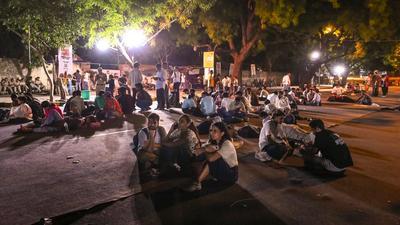
In a distressing turn of events at Delhi’s Jantar Mantar, reports surfaced of BJP workers allegedly assaulting reporters covering a protest led by Abhijeet Dipke. The shocking allegations took center stage when Dipke shared videos on social media platform X, depicting the chaotic scene where both reporters and protesters were allegedly targeted. Eyewitness accounts suggest that tensions escalated rapidly, leading to confrontations with law enforcement present on-site, as stated in a viral video from the incident that caught the voices and reactions of those affected.
The incident has sparked widespread outrage and condemnation among journalist communities and civil rights groups. Many are calling for a thorough investigation into the incident, emphasizing the need for transparency and accountability from political groups and law enforcement agencies. This assault on journalists not only raises pressing concerns over press freedom but also highlights the increasingly volatile atmosphere surrounding the protests at Jantar Mantar, especially amidst allegations related to competitive examination irregularities and the broader implications for democratic discourse in India.
Impact of the CJP Protest and Allegations Against BJP
Abhijeet Dipke’s ongoing protest at Jantar Mantar has garnered significant attention as he demands the resignation of Union Education Minister Dharmendra Pradhan. The protest has lasted for several days, drawing support from various groups who share concerns over the irregularities in national examinations and the NEET paper leak controversy. With tensions running high, allegations have surfaced that the BJP is resorting to violent means to suppress dissent, raising questions about the party’s approach to dealing with critics and media.
The allegations made by Dipke and the subsequent events at Jantar Mantar reflect a growing trend concerning the treatment of protest groups in India. Many are raising alarms about the increasing aggressiveness demonstrated by political parties against media representatives and civilians, indicating a broader pattern of hostility towards dissenting voices. As observers continue to monitor developments surrounding the protests and BJP violence news, this situation amplifies the ongoing discourse about the state of democracy and civil rights in the country.
The Role of Social Media in Documenting Allegations
Social media platforms, particularly X (formerly Twitter), have emerged as crucial tools in documenting and disseminating information about incidents like the alleged assault on reporters by BJP workers. Abhijeet Dipke’s persistent use of these platforms highlights their significance in rallying public support and generating awareness. By posting videos and statements, Dipke not only brought attention to his cause but also provided a visual narrative that has the potential to mobilize action from fellow activists and civil society.
However, while social media can serve as a powerful amplifier for pressing issues like the CJP protest updates, it also poses challenges such as the spread of misinformation. The quick circulation of unverified claims can exacerbate tensions and lead to misinterpretations of events. Nevertheless, it remains a pivotal battleground for dialogue and awareness, as users share firsthand accounts and media reports that contribute to the collective understanding of incidents like those occurring at Jantar Mantar.
Call for Accountability and Press Freedom in India
The alleged physical assault on reporters at the hands of BJP workers has ignited protests advocating for press freedom and accountability. Media bodies and journalists are increasingly voicing their concerns over the challenges faced while reporting on political events, particularly those involving protests and dissent. Amid claims of police indifference, the pressing need for protective measures for journalists becomes severely pronounced, urging the government to reevaluate its policies surrounding press safety during political demonstrations.
As the situation unfolds at Jantar Mantar, the assault illustrates a troubling pattern of violence against media representatives, prompting calls for stronger legislative measures to ensure their protection. Stakeholders in media ethics and civil rights are rallying for an environment where freedom of expression is upheld and journalists can perform their duties without fear of reprisal. This ongoing dialogue around accountability and freedom is vital for safeguarding democratic principles and human rights in the region.
Analyzing the Allegations of Violence and their Implications
The serious allegations that BJP workers engaged in violent actions against reporters and protesters at Delhi’s Jantar Mantar highlight underlying tensions between political entities and civil society. Abhijeet Dipke’s assertions, accompanied by disturbing footage, raise important questions about the conduct of political party members during protests. The implications of such behavior can affect public perception of the BJP, potentially damaging its reputation among voters concerned about issues of safety and democratic freedoms.
As the discourse around BJP violence news continues to evolve, stakeholders are urged to consider the broader implications of unchecked political aggression. The attack on the freedom of the press not only threatens journalists but also destabilizes the foundational democratic right to dissent. Ongoing investigations and public scrutiny of these allegations will play a key role in shaping the future landscape of political accountability and civilian engagement in India.
Civil Rights Groups Respond to Allegations at Jantar Mantar
Civil rights organizations have been vocal in their reaction to the shocking allegations of violence against reporters at the hands of BJP workers during the Jantar Mantar protest. Many groups are calling for urgent action and comprehensive investigations to address these allegations, emphasizing the need to uphold the right to free expression and public protest. This incident serves as a wake-up call about the alarming state of civil liberties in India, with civil rights advocates rallying to support journalists and victims of political violence.
Furthermore, civil rights organizations are stressing the importance of safeguarding democratic spaces for all citizens. The assault not only puts journalists in danger but also undermines the collective ability of the public to voice concerns about governmental policies. In this context, civil rights groups are mobilizing public opinion and calling on the BJP government to reconsider its approach towards dissent and protest management, advocating for a more peaceful and respectful political environment.
The Role of Law Enforcement in Protest Situations
The involvement of the Delhi police during the alleged assaults at Jantar Mantar brings to light the complexities surrounding law enforcement’s role in managing protests. Eyewitness statements and videos indicate possible negligence or lack of intervention by police, raising critical questions about their responsibilities in safeguarding both protesters and reporters. As the situation escalated, the duty of law enforcement to maintain public order while protecting the rights of individuals came under scrutiny.
This incident, within the broader context of protests, underscores the need for law enforcement agencies to adopt higher standards of accountability and crisis management. They must navigate the delicate balance between maintaining peace and ensuring that the rights of individuals participating in protests are respected. Moving forward, discussions about reforming police practices in such contexts are imperative for fostering trust and collaboration between the community, law enforcement, and political entities.
Understanding the Broader Context of Political Dissent
The events unfolding at Delhi’s Jantar Mantar are emblematic of larger issues surrounding political dissent in India. The allegations of assault and intimidation faced by reporters and activists signal a disturbing trend of repression against those challenging the status quo. The protests, particularly those driven by concerns over educational policies and alleged irregularities, highlight the critical role civic engagement plays in a democracy, yet it is met with varying degrees of resistance from political factions.
Such confrontations not only raise awareness about specific issues but also spark broader debates about the health of democracy in India. The ability to question authority, express grievances, and mobilize for change is foundational to democratic practices. However, as reports emerge detailing BJP violence and aggression against dissenting voices, it’s crucial for both citizens and lawmakers to prioritize and protect the principles that uphold these democratic processes.
The Future of Protests and Civil Engagement in India
As incidents like the alleged attack on reporters by BJP workers at Jantar Mantar unfold, they lay bare the challenges and future trajectory for protests in India. The intersection of politics, media, and civil society is complex, but critical for shaping the nation’s discourse. Activists like Abhijeet Dipke are paving the way for ongoing civic action, asserting the people’s right to demand accountability and advocate for changes, especially in the education sector. However, such movements depend on the atmosphere of safety and respect for free speech.
To ensure the future of protests in India remains vibrant and impactful, a concerted effort must be made by all stakeholders, including political leaders, law enforcement, and the media. This includes fostering a culture of open dialogue, protecting the rights of whistleblowers and reporters, and ensuring that all individuals, regardless of their affiliations, can engage in peaceful protests without fear of retaliation. The way forward must prioritize constructive engagement over conflict, aiming for a more inclusive political landscape.
Frequently Asked Questions
What are the recent allegations about BJP workers assaulting reporters at Delhi’s Jantar Mantar?
Recently, Abhijeet Dipke, founder of the Cockroach Janta Party (CJP), alleged that BJP workers physically assaulted reporters and protesters during a sit-in at Delhi’s Jantar Mantar. He shared videos on social media showing the incident, which prompted concerns about the safety of journalists covering political protests in India. The allegations coincide with ongoing protests regarding educational irregularities and the NEET paper leak controversy, with no immediate response from BJP or Delhi Police regarding these serious claims.
| Key Point | Details |
|---|---|
| Incident Allegation | Abhijeet Dipke alleges BJP workers assaulted reporters and protesters at Delhi’s Jantar Mantar. |
| Video Evidence | Videos shared by Dipke on X show the alleged assaults, but the details cannot be independently verified. |
| Dipke’s Protest | Dipke is protesting against Union education minister Dharmendra Pradhan, demanding his resignation over competitive exams irregularities. |
| BJP’s Response | There was no immediate response from the BJP or the Delhi Police regarding the allegations. |
| Protest Activities | Earlier, Dipke celebrated Pradhan’s birthday sarcastically, wishing him to resign as a gift. |
Summary
BJP workers assault reporters is a serious allegation that has recently surfaced from a protest at Delhi’s Jantar Mantar. Abhijeet Dipke has claimed that BJP personnel violently confronted journalists and demonstrators during this ongoing protest, sharing video evidence online. As tensions escalate, the lack of a response from BJP or the Delhi Police raises questions about accountability and transparency amidst a politically charged atmosphere. Dipke, leading the protest against perceived injustices in competitive examinations, underscores a growing frustration within certain sections of society regarding government actions. This incident sheds light on the broader implications of political protests in India, particularly regarding the treatment of journalists and dissenters.