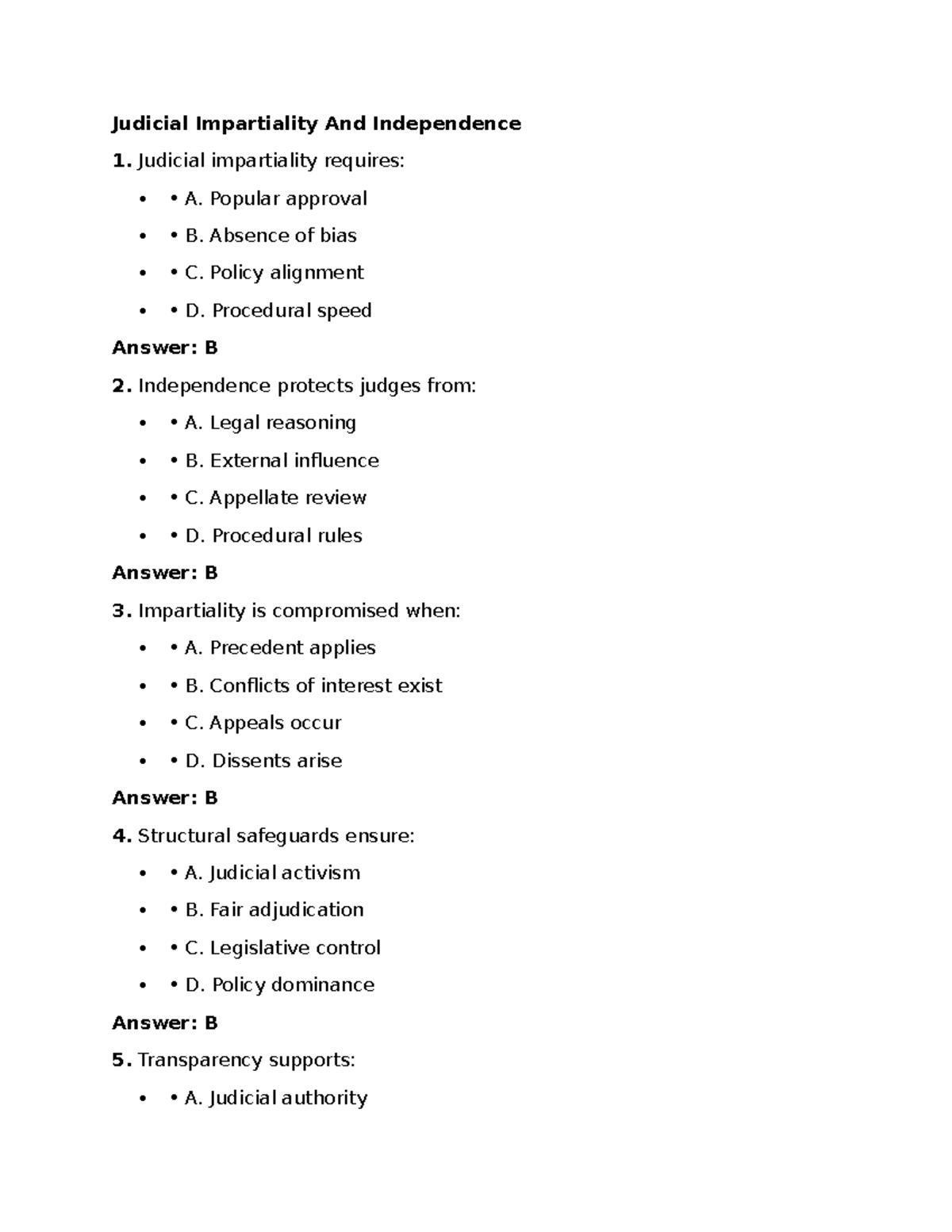
Judiciary impartiality stands as a cornerstone of justice, crucial for upholding democracy and citizens’ rights. In recent discussions, the Supreme Court raised objections to a section in an NCERT textbook that implied corruption in the judiciary, highlighting the delicate balance between judicial independence and public perception. The new Class 9 social science textbook presents the judiciary as an impartial and independent institution, affirming its role in safeguarding the Constitution and democratic values. This textbook aligns with the principles of separation of powers, emphasizing the judiciary’s functions, such as reviewing executive actions and protecting citizens’ rights through public interest litigations (PILs). As controversies surrounding judicial integrity unfold, the importance of ensuring judiciary independence remains paramount to maintain public trust and uphold the rule of law.
The concept of judicial neutrality is essential for nurturing a fair legal system that instills confidence amongst the citizenry. Recently, heated debates arose around the contents of an NCERT Class 8 textbook, which faced scrutiny regarding its portrayal of alleged judicial corruption. Following strong Supreme Court objections, a revised Class 9 textbook now characterizes the judiciary as a “neutral and autonomous body” dedicated to upholding the Constitution and the rights of individuals. With a focus on the separation of governmental authorities, the text emphasizes how the judiciary plays a crucial role in actors’ accountability, thereby reinforcing the principles of democracy. As public discussions continue, the significance of an unbiased judiciary is ever more critical in combating adverse narratives and preserving judicial credibility.
The Importance of Judiciary Impartiality in Modern Democracy
Judiciary impartiality is a cornerstone of democratic governance, ensuring that all individuals are treated equitably under the law. In a functioning democracy, the judiciary serves as a safeguard against abuses of power, providing a critical check on the executive and legislative branches. This independence allows judges to make decisions based solely on legal principles without influence from external pressures or public opinion, guaranteeing the fair administration of justice. When public trust in the judiciary is maintained, citizens are more likely to view the legal system as a credible institution that protects their rights.
The recent revisions to NCERT textbooks, highlighting the judiciary as an ‘impartial and independent institution,’ reflect a recognition of this essential function. Adequate representation of judiciary independence fosters a culture of respect for the rule of law. Moreover, it encourages students to engage with fundamental democratic principles, such as the separation of powers. The judiciary’s responsibility in adjudicating disputes, addressing violations of rights, and upholding constitutional integrity helps instill a sense of justice and fairness among the younger generation.
Challenges Facing Judiciary Independence and Impartiality
Despite the strong foundations that support judiciary independence, significant challenges remain. The recent protests over content in NCERT textbooks regarding allegations of judicial corruption illustrate these difficulties. Critics argue that such narratives can undermine public confidence in the judiciary, leading to an erosion of the critical trust necessary for a functioning legal system. Concerns have been raised about how external perceptions and political pressures may affect judicial impartiality, particularly when judicial reviews involve contentious governmental actions or policies.
Moreover, allegations of corruption within the judiciary can exacerbate these challenges. The Supreme Court’s decision to impose a ‘complete blanket ban’ on the questioned NCERT textbooks reflects the judiciary’s commitment to preserving its integrity and restoring public faith. This situation emphasizes the need for continuous education and reform within judicial institutions to enhance transparency and accountability. Protecting the judiciary from undue influence—whether from political entities, public sentiment, or media portrayals—serves not only to uphold the separation of powers but protects the very fabric of democratic society.
Judiciary’s Role in Upholding Constitutional Values
The judiciary plays a pivotal role in upholding the constitutional values that define a nation. By interpreting laws and ensuring their alignment with the Constitution, judges act as guardians of democratic principles. As highlighted in the NCERT textbook, the judiciary engages in reviewing executive actions and legislative processes to prevent any encroachments on fundamental rights. This vigilance is crucial for maintaining a balance of power among the various branches of government, a concept central to the doctrine of separation of powers.
Furthermore, through the mechanism of public interest litigations (PILs), the judiciary extends its purview beyond traditional cases, actively working to promote social justice and access to justice for marginalized communities. This proactive role reinforces its commitment to protecting the rights of individuals and ensuring that governmental actions conform to constitutional mandates. By educating citizens about the judiciary’s functions, as evidenced in academic resources like NCERT textbooks, society becomes more informed about its rights and responsibilities, fostering a more engaged citizenry.
Revisiting the NCERT Textbook Controversy
The NCERT textbook controversy sparked by the Supreme Court’s objections reveals underlying tensions between academic representations of the judiciary and its perceived integrity. The characterization of the judiciary as an institution plagued by corruption in an educational resource not only challenges the public’s perception but also risks instilling distrust among the youth regarding legal institutions. The swift response from the Supreme Court, including a ban on the dissemination of the textbooks, emphasizes the judiciary’s sensitivity to reputational damage and its efforts to protect its image.
This incident underscores the significance of carefully curated educational materials that accurately reflect the judiciary’s impartiality and independence. The balancing act between free expression in academic discourse and protecting institutional integrity raises critical questions about censorship, governance, and education in a democratic society. Ultimately, the resolution of this controversy serves not only to inform future textbooks but also to reinforce the importance of maintaining a transparent and accountable judiciary.
The Separation of Powers: Safeguarding Democracy
The doctrine of separation of powers is fundamental to ensuring that democracy functions effectively, delineating the distinct roles and responsibilities of the legislative, executive, and judicial branches of government. This framework is essential in preventing any single branch from exerting excessive influence over the others, thereby maintaining checks and balances. The NCERT textbook’s emphasis on the judiciary’s role in this balance highlights why it is crucial for students to understand the implications of this doctrine for protecting civil liberties and human rights.
By educating students about the separation of powers, the judiciary’s oversight capabilities, and its function in mediating disputes among other branches, the curriculum aims to cultivate informed citizens who appreciate the importance of judicial independence. Understanding how the judiciary interacts with the other branches of government prepares future generations to advocate for their rights and engage thoughtfully in civic discourse. This educational grounding is vital for fostering a robust democracy where governmental power is held accountable.
Judicial Review: A Pillar of Democracy
Judicial review is a critical mechanism that enables the judiciary to interpret the law and assess the constitutionality of legislative and executive actions. This process plays a vital role in maintaining a healthy democracy by ensuring that all government actions align with constitutional principles. The recent curriculum revisions in NCERT textbooks reflect both the importance and the complexity of judicial review, illustrating its implications for democracy and governance.
Through judicial review, the judiciary acts as a guardian of the Constitution, stepping in to overturn laws or actions that infringe on rights or deviate from constitutional mandates. This essential function not only maintains the rule of law but also reinforces the principles of democracy, safeguarding citizens from potential abuses of power. By understanding the nuances of judicial review as presented in educational material, students can appreciate the judiciary’s indispensable role in protecting freedoms and promoting social justice.
Implications of Judicial Corruption Allegations
Allegations of judicial corruption pose significant implications for the justice system and public perception. When accusations arise, they can lead to a crisis of confidence in the judiciary, challenging the foundational belief in its impartiality. As seen in the recent Supreme Court actions regarding the NCERT textbook content, the judiciary is acutely aware of how corruption narratives can undermine its authority and complicate its advocacy for justice and democracy.
The consequences of such allegations extend beyond immediate public opinion; they can catalyze systemic reform within judicial institutions designed to enhance transparency and accountability. As the Supreme Court navigates these tumultuous waters, the focus on integrity becomes paramount. Educational resources must not only convey the positive roles of judicial independence but also address the risks posed by corruption, equipping future generations to understand both the challenges and the importance of an incorruptible judiciary.
Educating the Youth on Judiciary’s Role
Educating young people about the judiciary’s role in democracy is crucial for cultivating an informed citizenry that values judicial independence and accountability. The inclusion of judiciary-related topics in NCERT textbooks aims to equip students with the knowledge necessary to appreciate the benefits of an impartial judicial system. By learning about the judiciary’s functions, such as protecting citizens’ rights and enforcing constitutional mandates, students are encouraged to engage with fundamental democratic principles.
Moreover, understanding the judiciary’s function in maintaining the separation of powers allows young citizens to recognize the importance of checks and balances in preventing governmental overreach. This foundational knowledge fosters civic engagement and enables students to advocate for justice and equality within their communities. As future leaders, this generation will play a key role in promoting and preserving the independence of the judiciary, ensuring that corruption allegations are addressed while maintaining faith in this vital institution.
The Role of Educational Institutions in Promoting Judiciary Independence
Educational institutions play a pivotal role in promoting awareness and understanding of the judiciary’s independence and its impact on society. By integrating discussions on judicial impartiality and the rule of law into the curriculum, schools can foster critical thinking and civic responsibility among students. The recent controversies surrounding NCERT textbooks highlight the importance of accurate and balanced educational content, underscoring the need for rigorous standards in teaching about judicial functions.
Furthermore, equipping students with the knowledge of how the judiciary serves as a bulwark against corruption and ensures justice empowers them to become informed advocates for democratic values. Institutions must prioritize teaching the principles of separation of powers and judicial review, which are essential for appreciating the judiciary’s role within a democratic framework. Through comprehensive education, students can cultivate a resilient democracy that understands the significance of an independent judiciary and actively participates in safeguarding it against external threats.
Frequently Asked Questions
What role does judiciary impartiality play in maintaining democracy and the rule of law?
Judiciary impartiality is essential for maintaining democracy and the rule of law, as it ensures that judicial decisions are made based on facts and the law, free from bias or external influences. An impartial judiciary can safeguard citizens’ rights and uphold constitutional principles, thus preventing abuses of power by the executive or legislative branches. This concept is reinforced by the idea of separation of powers, which seeks to prevent any single branch of government from becoming too powerful. Events like the NCERT textbook controversy underscore the importance of a fair and independent judiciary that can objectively address allegations of corruption within its ranks.
| Key Point | Details |
|---|---|
| Judiciary’s Role | Described as an impartial and independent institution that safeguards citizens’ rights and upholds the Constitution. |
| Functions of the Judiciary | Reviews executive actions and constitutional amendments, can nullify unconstitutional laws, and protects democratic values. |
| Public Interest Litigations (PILs) | Judiciary entertains PILs to ensure access to justice for all. |
| Controversy Over Corruption Allegation | Supreme Court objected to a Class 8 textbook containing allegations of judicial corruption, leading to an apology from NCERT and withdrawal of the textbook. |
| Supreme Court’s Reaction | Described the allegations as a conspiracy to defame the judiciary and imposed a ban on the textbook’s publication. |
| Academicians Involved | Three academicians were imposed a life ban from future academic involvement due to their role in writing the controversial textbook, though this was later lifted by the court. |
Summary
Judiciary impartiality is essential as it ensures that the justice system operates without biases, reinforcing the rule of law and protecting the rights of all citizens. The recent developments concerning the NCERT textbook highlight the importance of portraying the judiciary accurately and fairly. Amid controversies, the judiciary was characterized in a new textbook as an impartial and independent institution committed to upholding the rights of citizens and maintaining democratic values. This underscores the ongoing responsibility of educational institutions to communicate the judiciary’s role and functions without misrepresentation, thus fostering a public trust in judicial processes.