As we look ahead to 2026, understanding the best index funds in India is crucial for savvy investors seeking to capitalize on low-cost mutual funds that mirror market performance. These passive investment options have gained tremendous popularity, particularly since the onset of the COVID-19 pandemic, prompting individuals to consider safer avenues for their capital. With options like Nifty index funds leading the charge, investors can benefit from a diversified portfolio that minimizes risk while maximizing returns. This article provides valuable index fund investment tips, ensuring you’re equipped with knowledge about the top index funds India has to offer in 2026. Whether you are a seasoned investor or just starting, the insights here will guide you towards making informed choices in your index fund journey.
As the financial landscape continues to evolve in India, exploring the prime equity investment vehicles of 2026 becomes increasingly important. Index funds, known for replicating the performance of established market indices, offer an attractive alternative for those who favor passive investment strategies. These funds generally feature a lower expense ratio compared to actively managed counterparts, making them an appealing choice for cost-conscious investors. This discussion delves into the notable index funds available across India in this year, highlighting their potential for both novice and experienced investors seeking to bolster their portfolios. With clarity around the mechanics and benefits of these investment instruments, you can confidently navigate the world of index fund investments.
Understanding the Basics of Index Funds
Index funds are a type of mutual fund designed to replicate the performance of a specific market index, such as the Nifty 50 or the S&P BSE Sensex. Unlike actively managed funds where portfolio managers make investment decisions aimed at outperforming the market, index funds take a passive approach, buying and holding securities that are part of the chosen index. This means that investors can enjoy a more straightforward investment strategy that typically incurs lower fees and expenses, making it an appealing option for both novice and experienced investors.
Investing in index funds is often associated with the concept of passive investing. The portfolio mirrors the index composition, which implies that if the index rises, so do the index funds, albeit with minor variations known as tracking errors. This makes index funds an excellent choice for those looking to invest in a diversified range of equities without needing to actively manage their investments.
Key Features of the Best Index Funds in India 2026
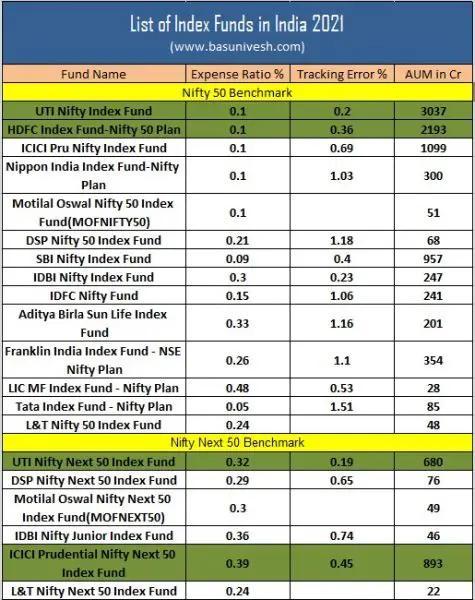
As we move through 2026, it is essential to identify the best index funds in India based on performance metrics and overall investor benefits. A few standout options such as the UTI Nifty 50 Index Fund and the HDFC Index Fund – Nifty 50 Plan have consistently shown impressive returns over time, particularly in a market recovering from recent uncertainties. These funds not only track leading indices, but they have also brought attractive one-year, three-year, and five-year returns, making them top choices for long-term investors looking for reliable equity exposure.
The top index funds in India not only feature robust historical performance, but they also offer lower expense ratios compared to actively managed funds, making them accessible to a broader audience. Particularly for investors focusing on low-cost mutual funds, these index funds serve as an ideal entry point into equity markets, allowing for consistent growth with minimal investment costs.
Benefits of Investing in Index Funds
One of the significant advantages of investing in index funds is their inherent stability and reliability. Because they are comprised of stocks that make up the underlying index, index funds usually include well-established companies with track records of strong performance. This characteristic makes them less vulnerable to market volatility, which is crucial for investors seeking safer investment options in turbulent times.
Additionally, the low-cost structure of index funds results in higher net returns for investors. Since they are passively managed, the transaction costs and management fees are significantly lower than those of actively managed funds. As more investors recognize the merits of low-cost mutual funds, index funds are becoming an increasingly popular choice for wealth creation and long-term financial goals.
Index Fund Investment Tips for 2026
To maximize the benefits of investing in index funds in 2026, potential investors should focus on a few essential tips. Firstly, it’s crucial to choose funds with a low expense ratio, as this will directly impact overall returns. Investors should compare different funds tracking the same index and select the one with the lowest costs for optimizing returns.
Moreover, investors should also consider their investment horizon and risk tolerance before diving into index fund investments. Index funds are more suitable for those willing to invest over the long term, as they typically yield better results when held for several years. Therefore, aligning investment choices with personal financial goals can lead to greater success in capitalizing on the strengths of index funds.
Understanding Risks Associated with Index Funds
While index funds are often viewed as safer investment options, they are not free from risks. Market volatility can significantly affect index fund performance, particularly in bear markets where the underlying indices may decline. Investors need to be prepared for potential dips in value, understanding that while index funds do offer a diversified approach, they still carry carmarket-related risks just like any equity investment.
Moreover, in certain market conditions, actively managed funds may outperform index funds, leading some investors to doubt passive strategies. Therefore, it is essential to regularly assess your investment portfolio and maintain a balanced approach that might include both index funds and more actively managed options to hedge against risks.
How to Choose the Right Index Fund
Choosing the right index fund involves thorough research and comparison. Investors should look for funds that not only have a solid performance history but also a low tracking error, indicating how closely the fund follows its benchmark index. A lower tracking error suggests that the fund manager effectively mirrors the index’s performance, enhancing investor confidence.
Additionally, it’s advisable to consider the size of the fund, or Assets Under Management (AUM). Typically, larger funds tend to be more stable and less prone to significant fluctuations compared to smaller funds, which may face liquidity problems. Thus, selecting a well-rounded index fund with both a healthy AUM and a good performance history can yield significant long-term benefits.
Long-Term Financial Goals and Index Funds
When investing in index funds, it’s crucial to align your strategy with long-term financial goals. Index funds are often recommended for investors aiming for wealth creation, retirement planning, or major future expenses like buying a home. By starting early and maintaining a disciplined investment strategy, investors can take advantage of compound growth over time.
Just as important is the understanding that equity investments are influenced by market trends. Therefore, aligning your expected timeline and risk tolerance with the right index fund can allow you to maximize gains while maintaining stability over the long haul. This strategic approach is beneficial in achieving financial freedom and cultivating a robust investment portfolio.
Tax Implications for Index Fund Investments
Investors in index funds need to be aware of the tax implications associated with their investments. As equity funds, index funds are subject to capital gains taxation. Short-term capital gains, realized within one year of investing, are taxed at a flat rate of 15%, while long-term capital gains exceeding Rs 1 lakh in a financial year are taxed at 10%. Understanding these tax brackets and how they affect your returns is crucial for effective financial planning.
Moreover, with the introduction of various tax-saving instruments, investors can optimize their tax liabilities while still benefiting from index funds. It’s advisable to consult with a financial advisor or tax professional to devise an investment strategy that minimizes tax impact while maximizing returns on your index fund investments.
The Future of Index Funds in India
As the investment landscape in India continues to evolve, index funds are likely to become even more entrenched in the portfolios of Indian investors. The rising interest in passive investment options points to a shift in investor mentality, where costs, efficiency, and simplicity take precedence. As market participants continue to seek reliable avenues for sustained growth, index funds will play a pivotal role.
Additionally, with more financial literacy campaigns and technological advancements enabling easier access to these funds, we can expect greater participation from the masses in the index fund segment. Ultimately, the future of investing in India appears promising for index funds, given their inherent advantages and the growing community of passive investors.
Frequently Asked Questions
What are the best index funds in India for 2026?
The best index funds in India for 2026 include options like the UTI Nifty 50 Index Fund, HDFC Index Fund – Nifty 50 Plan, and ICICI Prudential Nifty 50 Index Fund. These funds have demonstrated strong performance based on past returns and are popular choices among investors seeking low-cost mutual funds.
How to choose the top index funds in India for investment in 2026?
When selecting top index funds in India for 2026, consider factors like historical performance, expense ratios, tracking errors, and assets under management (AUM). Funds such as the SBI Nifty Index Fund and Navi Nifty 50 Index Fund are noteworthy for their consistent returns.
What are some index fund investment tips for 2026?
For successful index fund investment in 2026, focus on funds with low expense ratios, maintain a long-term investment horizon, and ensure your portfolio aligns with your risk tolerance. Actively monitor economic trends that may impact indices like Nifty and BSE Sensex.
Are Nifty index funds a good investment option in 2026?
Yes, Nifty index funds continue to be a sound investment option in 2026, offering stable returns that mirror the performance of the Nifty 50 index. They are ideal for investors looking for a passive investment option with lower costs and risk diversification.
What advantages do low-cost mutual funds offer in 2026?
In 2026, low-cost mutual funds, like index funds, provide several advantages including lower expense ratios, simplicity in investment strategy, and the ability to replicate index performance. This makes them suited for both novice and seasoned investors looking for efficient investment vehicles.
How do index funds work in relation to market indices in 2026?
Index funds in 2026 function by mirroring the performance of major stock market indices, such as the NSE Nifty. They invest in the same stocks that comprise the index, maintaining the same proportions to achieve returns that align closely with those of the underlying market.
Who should consider investing in index funds in India in 2026?
Investors who prefer stable and consistent returns without needing to actively manage their portfolio should consider index funds in India in 2026. These funds are well-suited for those with a long-term investment horizon who are willing to accept market-related risks.
| Fund Name | 1Y Return | 3Y Return (CAGR) | 5Y Return (CAGR) | AUM |
|---|---|---|---|---|
| UTI Nifty 50 Index Fund | 4.50% | 16.80% | 18.20% | 25,000 |
| HDFC Index Fund – Nifty 50 Plan | 4.40% | 16.70% | 18.10% | 19,000 |
| ICICI Prudential Nifty 50 Index Fund | 4.50% | 16.80% | 18.20% | 15,000 |
| SBI Nifty Index Fund | 4.40% | 16.60% | 18.00% | 10,000 |
| Navi Nifty 50 Index Fund | 4.50% | 16.80% | 18.20% | 3,500 |
| Bandhan Nifty 50 Index Fund | 4.30% | 16.50% | 17.90% | 2,000 |
| UTI Nifty Next 50 Index Fund | 8.80% | 22.40% | 24.10% | 4,000 |
| ICICI Prudential Nifty Next 50 Index Fund | 8.70% | 22.20% | 23.90% | 5,000 |
| Motilal Oswal Nifty Midcap 150 Index Fund | 11.50% | 27.50% | 29.80% | 2,500 |
| Nippon India Nifty Small cap 250 Index Fund | 12.10% | 28.30% | 31.20% | 1,800 |
Summary
The best index funds in India 2026 present a robust opportunity for investors seeking low-cost, passive investment options that closely mimic market indices. With many funds demonstrating impressive returns over a 10-year period, including UTI and HDFC index funds, these options offer stability and predictability for long-term investors. Index funds are particularly appealing to those looking for exposure to equities without the higher risks associated with actively managed funds. As the market continues to evolve, investors can capitalize on these passive investment strategies to achieve their financial goals.