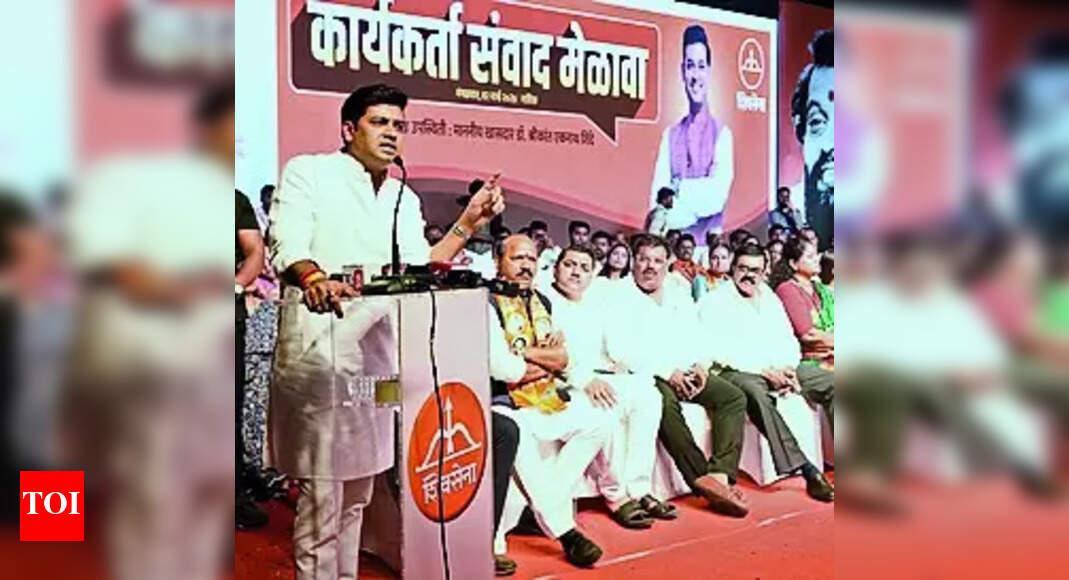
The Shiv Sena defection saga continues to unfold as MLC Sachin Ahir recently joined the Eknath Shinde-led faction, marking yet another critical shift in Maharashtra council politics. This move, alongside the defection of six Lok Sabha MPs, underscores the growing rifts within Shiv Sena (UBT), led by Uddhav Thackeray. Notably, with these MPs now supporting Shinde, the Uddhav faction’s political clout diminishes significantly, reducing its presence in Parliament to a mere three MPs. This scenario raises important questions regarding the defection law in Maharashtra and its implications for party loyalty and governance. As the political landscape evolves, Uddhav Thackeray news highlights the ongoing challenges faced by the Shiv Sena amid its internal conflict and the repercussions of such defections on regional politics in India.
The ongoing turmoil within Maharashtra’s Shiv Sena party illustrates a tumultuous shift in allegiances, particularly as key members pivot towards the faction led by Eknath Shinde. This notable shift is symptomatic of deeper issues facing the party and reflects broader themes of loyalty, ideology, and governance in a changing political environment. With Shiv Sena’s internal discord becoming increasingly pronounced, recent defections signal a pivotal moment for the faction originally established by Balasaheb Thackeray. The transformation of party dynamics as members switch sides evokes significant implications for Maharashtra’s political structure. Such internal strife and realignments not only challenge established leadership but also bring into question the future of party unity and the adherence to defection laws in Maharashtra.
Impact of Shiv Sena Defection on Maharashtra Politics
The recent defection of MLC Sachin Ahir to Eknath Shinde’s faction has sent shockwaves through Maharashtra politics. This transition not only deepens the fissures within the Shiv Sena but also alters the power dynamics within the Maharashtra council. Additional resignations, particularly those involving key members from Uddhav Thackeray’s faction, threaten to diminish their representation significantly. With the shifting loyalties of six Lok Sabha MPs, the Uddhav faction’s presence is now critically undermined, leaving them with only three MPs in the Lok Sabha. Such a dramatic change highlights the increasing fragmentation within the party, raising concerns about political stability in Maharashtra as elections approach.
This mass defection raises questions about the viability of the Uddhav Thackeray-led faction. With the Eknath Shinde faction now boasting a stronger parliamentary presence, it’s evident that Thackeray’s group is at a strategic disadvantage. The anti-defection law in Maharashtra plays a crucial role in these shifts; the departing MPs have ensured their transition does not trigger disqualification, leveraging the current legal framework to optimize their political gains. This development not only weakens Thackeray’s position but also sets a precedent that may influence future party loyalty across Maharashtra’s political landscape.
Shiv Sena Internal Conflict: A Timeline of Events
The internal conflict within Shiv Sena is a saga that began in June 2022, when Eknath Shinde initiated a mutiny against then Chief Minister Uddhav Thackeray. This pivotal moment led to the downfall of the Maha Vikas Aghadi government, reshaping the political landscape in Maharashtra. Since then, both factions have been embroiled in a struggle not just for power, but for the very identity of the Shiv Sena. The Election Commission’s decision in February 2023 to officially recognize Shinde’s faction as the true successor to the party, granting them its symbol and name, further cemented the division. This official endorsement has catalyzed a series of defections and realignments among party members.
As the conflict continues to unfold, it is essential to recognize the implications of these internal splits on Maharashtra’s political landscape. Each defection from Uddhav’s faction not only reduces his strength but also intensifies the competition for the legacy of Balasaheb Thackeray. The ongoing internal strife has fragmented the loyal base of Shiv Sena, creating a vacuum that rivals from other parties may seek to exploit. As the state gears up for future elections, the ramifications of this internal conflict will undoubtedly influence voter perceptions and party dynamics significantly.
New Developments in Uddhav Thackeray News
Recent developments in Uddhav Thackeray’s political journey have been marked by significant challenges as the Shiv Sena battles against internal divisions and external pressures. The announcement of Sachin Ahir joining Eknath Shinde’s faction has dominated Uddhav Thackeray’s news coverage, highlighting the excruciating moments the former Chief Minister faces amid dwindling support. This shift suggests that Thackeray’s faction is losing grip on its political influence, a situation accentuated by the drastic changes among its elected representatives. The media attention on Thackeray’s response to these defections is crucial, as it may reveal his strategy for maintaining relevance in a rapidly changing political environment.
Thackeray’s leadership is at a crossroads, and the future of his faction hinges on his ability to navigate these tumultuous waters. His recent public statements and strategic moves will be pivotal in rallying support from disenchanted party members and the electorate at large. The upcoming political maneuvers by both Thackeray and the Shinde faction could redefine the landscape of Maharashtra’s politics, making Uddhav Thackeray news a focal point in the discussion of the state’s governance and future.
Eknath Shinde Faction’s Rise in Maharashtra Politics
The Eknath Shinde faction’s ascension is a significant chapter in the evolving narrative of Maharashtra politics. With Shinde recently consolidating power through strategic alliances and defections from the Uddhav Thackeray faction, this group has not only increased its parliamentary presence but also positioned itself as a formidable force in state governance. The infusion of MPs from Thackeray’s faction strengthens Shinde’s claim to be the legitimate successor of the Shiv Sena legacy. Observers note that this shift could not only alter party loyalty dynamics but also influence policy decisions within the Maharashtra council, especially as they strive to implement their agenda.
Shinde’s adept navigation of the defection law in Maharashtra has allowed him to strategically bolster his ranks without facing significant legal repercussions. This has empowered his faction to pursue a more aggressive agenda in Maharashtra’s political arena, emphasizing their vision for governance distinct from Thackeray’s approach. As the Shinde camp continues to grow in strength, it will be crucial to watch how they handle the expectations of their supporters and the broader implications this has for future electoral battles in the state.
Analysis of Maharashtra Council Politics
Maharashtra council politics is increasingly shaped by the rivalries and alliances formed within key factions of the Shiv Sena. The recent defection of MLC Sachin Ahir to Eknath Shinde signals a shifting landscape, as factions now scramble to consolidate power ahead of impending elections. The political maneuvering in the council reflects broader trends observed in Maharashtra’s governance, as factions seek not only to expand their influence but also to redefine political ideologies shaped by party founders. This ongoing struggle highlights the delicate balance of power and the calculated risks faction leaders are willing to take.
In addition to the immediate effects of individual defections, the dynamics within the Maharashtra council will be pivotal in determining legislative outcomes. Shinde’s faction, bolstered by recent additions and a clearer identity, aims to leverage its numerical advantage to push forward its policy agenda. Observers must consider how this shift affects legislative decision-making processes and what it means for collaboration (or lack thereof) among various political entities in Maharashtra. The power plays and negotiations within the council could significantly impact the responsiveness of Maharashtra’s government to constituents’ needs amidst rising electoral tensions.
The Future of Shiv Sena After Recent Developments
As Shiv Sena navigates its future amid rising discontent and internal strife, the path forward for Uddhav Thackeray’s faction remains uncertain. The recent defection of multiple MPs to Eknath Shinde’s faction highlights significant challenges in maintaining unity and loyalty within the party. For Thackeray, the immediate focus will be on regrouping and strategically re-engaging with the electorate to bolster his faction’s relevance in Maharashtra politics. The fallout from these events will inevitably influence the forthcoming electoral battle, where the faction must articulate a clear vision to regain lost ground.
Moreover, how Uddhav Thackeray responds to the changing political landscape will be critical in shaping public perception and party dynamics. The challenge lies not only in recovering from these losses but also in reinvigorating the party’s core ideology and appealing to the followers disillusioned by the recent developments. Innovations in campaigning and effective communication strategies will be essential for Thackeray’s faction as they aim to reclaim their foothold in Maharashtra’s political scene, amidst a backdrop of fierce competition and shifting loyalties.
The Role of Defection Law in Maharashtra Politics
The anti-defection law in Maharashtra plays a pivotal role in the ongoing political turmoil within Shiv Sena. This legislation is designed to curb political instability by preventing elected representatives from switching parties; however, recent defections, particularly involving MPs switching allegiance to Eknath Shinde, demonstrate the law’s complexities. The Shinde faction’s ability to absorb a significant portion of Uddhav’s faction without triggering disqualification highlights both the loopholes and strategic utilizations of this law. It underscores the fine line that politicians must tread in loyalty and legal boundaries.
As the conflict within Shiv Sena continues to unravel, the implications of the anti-defection law will be closely scrutinized. Observers will pay attention to whether Uddhav Thackeray can manage to retain enough party members to avoid further fragmentation, or whether Shinde’s faction will continue to capitalize on these legislative nuances. The effective implementation of the anti-defection law is crucial for maintaining legislative integrity in Maharashtra; thus, the ongoing developments could lead to calls for reevaluation of such legal frameworks in an ever-evolving political landscape.
Frequently Asked Questions
What are the recent developments in Shiv Sena defection involving Uddhav Thackeray and Eknath Shinde?
Recently, Shiv Sena (UBT) suffered a setback as MLC Sachin Ahir joined the Eknath Shinde-led faction, filing his nomination for deputy chairperson of the Maharashtra council as a Mahayuti candidate. This defection marks a significant shift, with six of the party’s nine Lok Sabha MPs now aligned with the Shinde faction, reducing Uddhav Thackeray’s representation to just three MPs. This development highlights the ongoing Shiv Sena internal conflict that began in June 2022, exacerbating the challenges facing Uddhav Thackeray in Maharashtra council politics.
| Key Point | Details |
|---|---|
| MLC Defection | Sachin Ahir joined Eknath Shinde’s faction. |
| MPs Switching Allegiance | Six out of nine Lok Sabha MPs from Shiv Sena (UBT) have defected. |
| Current Lok Sabha Strength | Uddhav Thackeray’s faction has three MPs, while Shinde’s faction has thirteen. |
| Significance of Defection | The six MPs represent two-thirds of Shiv Sena (UBT)’s strength, allowing for a legal merge under the anti-defection law. |
| Origins of Conflict | Internal conflicts began in June 2022 with Shinde’s revolt. |
| Status of Factions | Shinde’s faction recognized as official Shiv Sena with the party symbol. |
Summary
The Shiv Sena defection marks a pivotal moment in Maharashtra’s political landscape, further fragmenting Uddhav Thackeray’s faction and solidifying the Eknath Shinde-led group’s position. The departure of key MLAs and MPs underscores the ongoing rift within the party, rooted in conflicts that date back to 2022. With the loss of significant legislative strength and the official recognition of rival factions, the struggle for the legacy of Balasaheb Thackeray intensifies, setting the stage for more dramatic shifts in Maharashtra politics.