

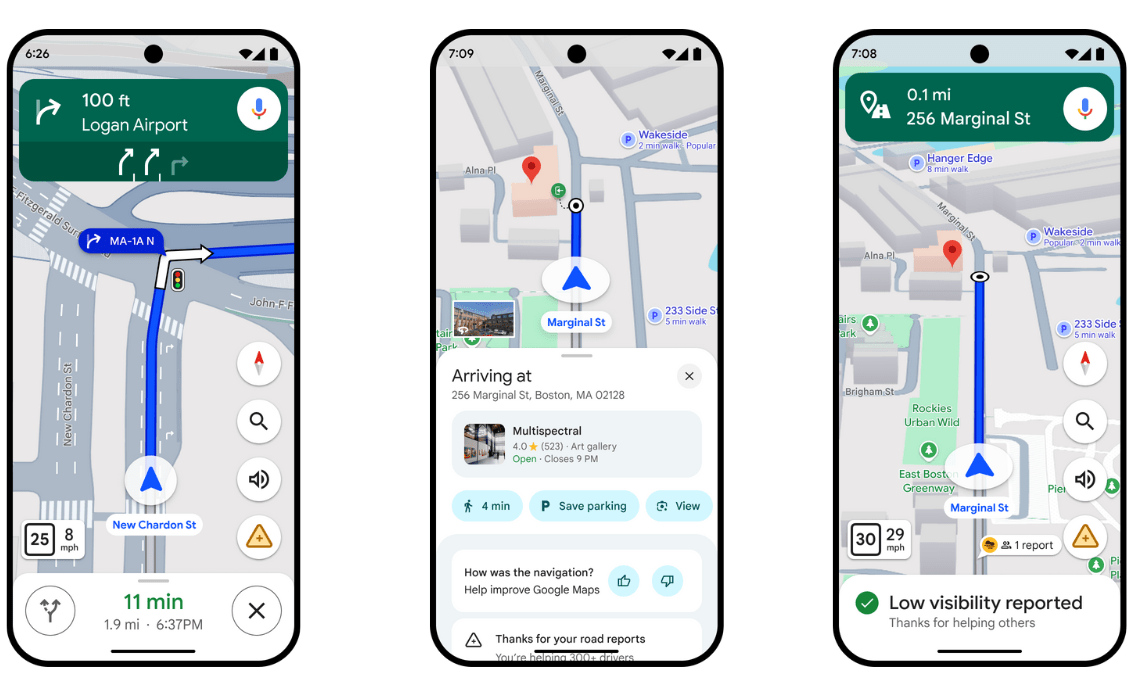
Google Maps updates are set to revolutionize the way users navigate through bustling environments by improving directional accuracy significantly. With the upcoming enhancements to the Fused Orientation Provider (FOP) API, Google aims to refine its navigation capabilities, especially in crowded spaces where GPS signals can be unreliable. These Android navigation updates will integrate data from a device’s gyroscope, accelerometer, and magnetometer, effectively minimizing magnetic interference that has historically led to erroneous directions. As users become increasingly reliant on Google Maps navigation for their daily commutes and explorations, this update promises to enhance Google Maps accuracy and provide a more seamless experience. Whether you’re commuting to work or exploring an unfamiliar city, these improvements are expected to make discovering the best routes easier and more efficient than ever.
The latest modifications to Google Maps represent a significant step forward in enhancing user experiences in digital navigation systems. By focusing on enhancing orientation detection through its advanced orientation technology, Google is aligning its services with the evolving needs of mobile users. This initiative not only aims to boost the overall precision in direction-finding but also strengthens collaboration with third-party apps that rely on Google Maps data. As we delve into these substantial navigation improvements, it becomes clear that accessing accurate and timely route information has never been more crucial. With better tools and smarter integrations, the future of navigating cities and roads looks exceptionally promising.
Google Maps Updates: Enhancing Navigation Accuracy
Google Maps is set to implement significant updates that aim to enhance the accuracy of navigation directions, a crucial feature for users in today’s fast-paced environment. With the integration of advanced technology via the Fused Orientation Provider API, Google promises to provide a more precise navigating experience. This enhancement involves the amalgamation of data from the gyroscope, accelerometer, and magnetometer within Android devices. As a result, users can expect fewer errors and misdirections, particularly in dense urban settings where traditional GPS signals may falter due to obstructions.
The impactful updates to Google Maps will not only benefit everyday users but will also have a positive effect on third-party applications that rely on Google’s robust navigation data. By minimizing magnetic interference and optimizing data interpretation, the updates reflect how Google is committed to improving its navigational tools. Android users, especially those using devices with version 5.0 and above, will have access to enhanced abilities that promise to mitigate common navigation frustrations, fostering a seamless travel experience.
The Role of the Fused Orientation Provider API in Navigation
The Fused Orientation Provider API plays a pivotal role in the forthcoming enhancements to Google Maps. This technology serves to synthesize readings from various onboard sensors, such as the gyroscope and accelerometer. By refining the way Google Maps calculates orientation, users can expect increased accuracy in their directional instructions. This is particularly beneficial in navigating complex environments where GPS inconsistencies have historically posed challenges for users and developers alike.
Such technological advancements underscore Google’s commitment to improving navigation accuracy through smart integrations. The Fused Orientation Provider API essentially acts as a bridge, ensuring that no matter the hardware manufacturer of an Android device, users benefit from the most up-to-date navigational aids. As Google rolls out these updates, the efficiency of navigation apps is poised to improve significantly, which is a welcome change for anyone relying on these services for everyday commuting.
Impact of Google Maps Navigation Updates on User Experience
The proposed navigation updates for Google Maps stand to revolutionize user experiences, particularly for those reliant on accurate directions. Users have frequently encountered issues with the app providing misguided or convoluted routes, leading to unnecessary delays and frustrations. The upcoming updates are structured to address these discrepancies, ensuring that users receive the most efficient route guidance, particularly in busy metropolitan areas.
Moreover, Google’s commitment to continuous improvement in navigation technology highlights the importance of user feedback and adaptation. As these updates roll out automatically, users can enjoy a seamless transition to better navigation experiences without needing to navigate complex interface changes. In a world where precision and reliability in direction are paramount, these updates mark a significant step forward for Google Maps.
Improving Google Maps Accuracy Through Sensor Integration
To enhance the accuracy of navigation, Google Maps is leveraging advanced sensor data integration, which is facilitated through the Fused Orientation Provider API. By utilizing data from a combination of the gyroscope, accelerometer, and magnetometer, the app is expected to achieve unprecedented levels of orientation perception. This new approach means that users will benefit from a refined directional experience that minimizes common issues associated with location accuracy.
This sensor integration allows Google Maps to offer more reliable navigation paths, particularly in areas where signal loss is common or magnetic interference occurs. As a result, users can feel confident that their navigation directions are built on accurate sensor readings, leading to more effective route planning and management. This improvement is a testament to Google’s commitment to user satisfaction and maintaining the trust users place in their navigation services.
Navigating Crowded Areas: New Challenges and Solutions
Navigating through crowded areas presents unique challenges, especially for applications like Google Maps, which are heavily reliant on GPS accuracy. However, with the upcoming updates, Google aims to significantly mitigate these disadvantages. The enhancements stemming from the Fused Orientation Provider API allow Google Maps to discern direction even amidst external interferences and complex urban layouts.
As cities grow denser and more chaotic, the necessity for accurate navigation becomes paramount. The updates promise to enable Google Maps to function effectively in these scenarios, leading to better user experiences. Users will be able to navigate through busy streets, transit hubs, and crowded venues, all while receiving reliable direction and travel suggestions tailored to real-time environmental conditions.
The Future of Google Maps: What’s Next?
As Google continues to innovate with tools like the Fused Orientation Provider API, the future of Google Maps looks promising. Enhancements in APIs and updates showcasing the integration of multiple sensors signal a broader initiative toward transforming how navigation is understood and executed. Users can anticipate not only improvements in directional accuracy but also a better understanding of how navigation tools adapt to geographical and situational changes.
Looking forward, the impending updates are part of a larger strategy to ensure Google Maps remains at the forefront of navigation technology. Sustained research and development efforts will likely yield even more sophisticated solutions, all focused on improving the reliability and efficiency of navigation services. The proactive steps taken by Google reflect a cohesive strategy aimed at ensuring that users receive the best possible navigational support.
User-Centric Design in Google Maps Updates
The approach to updating Google Maps emphasizes user-centric design, focusing on enhancing functionalities without overhauling the existing interface. The emphasis on internal updates means users can enjoy improved navigation directions without needing to adapt to significant design changes. For regular users, this ensures a seamless transition into a better navigation experience.
Focusing on user needs and feedback, Google Maps continually evolves, as evidenced by the enhancements derived from the Fused Orientation Provider API. These updates illustrate a commitment to creating solutions that prioritize the user experience—especially crucial for those who depend on reliable navigation for their daily commutes and travels.
Conclusion: Embracing Change in Navigation Technology
The upcoming updates to Google Maps signify an important step forward in the realm of navigation technology. As the integration of the Fused Orientation Provider API becomes fully realized, users can expect significant improvements in accuracy and reliability, enabling them to navigate busy or complex environments with confidence.
As the landscape of technology and user expectations continues to evolve, embracing these changes will be essential for Google Maps to maintain its status as a leading navigation service. By prioritizing updates that enhance directional accuracy, Google undoubtedly paves the way for a future where seamless navigation is the norm, ensuring users can always find their way.
Frequently Asked Questions
How are Google Maps updates improving navigation directions through the new Fused Orientation Provider API?
The upcoming Google Maps updates are significantly enhancing navigation directions by utilizing the upgraded Fused Orientation Provider (FOP) API. This improvement focuses on integrating data from the gyroscope, accelerometer, and magnetometer to minimize magnetic interference, which often causes inaccuracies. With these improvements, users can expect more accurate directions, especially in crowded areas, ensuring a smoother navigation experience on their Android devices.
| Key Points |
|---|
| Google Maps is enhancing its Fused Orientation Provider (FOP) API for better directional accuracy in busy areas. |
| The update integrates data from multiple sensors: gyroscope, accelerometer, and magnetometer. |
| Aim is to reduce magnetic interference during navigation. |
| Will benefit both Google Maps and third-party apps reliant on accurate navigation. |
| The update will roll out automatically on devices with Android 5.0 or later. |
| No changes to app design or user interface; internal API improvements. |
| Expected to enhance navigation accuracy, particularly in crowded locations. |
Summary
Google Maps updates are set to significantly improve navigation accuracy through an enhancement of its Fused Orientation Provider (FOP) API. This upcoming update aims to integrate data from various sensors, ensuring users receive reliable directional guidance even in crowded environments. By addressing issues of magnetic interference and refining orientation detection, Google Maps not only enhances its core application but also supports third-party apps that rely on its mapping services. With the new API rollout planned for devices using Android 5.0 and above, users can expect smoother navigational experiences without any visible changes to their app interface. Overall, these updates reflect Google’s commitment to continuous improvement in providing effective navigation solutions.



























