

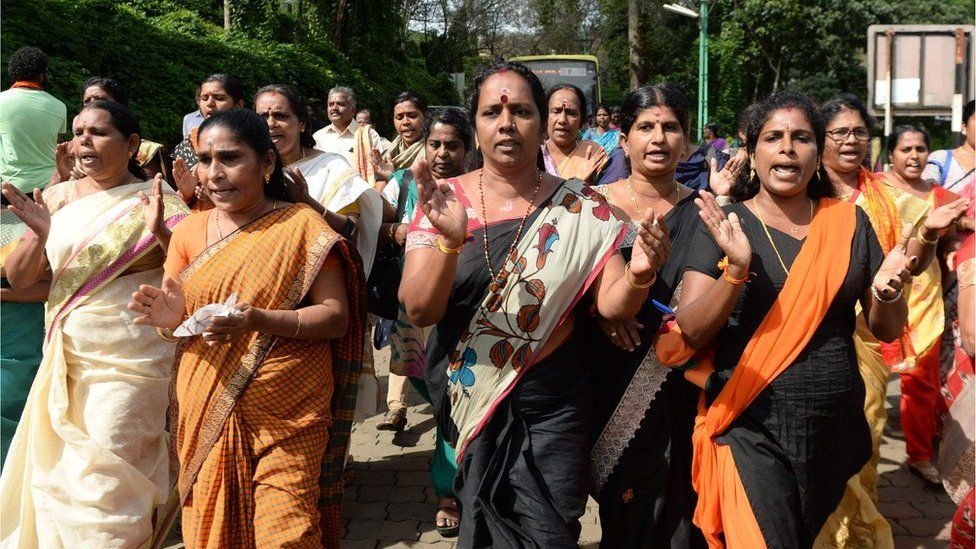
Sabarimala Temple, a revered pilgrimage site in Kerala, has become a focal point of contention regarding women’s rights and religious traditions. The temple’s historic entry ban for menstruating women has sparked debates that intertwine faith, gender equality, and human rights. This practice of excluding women during their menstrual cycle has been likened to untouchability in India, undermining the fundamental rights entitled to all individuals, regardless of gender. Justice B V Nagarathna’s remarks highlight the need to reevaluate such practices, particularly in light of the recent Supreme Court ruling that challenges discrimination against women in sacred spaces. As discussions continue around the intersection of menstruation and temples, the Sabarimala Temple stands as a symbol of the ongoing struggle for equity and inclusion within religious practices.
The Lord Ayyappa Temple at Sabarimala has drawn attention not only for its spiritual significance but also for its controversial norms regarding female participation. The ban on women of menstruating age entering the temple ignites discussions about faith and the broader implications of gender discrimination in religious contexts. Addressing these issues raises critical questions about the rights of women versus long-standing traditions that some argue should be preserved. This situation mirrors the broader discourse on untouchability in India, as it reflects societal attitudes that often marginalize women. As advocates push for fundamental rights for women to access all religious places, Sabarimala serves as a case study in the fight for equality and the dismantling of regressive practices.
The Controversy Surrounding Women in Sabarimala Temple
The Sabarimala Temple, dedicated to Lord Ayyappa, has become a focal point of controversy over the past few years, particularly regarding the entry of menstruating women. The traditional ban on women aged 10 to 50 years entering the temple has surrounded it with debates about faith, gender equality, and fundamental rights. Justice B V Nagarathna’s remarks highlight the social stigma attached to menstruation, equating the treatment of women during this natural process to a form of untouchability that should be abolished in modern society. This controversy underscores the tension between archaic social customs and the evolving understanding of women’s rights in India.
Furthermore, the recent judicial decisions have catalyzed a larger discussion about the role of women in religious practices and the implications of customary restrictions based on biological functions. The ban not only raises questions about the rights of women to access places of worship but also challenges the notion of untouchability that persists in some form across Indian society. By allowing women to enter Sabarimala Temple, a significant step can be taken towards dismantling the idea that certain biological conditions render individuals ‘impure’ or ‘untouchable,’ thereby aligning religious practice with modern constitutional values.
Fundamental Rights and Religious Practices: A Balancing Act
The clash between traditional beliefs and modern legal standards is vividly illustrated in the case of the Sabarimala Temple’s entry ban for women. Article 17 of the Indian Constitution prohibits untouchability and provides a legal framework to support the idea that no individual should be discriminated against based on gender or natural biological cycles. This legal perspective raises critical questions regarding the adherence to faith versus the guarantee of fundamental rights, where women’s equality in all spheres of life is essential for a progressive society. The discussion around Sabarimala is a microcosm of a larger national dialogue about how ancient traditions intersect with contemporary rights.
In attempting to resolve this complex issue, it is crucial to understand that religious practices should not infringe upon the fundamental rights of individuals, particularly women, who have been marginalized for centuries. The discourse around menstruation and temples is emblematic of broader societal views on women’s roles in spiritual life. While some may argue that preserving the sanctity of religious rituals is paramount, it is equally important to consider the implications of such practices on gender equality and social justice. Thus, the need for a nuanced approach that respects both faith and the rights of women is essential for the future of religious practices in India.
Menstruation and Temples: Unpacking Cultural Stigma
The cultural stigma surrounding menstruation is particularly pronounced in the context of Indian temples, where women have historically faced exclusion during their menstrual cycles. The status of ‘untouchables’ assigned to menstruating women echoes a broader societal narrative that associates purity with femininity and reinforces patriarchal structures. This notion not only limits women’s access to worship spaces like Sabarimala Temple but also perpetuates harmful stereotypes surrounding natural bodily functions. It is imperative to critically analyze these beliefs and work towards dispelling the myths that contribute to the systemic oppression of women.
Moreover, opening the gates of Sabarimala to women, irrespective of their menstrual status, represents a significant cultural shift that could challenge long-held beliefs about purity and sanctity. By addressing the misconceptions related to menstruation, society can foster greater acceptance and understanding, thereby dismantling archaic practices that reinforce gender discrimination. Empowering women to participate fully in religious practices will not only reclaim their rightful place in spiritual spaces but will also serve as a catalyst for broader discussions about gender equality in all facets of life.
Untouchability in India: Moving Towards Equality
Untouchability remains a pervasive issue in India, deeply ingrained in the social fabric despite legal provisions against it. The persistence of such practices, especially in the context of temples, raises crucial questions about societal norms and their impact on women’s rights. The case of Sabarimala Temple exemplifies how outdated customs can continue to dictate who has access to sacred spaces, while simultaneously infringing on constitutional rights. Justice B V Nagarathna’s remarks highlight the urgent need to address such disparities, emphasizing that untouchability, in any form, is a violation of human dignity and equality.
The ongoing struggle for women’s rights in India cannot ignore the insidious nature of untouchability, which manifests in various forms, including the restriction of women during their menstrual cycles. Challenging these outdated beliefs requires a collective effort from both society and the legal framework that governs it. Women’s access to Sabarimala Temple serves as a potential turning point that could inspire similar reforms across the nation, fostering a culture that celebrates inclusivity and rejects discrimination based on gender or biological circumstances.
Legal Framework and Women’s Access to Sabarimala
The legal framework surrounding the entry of women into Sabarimala Temple has been significantly influenced by the Indian Constitution, particularly Article 17, which abolished untouchability. This constitutional protection provides a robust foundation for advocating women’s rights in religious contexts. By striking down the customary ban, the judiciary has not only reaffirmed the rights of women to worship freely but has also set a precedent for addressing other discriminatory practices that may exist in various temple traditions across the country. The case directly challenges the intersection of legislative authority and religious practice, illustrating the evolving interpretation of rights in contemporary India.
As discussions about the legality of entry bans continue, it is essential to recognize the broader implications for women’s rights in faith-based communities. The movement for women’s access to Sabarimala Temple is emblematic of a larger fight against societal norms that marginalize women based on outdated beliefs. Ensuring that women can participate fully in religious activities aligns with the fundamental principles of equality and non-discrimination, reinforcing the need for ongoing dialogue and reform in religious practices. Such changes are crucial not just for women in Sabarimala, but for the realization of gender equality throughout Indian society.
Social Perspectives on Menstruation and Temples
The social perspectives surrounding menstruation in India often create barriers that impede women’s participation in religious practices. Temples like Sabarimala reflect deeply rooted cultural beliefs that frame menstruation as a source of impurity, thus reinforcing gender stereotypes. Despite scientific understanding that menstruation is a natural biological process, the stigma attached to it results in significant social consequences for women who wish to worship freely. Addressing these perspectives requires a collective cultural shift where menstruation is normalized rather than vilified, thereby allowing women to engage fully in spiritual practices.
Encouraging open dialogue about menstruation can facilitate a more inclusive environment within religious spaces. By actively confronting the stigma associated with periods, society can work towards dismantling the barriers created by outdated beliefs about women’s bodies. This not only empowers women but also enriches the spiritual experience of community worship, as women occupy their rightful place alongside their male counterparts. The ongoing conversation about women’s access to Sabarimala Temple serves as a catalyst for broader cultural changes that acknowledge and celebrate diversity in religious expressions.
Advocacy for Women’s Rights in Religion
Advocacy for women’s rights within religious contexts, particularly regarding places like Sabarimala Temple, is of utmost importance in the quest for gender parity. Organizations and activists are increasingly rallying for the rights of women to practice their faith without discrimination based on gender or biological status. As the transformative legal rulings unfold, they provide a platform for broader discussions about how women are treated in religious rituals and the necessity for change. This advocacy reflects a growing recognition that women’s rights are human rights, which must be upheld in all spheres, including religion.
The movement for women’s rights in places of worship resonates with a larger commitment to social justice and equality in India. By challenging discriminatory practices, activists not only pave the way for improved access to sacred spaces but also cultivate a culture of respect for women’s autonomy. The push for women’s participation in religious sites like Sabarimala is indicative of a societal shift towards embracing gender equality, urging individuals and communities to reevaluate traditional norms that perpetuate discrimination and exclusion.
Changing Narratives of Women in Spirituality
The narratives surrounding women in spirituality and religious practices are undergoing significant transformation, especially with regards to the entry of women into historically male-dominated spaces like Sabarimala Temple. As the conversation around women’s rights gains momentum, there is a growing recognition of the need to reshape narratives that have long marginalized women based on biological factors such as menstruation. This transformation challenges existing stereotypes and empowers women to reclaim their spiritual identities within their faith practices.
Revising social narratives about women and spirituality can cultivate an inclusive atmosphere that embraces diverse expressions of faith, distancing from regressive attitudes that perceive menstruation as an impediment to worship. A culturally sensitive approach that celebrates the contributions and roles of women in religious life can help facilitate deeper understanding and acceptance. As society moves toward greater equality, the evolving narratives underscore the necessity for change, allowing women to fully engage in their spiritual practices without fear of discrimination.
Conclusion: Toward an Inclusive Religious Future
In conclusion, the ongoing debates and legal outcomes regarding women’s entry into Sabarimala Temple underscore the pressing need for an inclusive approach to religion that honors both faith and fundamental rights. As societal norms shift towards embracing equality for women, it becomes increasingly important to challenge long-standing practices that exclude women from spiritual spaces based on menstruation. The discussions fostered by this case not only stand to impact how women are perceived in religious contexts but also aim to reshape broader societal attitudes toward gender equality.
Ultimately, an inclusive religious future hinges upon the collective efforts of individuals, communities, and legal systems to advocate for the rights of women while respecting religious sentiments. By dismantling discriminatory practices and fostering dialogue, society can create a more equitable environment for all to experience their faith. The Sabarimala Temple case serves as a pivotal moment in the fight for women’s fundamental rights, illustrating that faith and equality can coexist harmoniously when traditions are reassessed in light of contemporary values.
Frequently Asked Questions
What is the current status of women in Sabarimala Temple following the ban on their entry?
The Sabarimala Temple has been at the center of a significant debate regarding women’s entry. Following a landmark judgement, the customary ban that restricted menstruating women from entering the temple was struck down. This decision is rooted in the recognition of women’s fundamental rights, which challenges the ongoing practices of untouchability in India and asserts the need for gender equality in religious spaces.
| Key Points | Details |
|---|---|
| Debate over Faith and Rights | Discussion centers around the right of menstruating women to enter Sabarimala Temple. |
| Justice B V Nagarathna’s Critique | Criticized the practice of treating menstruating women as ‘untouchables’ for three days each month. |
| Legal Framework | Intersects with Article 17, which abolishes untouchability and punishes the practice. |
Summary
Sabarimala Temple stands at the intersection of tradition and modern rights, particularly concerning the rights of women. The recent discussions prompted by Justice B V Nagarathna highlight the critical societal issues surrounding menstruation and religious practices. The temple’s entry ban for menstruating women has been brought under legal scrutiny, emphasizing the need for alignment with Article 17, which prohibits untouchability in India. With its roots deeply embedded in centuries of custom, the case serves as a vital point of reflection in the broader discourse on gender equality, faith, and human rights.



























